From ancient board games to today’s £150 billion digital play grounds, gaming isn’t just entertainment, it’s showcasing how we work, learn, and connect. With AI and VR reshaping the industry, could gaming be the ultimate business disruptor?

“Man is most nearly himself when he achieves the seriousness of a child at play”, Heraclitus.
Imagine a world where over 4.5 billion people, more than half the planet, engage in a shared activity every single day.
Not work, not sleep, but play.
A Digital play.
What began as a curious experiment in university labs has evolved into a cultural force shaping how we learn, connect, and even understand ourselves. From the flickering green screens of the 1950s to today’s hyper-realistic virtual worlds, gaming has become humanity’s most dynamic form of storytelling, problem-solving, and self-expression.
But why? What is it about this digital play that captivates us so deeply?
The answer lies in something primal. Long before computers, humans were playing, carving game boards into ancient stone, rolling dice in Mesopotamian palaces, strategising over chess in medieval courts.
Play is not just entertainment; it’s how we learn, how we bond, how we explore the boundaries of what’s possible.
And now, in the digital age, gaming has become the ultimate evolution of that instinct.
But how did we get here? How did a few curious scientists tinkering with room-sized computers in the 1950s lay the foundation for a £150 billion industry that now rivals Hollywood?
And why does gaming matter more than ever as we step into an era of artificial intelligence, virtual reality, and digital identities?
The significance of play in human development
Johan Huizinga, the Dutch historian who penned Homo Ludens (1938), argued something radical: play is older than culture itself. Before we had language, before we built cities, we played.
It’s how we tested survival skills, how we formed social hierarchies, how we learned to cooperate and compete.
Fast-forward to today, and neuroscience backs this up. When we play:
- Dopamine floods our brains, reinforcing learning and memory.
- The prefrontal cortex lights up, sharpening decision-making and problem-solving.
- Social play activates oxytocin, strengthening bonds and empathy.
From Ancient Boards to Digital World
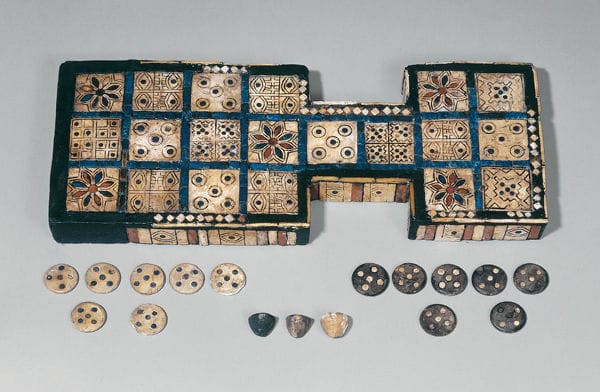
Archaeologists have found 5,000-year-old gaming boards in the Indus Valley. The Royal Game of Ur, played in Mesopotamia around 2600 BCE, had rules so sophisticated we still study them today.
Even gladiatorial combat was, in a sense, a deadly form of structured play, spectacle, competition, and narrative rolled into one.
Gaming is simply the latest chapter in this ancient story.
The Economics of Digital Worlds: A £150 Billion Playground
The gaming industry has evolved from a niche hobby to a £150 billion global economy, surpassing both film and music combined.
| Year | Global Gaming Revenue (£ Billions) | Major Milestone |
| 1972 | 0.2 | Pong released |
| 1980 | 2.8 | Pac-Man fever |
| 1990 | 14.5 | Nintendo’s golden age |
| 2000 | 28.7 | PC gaming renaissance |
| 2010 | 67.8 | Mobile gaming boom |
| 2020 | 121.7 | Pandemic surge |
| 2024 | 152.3 | AI integration begins |
(Source: Newzoo Global Games Market Report 2024)
By 2025, gaming dwarfs Hollywood and the music industry combined. But the real value isn’t just in profits, it’s in the jobs created, the skills honed, and the communities built.
Gaming as Modern Mythology
One of the most profound aspects of gaming is its ability to create shared narratives that transcend geographical, cultural, and linguistic barriers. In this way, gaming has become our generation’s mythology.
Games like:
- The Legend of Zelda
- Final Fantasy
are not merely forms of entertainment, they are modern retellings of the hero’s journey, a concept identified by Joseph Campbell in his study of myths.
This participatory form of storytelling allows players not just to observe but to actively engage in the narrative. In games, you don’t just watch the hero overcome challenges; you become the hero. The stakes are high, the challenges are real, and the rewards are earned.
And the impact goes beyond entertainment:
- SimCity influenced urban planning.
- Civilization reshaped how we view history.
- Minecraft became a tool for teaching engineering.
Gaming and Identity Formation
In virtual worlds, players are given the opportunity to experiment with different aspects of their identity, things that may be impossible in the real world. Dr. Sherry Turkle’s research at MIT reveals that online gaming environments often serve as laboratories for identity experimentation.
This is particularly significant for adolescents, who are at a stage of life where they are exploring and solidifying their self-concept.
In these digital spaces, players can choose avatars that represent different genders, personalities, and social roles, providing a level of freedom and exploration that is unique to the digital age. These experiences play a critical role in shaping our understanding of identity, empathy, and social roles, both in the gaming world and beyond.
The Democratisation of Creativity
One of the most exciting aspects of gaming today is how it has democratised creativity. Platforms like Unity, Unreal Engine, and Roblox have made game development accessible to anyone with an idea and the will to create.
No longer do you need a team of specialists or millions of pounds in equipment to bring your vision to life. Today, anyone with a computer can design and develop their own game or virtual world.
The rise of streaming platforms like Twitch and YouTube has also changed the landscape of entertainment. Gamers are no longer just consumers; they are creators and influencers, shaping how games are played, reviewed, and experienced.
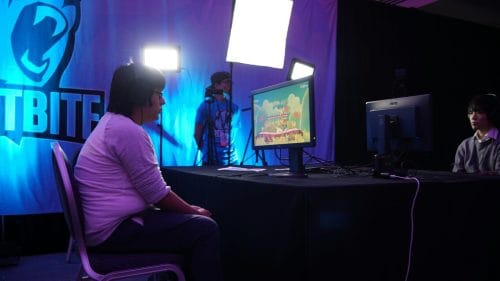
The world of esports has also blossomed, turning skilled play into a professional pursuit with tournaments that draw millions of viewers.
The Cathedral Builders of Silicon
The earliest computers were behemoths. The ENIAC, completed in 1946, weighed 30 tons and consumed enough electricity to power a small town.
These machines were temperamental, requiring teams of technicians to maintain them. Yet, almost as soon as they existed, their operators began bending them to a new purpose: play.
- 1950: Alan Turing wrote the first chess program, though with no computer powerful enough to run it, he played by hand, simulating the machine’s moves himself.
- 1951: Christopher Strachey created a draughts (checkers) program for the Ferranti Mark I, one of the earliest examples of a computer game.
- 1952: A.S. Douglas developed OXO (a digital tic-tac-toe game) for his PhD thesis at Cambridge.
Tennis for Two: The First Interactive Game

In 1958, physicist William Higinbotham who had worked on the Manhattan Project, created something extraordinary. For Brookhaven National Laboratory’s annual public exhibition, he rigged up an analog computer and an oscilloscope to simulate a simple tennis game.
Tennis for Two was crude by today’s standards just a dot bouncing between two lines, controlled by knobs but it was a sensation. Visitors lined up for hours to play.
Higinbotham later said he just wanted to “liven up the place”, but in doing so, he’d created the first interactive electronic game.
What made it special?
- It was social: two players competed face-to-face.
- It was intuitive: no programming knowledge needed.
- It repurposed military tech (the computer was designed for missile calculations) into entertainment.
The MIT Hackers and the Birth of Virtual Worlds
While Higinbotham was creating Tennis for Two on the East Coast, another group of innovators was making waves at the Massachusetts Institute of Technology (MIT). The Tech Model Railroad Club (TMRC) at MIT was home to a group of students who had developed a culture around their elaborate model railroad system.
They called themselves “hackers”, a term they used to describe the joy of technical exploration and the thrill of making systems do things they weren’t originally designed to do.
These students were the first to gain access to the PDP-1, one of the earliest minicomputers, installed at MIT in 1960. Unlike the large mainframes of the previous decade, the PDP-1 was interactive, it could respond to input in real-time and display graphics on a cathode ray tube screen.
This new technology opened up possibilities previously thought impossible, including the idea that humans could have a conversation with a computer.
The hackers at MIT saw the PDP-1 as their new canvas. They wrote music programs, created visual displays, and explored the potential for real-time interaction. Their ethos was simple: “the right thing to do”, and this philosophy permeated both their technical work and their approach to life.
Spacewar!: The First True Video Game
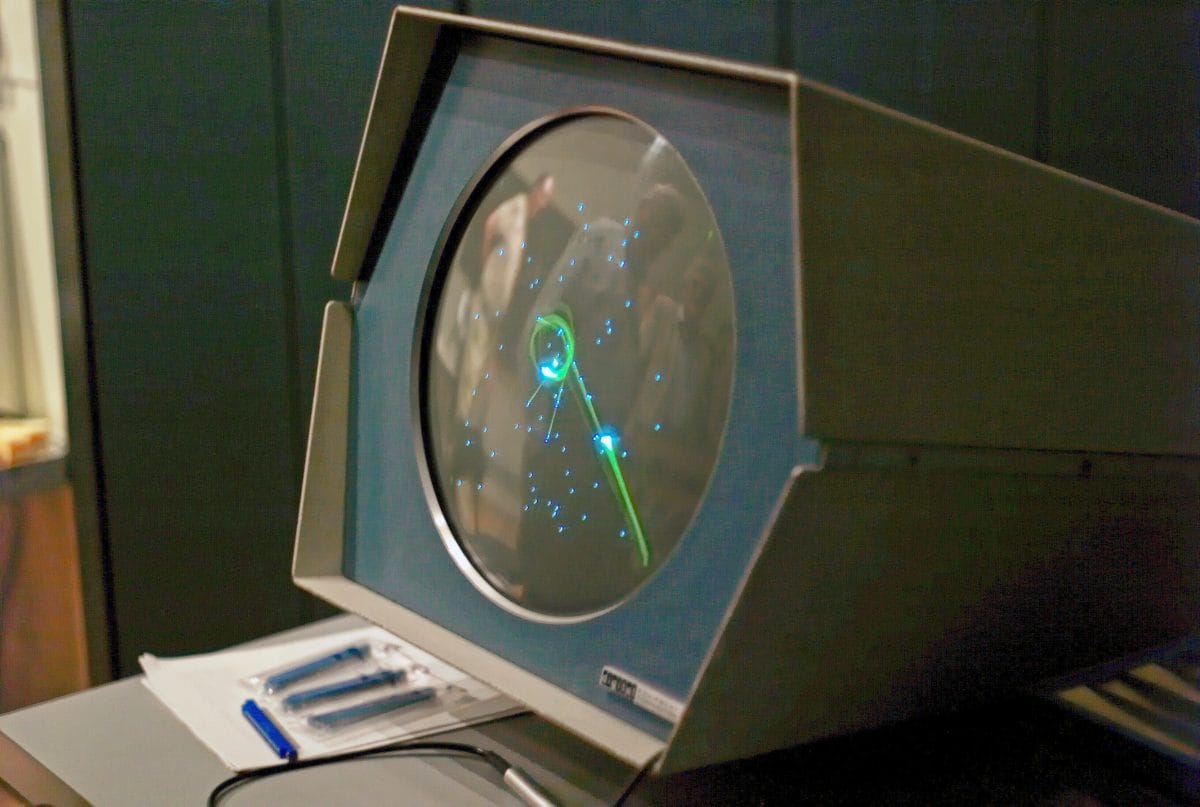
Enter Steve Russell, a young MIT student, who in 1961 was challenged by his fellow hackers to create a demonstration program that would show off the capabilities of the PDP-1.
Russell, a fan of science fiction novels, envisioned a game where two spaceships would battle around a star. This idea was bold, it would require real-time graphics, physics simulation, and responsive controls. It sounded ambitious, perhaps even impossible.
At first, Russell hesitated. He thought the project would be too complex and time-consuming. But his friends egged him on, and their taunts proved to be the catalyst Russell needed. By February 1962, after months of work, Spacewar! was born.
Spacewar! was a revolution.
Two players controlled spaceships, the “needle” and the “wedge,” battling around a star. The ships had limited fuel and ammunition, which added a layer of strategy to the combat. The game’s physics were remarkably sophisticated for the time, with gravity and momentum affecting the ships’ movement.
The game was challenging and fun to play, something that hadn’t yet been achieved in the world of computer science.
Russell’s creation wasn’t just a technical achievement, it was a cultural one. The game spread quickly through the small community of computer labs across the United States.
It became the focal point for emerging computer culture, demonstrating that computers weren’t just tools for experts, they could be sources of entertainment and social interaction.
The Technical Achievement
The rise of gaming has also been closely intertwined with technological advancements. From the early days of computer graphics to the cutting-edge virtual reality (VR) and augmented reality (AR) systems of today, gaming has pushed the boundaries of what technology can achieve.
The demand for more realistic graphics, faster processing, and more immersive experiences has driven developments in computer graphics, AI, and network infrastructure.
From a technical standpoint, Spacewar! was extraordinary. It ran on a computer that cost $120,000, more than $1 million today, and occupied an entire room.
The PDP-1 had just 4,096 words of memory (about 9KB by today’s standards) and processed 200,000 operations per second. Creating a real-time interactive experience on such limited hardware required innovative programming techniques.
The game’s graphics were groundbreaking. The PDP-1’s CRT display could show 1,024 x 1,024 points of light, creating the first true computer graphics. Although the spaceships were simple geometric shapes, their movement across the screen felt smooth and realistic.
The star field added depth to the game, creating an immersive experience. The controls, initially toggle switches on the PDP-1’s console, were later refined into custom controllers that more closely resembled the game controllers we use today.