
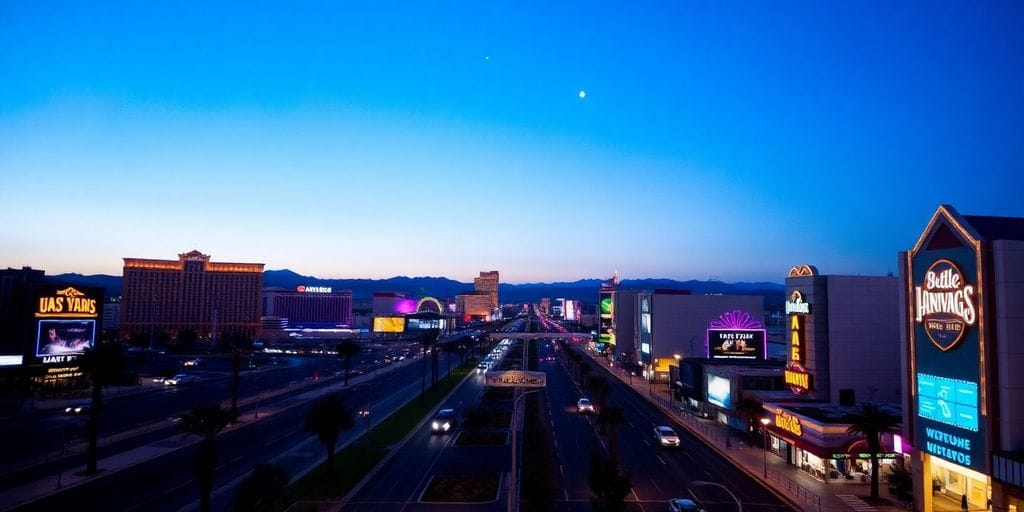
Las Vegas, the vibrant heart of the gaming industry, is currently grappling with a significant downturn. Recent data indicates a concerning decline in tourism and gaming revenue, raising alarms for the city’s economic future. This slump is attributed to a drop in visitor numbers, particularly international travelers, impacting various sectors that rely on the influx of tourists.
Las Vegas Faces Economic Headwinds
Las Vegas, a city synonymous with world-class entertainment and a thriving gaming industry, is experiencing a turbulent period. Once a robust economic engine generating billions, its gaming and tourism sectors are now confronting a notable decline in visitors. This trend is creating ripple effects across numerous industries that underpin the city’s economy.
Declining Tourism and Gaming Revenue
Recent data from the Las Vegas Convention and Visitors Authority (LVCVA) reveals a troubling pattern, with tourism numbers decreasing by 6.5% in May 2025 compared to the same month in 2024. This marks a substantial drop for a city heavily reliant on both domestic and international tourists. The reduction in visitation has sparked concerns within the city’s tourism and hospitality industries, suggesting that a prolonged downturn could have lasting effects on Las Vegas’s economic stability.
- Statewide gaming revenues, a crucial indicator for Nevada, saw a 2.2% year-over-year decrease.
- The gaming win fell from $1.32 billion in May 2024 to $1.29 billion in May 2025.
- Economist Stephen Miller from the University of Nevada, Las Vegas, expressed concerns about the impact on the gaming sector through 2026.
Impact of Reduced International Travel
Analysts suggest that the primary factor contributing to this decline is the decrease in international visitors, who typically contribute a significant portion of revenue to Las Vegas’s casinos. The absence of global tourists is proving to be a major hurdle for the city. While Las Vegas has historically attracted travelers worldwide, the reduction in international tourism has created a noticeable revenue gap. Experts believe that attracting these visitors back is crucial for reversing the city’s gaming decline, though this challenge is complicated by ongoing global uncertainties, including economic instability and evolving travel preferences.
Airport Traffic Reflects Broader Slowdown
Compounding the issue is the decline in passenger numbers at Harry Reid International Airport, a primary gateway for travelers. May 2025 marked the fourth consecutive month of falling passenger traffic, reflecting the broader tourism slowdown affecting the entire region. As one of the busiest airports in the United States, any significant reduction in air traffic is likely to have far-reaching effects on the retail, hospitality, and transportation sectors that depend on visitor influx.
Strategies for Recovery
With declining tourism and air traffic, experts are concerned about Las Vegas’s ability to maintain its status as a global tourism hub without a strong rebound. Stakeholders in the tourism, hospitality, and gaming sectors are exploring new approaches to revitalize the city’s economy. Strategies include:
- Expanding Appeal to Domestic Travelers: Focusing on attracting local and short-term domestic visitors through targeted marketing campaigns and incentives.
- Diversifying Tourism Portfolio: Promoting attractions beyond gaming, such as outdoor adventures, arts and culture, and health and wellness tourism, to reduce dependency on casinos and create a more sustainable tourism ecosystem.
These efforts aim to broaden the range of experiences available, ensuring long-term success and helping Las Vegas regain its position as a premier global entertainment destination.