
How Sony’s PlayStation, Nintendo 64, and Sega’s Dreamcast battled for dominance, reshaping gaming from pixelated sprites to immersive 3D worlds. From CD-ROM revolutions to online gaming’s birth, this was the decade gaming grew up. Which console won, and why does it still matter today?
The 32-Bit Wars and 3D Revolution (1995-2005), Infographic by Dinis Guarda
“We stand at the threshold of a new dimension, literally. The transition from sprites to polygons is not merely technological evolution; it is the birth of virtual reality as we dreamed it could be”, Yu Suzuki, Sega AM2
“In the beginning was the polygon, and the polygon was with creativity, and the polygon was creativity made manifest in digital space”, inspired by the Gospel of John, adapted for the 3D revolution.
Picture this: it’s 1995. Arcades are still buzzing, but something seismic is happening in living rooms worldwide. The pixelated sprites we grew up with are morphing into fully realised 3D worlds. Cartridges are giving way to shiny CDs.
And gaming? It’s no longer just for kids, it’s becoming art.
This was the 32-bit era, a decade where gaming didn’t just evolve, it reinvented itself. We went from flat, side-scrolling adventures to sprawling 3D landscapes where you could run, jump, and explore in ways that felt real.
The PlayStation, Nintendo 64, and Sega Saturn weren’t just consoles, they were battlegrounds for competing visions of gaming’s future.
Sony stormed in like a rockstar, betting on CDs, mature storytelling, and a rebellious attitude. Nintendo stuck to cartridges, proving gameplay was king with masterpieces like Super Mario 64.
And Sega?
They swung for the fences with the Dreamcast, delivering online gaming years before its time, only to crash and burn.
This was the era that gave us survival horror, cinematic adventures, and online multiplayer. It turned gaming into a cultural force. We’re diving into the console wars, technical breakthroughs, and legendary games that defined a generation.
Because this? This is where modern gaming really began.

POLYGON on Steam, Image Credit: Steam
The Evolution from Sprites to Polygons
Let’s take a trip back to a decade when everything in gaming suddenly changed. From 1995 to 2005, the games industry morphed from blocky sprites and plastic cartridges to sweeping 3D landscapes, orchestral scores, and mature storylines you’d happily discuss in the pub. Hardware took a quantum leap, so did our expectations.
For many, this wasn’t just a better-looking Space Invaders, it was the moment our favourite pastime became culturally undeniable.
The move from 2D to 3D wasn’t just “prettier graphics.” It was the dawn of new genres, new ways to play, and yes, sometimes a fair bit of early-3D confusion. CD-ROMs made way for real voice acting, soundtracks, and actual cinematic scenes, elevating gaming from digital toybox to a full-blown entertainment platform.
Ratings boards appeared, not just for worried parents but because the medium was ready to tackle grown-up topics.
The Battlefield Landscape: The Fifth Generation Console War
The mid-’90s were a battleground. Three bold consoles—Sega Saturn, Sony PlayStation, and Nintendo 64—each with their own vision, slugged it out to define who would own the living room.
Charting the battlefield
Each console brought something dramatically different:
| Console | Launch Year | Launch Price | CPU Type | Graphics Focus | Storage | Core Philosophy |
| Sega Saturn | 1995 | £399 | Dual 32-bit | 2D/3D hybrid | CD-ROM | Arcade perfection |
| Sony PlayStation | 1995 | £299 | 32-bit RISC | 3D focused | CD-ROM | Multimedia entertainment |
| Nintendo 64 | 1996 | £249 | 64-bit RISC | Advanced 3D | Cartridge | Refined gameplay |
| Sega Dreamcast | 1999 | £199 | 128-bit | High-end 3D | GD-ROM | Online gaming |
The winner wasn’t just the most powerful box, but the one smart enough to speak to what gamers really wanted: diverse experiences, accessible pricing, and a future to believe in.
Market share: The numbers tell the tale
It wasn’t even close by the millennium. Sony’s outsider PlayStation ran away with it while the others clambered for position:
| Year | PlayStation | N64 | Saturn | Dreamcast | PC Gaming |
| 1995 | 15% | 0% | 25% | 0% | 60% |
| 1996 | 35% | 25% | 15% | 0% | 25% |
| 1997 | 45% | 35% | 8% | 0% | 12% |
| 1998 | 50% | 38% | 5% | 0% | 7% |
| 1999 | 52% | 35% | 3% | 8% | 2% |
| 2000 | 55% | 32% | 1% | 10% | 2% |
| 2001 | 58% | 30% | 0% | 10% | 2% |
The Rise of Sony PlayStation: The Outsider’s Advantage

Sony came from left field, and that was exactly their power. No “gaming heritage” meant they saw no rules to break, just possibilities.
The Outsider’s Edge
Sony didn’t want to make “just another toy”:
“We didn’t want to make a toy for children. We wanted to create an entertainment system that adults would be proud to own and excited to use.” – Ken Kutaragi, Father of PlayStation
Sony’s “entertainment-first” mindset showed in everything: from CD drive and high-quality sound to a memorable ad campaign that made consoles seem as grown up as your new hi-fi.
Smart Collaborations, Smart Tech
Sony’s real achievement was blending strong technology with cinematic vision. The R3000 CPU, custom graphics chip, and high-fidelity audio came together for silky-smooth 3D, gorgeous sound, and those FMV cutscenes that wowed us all.
| Component | Spec/Feature | What Made It Special |
| CPU | 32-bit R3000 @33MHz | RISC, smooth 3D |
| GPU | Custom 2D/3D proc | Flat shading, Gouraud, 360k polys/sec |
| Sound | 24-ch ADPCM | CD-quality, orchestral |
| Storage | CD-ROM (650MB) | Cinematic scale, FMV possible |
| Controller | Digital+analogue | Precise 3D, force feedback |
Winning With Developers
Sony’s generosity to third-party developers was a masterstroke. They offered cheaper media, accessible dev kits, and lower licensing fees—a stark contrast to Nintendo’s famously strict rules.
| Aspect | PlayStation | Nintendo 64 |
| Licensing fee | 9% of wholesale | 23% of wholesale |
| Manufacturing | £0.50/disc | £8–12/cartridge |
| Dev. kits | £2,500 | £15,000 |
| Marketing | 50% Sony co-funding | Developer funded |
| Restrictions | Minimal | Extensive |
Third-party studios flocked to PlayStation—a virtuous circle of ever-better games.
The Mature Gaming Revolution
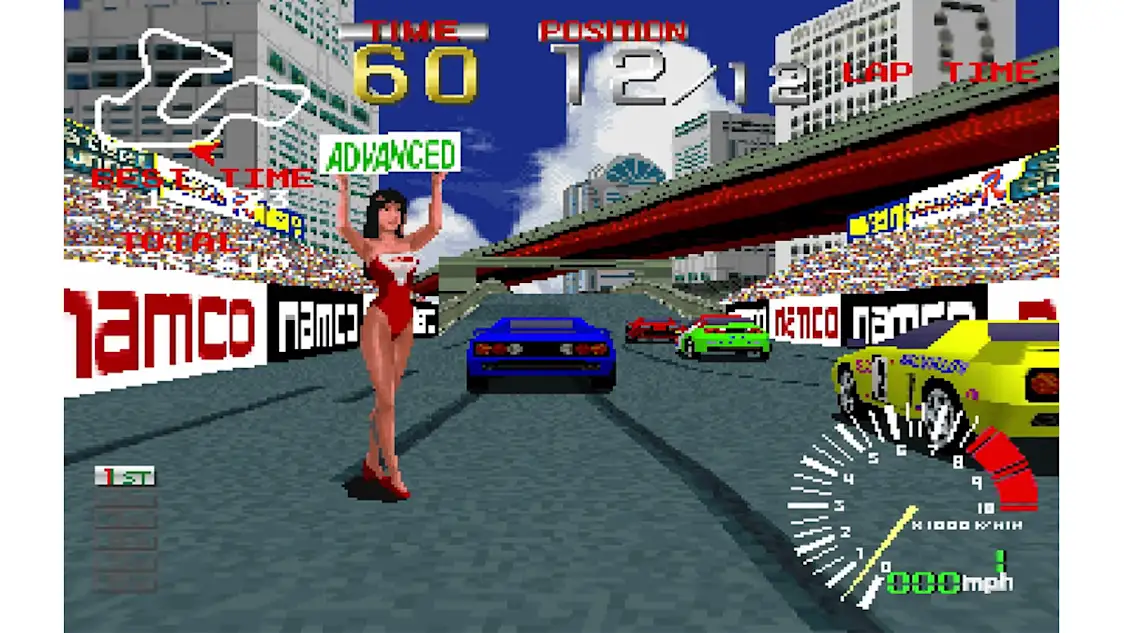
Massive moments in video games: Ridge Racer on PlayStation, 1995, Image credit: JB Hi-Fi
One of Sony’s biggest successes came through courting adult gamers. The company wanted to appeal to an audience that had been largely ignored by previous gaming consoles.
Rather than positioning the PlayStation as a kids’ toy, they marketed it as a sophisticated, mature form of entertainment. This shift towards mature content in gaming was key to PlayStation’s rise to dominance.
Some of the notable titles that helped cement the PlayStation’s legacy as an adult entertainment medium include Ridge Racer (1995), Resident Evil (1996), Final Fantasy VII (1997), and Metal Gear Solid (1998).
These games represented a shift in gaming’s cultural importance, from children’s pastimes to serious, mature narratives and experiences.
Nintendo 64: The Cartridge Gambit

Super Nintendo World, Image credit: Chris and Wren’s World
While Sony embraced the new world of CD-ROMs, Nintendo remained firmly attached to cartridge technology. Nintendo’s reasoning was grounded in both technical and philosophical concerns.
The cartridges offered instant loading times, superior durability, and an added layer of piracy resistance that CDs couldn’t provide. For Nintendo, gameplay quality was paramount, and they believed that cartridges offered a better solution than CDs.
However, Nintendo’s reliance on cartridges also came with significant drawbacks. Cartridges had a limited capacity, and manufacturing costs were far higher than those of CDs.
The Nintendo 64’s limited storage capacity meant it couldn’t compete with the PlayStation in terms of multimedia features like full-motion video or extensive voice acting.
This led to the eventual exodus of many third-party developers to Sony’s platform.
The N64 Controller Innovations:
Nintendo’s innovation didn’t just stop at the games; the N64 controller itself introduced groundbreaking features that would change the way we played games forever. The introduction of the analog stick allowed for 360-degree movement in 3D space, a feature that would soon become standard in all subsequent gaming consoles.
Other innovations included the Rumble Pak, an early example of force feedback, and the expansion slot for future peripherals.
Sega’s Saturn and Dreamcast: The Struggles and Triumphs

Sega Saturn System – Video Game Console, Image credit: PCMag
Sega’s fifth-generation consoles, the Saturn and Dreamcast, offered some of the most advanced technology of the era, but poor business decisions led to their downfall. The Sega Saturn, launched in 1995, was technologically ahead of its time but hampered by poor development practices and a rushed launch.
Despite its hardware capabilities, the Saturn struggled to compete with Sony’s well-marketed PlayStation.
Sega’s Dreamcast, however, was a technical marvel. Launched in 1999, it featured a 128-bit CPU and advanced 3D graphics. The Dreamcast was also the first console to offer built-in online gaming, setting the stage for the online gaming revolution that would come in the following years.
However, it was released too early, and Sega’s financial troubles ultimately led to its premature demise.
Despite its failure, the Dreamcast influenced future generations of consoles, introducing innovations like online connectivity and arcade-perfect ports that would become standard features in later systems.
The Rise of 3D Graphics: Challenges and Triumphs
The transition from 2D to 3D graphics was a monumental shift in game design. It wasn’t just about better graphics, it was about learning to think in three dimensions. Early 3D games faced numerous challenges, such as camera control, navigation, and visual clarity, issues that 2D games never had to address.
For designers, creating believable 3D spaces required a new understanding of depth and player perspective. As Shigeru Miyamoto aptly put it, “Moving to 3D wasn’t just about better graphics, it was about learning to think in three dimensions, to consider how players would understand and navigate virtual space.”
Over time, developers found solutions to these challenges. Games like Super Mario 64 (1996) and Ocarina of Time (1998) helped define the 3D game design blueprint, introducing innovations like analog movement, Z-targeting, and seamless worlds.
Related Content: super mario rpg remake
By 1999, the gaming world was ready for fully immersive, three-dimensional experiences that no longer required the restrictions of 2D gameplay.
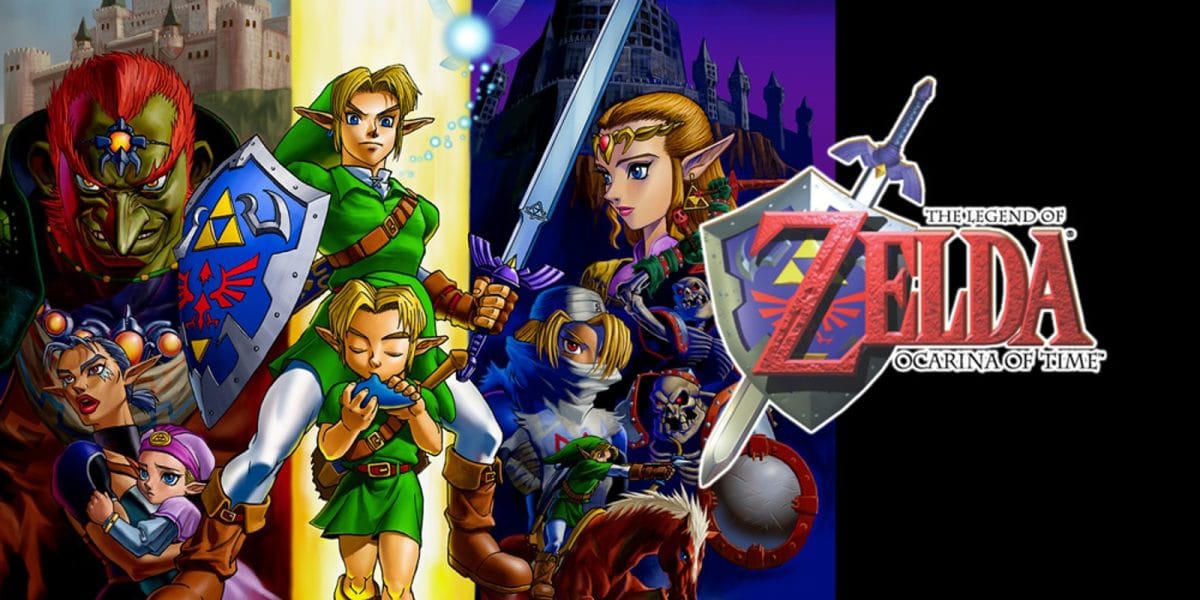
The Legend of Zelda: Ocarina of Time, Image credit: Nintendo
The Legacy of the 32-Bit Era
The 32-bit era (1995-2005) revolutionised gaming in ways no one could have imagined at the time. It wasn’t just about better hardware or more advanced graphics; it was about how gaming became a mainstream, culturally significant medium.
This was the era when gaming went from being a niche hobby to an art form capable of exploring deep and complex themes. The transition to 3D graphics, the introduction of cinematic storytelling, and the evolution of game design set the stage for everything that would come after.
The success of Sony’s PlayStation, Nintendo’s innovative control schemes, and Sega’s bold forays into online gaming all played a critical role in this evolution.
More importantly, this era established gaming as a legitimate form of cultural expression, capable of engaging players on emotional, intellectual, and artistic levels.
As Yu Suzuki reflected on the time, “We didn’t just add a dimension to gaming, we added a dimension to human experience. In learning to navigate virtual three-dimensional space, players developed new forms of spatial intelligence, new ways of understanding reality itself.”
The 32-bit era was, indeed, the birth of a new dimension in entertainment.