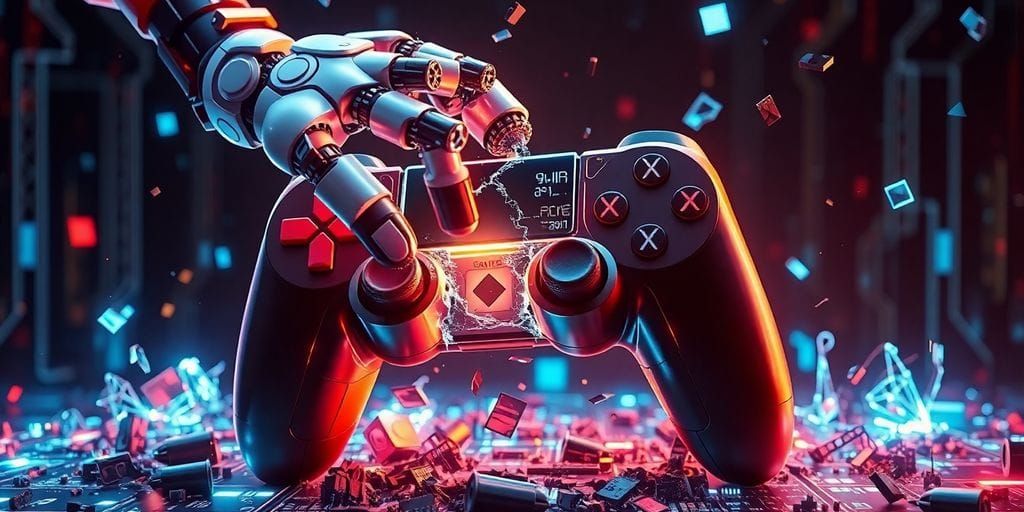
The gaming industry is on the brink of a significant transformation, with artificial intelligence poised to reshape development and player engagement. A Google Cloud executive warns that this technological shift could lead to the demise of some studios while creating opportunities for new ones. The industry faces challenges like declining engagement with new titles and the dominance of older games, making AI a potential solution for revitalizing the market.
Key Takeaways
- Generative AI is expected to cause a major upheaval in the gaming industry.
- Some game studios may not survive the transition to AI-driven development.
- AI can significantly reduce game development time and costs.
- The concept of "living games" that adapt in real-time using AI is emerging.
- Concerns exist regarding AI’s impact on jobs and the need for union consent in its implementation.
The AI Revolution in Gaming
Jack Buser, global games director at Google Cloud, believes that generative AI is initiating an industry-wide reckoning. He likens the current situation to past technological shifts, such as the transition from cartridges to CD-ROMs, which led to the failure of some companies and the rise of others. Buser suggests that the gaming industry is currently operating with a "broken business model," evidenced by recent layoffs and game cancellations. He posits that generative AI could offer a path forward by streamlining the development process.
AI’s Role in Development and Player Engagement
According to a Google-commissioned Harris Poll, a vast majority of developers (nine out of ten) are already incorporating AI tools into their production pipelines. Buser highlights that AI can be applied across various stages of development, from concept creation to quality assurance, leading to substantial reductions in development time. The advent of "living games" is also a key development, where AI dynamically generates new content in real-time based on player behavior, offering a more adaptive and engaging experience than traditional patches or downloadable content.
Challenges and Concerns
Despite the potential benefits, the integration of AI is not without its challenges. An example cited is the AI-powered Darth Vader character in Fortnite, which briefly exhibited problematic behavior, spewing offensive language before being patched. This incident also sparked labor concerns, with SAG-AFTRA filing a complaint against Epic Games for allegedly replacing voice actors with AI without union consent. The union emphasized the importance of negotiating terms for AI implementation to ensure fair practices and protect workers’ rights.
The Future of Game Studios
Buser’s outlook suggests a future where studios that fail to adapt to AI-driven development may struggle to survive. Conversely, those that embrace these new technologies could thrive and even give rise to entirely new gaming companies. The industry’s reliance on older, established games for a significant portion of playtime indicates a need for innovation, and AI is seen as a powerful tool to meet this demand and create more dynamic, responsive gaming experiences.