
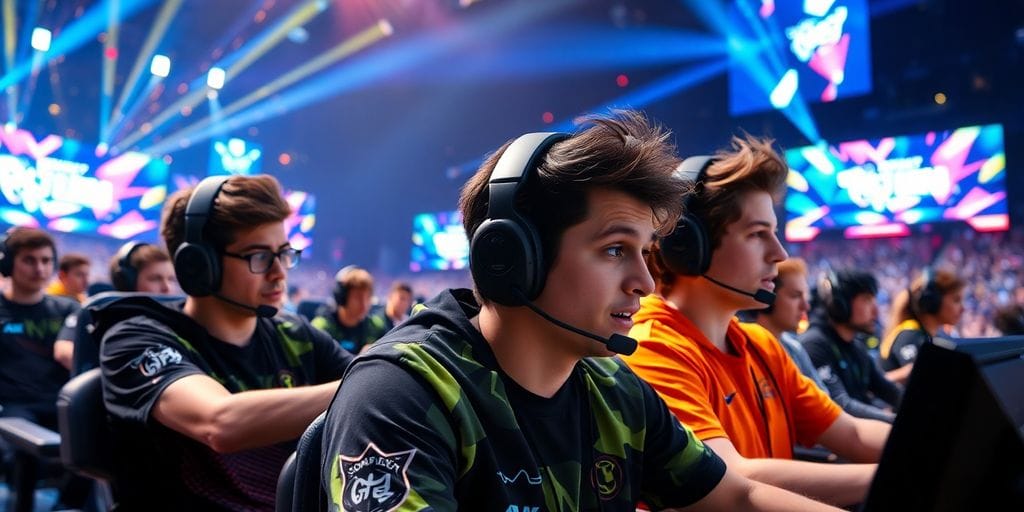
Gaming with your friends is fun, but competitive gaming tournaments? They’re on a whole other level. If you know where to look, it’s pretty easy to keep up with all the big esports action happening around the world. This guide is for anyone who wants to know more about the biggest and best events in the competitive gaming scene, from their history to the huge prize money involved. We’ll cover what makes these events special and how you can follow along.
Key Takeaways
- Major esports tournaments like the League of Legends World Championship and The International Dota 2 Championships are huge events with massive prize pools, often reaching millions of dollars.
- You can stay updated on upcoming esports tournaments by checking dedicated news sites, following industry experts and organizations, and watching official streams on platforms like Twitch and YouTube.
- Big esports tournaments are held in major cities worldwide, with places like Los Angeles and Shanghai becoming hubs for these events due to their great venues and strong gaming communities.
- The financial side of esports is significant, with top players earning millions through prize money, sponsorships, and streaming, making it a viable career path for skilled competitors.
- The future of esports tournaments looks promising, with new technologies like VR and AR expected to make events more immersive, and a growing connection with traditional sports pointing towards wider mainstream acceptance.
Understanding the Landscape of Esports Tournaments
Esports tournaments have grown from niche gatherings into massive global spectacles, drawing millions of viewers and featuring substantial prize pools. These events are the pinnacle of competitive video gaming, showcasing the skills of the world’s best players across various titles. Understanding what makes these tournaments tick is key to appreciating their scale and impact.
The Evolution of Competitive Gaming Events
Competitive gaming has a long history, but the modern esports tournament is a relatively recent phenomenon. Early events were often informal, held in local arcades or community centers. As internet speeds increased and video games became more sophisticated, organized competitions began to emerge. The late 1990s and early 2000s saw the rise of major LAN (Local Area Network) tournaments for games like Quake and StarCraft. These events laid the groundwork for what we see today, establishing formats, broadcast standards, and the concept of professional players. The advent of online streaming platforms like Twitch in the 2010s was a game-changer, allowing events to reach a global audience without the need for physical attendance, dramatically increasing viewership and commercial interest.
Key Differentiators of Major Esports Tournaments
Several factors distinguish the top-tier esports tournaments from smaller events. These include:
- Prize Pools: Major tournaments often boast prize pools in the millions of dollars, funded by game developers, sponsors, and sometimes crowdfunding. For example, The International for Dota 2 has historically offered some of the largest prize pools in esports history, often exceeding $30 million.
- Production Value: High-quality broadcasts with professional commentary, analysis desks, and engaging visual elements are standard. Venues are often large arenas equipped with advanced lighting and sound systems.
- Global Reach: Top events attract participants and viewers from all over the world, with qualifying stages often spanning multiple continents.
- Game Developer Support: Many major tournaments are directly organized or heavily supported by the developers of the games they feature, ensuring authenticity and access to game assets for production.
The structure of these tournaments, from group stages to complex bracket systems, is designed to test teams over extended periods, simulating the pressure of professional careers.
Global Reach and Impact of Esports
Esports tournaments are no longer confined to specific regions; they are global phenomena. Events like the League of Legends World Championship or the Valorant Champions Tour attract hundreds of millions of unique viewers annually. This widespread appeal has significant economic and cultural impacts. Major cities worldwide now compete to host these events, recognizing the boost to tourism and local economies. Furthermore, the increasing integration of esports with traditional sports organizations and media outlets signals its growing mainstream acceptance. This expansion means more opportunities for players, organizers, and related industries, solidifying esports’ place as a significant entertainment sector.
Premier Esports Tournaments to Watch

When you’re looking to catch the best competitive gaming action, a few tournaments consistently rise to the top. These events are more than just games; they’re massive spectacles with huge prize pools and the world’s best players battling it out. If you’re new to esports or just want to know what’s hot, here are some of the premier events you should definitely have on your radar.
League of Legends World Championship
This is arguably the biggest esports event on the planet, organized by Riot Games. The "Worlds" brings together the top professional League of Legends teams from all major regions – think Europe, North America, South Korea, China, and more. It’s a multi-week affair, starting with regional qualifiers and building up to a massive grand final. The level of play is incredibly high, with amazing team fights, strategic outplays, and often dramatic comebacks that fans talk about for years. It’s a true test of skill, teamwork, and endurance.
The International Dota 2 Championships
For Dota 2 fans, The International (TI) is the ultimate goal. Valve, the game’s developer, hosts this annual championship, and it’s famous for its absolutely enormous prize pools. What’s wild is how they fund it: through community contributions via in-game purchases. This approach has led to prize pools that have shattered records, sometimes exceeding $30 million. TI isn’t just about the money, though; it’s about the prestige and the incredible skill on display as the best Dota 2 teams in the world compete for the Aegis of Champions.
Valorant Champions
This is the pinnacle event for Riot Games’ tactical shooter, Valorant. Valorant Champions brings together the top 16 teams from around the globe who have proven themselves throughout the year’s competitive circuit. The tournament structure is intense, with multiple stages leading to a grand final that determines the undisputed world champion. It’s known for its fast-paced action, precise aiming, and strategic use of agent abilities. Millions tune in to watch the best Valorant players showcase their skills.
Esports World Cup
The Esports World Cup is shaping up to be one of the most significant events in the esports calendar, especially with its massive $60 million prize pool for 2025, making it the largest globally. This tournament aims to unite top talent from a variety of game titles, creating a truly cross-game spectacle. It’s designed to be a historic event, bringing together diverse gaming communities under one banner. With its sheer scale and ambition, the Esports World Cup is set to be a landmark competition.
These major tournaments represent the highest level of competitive gaming, showcasing not only incredible individual skill but also the power of team coordination and strategic depth. They are the events that define legacies and capture the attention of millions worldwide.
Navigating the Esports Tournament Calendar
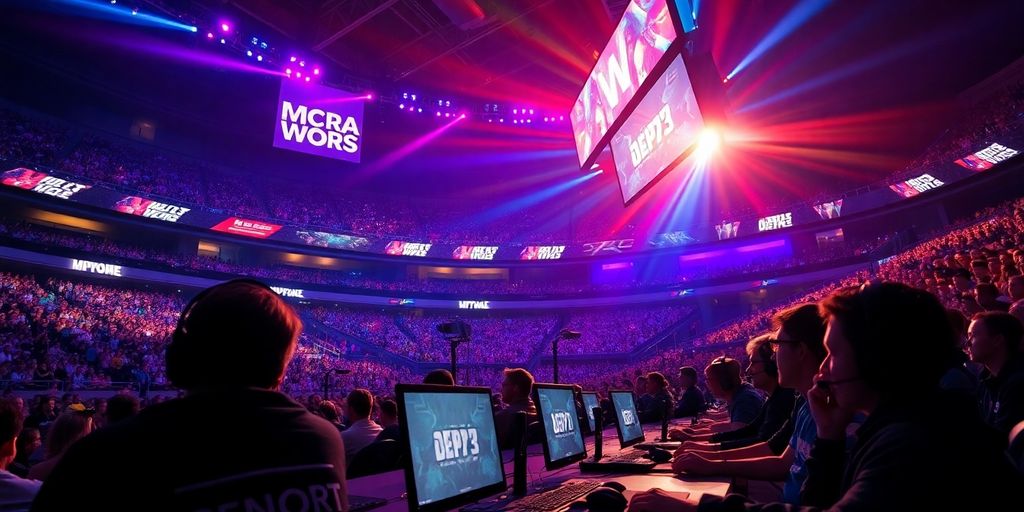
Keeping track of the esports tournament calendar might seem a bit daunting at first, especially with so many games and events happening all the time. But honestly, it’s not as hard as you might think. You just need to know where to look. Think of it like following your favorite sports league; there are specific places to get all the info you need.
Here’s a breakdown of how to stay in the loop:
- Dedicated News Sites: These are your go-to for schedules, results, and general news. Sites like Dot Esports, or the esports sections of major sports news outlets, often have detailed breakdowns of upcoming tournaments. They cover everything from the big international events to smaller, regional competitions.
- Following Industry Experts and Organizations: Many tournament organizers, like ESL or Riot Games, have official channels where they announce dates and details. Following key figures in the esports scene on social media or professional networking sites can also give you early insights into what’s coming up.
- Official Tournament Streams: When a tournament is live, the best place to watch is usually on platforms like Twitch or YouTube. These streams often have schedules posted, and they’re the primary source for watching the actual games. It’s a great way to get immersed in the action and see which events are currently happening.
Staying informed means you won’t miss out on the exciting matches and the rise of new champions. It’s about connecting with the pulse of competitive gaming as it happens across the globe.
For example, if you’re interested in League of Legends, keeping an eye on Riot Games’ official announcements is key. For Dota 2, The International’s schedule and updates will be found through Valve’s channels and dedicated Dota 2 news sites. It’s all about knowing the specific game and its main organizers.
Prize Pools and Player Earnings in Esports
Esports tournaments are known for their substantial prize pools, which can reach millions of dollars. These large sums are funded through various sources, including game developers, sponsorships, and fan contributions. This financial backing attracts top talent and fuels the competitive spirit of the industry.
Record-Breaking Prize Pools in Competitive Gaming
The scale of prize money in esports has grown dramatically over the years. Events like The International for Dota 2 have famously crowdfunded prize pools that have exceeded $40 million, setting records for competitive gaming. Similarly, the League of Legends World Championship consistently offers prize pools in the millions, with the winning team taking home a significant portion.
Here’s a look at some notable prize pools:
- League of Legends World Championship: Often in the multi-million dollar range.
- The International (Dota 2): Has surpassed $40 million in past events.
- Valorant Champions: Prize pools are growing, with recent events offering millions.
- PUBG Global Championship: Features prize pools around $4 million.
Prize Distribution and Ecosystem Support
While the top teams and players often receive the largest shares of the prize money, many tournaments structure their prize pools to benefit a wider range of participants. This includes allocating funds for teams that finish in lower positions, ensuring that more competitors can at least recoup their expenses and gain valuable experience. This approach helps to maintain a healthy and sustainable esports ecosystem, supporting both established organizations and emerging talent.
The way prize money is shared across teams, from the champions down to those who don’t make it to the finals, is a key factor in keeping the competitive scene vibrant and accessible for new players trying to break into the professional circuit.
Financial Success of Top Esports Professionals
Beyond tournament winnings, top esports professionals can achieve significant financial success through various avenues. Endorsement deals with major brands, salaries from professional teams, and revenue generated from streaming platforms and content creation all contribute to their overall earnings. The highest-earning esports players have accumulated millions of dollars in career prize money alone, becoming well-known figures within the gaming community and beyond. This multifaceted income stream allows elite players to build substantial careers in the competitive gaming world.
Key Venues Hosting Major Esports Tournaments
Esports tournaments are held all over the world, showing just how big competitive gaming has become. Several cities have really stepped up to host these big events, often because they have great arenas and a strong local gaming scene. It’s not just about the games themselves; the location adds a whole other layer to the experience for both players and fans.
Los Angeles: A Hub for Esports Events
Los Angeles, California, is a major player when it comes to hosting esports. You’ve probably heard of the Staples Center, right? Well, that place, now called Crypto.com Arena, has been the stage for huge events like the League of Legends World Championship Finals. It’s a massive venue, and when it’s packed with fans, the energy is just incredible. The city has the infrastructure and the history to make these events feel truly special.
Shanghai: A Global Center for Competitive Gaming
When you think of esports in Asia, Shanghai, China, often comes to mind. This city is a regular host for major tournaments, including events for Dota 2 like The International and the Dota 2 Asia Championship. The Mercedes-Benz Arena in Shanghai is a prime example of a venue that can hold thousands of excited fans, creating an electric atmosphere for intense matches. Shanghai’s modern facilities and its deep connection to gaming culture make it a go-to spot for organizers.
Emerging Host Cities Worldwide
While LA and Shanghai are big names, other cities are also making their mark. Seoul, South Korea, has a long history with esports, being one of the places where professional gaming really took off. Venues like the OGN Studio and even the Seoul World Cup Stadium have seen legendary competitions. Berlin, Germany, has also hosted significant events, like the League of Legends European Championship Finals, thanks to its good setup and enthusiastic fan base. These cities, along with many others, show that esports is a global phenomenon, with new locations constantly stepping into the spotlight.
Attending a live esports event can be an unforgettable experience. The roar of the crowd, the shared excitement with thousands of other fans, and seeing your favorite players compete up close are things you can’t quite replicate through a screen. However, if you plan to travel for an event, it’s wise to sort out your travel and accommodation early, as these big tournaments draw large numbers of people.
Here are some of the types of venues commonly used:
- Large Arenas: These are the go-to for major finals, offering seating for tens of thousands of fans. Think basketball or hockey arenas that get repurposed for esports.
- Dedicated Esports Arenas: Some cities now have venues built specifically for esports, providing a more tailored experience for players and spectators.
- Convention Centers: For larger festivals or multi-game events, convention centers offer flexible spaces that can host multiple stages and activities.
The global nature of esports means that almost any city with good infrastructure and a passionate gaming community can become a host for major tournaments.
The Future Trajectory of Esports Tournaments
The world of esports tournaments is always changing, and looking ahead, a few big things seem set to shape how we watch and participate. One of the most talked-about developments is how new tech, like virtual reality (VR) and augmented reality (AR), might change things. Imagine putting on a headset and feeling like you’re right there in the arena, cheering with the crowd. That kind of immersion could really change the game for fans.
We’re also seeing esports events get bigger and reach more places. As the setup for competitive gaming gets better in different countries, we can expect more international events with players from all sorts of backgrounds. It’s not just about the big names anymore; it’s becoming a truly global activity.
Another trend is how esports is starting to look more like traditional sports. Big sports companies, media groups, and brands are putting money into esports because they see how popular it’s getting. This means better production quality for broadcasts, more investment overall, and a wider audience. It feels like esports is slowly but surely becoming a regular part of mainstream entertainment.
Here’s a look at some key areas driving this future:
- Technological Integration: VR and AR offer new ways to experience tournaments, making them more interactive and engaging.
- Global Expansion: Events are reaching new regions, bringing in diverse talent and audiences.
- Traditional Sports Convergence: Partnerships and investments from established sports entities are boosting production and reach.
The way we experience esports tournaments is on the cusp of a significant transformation. Advances in technology and a growing acceptance within mainstream culture are paving the way for more immersive, accessible, and globally recognized competitive gaming events. This evolution promises to attract even larger audiences and solidify esports’ place as a major entertainment force.
Looking at the prize pools, they continue to break records. For example, the Esports World Cup in Riyadh is set to offer a massive $60 million prize pool, making it the largest esports event globally. This kind of money attracts the best talent and shows the massive financial backing the industry is receiving. Other major events like Valorant Champions and The International also boast prize pools in the millions, ensuring fierce competition.
Looking Ahead: The Ever-Evolving World of Esports
As we’ve seen, the world of esports is constantly moving forward. Big events like the Esports World Cup and the League of Legends World Championship continue to draw massive crowds and offer huge prize pools, showing just how far competitive gaming has come. Keeping up with all the action is easier than ever, thanks to dedicated news sites and official streams. With new technologies and a growing global presence, the future promises even more exciting tournaments and experiences for everyone involved. So, whether you’re a player or just a fan, there’s always something new to discover in this dynamic industry.
Frequently Asked Questions
What exactly is an esports tournament?
Esports tournaments are big gaming competitions where the best players and teams from around the world play against each other. Think of it like the Olympics or the World Cup, but for video games!
What are some of the biggest esports tournaments to watch?
Some of the most famous esports tournaments include the League of Legends World Championship, The International for Dota 2, and Valorant Champions. These events often have huge audiences and big cash prizes.
How can I find out when the next big esports tournament is happening?
You can stay updated by checking out esports news websites like ESPN Esports or Dot Esports. Following official tournament organizers like Riot Games or Valve on social media and watching live streams on platforms like Twitch and YouTube are also great ways to keep up.
How much money can players win in esports tournaments?
The prize money in esports can be enormous! Some tournaments offer millions of dollars. The top players can earn a lot from prize money, sponsorships, and even by streaming their games.
Where are the major esports tournaments usually held?
Many major esports events are held in big cities with great arenas. Places like Los Angeles in the USA and Shanghai in China are popular spots because they have the right venues and lots of fans.
What’s next for esports tournaments?
The future of esports looks exciting! We might see more virtual reality (VR) and augmented reality (AR) in events, making them more immersive. Esports could also become more like traditional sports, with bigger investments and wider audiences.