Looking for your next big quest? PC gaming, especially through Steam, has a ton of amazing role-playing games, or RPGs, that can suck you in for hours. It can be tough to pick just one, though, with so many worlds to explore and stories to uncover. We’ve put together a list of some of the best steam rpg games out there to help you find your next adventure.
Key Takeaways
- Elden Ring offers a massive open world with challenging combat and a deep fantasy setting.
- Kingdom Come: Deliverance provides a realistic medieval experience with a focus on historical accuracy.
- Gothic 2 is praised for its detailed world design and challenging early-game progression.
- Mount & Blade: Warband combines sandbox exploration with large-scale medieval combat and empire building.
- Divine Divinity is an ambitious action RPG with a vast world, freedom of choice, and a unique tone.
1. Elden Ring
FromSoftware took their well-known Souls formula and expanded it into a massive open world with Elden Ring. Released in 2022, this game offers a huge map filled with dangers and secrets to uncover. It’s a grand journey where exploring the environment often leads to challenging boss fights. Compared to its predecessors, Elden Ring is considered more approachable due to its open-world design, giving players more control over the difficulty and how they progress.
Like other games from the studio, Elden Ring is about learning from mistakes and eventually mastering its tough combat. Even though it uses a more traditional fantasy setting, the game still has that unique and sometimes strange feel FromSoftware is known for. As an RPG, it provides a lot of options for building your character, letting you customize your playstyle and combat approach in many ways.
Here are some key aspects of Elden Ring:
- Vast Open World: The Lands Between is enormous, encouraging exploration and rewarding players with discoveries.
- Challenging Combat: Expect difficult boss encounters that require learning patterns and precise timing.
- Deep Character Customization: Numerous ways to build your character, from weapons and armor to magic and skills.
- Exploration Focus: The open-world structure makes exploration a central part of the experience, unlike more linear Souls games.
The game’s large scale means there’s always something new to find, whether it’s a hidden cave, a powerful item, or a formidable enemy. While some areas might feel a bit repetitive, the handcrafted dungeons and unique boss encounters make the journey worthwhile for many players.
Since its release, Elden Ring has also received significant updates, including the "Shadow of the Erdtree" expansion, which added even more content and was highly praised.
2. Kingdom Come: Deliverance
Stepping into 15th-century Bohemia, Kingdom Come: Deliverance offers a unique take on the RPG genre by focusing on historical accuracy and grounded realism. Forget magic spells and dragons; here, your journey is about survival, skill development, and navigating the complex social and political landscape of medieval Europe. You start as Henry, a blacksmith’s son caught in the middle of a civil war, and your path is one of humble beginnings to potential renown.
The game demands patience and a willingness to learn its intricate systems. From mastering a deep, directional combat system that requires timing and stamina management, to learning how to read, hunt, or even pick locks, the game doesn’t hold your hand. This commitment to realism means that early on, Henry is a clumsy, uneducated peasant who can barely swing a sword. Your progression is tied to practical experience – the more you practice reading, the better you become at it.
Here’s a look at some of the core mechanics you’ll engage with:
- Combat: A challenging system based on directional attacks, parries, and stamina. Mastering footwork and feints is key to overcoming opponents.
- Skills: A wide array of skills, from alchemy and archery to speech and stealth, all improve through use.
- Survival: You’ll need to eat, sleep, and manage your gear. Hunger and fatigue can have real consequences.
- Reputation: Your actions and choices affect how NPCs perceive you, influencing dialogue options and quest availability.
The world of Kingdom Come: Deliverance is meticulously crafted, with a strong emphasis on historical detail. This dedication extends to everything from the architecture and clothing to the social customs and even the language spoken. It creates an immersive experience that truly transports you to another time.
While the game’s commitment to realism can be a steep learning curve, for those who appreciate a deep, simulation-heavy RPG with a compelling historical setting, Kingdom Come: Deliverance provides an incredibly rewarding adventure. It’s a game that respects your intelligence and rewards your dedication to mastering its world.
3. Gothic 2
Gothic 2 is a game that really sticks with you, even years after you first play it. It’s a big, open-world RPG that came out back in 2002, and honestly, it still holds up incredibly well. Unlike a lot of games that hold your hand, Gothic 2 expects you to figure things out on your own. You’re dropped into a world that feels alive, but also pretty dangerous. Don’t expect to be a hero right away; you’ll start weak and have to work your way up.
The world of Gothic 2 is dense with things to do and places to explore. Every corner feels like it has a purpose, whether it’s a hidden cave, a challenging enemy, or a quest giver with a story to tell. The game doesn’t use level scaling, meaning enemies stay the same strength, so you really feel your character’s progression as you get stronger and can take on tougher foes. This makes overcoming obstacles feel genuinely rewarding.
Here’s a look at some of the core elements:
- Exploration: The map is large and packed with detail. Wandering off the beaten path is often rewarded with unique encounters or useful items.
- Combat: It’s challenging and requires timing and skill. You’ll need to learn enemy patterns to survive.
- Quests: Many quests have multiple solutions, and your choices can have consequences.
- Atmosphere: The game creates a strong sense of place, with a gritty and realistic medieval setting.
The game doesn’t shy away from difficulty. You will die, especially early on. But this challenge is part of what makes the game so satisfying when you finally succeed. It’s a world that feels earned.
If you’re looking for an RPG that respects your intelligence and offers a truly immersive experience, Gothic 2 is definitely worth your time. It’s a classic for a reason, and its sequel, The Chronicles of Myrtana: Archolos, is a fantastic fan-made addition that builds upon its legacy.
4. Mount & Blade: Warband
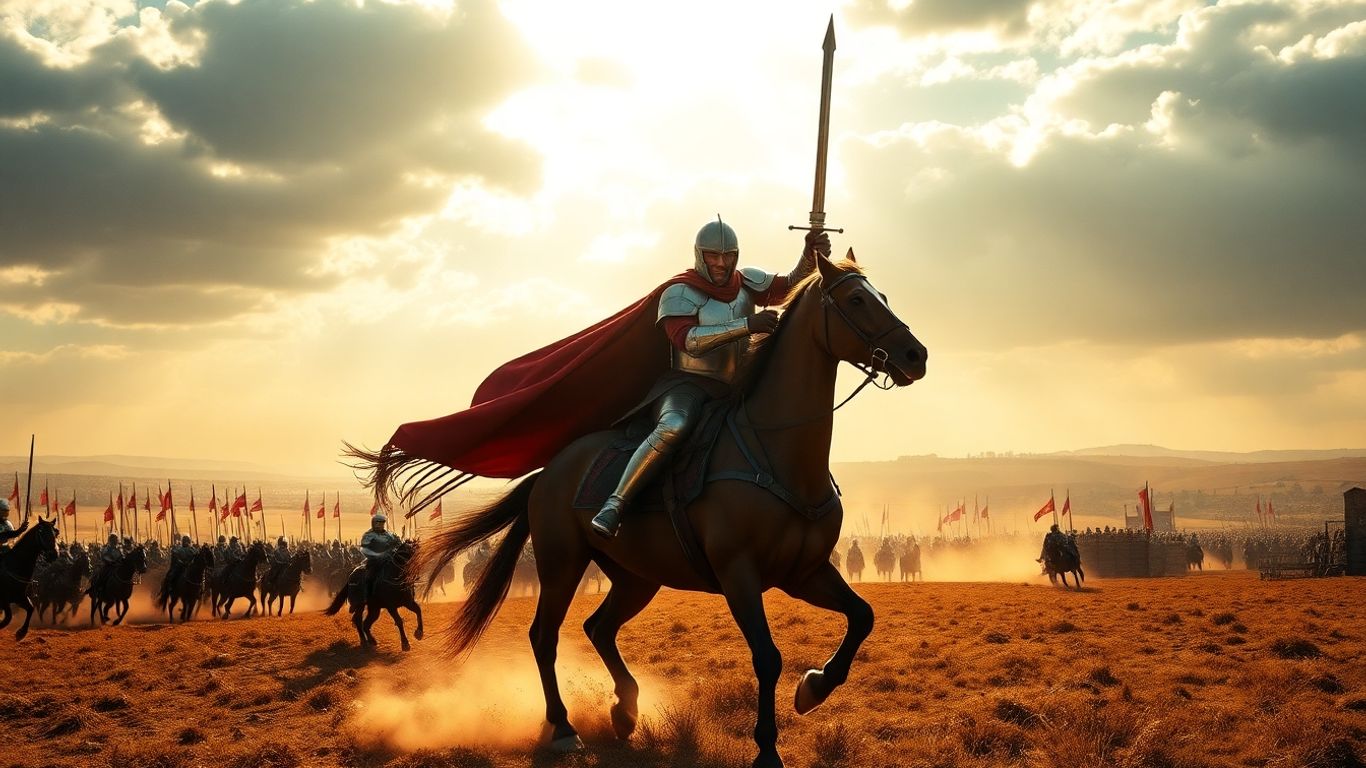
Mount & Blade: Warband is a game that really lets you forge your own path in a medieval sandbox. You start as a nobody, maybe a simple traveler or a mercenary, and from there, the world is pretty much yours to shape. The real magic happens when you start building your own army and leading it into massive battles.
This isn’t a game with a strict story you have to follow. Instead, you’re given a vast world, Calradia, and a lot of freedom. You can become a trader, a mercenary captain, a vassal to a king, or even try to conquer the land and become a king yourself. The game really shines in its open-ended nature and the sheer scale of its combat.
Here’s a bit of what you can expect:
- Army Building: Recruit soldiers from villages and towns, train them up, and manage their morale. You’ll need a strong force to take on bandits, rival lords, and even entire armies.
- Combat: The battles are where Warband truly stands out. You’re not just watching from above; you’re right there in the thick of it, sword in hand. The directional combat system means you control the swing of your weapon, making each fight feel personal and impactful. Mounted combat is also a blast.
- Kingdom Management: If you rise through the ranks, you’ll get to manage castles and towns, deal with diplomacy, and make decisions that affect your territory and your relationships with other lords.
- Modding: The game has a huge modding community, which means you can find anything from total conversions that change the setting to Lord of the Rings or Star Wars, to smaller mods that add new items or improve gameplay.
It can feel a bit rough around the edges, and the graphics aren’t cutting-edge, but the depth of gameplay and the freedom it offers are hard to beat. It’s the kind of game where you can easily lose hundreds of hours just seeing what you can achieve.
Mount & Blade: Warband doesn’t hold your hand. You’ll learn by doing, and sometimes that means suffering a few defeats. But each victory, whether it’s winning a tough skirmish or capturing a castle, feels earned. It’s a game that rewards patience and strategic thinking.
5. Divine Divinity
Divine Divinity, released in 2002, is an action RPG that often gets compared to Diablo, but it really offers much more. Think of it as a game that aims for the depth of something like Ultima VII, but with a more accessible, action-oriented combat system. You get a really big world to explore, and it’s all connected without those annoying loading screens between areas. There’s a ton of stuff to do, with quests that can have different results depending on your choices, and you can interact with almost everything you see – from weapons and armor to simple things like spoons and beds.
The game doesn’t take itself too seriously, which is a nice change of pace. It has some genuinely funny moments and characters, breaking away from the usual grim fantasy settings. The combat feels solid, and the lack of strict classes means you can really build your character however you want. You’re not locked into a specific path; you can mix and match skills and abilities to create a unique playstyle.
While the ending might feel a bit rushed and there are some balance issues that pop up, the overall experience is still very rewarding. It feels like a game made with a lot of care, where the developers really put in the hours to create a world that feels alive.
Here’s a look at some of its key features:
- Vast, Seamless World: Explore a large map without constant loading screens.
- Deep Interaction: Interact with thousands of objects in the environment.
- Flexible Character Progression: A classless system allows for diverse character builds.
- Engaging Quests: Many quests offer multiple solutions and outcomes.
- Humorous Tone: Features witty writing and memorable characters.
6. Underrail
Underrail is an indie RPG that really leans into its retro inspirations, but it manages to feel fresh. Think Fallout, but set in a post-apocalyptic subway system. It’s a game that doesn’t hold your hand, which is part of its charm. You’ll spend a lot of time exploring these cramped, dangerous tunnels, piecing together what happened to the world.
The game really shines in its quest design. You’ll run into some truly unique situations, like dealing with doppelgangers or escaping a base that’s slowly filling with a dangerous mutagen. Even the more standard quests feel well-written and often have a dark sense of humor. If combat isn’t your main focus, there’s even a system where you get experience points for finding hidden items, which is a nice touch.
When it comes to character building, Underrail offers a lot of variety. You can build a heavily armored warrior, a precise sniper, or a sneaky character who relies on traps and stealth. There are also psi abilities, which are basically magic, with different schools to choose from. This tactical depth means you can really tailor your character to your playstyle.
The world design is intricate, with a strong emphasis on exploration and discovery. You won’t find a quest marker telling you exactly where to go; instead, you’ll rely on your wits and the environment to find your way.
Here’s a look at some of the character build possibilities:
- Melee Specialist: Focuses on close-quarters combat, often with heavy armor and powerful melee weapons.
- Ranged Combatant: Excels with firearms or crossbows, keeping enemies at a distance.
- Psi User: Wields psionic abilities for offensive or defensive purposes.
- Stealth Operative: Utilizes stealth, traps, and sometimes silenced weapons to take down enemies unseen.
7. Ultima Underworld: The Stygian Abyss
Released in 1992, Ultima Underworld: The Stygian Abyss was a groundbreaking title that really pushed the boundaries for RPGs. It was one of the first games to offer a true first-person 3D perspective in an RPG, and it did so with a level of immersion that was pretty rare for its time. You play as the Avatar, banished to the Stygian Abyss to rescue a kidnapped princess. The game is set entirely within a massive dungeon, but don’t let that fool you; these levels are huge and packed with secrets.
What really sets Ultima Underworld apart is its simulation aspects. You’re not just fighting monsters; you have to manage your character’s basic needs like hunger and sleep. You’ll need to find food, perhaps by fishing, and keep your gear in good repair. This adds a layer of realism that makes surviving the Abyss feel like a genuine challenge.
The game’s design encourages careful exploration. Actions have consequences, and the environment itself often feels like the main antagonist. You’ll need to be resourceful and pay attention to your surroundings to make it through.
While the game only has eight levels, each one is expansive and filled with puzzles, hidden areas, and various inhabitants, both friendly and hostile. The non-linear structure means you can approach challenges in your own way, but be prepared – the enemies here are tough, especially if your equipment isn’t up to par. It’s a game that rewards patience and smart thinking, making it a standout experience even today.
8. ATOM RPG
If you’ve ever found yourself wishing for a Fallout experience set in the desolate landscapes of post-apocalyptic Russia, then ATOM RPG might just be the game you’re looking for. Developed by ATOMTeam and released in 2018, this indie title wears its influences proudly, capturing the spirit of early Fallout games while carving out its own identity.
ATOM RPG drops you into a world ravaged by nuclear war, where survival is a daily struggle. The game does a solid job of recreating that familiar post-apocalyptic atmosphere, complete with harsh environments, dangerous creatures, and morally ambiguous characters. You’ll explore ruined cities, abandoned bunkers, and irradiated wastelands, all while trying to piece together your own story and make your mark on this broken world.
The game really shines in its commitment to its setting, offering a distinct Eastern European flavor that sets it apart from its Western counterparts. This translates into its writing style, which can be quite gritty and unsanitized, opening up unique roleplaying opportunities that might be shied away from in other titles. You’ll encounter a variety of factions and individuals, each with their own motivations and secrets, and your choices will have a tangible impact on the world around you.
When it comes to gameplay, ATOM RPG offers a turn-based combat system that fans of classic RPGs will find familiar. You’ll manage your character’s stats, skills, and equipment, making strategic decisions in every encounter. The game also features a deep crafting system, allowing you to create useful items and equipment from salvaged materials.
Here’s a look at some of the core gameplay elements:
- Exploration: Traverse a vast, post-apocalyptic world filled with hidden locations and dangers.
- Combat: Engage in tactical, turn-based battles where positioning and resource management are key.
- Quests: Undertake a variety of missions, from simple fetch quests to complex storylines with branching outcomes.
- Character Progression: Develop your character by allocating points to various skills and attributes.
While ATOM RPG might not possess the same philosophical depth as some of its inspirations, it successfully blends nostalgia with a fresh perspective. The post-Soviet setting provides a unique backdrop that rekindles the sense of discovery found in the earliest Fallout titles, making it a compelling experience for fans of the genre.
9. Dragon’s Dogma
Dragon’s Dogma is an action RPG that really leans into its combat system. Developed by Capcom, it offers a unique blend of fast-paced fighting and strategic depth, drawing inspiration from titles like Devil May Cry and Monster Hunter. The standout feature is its ability to let players climb onto massive monsters to attack weak points, which creates some truly memorable and intense encounters. You’re not just standing and trading blows; you’re actively engaging with the environment and the creature’s anatomy.
The game also provides a good amount of character customization through its class system. You can choose from various vocations, each with its own set of skills and playstyles, allowing for different approaches to combat. Whether you prefer getting up close with a sword, raining arrows from afar, or casting powerful spells, there’s a build for you.
Here’s a look at some of the core vocations:
- Fighter: Focuses on melee combat, excelling with swords and shields.
- Strider: A nimble class that uses bows and daggers, good for quick attacks and mobility.
- Mage: Specializes in offensive and defensive magic, capable of dealing area damage or buffing allies.
- Warrior: A heavy melee class that wields great swords and hammers, focusing on raw power.
Beyond the combat, Dragon’s Dogma features a large, open world filled with monsters to fight and secrets to uncover. The world structure is non-scaled, meaning you can explore areas with different threat levels at your own pace. This exploration aspect is a big part of the RPG experience, as you chart the map and discover what lies beyond the fog of war.
While the game’s main story might not be its strongest point, the sheer joy of its combat mechanics and the thrill of taking down colossal beasts make it a worthwhile adventure for action RPG fans.
10. Albion
Released in 1995 by Blue Byte, Albion stands out as a unique blend of science fiction and fantasy. You play as Tom Driscoll, a pilot whose ship crashes on the planet Albion. What’s supposed to be a barren world quickly reveals itself to be teeming with alien life, diverse landscapes, and hidden secrets. The game mixes elements of story-driven JRPGs with the open-ended exploration often found in Western RPGs.
Albion offers a rich narrative with well-written dialogue and characters who have their own backstories that tie into the main plot. Exploration is a key component, with hundreds of interactive objects and items to discover. The game also features quests that can have multiple solutions, adding replayability. While character development might not be as deep as in some other RPGs, the imaginative setting and adventure aspects compensate for this.
The game’s visual presentation was quite impressive for its time, featuring beautiful 2D graphics and a memorable soundtrack. The combat is turn-based and can be challenging, requiring careful planning. You manage a party of up to five characters, each with their own inventory, making resource management important. Decisions about what to carry and what to sell are influenced by your characters’ strength.
Albion creates a believable alien world, offering an involving character development system, rewarding exploration, and many things to discover and skills and spells to learn. The end result is a beautiful, interesting, and unique RPG.
Interacting with the various alien races is a significant part of the gameplay, with extensive dialogue options that can reveal new quests and lore. The story itself is known for its twists and turns, keeping players engaged. You’ll also encounter puzzles and riddles that add another layer to the experience. Albion is often recommended for fans of series like Ultima and Realms of Arkania.
Your Next Great Adventure Awaits
Steam offers a vast landscape of role-playing games, each promising unique experiences. From sprawling open worlds that invite endless exploration to intricate turn-based battles that test your strategic mind, there’s truly something for every player. We’ve highlighted some standout titles across various styles, but the real joy is in discovering your own favorites. So, grab your controller or keyboard, dive into the diverse world of PC RPGs, and embark on an adventure that calls to you. Happy gaming!
Frequently Asked Questions
What makes a good RPG game on Steam?
A good RPG on Steam often has a big world to explore, interesting characters, and a story that keeps you hooked. Many players also enjoy games with lots of items to find or cool skills to learn. The best ones let you make your own choices that affect the game.
Are there RPGs on Steam that aren’t fantasy-based?
Yes, absolutely! While fantasy is popular, you can find RPGs set in historical times, post-apocalyptic worlds, or even sci-fi settings. Games like Kingdom Come: Deliverance or ATOM RPG offer different kinds of adventures away from dragons and magic.
What’s the difference between action RPGs and turn-based RPGs?
Action RPGs are fast-paced, where you control your character’s movements and attacks in real-time, like in Elden Ring. Turn-based RPGs make you wait for your turn to choose actions, often involving strategy and planning, like in older Fallout games or some indie titles.
How important are graphics in modern RPGs?
While stunning graphics can make a game look amazing, they aren’t always the most important thing. Many players value fun gameplay, a good story, and engaging characters more. Some older or indie RPGs have simpler graphics but are still incredibly popular because they are so well-made.
Can I play older RPGs on modern computers?
Often, yes! Many classic RPGs are available on Steam, and sometimes they’ve been updated or remastered to work better on new systems. Even if they haven’t, there are often ways to get them running, though it might take a little effort.
What makes a game like Mount & Blade: Warband unique?
Mount & Blade: Warband is special because it mixes fighting, managing your own army, and building your own kingdom. You can start as a nobody and become a powerful ruler, fighting in huge battles where you command your troops directly.