The NYT’s Letter Boxed seems simple until you’re trapped. That deceptively easy square hides a brutal linguistic challenge that stumps even word-game pros. Here are the 3 strategic secrets to consistently solving it in just two words.
Have you ever tried solving a puzzle that looks deceptively easy at first glance but soon makes you realise it’s much trickier than you thought? That’s the feeling many people experience when they play Letter Boxed, the New York Times’ word puzzle game that seems simple but quickly challenges even the sharpest minds.
What looks like a fun, quick word game can quickly become a maze of letters and missed connections.
The Basics of Letter Boxed
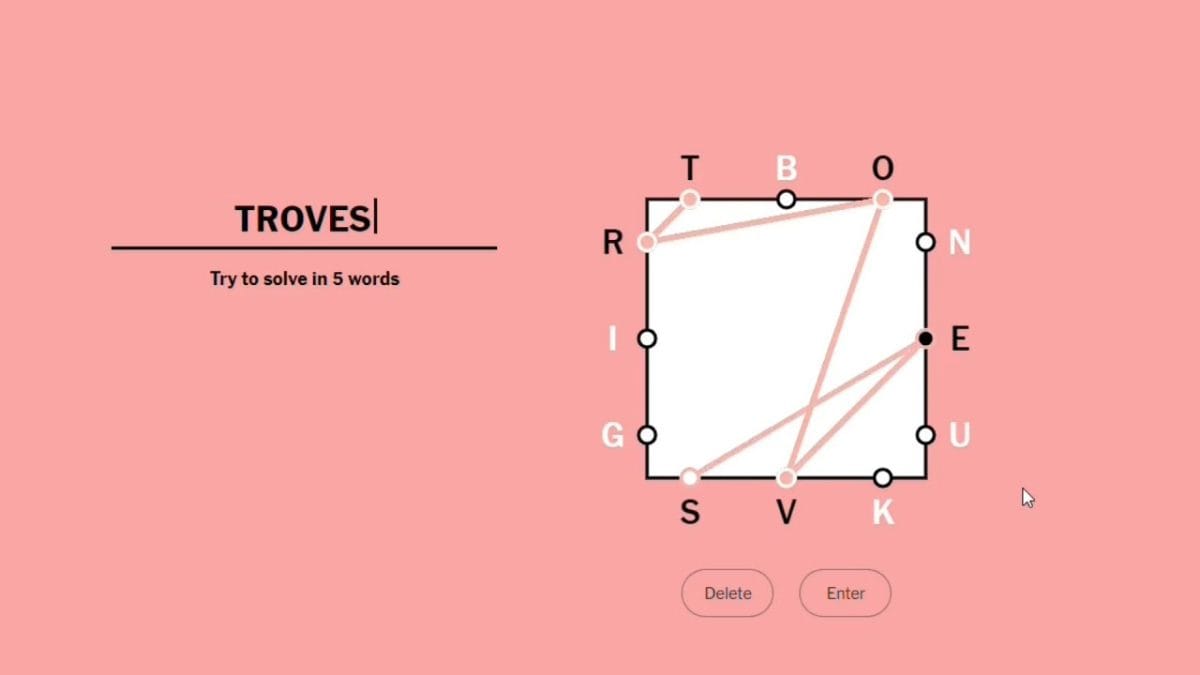
Before we dive into why Letter Boxed is challenging, let’s quickly go over the basics of the game. In Letter Boxed, you are given a square grid with a letter on each side of the box. The objective is to connect the letters around the edges to form words. Once a word is formed, the last letter must connect to the next word, and so on until all letters have been used up. The game requires you to think strategically, forming words in a way that not only makes sense but also helps you finish the puzzle as quickly as possible.
At first, you may think this is straightforward. After all, it’s just a bunch of letters, and how hard could it be to form a word or two? However, as the game progresses, it quickly becomes clear that there’s more to this puzzle than meets the eye.
The “Not So Obvious” Constraints
One of the main reasons Letter Boxed is tougher than it appears is the restrictions placed on word formation. Unlike some word games where you can pick and choose any letters from anywhere, Letter Boxed forces you to work within a set of challenging rules. Here are some of the major constraints:
- Consecutive Letters Must Not Be From the Same Side: In Letter Boxed, you can’t form a word by using consecutive letters from the same side of the box. This means if you start a word with a letter on one side, you can’t continue that word with another letter from the same side. This restriction forces you to think outside the box (pun intended!) and get creative with your word choices.
- No Proper Nouns: Proper nouns—names of people, places, or things—cannot be used in the game. While this may seem like a given, it’s easy to start forming a word and then realise you’ve made a mistake by trying to use a name. This limitation forces you to stick to more general vocabulary, which can make solving the puzzle a bit trickier.
- Using All Letters: The ultimate challenge of Letter Boxed is to use every letter in the grid while forming valid words. The aim is to solve the puzzle in as few words as possible—preferably two. This requires not only a good vocabulary but also a strategic approach to word placement.
Thinking Ahead is Key
One of the common mistakes players make is focusing too much on the current word and not enough on the bigger picture. A common strategy for those looking to solve Letter Boxed quickly is to think ahead. Every time you form a word, consider which letters you’re leaving behind and how you can use them in the next word. This forward-thinking approach allows you to set up the next word while working on the current one, maximising the available letters and reducing the chances of getting stuck later on.
Many players make the error of using all the easy-to-find words first, leaving the more challenging ones until the end. However, doing this too early can box you in—pun intended—by using up too many important vowels or consonants. For example, using all the vowels early might leave you struggling to make sense of a complex consonant cluster later on.
The Challenge of Rare Letters
One of the most difficult aspects of Letter Boxed is dealing with the rare letters. While most puzzles feature a good mix of common vowels and consonants, there’s always the chance you’ll encounter a letter that doesn’t seem to fit in with the others. Letters like “Q,” “Z,” and “K” can be particularly tricky, as they don’t easily combine with many other letters to form valid words.
A good strategy when you encounter rare letters is to tackle them early. Don’t let the “Q” or “Z” sit there unused while you work on simpler words. These oddball letters may be harder to fit into words, but once they’re out of the way, the remaining puzzle becomes significantly easier to solve. In fact, some players even suggest using online tools to look up rare words when you get stuck, but that’s a personal choice that some might see as cheating. Either way, getting these awkward letters out of the way can make a significant difference in your puzzle-solving speed.
The Art of Prefixes and Suffixes
An often-overlooked strategy for solving Letter Boxed puzzles is to pay attention to prefixes and suffixes. English is full of prefixes (like “un-,” “re-,” and “pre-”) and suffixes (like “-ed,” “-ing,” and “-ly”) that can easily help you form new words from the letters available.
When faced with a tough puzzle, look for opportunities to add a prefix or suffix to a word. For example, if you see a word starting with “-ing” or ending with “-ed,” you can use that to expand the word and make it fit better with the remaining letters. This technique not only opens up more possibilities but also gives you the flexibility to work with shorter words and build up to longer ones.
Recognising Patterns
One of the hidden complexities of Letter Boxed is recognising patterns. The puzzle isn’t just about word formation; it’s about pattern recognition. Over time, players begin to see familiar letter combinations, common prefixes, and even potential word endings. These patterns help players form words faster and more efficiently, reducing the amount of trial and error required.
For example, if you notice a combination of letters like “ST” or “TH,” you can almost immediately start thinking of potential words that might form with those letters. Once you begin to recognise these patterns, the game becomes less about randomly connecting letters and more about strategically working with what you’ve already seen before.
The Goal of the Two-Word Solve
The holy grail of Letter Boxed is solving the puzzle with only two words. While this may sound easy, the fact is that it’s extremely difficult to achieve. Why? Because every letter must be used, and the last letter of one word must connect to the first letter of the next. Solving the puzzle with only two words means you’ve not only used up all the letters but also cleverly connected them in a way that’s both efficient and effective.
Achieving a two-word solve requires practice, patience, and, of course, a good vocabulary. But beyond that, it requires careful planning, an understanding of letter placement, and the ability to adapt quickly when things don’t go as planned.
Conclusion
Letter Boxed may appear simple at first, but it’s much harder than it looks. Between the restrictions on letter usage, the challenge of rare letters, and the need for strategic planning, it’s a game that requires both skill and creativity.
But it’s exactly these challenges that make Letter Boxed so rewarding. When you finally manage to solve a particularly tricky puzzle, there’s a sense of accomplishment that comes with it. So, the next time you play, remember that it’s not just about finding words—it’s about using your brain to think outside the box and connecting the dots (or letters) in a way that leads to victory.
Mastering Letter Boxed isn’t just about knowing which words to form, but understanding the intricate dance of letter placement, strategy, and timing. With the right mindset and a bit of practice, you’ll soon find yourself solving puzzles faster and more efficiently.