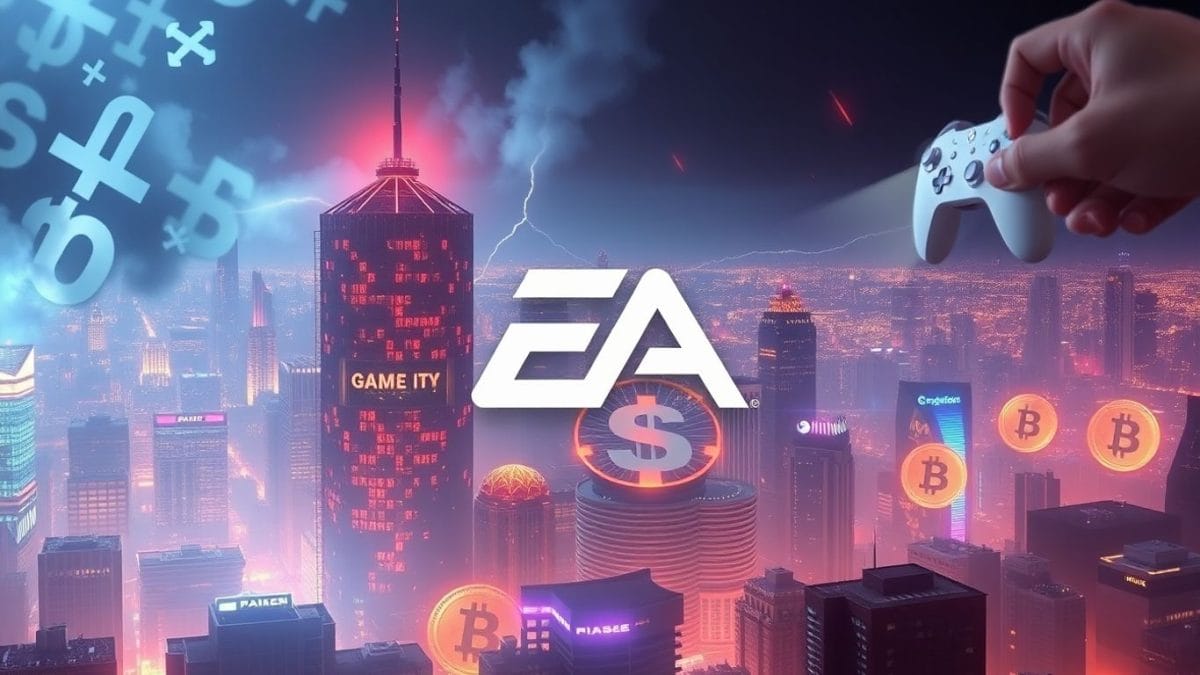
Electronic Arts (EA), the creative force behind blockbuster franchises like Battlefield, EA Sports FC, and The Sims, has been bought out in a $55 billion mega-deal led by Saudi Arabia’s Public Investment Fund (PIF), Silver Lake, and Affinity Partners. The unprecedented deal, one of the largest in industry history, is set to reshape the landscape of gaming and interactive entertainment.
Key Takeaways
- EA acquired by consortium led by PIF, Silver Lake, and Affinity Partners for $55 billion
- The deal takes EA private and loads the company with around $20 billion of debt
- EA CEO Andrew Wilson will remain in place; no immediate structural changes announced
- Industry observers are divided on whether privatization will spur creativity or prioritize profits
Why This Buyout Matters
The purchase of EA signals a turning point, not just because of its staggering size but also for its implications. Now private, EA is no longer accountable to public shareholders, which could enable more creative risks or longer development cycles free from quarterly market pressures. Still, with $20 billion in financing debt, analysts are wary of a shift toward aggressive monetization or reduced investment in new, untested properties.
Saudi Arabia, through PIF, has rapidly expanded its gaming presence, previously investing in Take-Two Interactive and Nintendo. This acquisition cements its growing influence in global entertainment and marks its most significant bet in gaming to date.
What Happens to EA’s Blockbuster Franchises?
EA’s lineup of mega-franchises—Battlefield, The Sims, EA Sports FC, and others—will remain intact under the new leadership, at least for now. CEO Andrew Wilson retains his position, and EA’s headquarters will stay in California. No layoffs or restructuring plans have surfaced, meaning fans of staple series like Madden NFL, Mass Effect, and Need for Speed can expect continuity in the short term.
However, industry analysts note that with the pressure to service massive debt, EA might lean even further into proven revenue streams. That could mean more focus on live service models, microtransactions, and esports, especially for titles like EA Sports FC and Apex Legends.
Broader Implications for the Industry
This buyout comes amid a period of slower growth for the video game sector, as consumer spending tightens. The value of a strong intellectual property portfolio has never been clearer, especially as gaming IP increasingly crosses over into television and film. Success stories, such as The Last of Us adaptation or Amazon and MGM’s upcoming The Sims movie, have led conglomerates and investors to prioritize IP-rich companies.
At the same time, history has shown that aggressive consolidation can backfire, as illustrated by other companies that overpaid for IP only to suffer from troubled launches and critical missteps. EA’s future will depend on balancing investor demands for reliable returns with the need for creative innovation—a challenge facing the entire industry.
What Gamers and Investors Should Expect
For gamers, the buyout means little immediate change to their favorite titles, but it raises questions about the direction of game development and monetization strategies. For investors and industry watchers, it’s a sign that gaming remains hot property for global investment—but not without risks attached. As the industry’s balance of creativity and commerce evolves, all eyes will be on how EA’s iconic franchises fare in this new era.
Sources
- Videogame publisher EA’s $55 billion buyout turns spotlight on gaming IP diversification, Reuters.
- Gaming giant Electronic Arts bought in unprecedented $55bn deal, BBC.
- Videogame publisher EA’s $55 billion buyout turns spotlight on gaming IP diversification (Oct. 2), Yahoo Finance.
- Inside EA’s $55B Buyout and its impact on gaming’s future, DLCompare.com.
- EA Buyout Highlights Gaming Struggles as Growth Slows, Bloomberg.com.