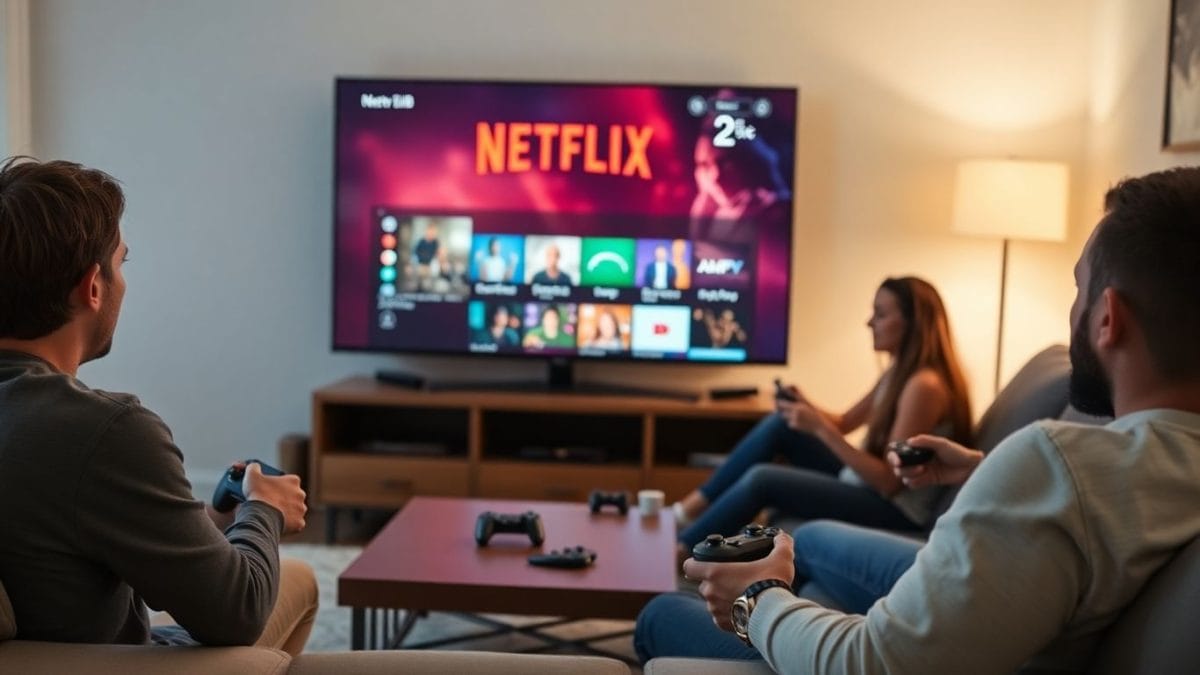
Netflix is making a decisive move to transform living rooms into social gaming hubs. Building on four years of mobile game experiments, the streaming giant is now expanding its interactive offerings to smart TVs and other major home screens, signaling a significant shift in its content strategy.
Key Takeaways
- Netflix is launching interactive party games for TV, marking its first major foray off mobile devices.
- Subscribers use their smartphones as controllers, making group play accessible and seamless.
- The initial lineup features party classics like Boggle Party, Pictionary: Game Night, Tetris Time Warp, and Lego Party (normally retailing for $40, but free for subscribers).
- Netflix sees social and interactive content as a core addition to its entertainment ecosystem, not a short-term experiment.
Netflix’s TV Gaming Strategy Unveiled
At the heart of Netflix’s expansion is the drive to make its gaming experiences more social, bringing users together around the TV — the traditional epicenter of home entertainment. The CTO, Greg Peters, announced the gaming push at an industry event, rating Netflix’s progress so far as a “B-” but promising rapid evolution.
With smartphones acting as controllers, Netflix’s approach eliminates the need for consoles or other special hardware. Users simply scan a QR code on the screen to join the game. This technical solution, combined with a growing library of party and family-friendly titles, is designed to court both casual gamers and groups seeking shared experiences in the living room.
Strategic Focus: Categories and Content
Netflix has identified four core gaming categories to guide its expansion:
- Children’s Games – Family-friendly fun for younger audiences.
- Party Games – Emphasizing local multiplayer engagement.
- Popular Mainstream Titles – Including industry hits like Grand Theft Auto.
- Netflix-Inspired Games – Leveraging original programming such as Stranger Things for unique game experiences.
All games available on the platform are free for subscribers, representing significant added value. The addition of titles typically sold at premium prices strengthens Netflix’s competitive position against traditional gaming platforms.
Technical Expansion and Cloud Investment
To ensure smooth gameplay, Netflix is bolstering its cloud infrastructure. The aim is to manage surging demand and guarantee a seamless, lag-free experience as interest in TV-based games grows.
Compatibility is designed to be broad, supporting most modern smart TVs and external streaming devices like Roku. This ensures accessibility for the bulk of Netflix’s more than 300 million global subscribers.
Looking Ahead: Netflix’s Brand Evolution
By adding gaming to its core services, Netflix signals a long-term commitment to interactive entertainment. The move extends beyond a simple add-on; it integrates games into the broader narrative of Netflix as a multimedia powerhouse. Industry insiders view this as a potential game-changer, particularly as consumer preferences shift toward immersive and community-driven experiences in the home.
References
- Watch Netflix Co-CEO Greg Peters on New Video Games Approach and Live Sports Push, Bloomberg.com.
- Netflix (NFLX) Expands Gaming to TV Platforms, Aiming for Growth, GuruFocus.
- Netflix (NFLX) Expands Gaming to TV Platforms, GuruFocus.
- Netflix brings social gaming to TVs, turning streaming screens into party playgrounds, Storyboard18.