
Before “binge-watching” was a term, a 90s anime revolution redefined television itself. From Evangelion’s psychological depth to Cowboy Bebop’s existential cool, discover how a decade of animation broke genre constraints to explore consciousness, identity, and human fragility.
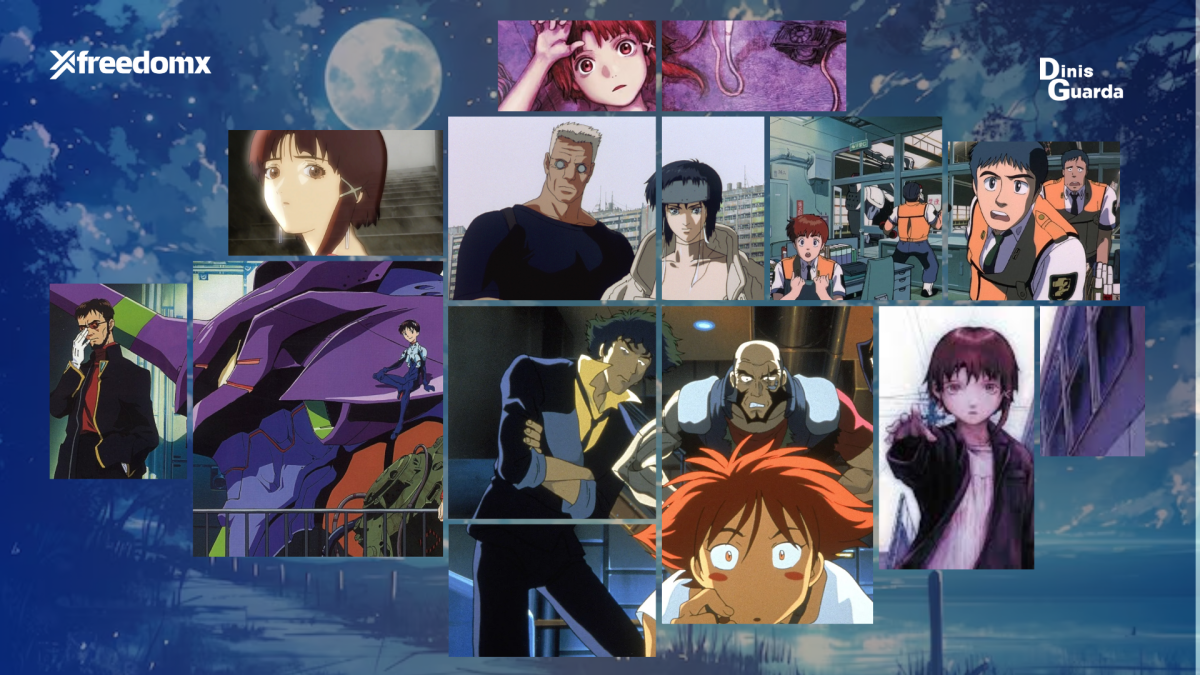
In October 1995, Japanese television audiences encountered something they had never quite seen before. It wasn’t just another robot series, nor was it the kind of brightly coloured adventure that dominated afternoon programming. It was strange, introspective, and unsettling. The show was Neon Genesis Evangelion, and within weeks, it began to unravel expectations of what anime could do and what television itself could be.
What Evangelion initiated, and what series like Cowboy Bebop, Serial Experiments Lain, and Ghost in the Shell: Stand Alone Complex would soon expand upon, was nothing short of a televisual renaissance. Between 1995 and 2005, Japanese television anime evolved from genre entertainment into a sophisticated art form, one that explored consciousness, identity, and the fragility of human connection through complex serial storytelling.
This period was not merely a technological evolution. It was a cultural awakening, a decade in which animation found a new language, capable of expressing inner turmoil as vividly as it once depicted outer spectacle.
The cultural context: Japan between worlds
The Japan of the mid-1990s was a country in transition. The great economic bubble had burst, leaving behind disillusionment and financial uncertainty. Urban life, once a symbol of unstoppable progress, had begun to feel isolating and cold. The Aum Shinrikyō sarin gas attacks of March 1995 shattered the illusion of security in modern Japan.
In this atmosphere of anxiety and reflection, creators began to turn inward. The confidence of the 1980s cyberpunk age gave way to introspection – questions about identity, purpose, and meaning in a world increasingly mediated by technology.
Television became the perfect stage for this transformation. Its serial format allowed for gradual revelation, psychological nuance, and sustained character evolution. Where the cinematic works of the late 1980s (Akira, Patlabor, Ghost in the Shell) had explored humanity’s relationship with technology through spectacle, the new wave of television anime shifted focus towards the psychological and emotional consequences of living in that technological world.
The beginning of complexity: Neon Genesis Evangelion (1995–1996)
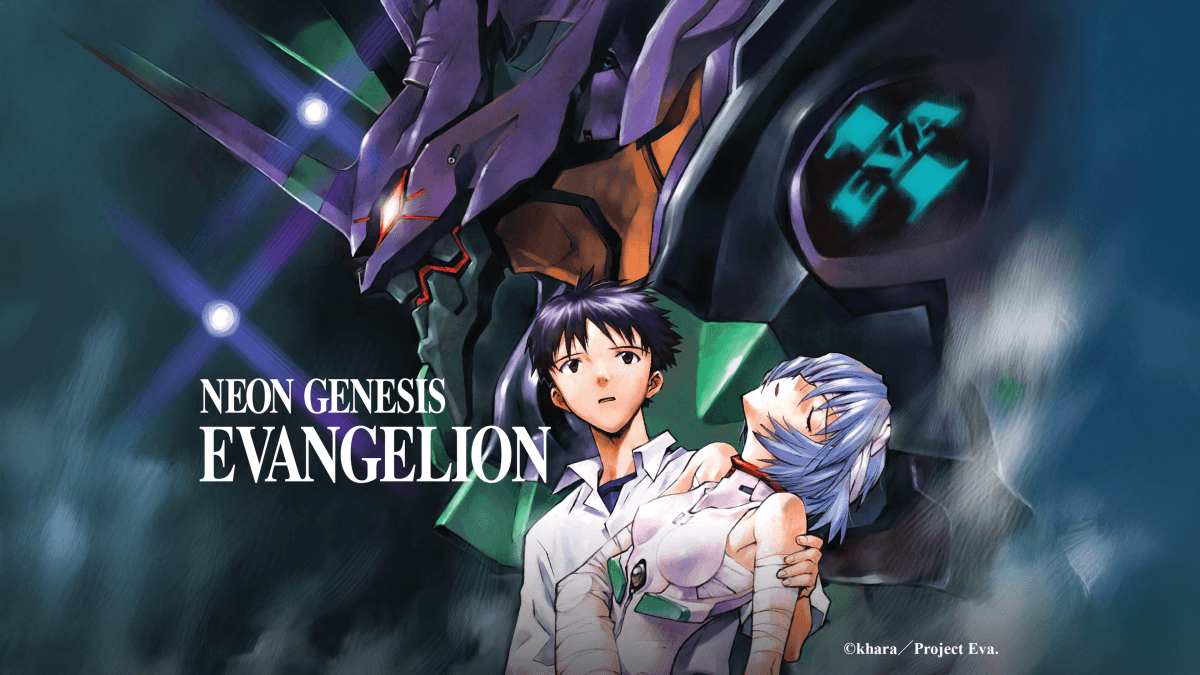
Neon Genesis Evangelion, directed by Hideaki Anno and produced by Gainax, marked a seismic moment in anime history. It began as a familiar premise, teenage pilots controlling giant bio-mechanical robots to save humanity, but what followed was a dissection of the human mind.
Anno, struggling with depression during production, poured his own internal chaos into the series. The battles between the Evangelions and “Angels” became metaphors for emotional trauma, self-loathing, and existential fear. The characters, Shinji, Asuka, Rei, Misato, were not heroic archetypes but fragile, broken people. Their inner struggles mattered more than the war outside.
As the series progressed, narrative clarity gave way to psychological fragmentation. Episodes became mosaics of memories, sketches, and internal monologues. By the final two episodes, the mecha genre had dissolved entirely, replaced by raw introspection.
For audiences, it was both exhilarating and disorienting. Here was a show that asked them not to consume, but to confront, to face their own doubts through the pain of its characters.
Evangelion’s ending divided viewers, but it also elevated anime into the realm of art. It proved that television could carry the emotional weight and philosophical ambition of literature or cinema.
Serialisation as a new narrative form
Before Evangelion, most anime had followed episodic formulas. Each week offered a self-contained story, often returning characters to the status quo by the end. But serialisation, true serialisation, required patience and attention. It demanded that audiences remember, interpret, and emotionally invest.
This structural shift transformed the medium. Where earlier anime offered closure, these new series offered continuity and complexity. They mirrored the way memory and identity work, cumulative, fragile, and sometimes contradictory.
The late-night broadcast slots of the 1990s gave directors creative freedom. No longer constrained by family-friendly expectations, they could explore mature themes, mental illness, sexuality, alienation in layered, interconnected narratives.
The result was a new kind of television: intellectually challenging, emotionally demanding, and aesthetically daring.
Masters of Psychological and Philosophical Storytelling (1998–2004)
Cowboy Bebop (1998–1999):
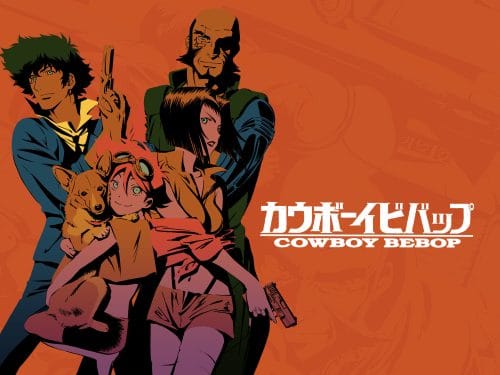
The close of the 1990s witnessed one of the most stylistically assured productions in Japanese television history. Cowboy Bebop, directed by Shinichirō Watanabe and produced by Sunrise, transformed the space-western motif into a meditation on alienation and memory. It followed a small crew of bounty hunters drifting through a fragmented solar system, yet its true concern lay not in outer space but in the emotional distances between people.
At first encounter, Bebop appeared a pastiche of genres, part western, part noir, part science fiction, but beneath its effortless cool resided an unmistakable melancholy. Each episode, or “session” as Watanabe termed them, functioned as an individual riff on loneliness and regret. The narrative refused closure, instead tracing the slow erosion of its characters’ defences against their own histories.
The ensemble of Spike Spiegel, Faye Valentine, Jet Black, and Edward Wong offered a mosaic of lost lives. Spike’s fatalism, Faye’s fractured identity, Jet’s disillusionment, and Ed’s ephemeral innocence together formed a portrait of human transience. Watanabe’s use of genre was not restrictive but liberating; it became a vessel through which universal emotions could be expressed.
Central to the series’ aesthetic was the music of Yoko Kanno. Her jazz-inflected score fused brass, blues, and silence into a language of yearning. The interplay between image and sound elevated Bebop from animated drama to audiovisual symphony. When Spike delivers his final word, “Bang”, it resonates as a requiem, marking the end of an era of innocence in anime storytelling and the arrival of a mature televisual art form.
Serial Experiments Lain (1998):
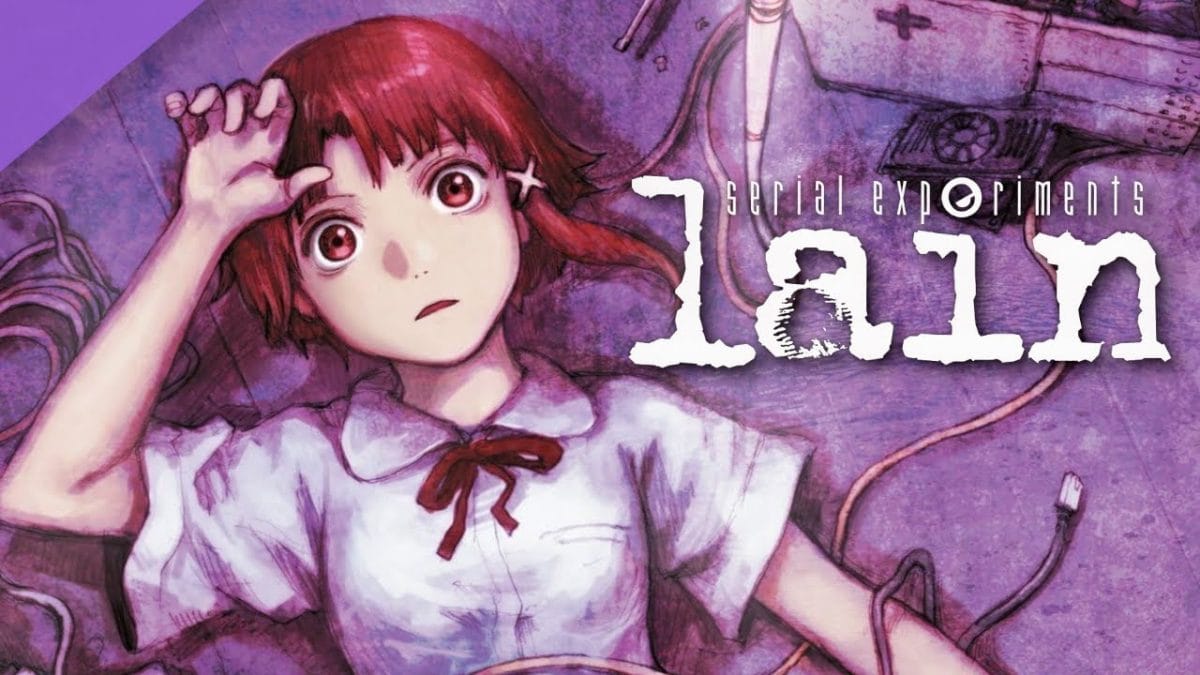
That same year, Japanese viewers encountered a markedly different work, one austere, cerebral, and prophetic. Serial Experiments Lain, directed by Ryūtarō Nakamura and written by Chiaki J. Konaka, explored the porous boundary between consciousness and technology. It centred on Lain Iwakura, a reserved schoolgirl whose engagement with a global computer network known as The Wired precipitates the disintegration of her identity.
Minimalist in style and philosophical in intent, Lain anticipated the psychological consequences of the digital age long before the rise of social media. As Lain’s sense of self becomes increasingly fragmented, the series invites the viewer to question the nature of reality and individuality. Its muted palette, sparse dialogue, and lingering silences evoke the quiet dread of a generation awakening to permanent connectivity.
The series marked a departure from conventional narrative progression. Rather than guiding its audience, Lain required participation. Viewers were compelled to reconstruct meaning from discontinuous fragments, mirroring the experience of navigating the early internet. In rejecting spectacle, Nakamura created a work of haunting introspection that remains one of anime’s most accurate premonitions of digital alienation.
Ghost in the Shell: Stand Alone Complex (2002–2005):

By the dawn of the new millennium, the philosophical questions raised by Lain and Evangelion found renewed expression in Ghost in the Shell: Stand Alone Complex. Directed by Kenji Kamiyama and produced by Production I.G., the series expanded upon Masamune Shirow’s universe to depict a society where cybernetic enhancement and digital consciousness had become commonplace.
Set against the backdrop of a networked future, the narrative followed Major Motoko Kusanagi and the counter-terrorist unit Section 9 as they navigated the moral ambiguities of an interconnected world. Kamiyama redefined cyberpunk for a post-internet generation, replacing dystopian fatalism with analytical precision. His writing probed the limits of individuality: if the human mind can be copied, what becomes of identity? If memory can be rewritten, does authenticity survive?
The title’s concept, the “Stand Alone Complex”, was more than metaphor; it encapsulated the paradox of collective behaviour arising from isolated actions. In this sense, the series became a mirror for twenty-first-century society, portraying billions of individuals linked yet profoundly alone. Through meticulous animation, layered sound design, and philosophical dialogue, Stand Alone Complex merged procedural storytelling with metaphysical inquiry, achieving a rare synthesis of accessibility and depth.
FLCL (2000):

Between the solemnity of Evangelion and the abstraction of Lain erupted a work of unrestrained exuberance. FLCL (Fooly Cooly), directed by Kazuya Tsurumaki under the Gainax banner, condensed the chaos of adolescence into six anarchic episodes. Its narrative defied logic: a boy struck by a Vespa-riding alien woman develops a portal in his forehead from which robots emerge. Yet beneath this absurdity lay a precise metaphor for the hormonal confusion of youth.
FLCL transformed emotional turbulence into visual rhythm. Every frame pulsed with kinetic energy; every cut, colour, and musical cue echoed the volatility of self-discovery. The rock soundtrack by The Pillows provided the heartbeat of rebellion, fusing sound and motion into a single expressive current.
Despite its brevity, the series articulated a profound truth: that growth is not orderly but explosive. Its apparent nonsense concealed a lyrical coherence, a celebration of the mess through which identity is forged. FLCL stands as the punk manifesto of the televisual renaissance, proof that sincerity can thrive within chaos.
Haibane Renmei (2002):
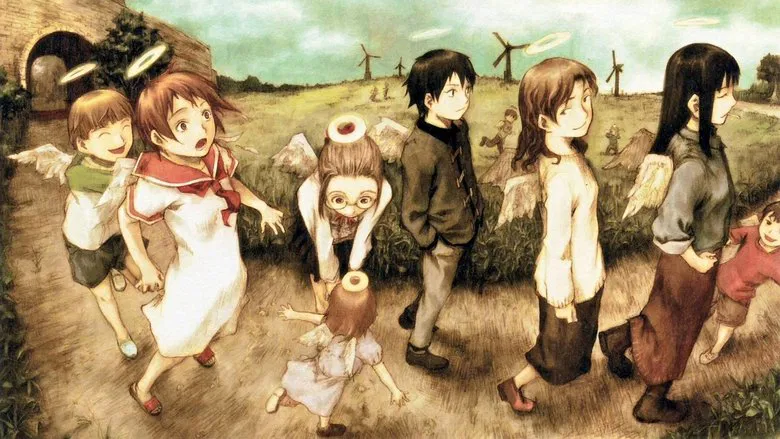
While many creators sought innovation through complexity, others achieved it through stillness. Haibane Renmei, conceived by Yoshitoshi ABe and directed by Tomokazu Tokoro, offered a meditative counterpoint to the frenetic energy of its contemporaries.
Set within a walled town inhabited by angel-like beings known as Haibane, the series unfolds at a deliberate pace, chronicling work, friendship, and gradual self-acceptance. The Haibane, born from cocoons and destined eventually to “take flight,” serve as metaphors for souls seeking reconciliation with their pasts.
Visually subdued and emotionally resonant, the series replaces conflict with contemplation. Its palette of soft greys and greens contrasts sharply with the neon vibrancy of cyberpunk worlds, embodying a serenity rarely found in televised animation. Through simplicity, Haibane Renmei achieves emotional sophistication, redefining complexity as an inward rather than outward pursuit. It remains a testament to the idea that profound storytelling can emerge from silence.
Texhnolyze (2003):
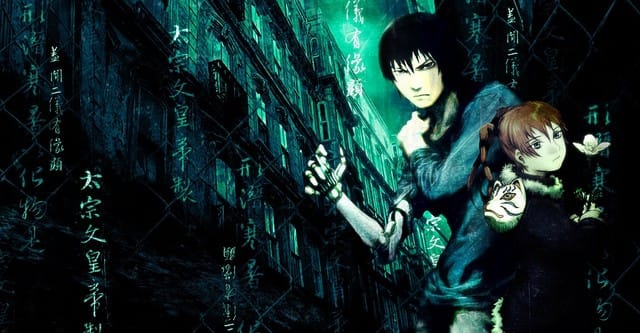
Where Haibane Renmei sought redemption, Texhnolyze embraced decay. Directed by Hiroshi Hamasaki and produced by Madhouse, the series presents a vision of civilisation in terminal decline. Set in the subterranean city of Lux, it chronicles the gradual collapse of humanity amid technological mutation and moral exhaustion.
Dialogue is sparse, action minimal. Instead, atmosphere reigns. The inhabitants, enhanced with mechanical limbs called “Texhnolyze”, drift through a world devoid of purpose. The first episode contains scarcely a dozen spoken lines, establishing from the outset a tone of near-ritualistic desolation.
Visually, Texhnolyze is dominated by greys and shadows, its minimalist score amplifying the suffocating sense of entropy. The narrative unfolds less as a plot than as an existential descent, confronting the viewer with the possibility that progress itself may be humanity’s undoing. In its uncompromising austerity, the series stands among the bleakest meditations ever produced in animation, equalling in gravity the existential cinema of Europe’s post-war auteurs.
Paranoia Agent (2004):
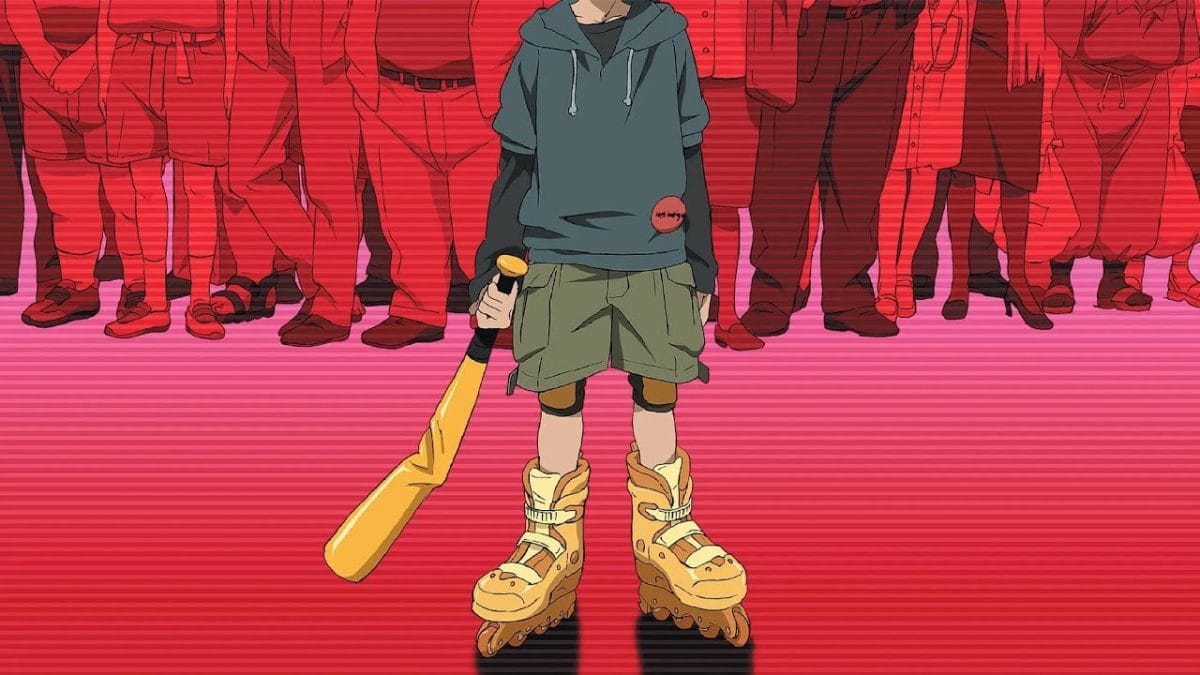
The culmination of this televisual decade arrived through the vision of Satoshi Kon, whose mastery of psychological illusion found perfect form in Paranoia Agent (2004), produced by Madhouse.
The series opens as a crime mystery: a boy on rollerblades, wielding a golden bat, assaults random Tokyo citizens. Yet as the episodes progress, the narrative dissolves into an exploration of mass hysteria and media-fuelled anxiety. “Shōnen Bat,” it transpires, may not exist at all; he is the personification of societal repression and guilt.
Kon’s command of animation’s elasticity allowed him to blur boundaries between dream, memory, and reality with seamless precision. Each episode introduces a new perspective, gradually constructing a collective portrait of fear. By the conclusion, the mystery has transformed into an allegory, and Tokyo itself becomes the patient, suffering from denial and avoidance.
Paranoia Agent stands as both diagnosis and requiem for turn-of-the-century Japan: a culture haunted by its own expectations, inventing monsters to escape introspection. It is a haunting close to the Renaissance, a final, lucid nightmare in which the medium confronts its society’s subconscious.
Final thoughts
Between 1995 and 2005, Japanese television anime ceased to be an industry driven by formula and became a medium of introspection.
Neon Genesis Evangelion cracked open the human soul; Cowboy Bebop turned loneliness into poetry; Lain predicted our digital disorientation; Paranoia Agent turned collective anxiety into allegory.
This was a decade when every frame became a question, every episode a meditation. Complexity was no longer the exception; it was the language.
The televisual renaissance didn’t just give us great shows. It gave us a way of seeing, a recognition that behind the spectacle of animation lies a mirror, reflecting the fragile, searching consciousness that makes us human.
And in that reflection, television found its soul.