The anime industry was creatively stagnant by the 1990s, until a digital revolution sparked an artistic rebirth. This metamorphosis didn’t just modernise techniques; it liberated storytellers, birthing a new golden age. How did a risky shift from cel to pixel save an art form and reshape global culture for decades to come?
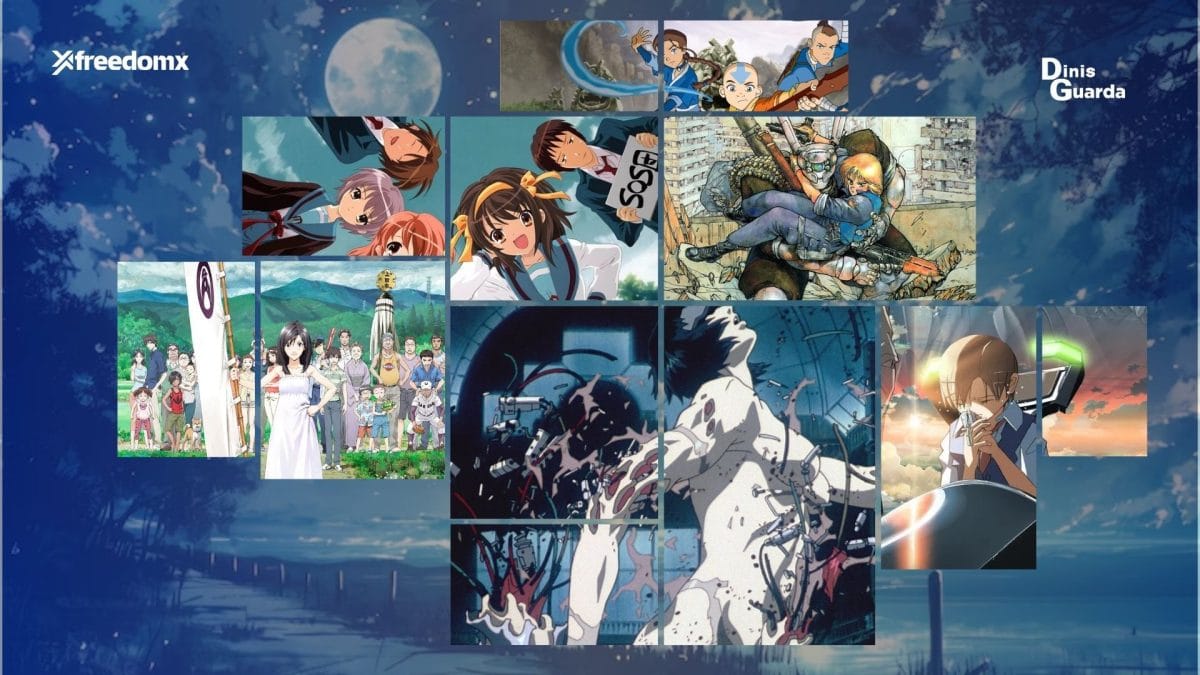
The first decade of the twenty-first century was not just another chapter in the story of animation; it completely rewrote the creative process. From around 2000 to 2010, anime, a distinctly Japanese art form, experienced a transformation so significant that it could be called a digital metamorphosis.
This was not just a simple upgrade or a cold machine-driven approach to artistry. Instead, it told the story of how pixels became poetry, how machines fueled imagination, and how technology freed creativity rather than restricted it.
To outsiders, the early 2000s might have seemed like a simple move from paint and paper to screens and software. However, something revolutionary was happening inside studios. Artists who once worked over cels and light tables now use styluses and tablets. Layers of acetate were replaced by digital layers in compositing software.
But here’s the beauty: the human touch did not vanish; it became stronger. Instead of removing the warmth and flaws that made anime special, the digital revolution offered artists new ways to express it. What started as a practical response to necessary technology turned into a celebration of human creativity improved by machine accuracy.
Japan’s Digital Renaissance
To understand this revolution, one must view it in its cultural and economic context. Japan in the early 2000s was coming out of what economists still refer to as the “Lost Decade,” a time of stagnation after the burst of the late-1980s economic bubble.
However, history shows that difficult times often inspire innovation. Having led the global consumer electronics market for decades, Japan turned inwards to redefine its technological identity and, coincidentally, its artistic one as well.
The internet was growing rapidly. Broadband connections, early smartphones, and portable media players changed how young people accessed content. Digital tools were no longer just in corporate labs; they were on desks, in bedrooms, and in cafés. A generation that had played Pokémon and Final Fantasy was now ready to create.
For anime studios, this cultural shift created a perfect storm. Audiences were asking for more, technology was advancing quickly, and artists were discovering new ways to tell stories. The traditional process of animation production was slow, costly, and restrictive. Suddenly, it was full of potential. New software made traditional tasks easier, and digital tools opened up entirely new avenues for creative ideas.
Japan’s growing confidence in digital technology flowed into its creative industries. Anime, manga, and gaming combined to become a major cultural export. By the middle of the decade, Japan was not just selling electronics; it was also sharing imagination.
From Tokyo to Toronto, anime conventions thrived, and Western audiences embraced the unique mix of emotional storytelling and stylised art. In this atmosphere of global interest, Japan’s creators felt empowered to experiment.
The internet and creative democratisation
Then came the internet, not just as a tool but as a cultural revolution. For the first time, artists could connect directly with audiences without going through television broadcasters or distributors. Early fan sites, web forums, and peer-to-peer file sharing changed how fans discovered, discussed, and shared anime.
It’s hard to overstate how radical this shift was. Before the internet, producing anime was expensive and mostly closed off. Studios controlled access, and fans were just passive viewers. The internet changed that dynamic overnight. Fan artists could share their work globally. Aspiring animators could publish shorts or music videos online and find audiences instantly. The line between creator and consumer became fuzzy.
This participatory culture accomplished something remarkable: it made animation social. The creative energy was no longer limited to production houses. Online communities acted like digital gathering places, where feedback, collaboration, and mentorship thrived. When platforms like Nico Nico Douga, Japan’s early video-sharing service, and later YouTube appeared, they became breeding grounds for new talent and fresh storytelling styles.
Suddenly, anyone with a second-hand computer and open-source software could try their hand at digital animation. Independent creators, once sidelined, found ways to make their voices heard. In many ways, the internet became the twenty-first century’s version of the printing press, opening access not just to information but also to creation itself.
From Cel to Pixel: The Technical Revolution
Let’s talk about the real nuts and bolts – or, more accurately, the cels and pixels. Anime’s production pipeline had followed a familiar rhythm for decades: storyboards, key animation, in-betweens, ink and paint, compositing, and editing. Every cel, those transparent sheets of celluloid- was a physical object, painted by hand and photographed under a camera. The results were beautiful but slow, and each layer of production came with enormous logistical cost.
Digital technology changed that forever.
Digital paint systems:
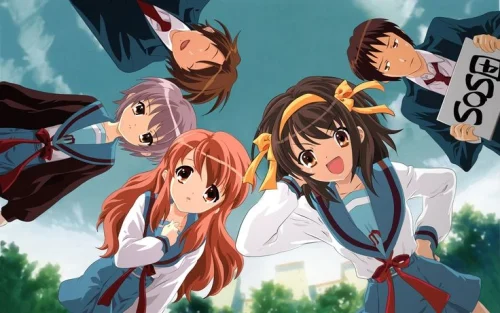
Digital paint systems replaced the slow process of cel painting, allowing artists to colour and shade directly on computers. The implications were significant. Suddenly, there were no limits on colour choices. Subtle gradients, complex lighting, and dynamic shadows could all be created easily. Artists could change hues or adjust contrast late in production, which would have been impossible in the old workflow.
The transition was cautious at first. Studios were understandably worried; after all, anime’s beauty had always relied on its hand-crafted warmth. But when used correctly, digital paint did not sterilise the image, it improved it. Shows like The Melancholy of Haruhi Suzumiya (2005) showed how digital colouring could add depth without losing charm. The texture of brushstrokes may have disappeared, but the emotion behind them remained.
Digital compositing:
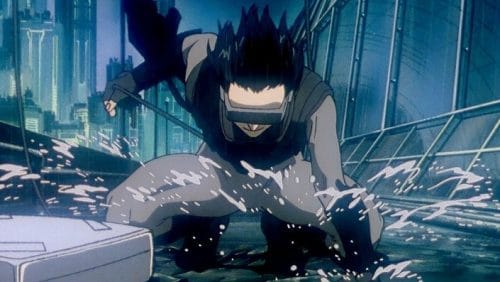
Then came digital compositing, the real game-changer. Imagine being able to move multiple visual layers independently: characters, backgrounds, effects, lighting—all adjustable in real time. This created opportunities for camera pans, zooms, and transitions that would have been either too costly or technically impossible in the analogue era.
Suddenly, anime could move like cinema. Think of Ghost in the Shell: Stand Alone Complex (2002): sweeping cityscapes, rotating camera angles, and dynamic motion all became achievable without losing the signature anime style. It was cinematic sophistication without Hollywood budgets.
CGI Integration:
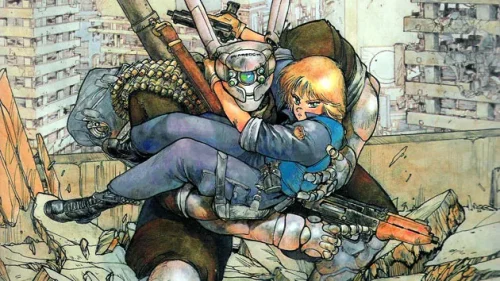
Of course, the word “CGI” still scares purists. But in the 2000s, Japanese studios figured out how to integrate 3D models without losing the 2D aesthetic. Instead of replacing hand-drawn animation, CGI was used strategically, for mecha battles, vehicles, and complex backgrounds.
Production I.G led the charge, merging digital depth with traditional design. Meanwhile, Shinji Aramaki’s Appleseed (2004) pushed cell-shaded CGI to new heights, proving that computer graphics could still look hand-drawn if handled with artistic care. This technique preserved anime’s visual identity while expanding its technical reach.
Even Studio Ghibli, fiercely loyal to its hand-drawn roots, began experimenting quietly. Miyazaki’s Spirited Away (2001) used digital technology for compositing and effects, enhancing rather than overshadowing its human touch. Ghibli’s philosophy became a rallying cry for the industry: technology should serve art, not dominate it.
Studios in transformation
Each studio navigated the digital wave differently, reflecting their creative philosophies.
- Production I.G became the technological vanguard, blending CGI with narrative sophistication. Their mastery of digital environments in Ghost in the Shell: Stand Alone Complex set a new industry benchmark.
- Kyoto Animation, meanwhile, turned digital compositing into an art form. The studio’s work on Haruhi Suzumiya and later Clannad demonstrated how digital processes could enhance emotional resonance without losing visual warmth.
- Studio Ghibli, as mentioned, held onto its pencils but adopted selective digital tools to streamline production. Their approach was conservative yet wise—a balance of tradition and innovation.
- Madhouse leaned into experimentation, producing Paprika (2006) and Summer Wars (2009)—both stunning examples of digital imagination unbound.
Aesthetic innovation and visual poetry
Technology didn’t flatten anime’s artistic soul; it expanded it. The decade saw anime explore new dimensions of visual poetry, from the surreal dreamscapes of Paprika to the dazzling digital landscapes of Summer Wars.
Satoshi Kon’s Paprika deserves special mention here. With its fluid dream logic, seamless transitions, and kaleidoscopic imagery, it used digital compositing like brushstrokes in a surrealist painting. It wasn’t technology for technology’s sake; it was storytelling through visual metamorphosis.
Similarly, Summer Wars used digital aesthetics to comment on digital life itself. Its depiction of the virtual world “OZ” wasn’t just a visual spectacle; it was a social commentary on how our identities were merging with our online selves. The animation blurred lines between code and consciousness, reflecting Japan’s growing fascination (and anxiety) about the internet age.
Even at the more commercial end of the spectrum, digital artistry enhanced the cinematic experience. Films like Rebuild of Evangelion (2007 onward) rebuilt a beloved franchise using modern digital pipelines, blending nostalgia with innovation. Meanwhile, Redline (2009)—a hand-drawn yet digitally refined masterpiece – proved that digital tools could elevate analogue art rather than replace it.
The rise of the independent creator
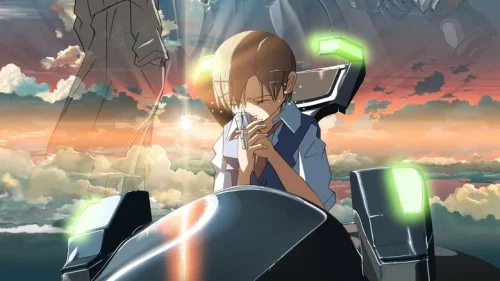
Perhaps the most inspiring outcome of this digital revolution was its democratising effect. Animation, once the domain of large studios, became accessible to individuals. And at the forefront of this change was a name that would soon become legendary: Makoto Shinkai.
In 2002, Shinkai released Voices of a Distant Star, an animated short created almost entirely by himself on a Macintosh computer. It was breathtaking—not because of its polish, but because of its intimacy. A single creator had achieved, through digital tools, what once required a studio of hundreds. The story, about two lovers separated by space and time, mirrored the emotional distance bridged by technology itself.
Shinkai’s success inspired countless others. Suddenly, the idea that one person could make professional-grade animation wasn’t a fantasy; it was a fact. Digital tools had turned isolation into empowerment. The result was a wave of creative independence that continues to this day.
Economic shifts and industry evolution
Of course, revolutions come with economics attached. Digitalisation changed not only how anime was made but how it was funded, distributed, and monetised.
Production costs shifted. While the early transition required investment in hardware and software, digital workflows eventually proved more efficient. Studios could produce higher quality at lower long-term cost. Files replaced film reels; revisions became faster; storage became virtual. The industry gained speed and flexibility.
Then came distribution. DVD sales had dominated the early 2000s, but by the decade’s end, online streaming was emerging as the future. Platforms like Crunchyroll and Nico Nico introduced direct-to-audience models, bypassing traditional gatekeepers. Anime fans in London or São Paulo could now watch episodes the same week they aired in Tokyo.
This global accessibility not only expanded the audience—it reshaped the economics. International demand began influencing domestic production. Co-productions, licensing deals, and global fandoms turned anime from a niche market into a mainstream cultural force. Digital transformation didn’t just liberate creativity—it globalised it.
Education, knowledge, and skill evolution
As the industry transformed, so did its educational ecosystem. Animation schools across Japan (and increasingly abroad) retooled their curricula to include digital workflows. Students learned both pencil and pixel. The new generation was bilingual in art and code.
What emerged was a hybrid form of craftsmanship. Artists no longer saw digital software as alien; it became an extension of their hands. And, crucially, they carried forward anime’s visual heritage, understanding that emotion couldn’t be automated.
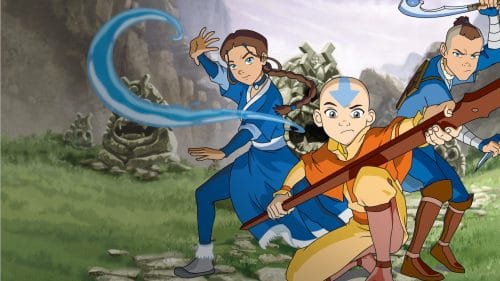
Internationally, this knowledge spread fast. Japanese studios shared techniques with Western partners, influencing everything from Avatar: The Last Airbender to Spider-Verse. The hybrid production models born in Tokyo would ripple across global animation for decades.
Foundations for the future
By the end of the decade, the transformation was complete. The anime industry had crossed the digital threshold without losing its humanity. Technology hadn’t replaced artists; it had empowered them.
The infrastructure built during those years became the backbone of everything that followed: 4K remasters, streaming simulcasts, and the digital workflows of studios like MAPPA, Ufotable, and CoMix Wave Films. These advancements didn’t spring from nowhere; they were the legacy of the 2000s digital pioneers.
And yet, the philosophical takeaway is far larger than anime itself. What happened in Japan between 2000 and 2010 was a case study in how technology, when wielded with purpose and humility, can serve as creative liberation. It redefined not just what animation could look like, but what creativity itself could mean in the digital age.