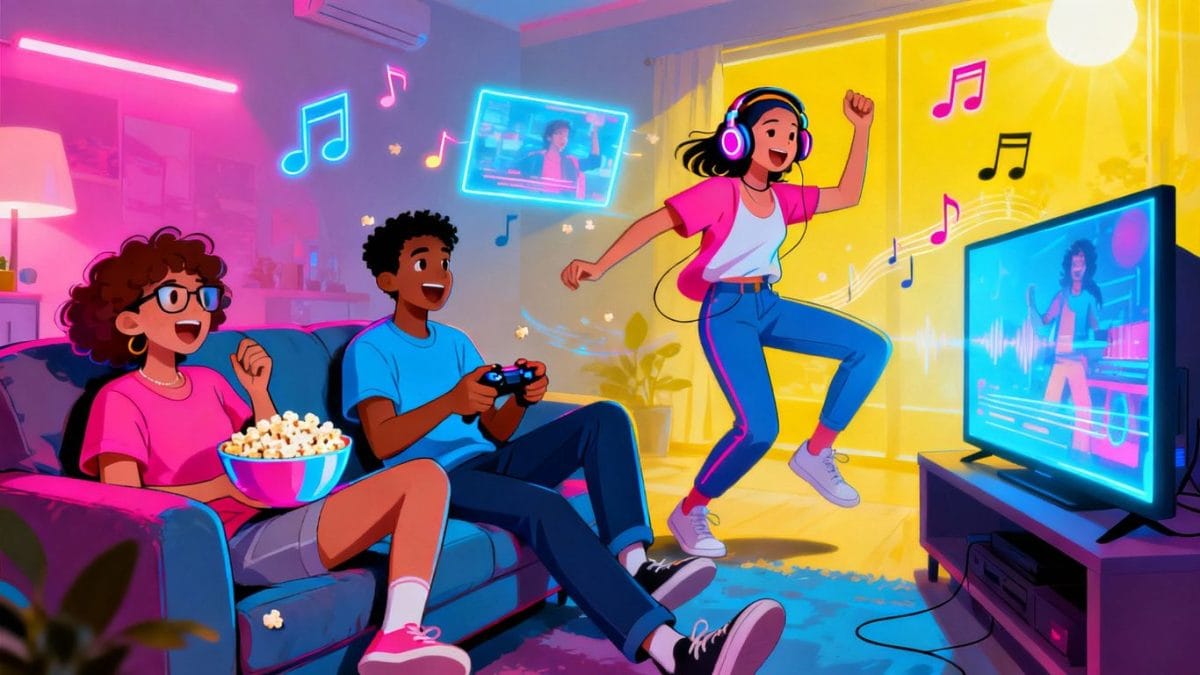
We all need a break sometimes, right? Life can get pretty hectic, and finding ways to switch off and just enjoy ourselves is super important. That’s where entertainment comes in. From watching a movie to playing a game, it’s more than just passing the time. This essay looks at why entertainment is such a big deal in our lives, how it affects us, and how it’s changed over the years. It’s a big topic, but understanding the importance of entertainment essay can help us appreciate it even more.
Key Takeaways
- Entertainment is a major way we relax and de-stress from daily pressures, offering a needed escape.
- Engaging with entertainment can really boost our mood and overall emotional health.
- Shared entertainment experiences help build connections between people and strengthen communities.
- The kinds of entertainment we consume and create say a lot about our culture and can even shape our behavior and identities.
- Entertainment has evolved a lot, especially with new digital media, changing how we interact with it and its impact on society.
The Multifaceted Role of Entertainment in Daily Life
Life can get pretty hectic, right? Between work, chores, and just keeping up with everything, it’s easy to feel overwhelmed. That’s where entertainment steps in, playing a much bigger part in our lives than we might sometimes think. It’s not just about passing the time; it’s a vital tool for managing stress and keeping our spirits up.
Entertainment as a Means of Decompression and Relaxation
Think about that feeling after a long day when you finally get to kick back with a good book, binge-watch a favorite show, or get lost in some music. This isn’t just a luxury; it’s a necessary break. Entertainment provides an escape from the pressures and demands of daily routines. It allows our minds to switch off from problems and worries, offering a mental vacation. This period of disengagement is key to preventing burnout and maintaining a sense of balance. Whether it’s the simple act of playing a casual game on your phone or engaging in a more involved hobby, these activities help reset our mental state.
- Reading: Escaping into different worlds and stories.
- Music: Using rhythm and melody to change mood or relax.
- Movies & TV Shows: Following narratives that take our minds elsewhere.
- Gaming: Engaging in interactive challenges that require focus.
Taking time for entertainment isn’t being lazy; it’s an active form of self-care that helps us recharge our batteries so we can handle life’s challenges better.
Enhancing Emotional Well-being Through Engaging Experiences
Entertainment has a direct line to our emotions. A funny movie can bring on hearty laughter, which is a great stress reliever. A moving drama might bring tears, allowing for emotional release. Even thrilling experiences, like those found in action films or exciting games, can provide a rush of adrenaline that feels good. These emotional responses are not trivial; they are part of what makes us feel alive and connected. Experiencing a range of emotions through entertainment can help us process our own feelings and develop empathy.
Fostering Social Connections and Community Bonds
While we often think of entertainment as a solitary activity, it’s also a powerful social glue. Sharing a movie night with friends, discussing the latest episode of a popular series, or cheering for a sports team together creates shared experiences. These moments build connections and strengthen relationships. Participating in group activities, whether online gaming or attending a concert, helps create a sense of belonging and community. It gives us common ground to talk about and shared memories to cherish.
| Activity Type | Social Interaction Level | Emotional Impact Example |
|---|---|---|
| Watching a movie alone | Low | Personal reflection |
| Watching a movie with friends | High | Shared laughter/excitement |
| Playing multiplayer games | Very High | Teamwork, competition |
| Attending a concert | High | Collective energy |
Exploring Deeper Dimensions of Entertainment
Entertainment as a Means of Decompression and Relaxation
We all need a break, right? Life can get pretty hectic, and sometimes, just zoning out with a good movie or getting lost in a video game is exactly what the doctor ordered. It’s not just about mindless distraction, though. This kind of entertainment acts like a pressure release valve for our daily stresses. Think about it: when you’re really into a story or a challenge, the worries of work or chores tend to fade away. It’s a way to recharge our mental batteries, letting us come back to our responsibilities feeling a bit more refreshed.
Enhancing Emotional Well-being Through Engaging Experiences
Entertainment isn’t just about feeling good in a superficial way; it can actually do wonders for our emotional state. Watching a comedy can genuinely lift our spirits, while a moving drama might allow us to process complex feelings by connecting with characters. Even something like a thrilling action movie can give us an adrenaline rush that feels good. These experiences, whether they make us laugh, cry, or feel excited, play a significant role in our overall emotional health. It’s like a workout for our feelings, helping us to experience a wider range of emotions in a safe environment.
Fostering Social Connections and Community Bonds
It might seem like entertainment is a solitary activity, but it’s often a powerful social glue. Sharing a laugh at a concert, discussing the latest episode of a popular show with friends, or even joining an online gaming community creates connections. These shared experiences give us something to talk about and bond over. It helps build a sense of belonging, whether it’s with a small group of friends or a larger online community. Think about sports fans – they often feel a strong connection to others who support the same team, even if they’ve never met.
Entertainment provides a common ground for people to connect. It offers shared experiences that can bridge differences and create a sense of unity, making us feel less alone in our pursuits and interests.
The Concept of Eudaimonic Entertainment
Beyond just simple pleasure, there’s a type of entertainment that aims for something deeper, often called eudaimonic entertainment. This is where entertainment provides a sense of meaning, personal growth, or a deeper understanding of life. Think about watching a documentary that changes your perspective, reading a book that makes you reflect on your own life, or playing a game that challenges your problem-solving skills in a meaningful way. It’s not just about passing the time; it’s about feeling enriched and perhaps even a little wiser after the experience.
Entertainment’s Influence on Identity and Behavior
What we watch, play, and listen to can subtly shape who we are and how we act. We often see ourselves reflected in characters or stories, and this can influence our own beliefs and behaviors. For instance, seeing positive role models in media might inspire us to act in similar ways, while exposure to certain lifestyles or ideas can broaden our horizons. It’s a continuous feedback loop where entertainment influences us, and our engagement with it, in turn, helps define our personal identities.
The Intersection of Entertainment and Personal Fulfillment
Ultimately, entertainment contributes to our overall sense of fulfillment. When we engage in activities that bring us joy, allow us to learn, connect with others, or explore different aspects of ourselves, we are moving towards a more complete and satisfying life. It’s about finding that balance between our responsibilities and the activities that bring us genuine happiness and a sense of purpose. This pursuit of enjoyable and meaningful experiences is a key part of living a well-rounded life.
Entertainment’s Impact on Communication and Culture
Entertainment isn’t just about passing the time; it’s a major player in how we talk to each other and what we believe as a society. Think about it: movies, music, and even viral videos on social media are all ways we share ideas and feelings. They can be a big part of how we understand the world around us.
Entertainment as a Form of Public Communication
When we talk about entertainment as communication, we’re looking at how stories, images, and sounds are put out there for lots of people to see and hear. It’s not like a private chat; it’s meant for a wide audience. This is where things get interesting because the way a message is put together – the "encoding" – might not be exactly how people "decode" it. What the creator intends might get twisted or understood differently by the audience, depending on their own experiences and backgrounds. It’s a two-way street, even if it doesn’t always feel like it.
The Industrialization of Entertainment Production
These days, making entertainment is a big business. It’s not just a few artists working in a garage anymore. We have huge companies that produce movies, TV shows, music, and games on a massive scale. This "industrialization" means that efficiency and reaching as many people as possible are key. It can lead to a lot of repetition in themes and styles because what’s proven to sell often gets made again and again. This system shapes what we see and hear, often prioritizing broad appeal over niche interests.
Entertainment’s Role in Shaping Cultural Values
What we watch, listen to, and play has a real effect on our culture. Entertainment can introduce new ideas, challenge old ones, or simply reflect what’s already happening. It can influence how we think about things like relationships, success, and even what’s considered normal. Over time, the stories and characters we connect with can subtly shift our perspectives and contribute to the bigger picture of our shared values and beliefs. It’s a constant back-and-forth between what entertainment shows us and how we, as a society, choose to interpret and act on it.
The way entertainment is made and shared today means it has a huge influence. From the big studios churning out blockbusters to the individual creators going viral online, the messages we receive are constantly shaping our understanding of ourselves and the world. It’s a powerful force, and understanding how it works is key to being a smart consumer of media.
The Evolution of Entertainment Forms and Experiences
Entertainment hasn’t always looked like the streaming services and video games we know today. Think back, way back. For a long time, entertainment was tied to community gatherings, storytelling around a fire, or live performances in town squares. As societies changed, so did how people amused themselves. The invention of the printing press, for instance, made books more accessible, shifting entertainment towards more individual pursuits. Later, the rise of theater and then cinema brought shared visual experiences to the masses.
Historical Shifts in Entertainment Consumption
Over centuries, the way we consume entertainment has gone through major changes. Early forms were often communal and participatory. As technology advanced, entertainment became more of a spectator activity. Consider the shift from live theater, where audiences were physically present, to radio plays that could be enjoyed from home, and then to television, which brought moving pictures into living rooms.
- Ancient Times: Storytelling, music, dance, and communal festivals.
- Middle Ages: Traveling performers, religious plays, and courtly entertainment.
- Renaissance: Theatrical productions, opera, and the spread of literature.
- Industrial Revolution: Music halls, early cinema, and mass-produced novels.
- 20th Century: Radio, film, television, and recorded music.
The very definition of entertainment has broadened. What was once a luxury or a communal event is now often a personal, on-demand experience, shaped by technological progress and changing social norms.
The Rise of Digital Media and Interactive Entertainment
The digital age has completely reshaped the entertainment landscape. The internet and mobile devices have made content instantly available, anytime, anywhere. This has led to a boom in digital media, from online video platforms and music streaming to social media itself, which has become a form of entertainment for many. Interactive entertainment, where the audience plays an active role, has also surged in popularity.
Video Games Versus Traditional Media
Video games represent a significant evolution in entertainment. Unlike passive media like movies or television, video games require active participation and decision-making from the player. This interactivity creates a unique form of engagement. While movies and TV shows tell a story, video games allow players to become part of the narrative, influencing its direction and outcome. This difference in engagement is a key factor in their growing appeal.
| Medium | Primary Mode of Engagement | Interactivity Level | Content Delivery | Examples |
|---|---|---|---|---|
| Traditional | Passive Viewing/Listening | Low | Scheduled/Broadcast | Movies, TV Shows, Radio, Books |
| Video Games | Active Participation | High | On-Demand/Player-Driven | Console Games, PC Games, Mobile Games |
Entertainment and Its Societal Influence
The Pervasive Nature of Entertainment in Society
It’s hard to imagine a day without some form of entertainment. From the moment we wake up and check our phones to the evening spent watching a show or listening to music, entertainment is woven into the fabric of our lives. This constant presence means it has a significant, though often unnoticed, impact on how we think, what we believe, and how we interact with the world around us. Entertainment isn’t just a way to pass the time; it’s a powerful force shaping our collective experience. Think about it: the stories we consume, the characters we follow, and the trends we see all contribute to a shared cultural understanding.
Entertainment’s Effect on Popular Culture Dissemination
Entertainment acts as a major channel for spreading ideas, trends, and cultural norms. Movies, music, and social media trends don’t just appear out of nowhere; they are often created and amplified through entertainment platforms. This process can quickly turn a niche interest into a mainstream phenomenon. Consider how certain music genres or fashion styles become globally popular almost overnight, largely thanks to their presence in popular media. This rapid spread influences everything from language and slang to social attitudes and consumer behavior.
The Global Reach of Entertainment Industries
The entertainment industry is a massive global enterprise. Productions from Hollywood, K-Pop groups, or Bollywood films can reach audiences across continents, transcending geographical and linguistic barriers. This global reach means that entertainment produced in one part of the world can significantly influence cultures elsewhere. It creates a shared global culture, but also raises questions about cultural homogenization and the dominance of certain cultural perspectives. The economic impact is also huge, with entertainment industries generating billions of dollars and employing millions worldwide.
Here’s a look at how entertainment spreads:
- Mass Media: Television, radio, and film have historically been key in disseminating entertainment content to large audiences.
- Digital Platforms: The internet, social media, and streaming services have revolutionized how entertainment is accessed and shared, allowing for more direct and immediate global distribution.
- Celebrity Influence: Popular figures in music, sports, and acting often become cultural ambassadors, their lifestyles and opinions influencing fans worldwide.
The constant flow of entertainment content shapes our perceptions and expectations. It provides a common ground for conversation and connection, but also has the potential to reinforce stereotypes or promote certain ideologies without explicit intent. Understanding this influence is key to being a more aware consumer of media.
Understanding the Psychology of Entertainment
Why do we watch movies, play games, or listen to music? It all comes down to what’s happening inside our heads. Entertainment isn’t just about passing the time; it taps into some pretty basic human drives and psychological processes. At its core, entertainment is about seeking experiences that engage our minds and emotions in a way that feels rewarding.
The Pursuit of Fun and Pleasure
This is probably the most obvious part. We’re wired to seek out things that feel good. Fun and pleasure are powerful motivators. Think about the simple joy of a good laugh or the satisfaction of solving a puzzle. These experiences trigger the release of dopamine, a neurotransmitter associated with reward and motivation. This biological response encourages us to repeat behaviors that lead to these positive feelings. It’s why we might reach for a familiar comedy after a tough day or get hooked on a game that offers constant small victories.
The Role of Emotion in Entertainment Engagement
Entertainment is a masterclass in emotional manipulation, in the best sense of the word. It’s designed to make us feel things – excitement, sadness, fear, joy, surprise. This emotional engagement is what makes entertainment so compelling. When we experience strong emotions, even simulated ones, it can feel very real and impactful. This is why a sad movie can be cathartic, or a thrilling game can make our hearts race. The intensity of these emotional responses can make the experience memorable and meaningful.
Evaluating the Impact of Entertainment Experiences
It’s not just about the immediate feeling, though. We also evaluate our entertainment experiences afterward. Did it make us think? Did it change our mood for the better? Did it feel meaningful, even if it wasn’t purely ‘fun’? Sometimes, entertainment that challenges us or makes us reflect can be just as rewarding, if not more so, than something purely lighthearted. This is where the idea of ‘eudaimonic’ entertainment comes in – experiences that contribute to our sense of meaning and personal growth, rather than just providing fleeting pleasure.
Here’s a look at how different types of entertainment might engage us:
- Hedonic Entertainment: Focuses on immediate pleasure, fun, and sensory enjoyment. Think of a lighthearted comedy or a catchy pop song.
- Eudaimonic Entertainment: Offers a sense of meaning, personal growth, or deeper reflection. A thought-provoking documentary or a complex drama might fit here.
- Social Entertainment: Involves shared experiences and connection with others. Playing a multiplayer game or watching a movie with friends falls into this category.
Understanding why we seek out entertainment helps us appreciate its role beyond mere distraction. It’s a fundamental part of how we process the world, manage our emotions, and connect with ourselves and others.
The Lasting Impact of Entertainment
So, as we wrap things up, it’s pretty clear that entertainment isn’t just some fluffy extra in our lives. It’s woven into the fabric of who we are and how we get through the day. Whether it’s helping us blow off steam after a long week, giving us a good laugh, or just letting us escape for a bit, it does a lot. It connects us with others, too, building communities and shared experiences. Thinking about it, entertainment plays a pretty big part in keeping us balanced and feeling good. It’s more than just passing time; it’s a way we understand ourselves and the world around us.
Frequently Asked Questions
Why is entertainment important in our lives?
Entertainment is super important because it helps us relax and forget about our worries for a while. Think about watching a funny movie, listening to your favorite songs, or playing a game – these things help us chill out after a long day. It’s like a mini-vacation for our minds!
Can entertainment make us feel happier?
Absolutely! When we watch something exciting, laugh at a joke, or get lost in a good story, it can really boost our mood. Entertainment can bring out all sorts of feelings, like joy, excitement, or even a good cry, which are all part of feeling alive and connected.
Does entertainment help us make friends?
Yes, it definitely does! Sharing experiences like going to concerts, watching sports together, or even playing multiplayer video games can bring people closer. It creates a sense of belonging and helps us build stronger friendships and communities.
How does entertainment affect what we think and do?
Entertainment, like TV shows, movies, and even social media trends, can influence how we see ourselves and the world. Sometimes, seeing characters or stories can inspire us, change our opinions, or even shape our personal style and how we act.
Has the way we enjoy entertainment changed over time?
Oh, for sure! Think about how people used to gather to listen to stories or watch plays. Now, we have amazing technology like streaming services, video games, and the internet. Entertainment has become much more personal and interactive, with new ways to experience it popping up all the time.
What’s the difference between just having fun and deeper entertainment?
Sometimes entertainment is just about having a good time and feeling good in the moment, like eating candy. But other times, entertainment can make us think deeply, learn something new, or feel a connection to something bigger, like watching a powerful documentary or reading a book that changes your perspective. That’s called ‘eudaimonic’ entertainment.