
Remember 2006? It was a pretty big year for video games. A lot of titles came out that year that we still talk about today. It felt like games were really hitting their stride, offering bigger worlds and new ways to play. Let’s take a look back at some of the most memorable games 2006 had to offer and why they stick with us.
Key Takeaways
- The Elder Scrolls IV: Oblivion invited players into a huge world with tons of quests, becoming a big name in RPGs.
- Gears of War changed how third-person shooters worked with its cover system and tough co-op play.
- New Super Mario Bros. brought back classic 2-D Mario fun with new challenges and power-ups.
- OutRun 2006: Coast 2 Coast offered fast-paced driving with lots of cool cars and different places to race.
- These games from 2006 really pushed gaming forward, giving players unforgettable experiences and leaving a lasting mark on the industry.
The Elder Scrolls IV: Oblivion’s Expansive World
A New Realm of Adventure in Cyrodiil
Stepping into the province of Cyrodiil for the first time in 2006 felt like opening a door to a truly massive world. The Elder Scrolls IV: Oblivion wasn’t just a game; it was a place you could get lost in for hours, days, even weeks. From the moment you escape the Imperial Prison and step out into the open, the sheer scale of it all hits you. The developers really outdid themselves creating this vibrant land, with distinct regions, bustling cities, and countless hidden caves and ruins just begging to be explored. You could spend your time following the main quest to close the Oblivion gates, or you could just wander off, get sidetracked by a side quest, or simply admire the scenery. It was this freedom that really set Oblivion apart.
Solidifying Its Place as an RPG Classic
Oblivion offered players a deep role-playing experience. You could create your character, choosing from various races, each with their own strengths and weaknesses. Then, you’d develop your skills by using them – swing a sword enough, and your blade skills improve. This organic progression system made every action feel meaningful. The game also featured a dynamic quest system and a world that reacted to your choices, making your adventure feel personal. It wasn’t just about completing objectives; it was about living another life in a fantasy setting. The sheer amount of content, from the main story to the numerous guild quests and random encounters, made it a game that kept on giving.
The freedom to choose your path, combined with a world that felt alive and reactive, made Oblivion a landmark title in the RPG genre. It set a high bar for open-world games that followed.
Here’s a look at some of the key elements that made Cyrodiil so engaging:
- Vast Open World: The province of Cyrodiil was immense, featuring diverse landscapes from forests and plains to mountains and swamps.
- Deep Character Customization: Players could create unique characters with distinct races, appearances, and starting attributes.
- Skill-Based Progression: Character abilities improved through use, encouraging varied gameplay styles.
- Engaging Questlines: Beyond the main story, numerous faction quests and side adventures offered hundreds of hours of gameplay.
Gears of War: Redefining Third-Person Shooters
A New Realm of Adventure in Cyrodiil
In 2006, a game dropped that completely changed how we thought about playing from behind our character’s shoulders. Gears of War wasn’t just another shooter; it was an experience. It threw players headfirst into the war-torn planet of Sera, a world battered by the Locust Horde. This wasn’t a clean, sterile battlefield. It was messy, brutal, and incredibly atmospheric. The visuals were dark and gritty, really selling the idea that humanity was on the brink of extinction. You felt the weight of every bullet fired and every desperate stand made.
Solidifying Its Place as an RPG Classic
What really set Gears of War apart was its gameplay. The introduction of cover-based mechanics became a standard that countless games would follow. Instead of just running and gunning, players had to strategically use the environment for protection. Peeking out from behind a crumbling wall to fire a burst of shots, then quickly ducking back down – it was tense and required real thought. This system made combat feel more deliberate and less like a chaotic free-for-all. It demanded teamwork and smart positioning, turning every encounter into a mini-puzzle.
Innovative Cover-Based Mechanics
Beyond just hiding, the cover system was dynamic. You could vault over low obstacles, slide into cover, and even use your cover as a weapon, kicking it into enemies. This added a layer of physicality to the combat that felt fresh and exciting. It wasn’t just about aiming; it was about movement and using the battlefield to your advantage. The AI also seemed to understand this, flanking and pushing players, making them constantly aware of their surroundings.
Intense Cooperative Gameplay
And then there was the co-op. Playing through the campaign with a friend was a blast. The game was designed with two players in mind, encouraging communication and coordinated attacks. You had to watch each other’s backs, revive fallen comrades, and work together to overcome overwhelming odds. This shared struggle made the victories feel even more earned and the overall experience much more engaging. It was a true test of teamwork, and frankly, a lot of fun.
Gears of War proved that a well-designed cover system could be more than just a mechanic; it could be the foundation for a whole new style of shooter gameplay. It made players think differently about combat and teamwork.
New Super Mario Bros.: A Nostalgic Return
A Homage to Classic 2-D Side-Scrollers
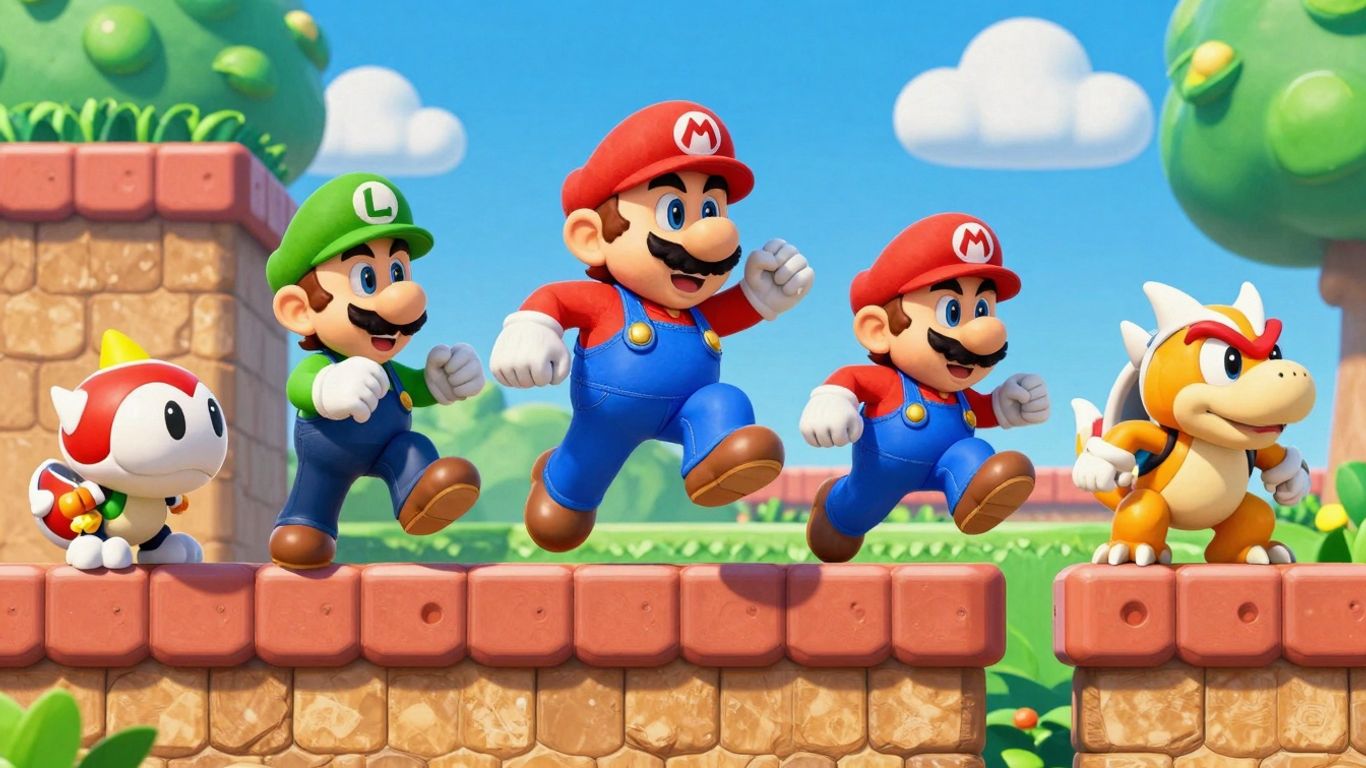
Remember those days spent hunched over a controller, jumping through pixelated worlds and collecting coins? Nintendo certainly does. With New Super Mario Bros. for the Nintendo DS, the company brought back the beloved 2-D side-scrolling Mario experience that so many of us grew up with. It felt like coming home. The game doesn’t just copy the past, though; it builds on it. It masterfully blends familiar gameplay with just enough new ideas to feel fresh.
Elegant Simplicity and Catchy Themes
One of the biggest draws of New Super Mario Bros. is its straightforward design. You know how to play it the moment you pick it up, whether you’re a seasoned gamer or someone who hasn’t touched a controller in years. The controls are simple, the objectives are clear, and the music is incredibly catchy. It’s the kind of game that’s easy to pick up but still offers a good challenge.
The game’s sound design is a big part of its charm. Those classic Mario sound effects are back, along with new tunes that stick in your head long after you’ve turned off the system. It all adds up to a really fun and upbeat experience.
New Foes and Power-Ups
While it pays tribute to the classics, New Super Mario Bros. isn’t afraid to introduce new elements. Players will encounter some fresh enemies, like the surprisingly tricky Cheep Chomps that can leap out of the water. There are also some neat new power-ups to discover. My personal favorite has to be the Mega Mushroom, which turns Mario into a giant version of himself, capable of smashing through almost anything in his path. It’s a blast to play with!
Here’s a look at some of the new additions:
- New Enemies:
- Cheep Chomps (aquatic foes)
- Spiny Cheep Chomps (flying aquatic foes)
- Hammer Bros. (returning, but with new patterns)
- New Power-Ups:
- Mega Mushroom (makes Mario giant)
- Mini Mushroom (makes Mario small)
- Blue Shell (allows Mario to fly briefly)
Even with the new additions, the core gameplay remains pure Mario fun. It’s a perfect example of how to revisit a classic formula and make it exciting for a new generation, while also delighting long-time fans.
OutRun 2006: Coast 2 Coast’s Driving Thrills
A Spiffy Update to an Arcade Classic
OutRun 2006: Coast 2 Coast took the beloved arcade formula and gave it a significant polish for home consoles and handhelds. It wasn’t just a simple port; Sega really worked to make this feel like a fresh experience while staying true to the original’s spirit. The game masterfully blended the thrill of high-speed driving with a collection of engaging modes that kept players coming back for more. It felt like a true evolution of the classic OutRun experience, offering more depth and variety than its predecessors.
A Fleet of Ferraris to Choose From
One of the standout features of OutRun 2006 was the sheer number of iconic Ferraris available. Players could get behind the wheel of a variety of these legendary sports cars, each with its own feel and look. This selection added a layer of personalization and excitement, allowing drivers to pick their favorite machine for cruising.
- Ferrari F40
- Ferrari Testarossa
- Ferrari 288 GTO
- Ferrari 365 GTS/4 Daytona
- Ferrari 512 BB
Varied Environments and Skill Challenges
Beyond just racing, OutRun 2006 offered a diverse range of environments to speed through. From sunny coastlines to winding mountain roads, the scenery was always a treat. To keep things interesting, the game also introduced a variety of skill-based challenges. These weren’t just about crossing the finish line first; they tested your driving finesse in different ways, adding replayability and a sense of accomplishment.
The addition of modes like ‘Heart Attack’ and ‘Time Attack’ provided distinct objectives beyond simply outracing opponents. These modes encouraged players to master specific driving techniques, like drifting around corners or maintaining a certain speed, making the gameplay more than just a straightforward race.
The Impact of 2006 Games on the Industry
Setting New Standards for Genres
The year 2006 wasn’t just about releasing great games; it was about games that fundamentally changed how entire genres were made and played. Take Gears of War, for instance. Before this game, third-person shooters were a bit all over the place. Gears introduced a cover system that felt natural and tactical, making players think about positioning and teamwork in a whole new way. It wasn’t just about aiming and shooting anymore; it was about using the environment to your advantage. This cover mechanic became a blueprint for so many shooters that followed, you can practically see its DNA in games released years later.
Then there’s The Elder Scrolls IV: Oblivion. While open-world RPGs existed, Oblivion offered a scale and freedom that was pretty mind-blowing for its time. The sheer size of Cyrodiil, the ability to go almost anywhere and do almost anything, set a new bar for what players expected from a role-playing experience. It showed developers that players wanted deep worlds to get lost in, not just linear paths.
Memorable Experiences for Players
Beyond the technical advancements, 2006 gave us games that stuck with players long after the credits rolled. New Super Mario Bros., for example, tapped into a deep well of nostalgia. It took the classic 2D Mario formula that millions grew up with and polished it to a shine. It proved that simple, well-executed gameplay could still be incredibly engaging, even in an era of increasingly complex games. It was a reminder of why people fell in love with video games in the first place.
OutRun 2006: Coast 2 Coast also offered a unique kind of fun. It wasn’t about saving the world or complex narratives; it was pure, unadulterated driving pleasure with a cool soundtrack and a garage full of Ferraris. This focus on accessible, stylish arcade fun provided a different, but equally memorable, experience that appealed to a broad audience.
Timeless Gems That Shaped Gaming
Looking back, the games released in 2006 did more than just entertain; they influenced the direction of the entire industry. They showed developers new ways to design gameplay, create immersive worlds, and connect with players on an emotional level. The innovations seen in titles like Gears of War and Oblivion became industry standards, while the pure joy found in New Super Mario Bros. and OutRun 2006 reminded everyone what makes gaming special.
The year 2006 was a significant turning point, where established franchises evolved and new ideas took hold, leaving a lasting legacy on game design and player expectations.
These games weren’t just popular for a season; they became benchmarks. They are the kind of titles that people still talk about, play, and draw inspiration from today. They represent a period where creativity and technical skill combined to produce experiences that truly shaped the gaming landscape we know now.
Looking Back at a Landmark Year
So, 2006. It really was a year that gave us some games we still talk about today. We saw big adventures like Oblivion and intense action in Gears of War. And who could forget the fun of New Super Mario Bros. or the speed of OutRun 2006? These games weren’t just popular; they changed things. They showed us what gaming could be and set a high bar for what came next. Thinking back on these titles reminds us why we love playing games and how much fun we had. It’s a good reminder to maybe dust off an old console or fire up an emulator sometime soon.
Frequently Asked Questions
What made The Elder Scrolls IV: Oblivion stand out in 2006?
Oblivion offered a huge, open world called Cyrodiil that players could explore for hours. It was a big deal for role-playing games because it let you do so many different things and create your own unique character and story.
How did Gears of War change shooter games?
Gears of War was a game-changer for third-person shooters. It introduced a cool cover system that made battles more strategic and intense. Plus, playing with friends to fight off enemies together was a really fun part of the game.
Why was New Super Mario Bros. so special for Nintendo DS players?
This game brought back the classic 2-D Mario feel that many people loved. It was easy to pick up and play, with fun music and familiar enemies, but also added new challenges and power-ups to keep things exciting.
What was exciting about OutRun 2006: Coast 2 Coast?
OutRun 2006 was a cool update to an old arcade racing game. It let you drive a bunch of different fast Ferraris through awesome scenery. There were also fun challenges to test your driving skills beyond just racing.
What was the overall effect of these 2006 games on the gaming industry?
Games from 2006 really pushed the boundaries for their genres. They created memorable experiences that players still talk about and became classics that influenced many games made later on.
Were there any other notable games released in 2006?
While Oblivion, Gears of War, Mario, and OutRun were big hits, 2006 was a strong year for gaming overall. Many other titles also made a significant impact, contributing to the rich gaming landscape of that era.