So, there’s this whole buzz lately about ‘AI High,’ and it’s not just about robots taking over classrooms. It’s more like AI is becoming a regular tool, showing up everywhere from how teachers plan lessons to how artists create. Think of it as a new assistant, one that can whip up ideas, help students learn in different ways, and even speed up some of the more tedious parts of creative work. We’re going to unpack what this ‘AI High’ thing really means and how it’s starting to change things.
Key Takeaways
- Generative AI has moved from a niche tech to something many people are using, changing how we think about creating content and solving problems.
- In education, AI high is helping teachers make materials faster and plan lessons, while also giving students more personalized ways to learn.
- Creative fields are seeing AI high assist with design, music, and visuals, speeding up production and offering new ideas for artists.
- New teaching methods are popping up, with AI acting as a partner for improvisation and helping create unique learning experiences, even for physical activities.
- AI high is also being looked at for making assessments fairer and easier to manage, though we still need to think carefully about the ethics and how to use it right.
Understanding The Rise Of Ai High
Artificial intelligence has been around for a while, quietly working in our phones and editing software. But recently, something shifted. Generative AI, or GenAI, has burst onto the scene, and it feels like a whole new ballgame. Tools like ChatGPT and DALL-E 2, which can create text, images, and more, have become incredibly popular. It’s no wonder there’s so much talk about AI’s capabilities and potential pitfalls.
Generative AI’s Mainstream Entry
GenAI works by learning from vast amounts of data to produce new content. Think of it like a super-powered pattern recognizer. The rapid development and easier access to these tools have led to a huge surge in their use. ChatGPT alone reached over 180 million users in its first year, showing just how quickly it’s become a part of our digital lives. This technology is moving fast, and keeping up can be a challenge for everyone, from users to those making the rules. The United Nations has even formed an advisory group to help guide AI’s development and address potential risks.
The Evolution Beyond Basic AI
We’re moving past simple AI functions. GenAI represents a significant leap, capable of generating creative outputs that were once solely the domain of humans. This evolution means AI is no longer just a tool for automation; it’s becoming a partner in creation. While early AI focused on specific tasks, GenAI can tackle more complex, open-ended challenges, blurring the lines between human and machine creativity. This shift is prompting a re-evaluation of what AI can do and how it integrates into various fields, including the arts and education. The potential for AI to assist in creative processes is vast, opening up new avenues for exploration and production in areas like entertainment production.
Anticipating Future AI Capabilities
It’s hard to predict exactly where AI will go next, but one thing is clear: it will continue to evolve. We’re already seeing AI move into more sophisticated roles, and the development of new plugins and extensions means its applications will only broaden. While we might overestimate the immediate impact of new technologies, their long-term effects can be profound. Understanding GenAI now is key to preparing for its future influence on how we learn, create, and interact with the world around us. It’s a fast-moving area, and staying informed is important.
The rapid pace of AI development means that what seems cutting-edge today might be commonplace tomorrow. This constant change requires a flexible approach to learning and adaptation.
- Resource Creation: A common use for educators is generating teaching materials.
- Lesson Planning: AI can assist in structuring and designing educational content.
- Personalization: Tools can help tailor learning experiences to individual student needs.
Transforming Educational Landscapes With Ai High
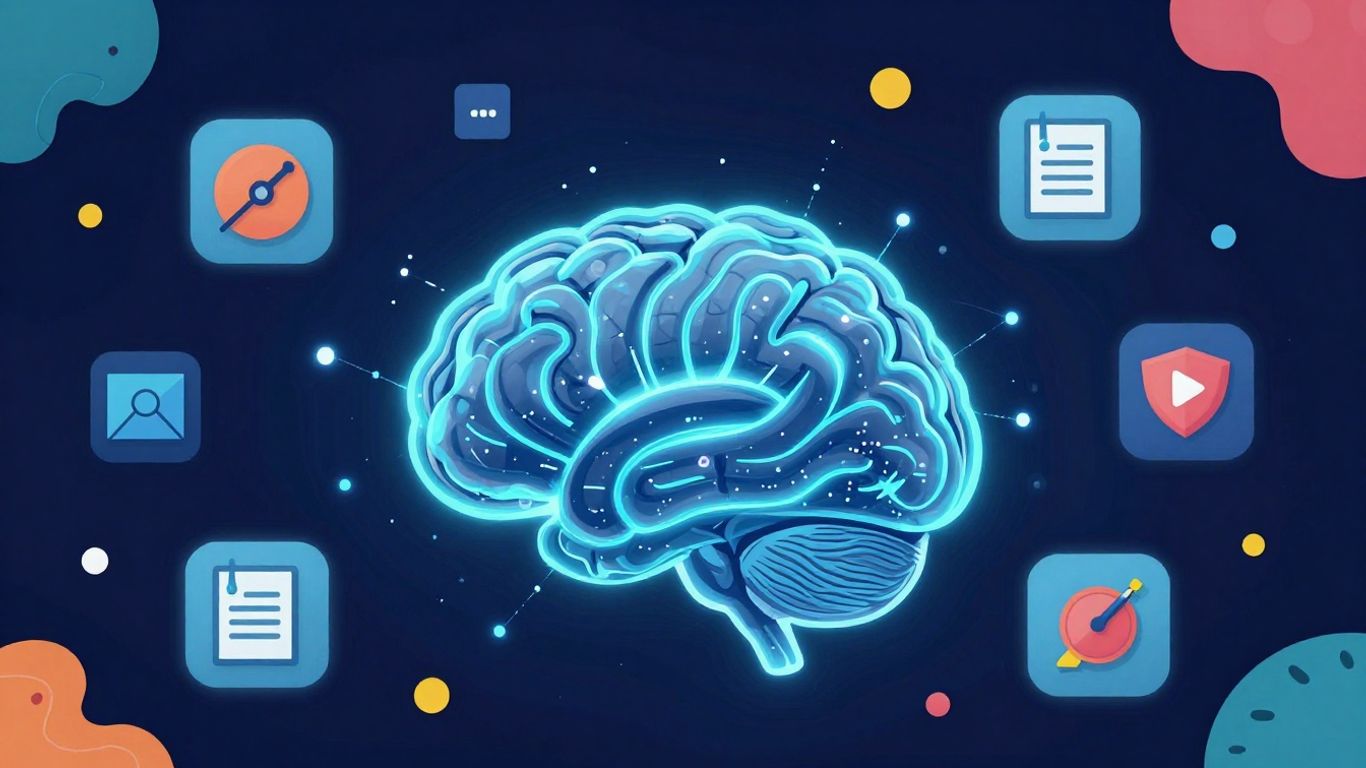
Artificial intelligence, particularly generative AI, is starting to change how we teach and learn. It’s not just about fancy new tools; it’s about rethinking how educators can create materials, plan lessons, and help students learn in ways that fit them better.
Enhancing Resource Creation For Educators
Teachers often spend a lot of time making worksheets, presentations, and other learning materials. Generative AI can speed this up considerably. Imagine needing a set of practice questions for a history lesson or a visual aid for a science concept. AI can generate these quickly based on specific prompts.
- Quick generation of diverse question types: From multiple-choice to short answer, AI can create varied assessments.
- Visual aid creation: Generate diagrams, charts, or even simple illustrations to explain complex topics.
- Adaptable content: Easily modify existing materials for different reading levels or learning styles.
This means educators can spend less time on repetitive tasks and more time focusing on student interaction and tailored support.
Streamlining Lesson Planning And Design
Planning lessons can be a complex process, involving aligning with curriculum standards, considering student needs, and structuring activities. AI can assist in this by suggesting lesson structures, activities, and even potential discussion points.
For example, an educator could input the learning objectives for a week and ask the AI to propose a sequence of lessons, including ideas for group work or individual tasks. It can also help in finding relevant supplementary materials or suggesting ways to connect different subjects.
AI can act as a brainstorming partner, offering a wide array of ideas that a teacher might not have considered, thereby enriching the overall lesson design.
Personalizing Student Learning Experiences
One of the most promising aspects of AI in education is its ability to tailor learning to individual students. AI can analyze student performance data (with appropriate privacy safeguards) to identify areas where a student might be struggling or excelling.
Based on this, AI can suggest specific resources, practice exercises, or alternative explanations. For students who need extra support, AI can provide step-by-step guidance or break down complex tasks into smaller, manageable parts. Conversely, for students who grasp concepts quickly, AI can offer more challenging material or enrichment activities.
This personalized approach helps ensure that each student receives the support they need to succeed, moving away from a one-size-fits-all model towards a more student-centered educational environment.
Ai High In Creative And Performing Arts
The world of creative and performing arts is finding new avenues for expression and production with the help of AI. From the initial concept to the final performance, AI tools are changing how students and educators approach artistic creation.
Revolutionizing Set and Costume Design
AI is proving to be a game-changer for visual design in theatre and performance. Image-generating AI can quickly produce a wide range of visual concepts based on simple text descriptions. This means students can rapidly prototype ideas for sets, costumes, props, and backdrops. Instead of spending hours sketching or painting, they can generate multiple visual options in minutes. This allows for more exploration of different styles and aesthetics, helping students refine their vision before committing to physical creation. For instance, a student might describe a "Victorian-era ballroom with a touch of steampunk" and see several distinct visual interpretations appear, sparking new ideas.
- Rapid Prototyping: Generate multiple design concepts quickly.
- Visual Exploration: Experiment with different styles and themes.
- Concept Refinement: Test character looks or set atmospheres before production.
AI can transform a student’s initial sketch into a 3D model or a fully rendered image, making it easier to share and discuss production ideas with a team.
Facilitating Audio and Visual Production
Beyond static visuals, AI is also making waves in audio and video production for performances. Students can use AI to compose original music, create sound effects, or generate ambient soundscapes that perfectly match the mood and action of a play or performance piece. This capability allows for a more dynamic and immersive audience experience. Similarly, AI can generate video clips or animations from text prompts, which can then be incorporated into live performances as projected backdrops or visual effects. This opens up possibilities for integrating digital media directly into theatrical storytelling.
Character Development Through AI Visualization
Developing believable and compelling characters is a core part of drama. AI can assist in this process by helping students visualize their characters. By inputting detailed character descriptions into an image-generating AI, students can see if their written words accurately translate into a visual representation. If the AI’s output doesn’t match their intended character, it prompts them to revise and deepen their descriptions. This iterative process can lead to more nuanced and well-defined characters, ensuring that the visual aspect aligns with the character’s personality and backstory. This visual feedback loop is a powerful tool for solidifying character identity.
Pedagogical Innovations Driven By Ai High
AI High is opening up some really interesting avenues for how we teach and learn, especially in subjects that rely on more than just textbook knowledge. It’s not just about making lesson plans faster; it’s about fundamentally changing how educators and students interact with material and with each other.
AI As An Improvisation Partner
One of the most fascinating developments is using AI as a partner in improvisation exercises. Think about it: students can engage in dramatic exchanges with an AI character, practicing dialogue, character reactions, and scene development. This is particularly useful because it allows for individual practice, anytime, anywhere. The AI can be prompted to play a specific role, creating a dynamic scenario for the student to respond to. This kind of practice can be done solo, which is a big plus for students who might feel shy or need extra time to prepare.
- Practice dialogue and scene work: Students can rehearse lines and explore different character interactions.
- Develop spontaneous responses: AI prompts can encourage quick thinking and adaptation.
- Explore character motivations: Students can test how a character might react in various situations.
This approach taps into the AI’s ability to simulate conversation, sometimes leading to a phenomenon where users feel a connection with the AI, much like characters in classic plays are trained to adapt. It’s a novel way to bring dramatic scenarios to life.
Developing Unique Pedagogical Approaches
Beyond improvisation, AI High is helping educators create entirely new ways to teach. For subjects that involve a lot of hands-on or experiential learning, like drama, AI can fill gaps. While current AI is mostly text-based, the potential for future applications involving visual or movement responses is huge. Educators are finding ways to use AI to generate specific teaching materials, like tongue twisters focusing on particular sounds, which can be rapidly updated to keep lessons fresh and challenging. This adaptability means that teaching content can be constantly renewed.
The practical and embodied nature of drama pedagogy means that educators are often adopting approaches that differ from those used in other subject areas when employing AI. This is a space where creativity can really flourish.
Leveraging AI For Embodied Learning
While AI often lacks a physical presence, its role in embodied learning is evolving. Currently, its strength lies in language-based interactions, but the future holds promise for AI that can incorporate visual elements or even movement. For now, educators are finding ways to use AI to support the conceptual aspects of embodied practices. For instance, students developing design concepts for a play can use AI to quickly generate visual prototypes of sets or costumes. This allows them to spend more time refining their ideas or developing other performance skills. The ability of AI to quickly generate multiple design variations from a single prompt can spark new creative directions and help teams quickly share and understand production visions. This is a great way to get creative tools and AI assistants working for design.
Assessment And Accessibility With Ai High
AI High is starting to change how we look at grading and making sure everyone can participate. It’s not just about making things easier for teachers, but also about helping students who might have a harder time with traditional methods.
Improving Assessment Inclusivity
One of the big promises of AI in assessment is making it fairer for all students. Think about a student who is learning English. If a drama assignment is about acting skills and not their English proficiency, AI can help translate the instructions into their first language. This way, they can focus on the acting, not struggling with the words. AI can also rewrite instructions to be simpler, which helps students who find complex language difficult. For students who have trouble getting started or organizing their thoughts, AI can provide step-by-step guides or even suggest ways to begin a scene or an essay.
- AI can adapt assessment materials to different reading levels.
- It can provide alternative formats for instructions, like visual aids or simplified text.
- AI tools can help generate practice questions that mimic real exam scenarios, building student confidence.
AI-Powered Support For Diverse Learners
AI tools can be a real game-changer for students with different learning needs. For example, if a student needs to show their design ideas for a play, AI image generators can help them visualize those concepts. This is especially useful if drawing or detailed writing isn’t their strongest skill. AI can also help teachers group students for projects. Instead of spending a lot of time figuring out who works best with whom, AI can quickly suggest groups based on different factors, freeing up the teacher to focus on teaching.
AI’s ability to personalize content is a major strength. It can adjust materials to fit individual student needs and preferences, which is a big step towards more equitable assessment practices.
Streamlining Administrative Assessment Tasks
Beyond helping students directly, AI can also take some of the load off teachers when it comes to the paperwork of assessment. Imagine having common student questions about assignments answered automatically by an AI chatbot, even when the teacher isn’t available. This means students get help faster, and teachers have more time to focus on planning and teaching. AI can also help in designing rubrics or scoring guides, making the grading process more consistent and transparent. This consistency is important for fairness, ensuring all students are evaluated against the same standards.
Navigating The Ethical Dimensions Of Ai High
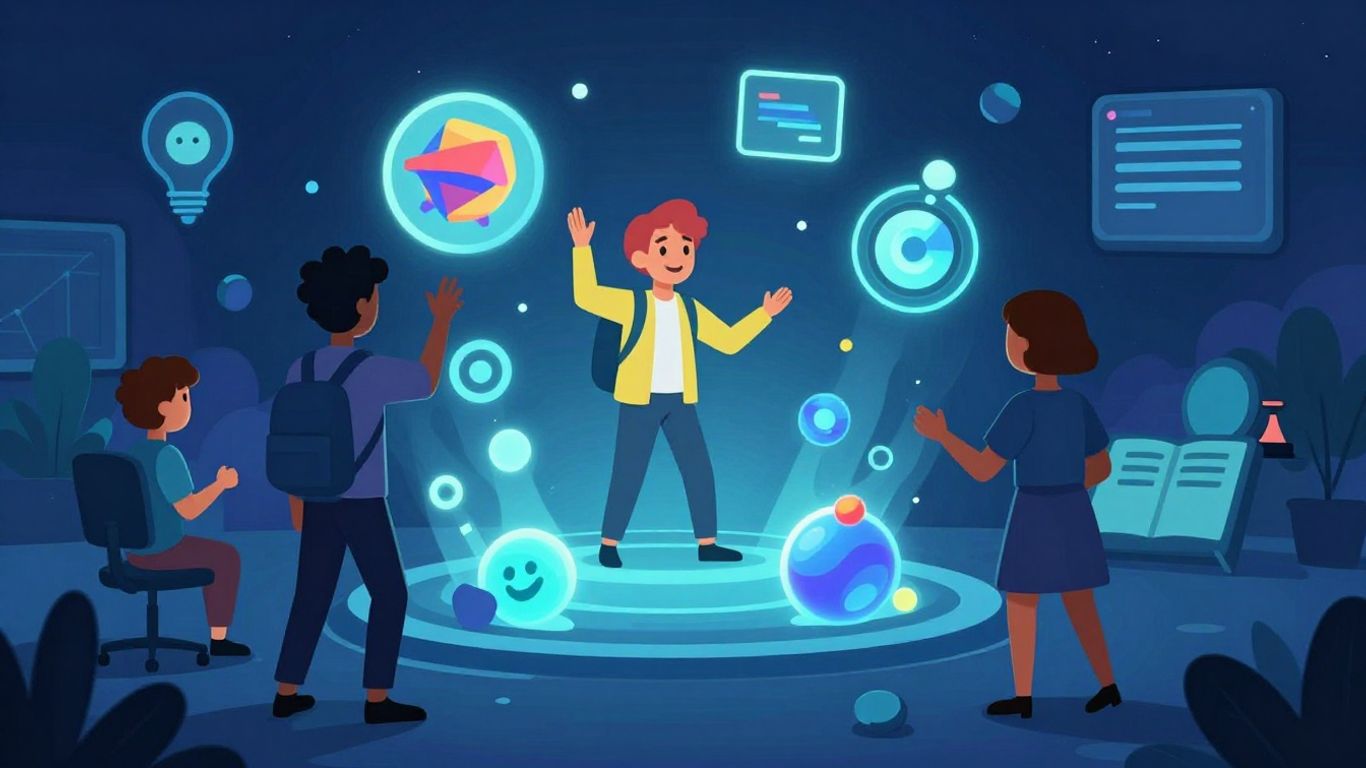
As AI tools become more common in education and creative fields, it’s important to think about the tricky parts. We’re talking about the ethical side of things, the stuff that makes you pause and consider the bigger picture.
Concerns Regarding Student Development
One big question is how using AI might change how students learn and think. Are we building skills or just getting good at asking AI for answers? There’s a worry that over-reliance could make it harder for students to develop their own critical thinking and problem-solving abilities. It’s like using a calculator for simple math all the time – you might forget how to do it yourself. We need to make sure AI is a tool that helps learning, not a shortcut that replaces it.
Addressing Academic Integrity Challenges
This is a hot topic. With AI that can write essays, create art, or even code, how do we know what’s a student’s own work? It’s a challenge for educators to keep assignments meaningful and to detect when AI has been used inappropriately. This means rethinking assignments and how we assess understanding. Maybe it’s less about the final product and more about the process, or perhaps focusing on in-class work where AI use is more controlled.
Intellectual Property And Bias Considerations
AI models learn from vast amounts of data, and that data can contain biases. This means AI-generated content might unintentionally reflect or even amplify those biases. Think about AI art tools trained on images that don’t represent diverse people well, or text generators that use language reflecting societal prejudices. We also need to consider where the AI gets its information. Is it using copyrighted material without permission? This raises questions about who owns AI-generated work and how artists and creators are credited and compensated. It’s a complex area with ongoing legal and ethical debates.
Optimizing Ai High Integration
Getting the most out of AI tools in education isn’t just about knowing they exist; it’s about using them smartly. This means understanding how to talk to the AI so it gives you what you need, exploring extra tools that can expand its abilities, and making sure everyone involved knows how to use these technologies well.
The Art of Effective Prompt Engineering
Think of prompt engineering as giving clear instructions. The better your instructions, the better the AI’s response. It’s about being specific and providing context. For instance, instead of asking for "a story," you might ask for "a short story about a lost robot finding its way home, written in the style of a children’s fairy tale, with a happy ending."
Here are some tips for better prompts:
- Be Specific: Clearly state what you want. Include details about format, style, tone, and content.
- Provide Context: Give the AI background information. If you’re asking it to write a scene, tell it who the characters are and what has happened before.
- Iterate and Refine: Don’t expect perfection on the first try. Adjust your prompt based on the AI’s output until you get the desired result.
Exploring AI Plugins and Extensions
Many AI platforms offer plugins or extensions that add new features or connect to other services. These can significantly broaden what AI can do. For example, a plugin might allow an AI to access real-time data from the internet, create images from detailed descriptions, or even generate code.
- Image Generation: Tools that turn text descriptions into visuals, useful for character design or illustrating concepts.
- Data Analysis: Plugins that can process and interpret data sets, aiding in research or understanding trends.
- Content Summarization: Extensions that can condense long articles or documents into key points.
Fostering Teacher and Student AI Literacy
For AI to be truly effective, both teachers and students need to understand its capabilities and limitations. This involves training and ongoing learning.
AI literacy isn’t just about knowing how to use the tools; it’s about understanding the principles behind them, recognizing potential biases, and using them responsibly. It’s a skill set that will become increasingly important.
Developing AI literacy involves:
- Workshops and Training: Providing structured sessions for educators and students on AI tools and best practices.
- Hands-on Practice: Encouraging experimentation with AI in a safe and guided environment.
- Critical Discussion: Facilitating conversations about the ethical implications and societal impact of AI.
Looking Ahead: The Evolving Role of AI
As we’ve seen, artificial intelligence, particularly generative AI, is making its mark across various fields, from the classroom to the stage and beyond. While its integration into areas like drama education presents unique opportunities, especially in resource creation and planning, it also brings up important questions about how we learn and create. The technology is still quite new, and its capabilities are changing fast. It’s clear that educators and creators are figuring out how to use these tools in ways that fit their specific needs, sometimes in ways that are quite different from how they’re used in other subjects. As AI continues to develop, understanding its potential and its limits will be key. Being aware of the ethical considerations is also a must. Ultimately, the goal is to use these new tools thoughtfully, to support creativity and learning, rather than replace the human element that makes these fields so vibrant.
Frequently Asked Questions
What exactly is ‘AI High’?
‘AI High’ is a term we’re using to talk about how artificial intelligence, especially the newer kinds like ChatGPT, is becoming super common in schools and even in fun stuff like entertainment. It’s like AI is going to school and learning new tricks to help us out.
How is AI changing how teachers teach and students learn?
AI can help teachers create cool lesson plans and materials way faster. For students, it means learning can be more personalized, like having a tutor that knows exactly what you need help with. It’s all about making learning more engaging and easier for everyone.
Can AI help with creative stuff like art and drama?
Absolutely! In drama, AI can help design sets and costumes, or even create music and sound effects for plays. It can also help visualize characters, making the creative process smoother and opening up new ideas for artists and students.
Are there any downsides to using AI in schools?
Yes, we need to be careful. There are worries about students not thinking for themselves as much, or about cheating. Plus, AI can sometimes be biased or use ideas without giving credit. It’s important to use AI responsibly and ethically.
How can teachers and students get better at using AI?
The best way is to learn how to talk to AI effectively – that’s called ‘prompt engineering.’ It’s like learning the right way to ask questions to get the best answers. Also, understanding how AI tools work and practicing using them helps a lot.
Is AI going to replace teachers?
No way! Think of AI as a helpful assistant. Teachers are still super important for guiding students, sparking creativity, and providing that human connection. AI can handle some tasks, freeing up teachers to focus on what they do best.