

Have you ever heard of the aye-aye? This creature is pretty wild. It looks a bit strange, and it does some really unique things. We’re going to dive into what makes this animal so special, from how it finds food to where it lives. It’s a fascinating look at a creature that’s unlike most others you’ll find. Let’s get to know this unusual primate, sometimes called the ai ai animal, a bit better.
Key Takeaways
- The aye-aye has very distinct physical traits, like big eyes and a long, thin middle finger, which help it survive in its environment.
- These animals are nocturnal, meaning they are active at night, and they live only on the island of Madagascar.
- Their way of finding food is pretty amazing; they tap on trees to locate grubs and then use their strong teeth to chew into the wood.
- Aye-ayes are generally solitary creatures and have their own ways of communicating and reproducing.
- Because they are so unique, there are efforts to protect them and their forest homes, as they face threats to their survival.
Understanding the Unique Aye-Aye
Distinctive Physical Characteristics
The aye-aye is a creature that really stands out in the animal kingdom, and not just because it looks a bit like it’s been assembled from spare parts. It’s a type of primate, but it doesn’t look like your typical monkey or ape. For starters, it has these big, round eyes that are perfect for seeing in the dark. Its ears are also pretty large and leathery, kind of like a bat’s, which helps it listen for its dinner.
But the most striking feature has to be its hands, especially the middle finger. This finger is super long and thin, almost skeletal, and it’s used for a very specific job. The aye-aye also has rodent-like incisors that grow continuously, which is unusual for a primate. These teeth are strong and sharp, perfect for gnawing through wood.
Nocturnal Habits and Habitat
Aye-ayes are strictly nocturnal, meaning they sleep during the day and come out at night. They usually make nests in tree hollows or dense foliage to rest. Their habitat is pretty specific: they are found only on the island of Madagascar, off the coast of East Africa.
They prefer to live in forests, especially rainforests and deciduous forests. These environments provide them with the trees they need for shelter and, more importantly, for finding food. The dense canopy of the forest also offers protection from predators while they are out foraging.
The Aye-Aye’s Place in the Primate Family
Classifying the aye-aye has been a bit of a puzzle for scientists. For a long time, people weren’t sure where it fit in. It has some features that remind people of rodents, like those ever-growing incisors, and others that seem more like bats, such as its large ears and nocturnal lifestyle.
However, after a lot of study, it’s now firmly placed within the primate order. It’s the only surviving member of its family, the Daubentoniidae. This makes it a very special and unique branch on the primate evolutionary tree.
The aye-aye’s unique adaptations, from its specialized finger to its gnawing teeth, highlight the incredible diversity that can arise through evolution in isolated environments like Madagascar.
The Aye-Aye’s Specialized Foraging Techniques
Percussive Foraging for Grubs
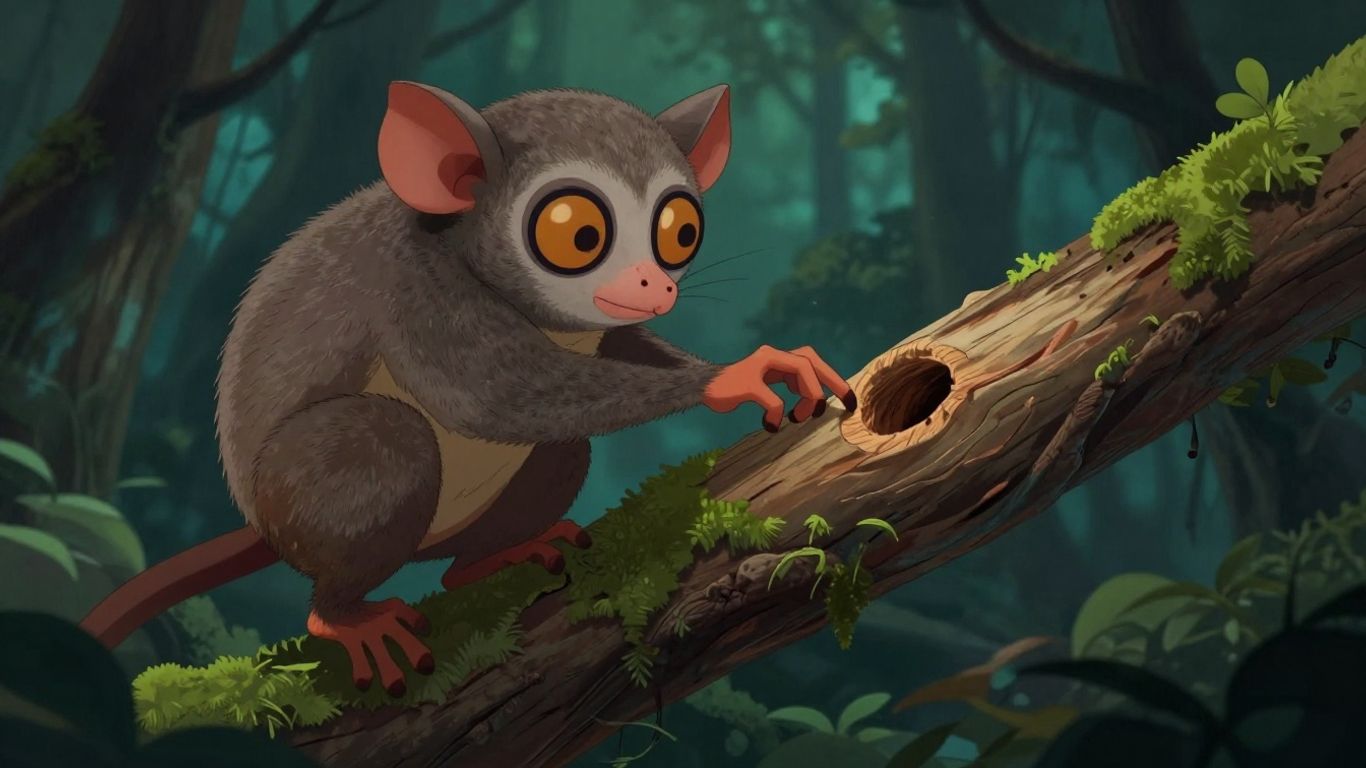
The aye-aye has a very particular way of finding its dinner, and it all starts with a tap. These nocturnal primates are insectivores, meaning they primarily eat insects, and they have a unique method for locating the grubs that live inside trees. They use their long, slender middle finger to tap rapidly on the surface of wood, listening intently for any changes in the sound. This technique, known as percussive foraging, allows them to detect hollow spaces beneath the bark where insect larvae might be hiding. It’s a bit like echolocation, but with sound produced by tapping instead of emitted calls.
The Role of the Elongated Middle Finger
Once a likely spot is identified through tapping, the aye-aye’s specialized middle finger comes into play again. This finger is incredibly thin and flexible, almost like a twig itself. It’s used to probe into small holes and crevices in the wood. If the aye-aye can create an opening, it will insert this finger deep into the cavity to feel around for grubs. When it finds one, the finger is used to hook and extract the unfortunate insect. This finger is so specialized that it’s a key tool in their survival, allowing them to access food sources other animals can’t reach.
Specialized Incisors for Wood Gnawing
To get to those grubs in the first place, the aye-aye needs to break through the tough exterior of trees. This is where their remarkably adapted incisors come in. Unlike the incisors of other primates, the aye-aye’s front teeth are large, continuously growing, and incredibly strong. They are shaped in a way that makes them perfect for gnawing through wood. After tapping to locate a grub, the aye-aye will use these powerful incisors to chew a hole into the tree bark or wood. This creates an entry point for their slender middle finger to then do its work. It’s a two-part system that’s highly effective for their diet.
The aye-aye’s foraging strategy is a prime example of evolutionary adaptation, showcasing how specific physical traits can be finely tuned to exploit unique ecological niches. Their ability to tap, gnaw, and probe allows them to access a food source that is largely unavailable to other animals in their environment.
Here’s a quick look at the tools of the trade:
- Tapping Finger: Used to locate hollow spaces and grubs by sound.
- Gnawing Incisors: Large, continuously growing teeth for chewing through wood.
- Probing Middle Finger: Thin and flexible, used to extract grubs from holes.
Habitat and Distribution of the Aye-Aye
Endemic to Madagascar
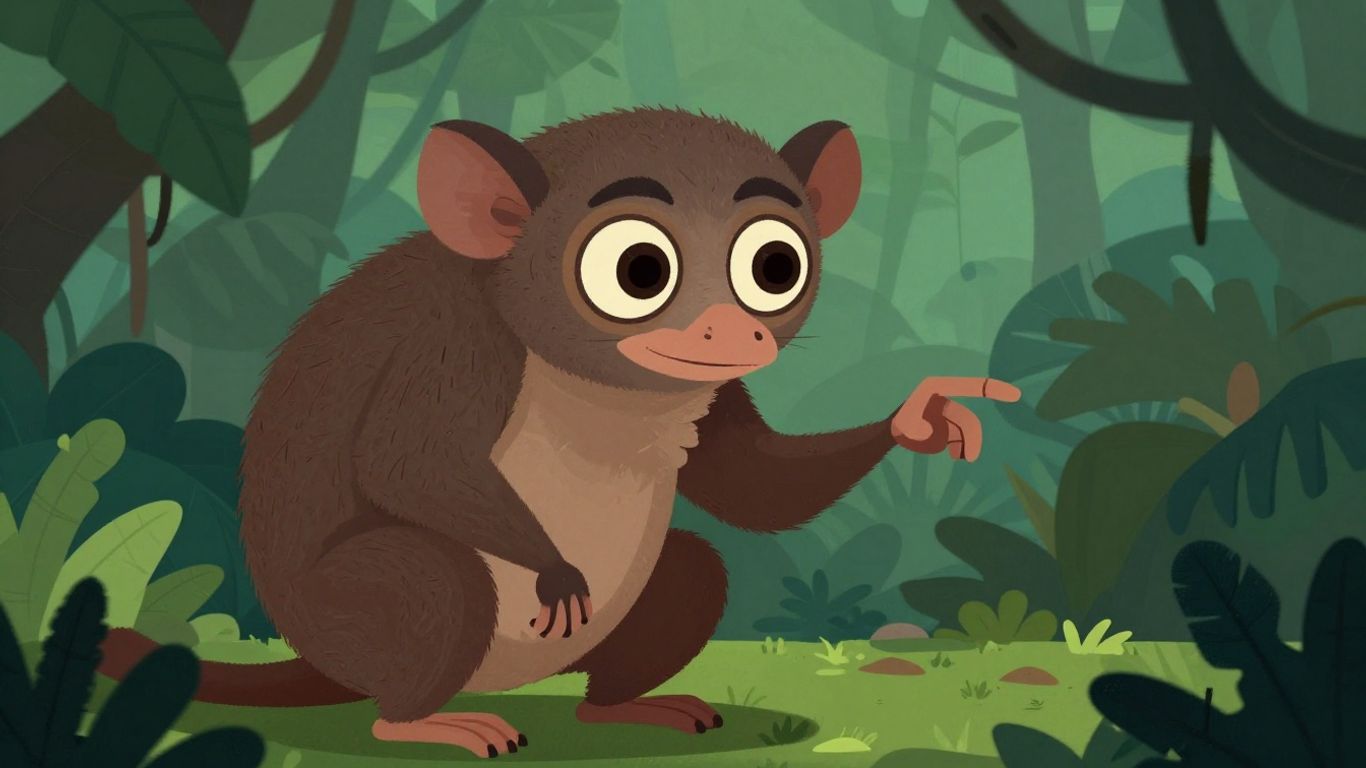
The aye-aye is a creature found nowhere else on Earth but the island of Madagascar, off the coast of East Africa. It’s like the island’s own special, weird little secret. This means that if Madagascar’s forests disappear, the aye-aye goes with them. Their entire world is this one island. They live in a variety of forest types across the island, from dense rainforests in the east to drier deciduous forests in the west and south.
Importance of Forest Ecosystems
Aye-ayes really depend on healthy forests. They need the trees for shelter, for finding food, and for raising their young. Their unique way of finding food, which involves tapping on wood to locate insect larvae, means they need trees with plenty of grubs. Different types of forests provide different food sources and hiding spots, so a diverse forest ecosystem is best for them. When forests are cleared for farming or other human activities, it directly impacts the aye-aye’s ability to survive.
Conservation Status and Threats
Sadly, the aye-aye is listed as endangered. This isn’t just because their habitat is shrinking, but also due to local beliefs. In some parts of Madagascar, the aye-aye is seen as a bad omen, and people may kill them on sight. This fear, combined with habitat loss, puts a lot of pressure on their populations. It’s a tough situation for these unique animals.
The aye-aye’s survival is tied directly to the health of Madagascar’s forests. Protecting these natural areas is the most important step in keeping this species from disappearing forever.
Here’s a quick look at the threats:
- Habitat Destruction: Forests are cleared for agriculture, logging, and charcoal production.
- Persecution: Local superstitions lead to aye-ayes being killed.
- Roads: New roads can fragment habitats and increase human access to remote areas, leading to more disturbance.
Behavioral Ecology of the Aye-Aye
Solitary and Nocturnal Lifestyle
The aye-aye leads a life mostly under the cover of darkness. These creatures are strictly nocturnal, meaning they are most active during the night. As the sun sets, they emerge from their nests, which are often built in tree hollows or dense leafy structures. During the day, they rest, usually alone, to conserve energy for their nightly activities. This solitary nature means that interactions between aye-ayes are generally limited, occurring primarily for mating or during territorial encounters. Their movements are quiet and deliberate as they search for food, relying on their keen senses to navigate the forest canopy.
Communication Methods
Communication among aye-ayes isn’t as vocal as in many other primates. While they do produce sounds, these are typically soft and used for close-range interactions. These vocalizations can include soft whistles or chirps, often heard between a mother and her young, or during mating. Scent marking might also play a role in their communication, helping individuals define their territories and signal their presence to others, though this is less studied than their vocal signals. Visual cues are likely minimal due to their nocturnal habits.
Reproductive Strategies
Aye-aye reproduction is not tied to a specific season, allowing them to breed whenever conditions are favorable. Females typically give birth to a single offspring after a gestation period of about 170 days. The young aye-aye is born blind and hairless, relying entirely on its mother for care. It will remain with its mother for an extended period, often up to two years, learning essential survival skills like foraging techniques. This long dependency period is characteristic of many primate species and allows for thorough skill development before the young aye-aye ventures out on its own.
Cultural Significance and Folklore
Myths and Superstitions
In Madagascar, the aye-aye often finds itself at the center of local folklore, and not always in a positive light. Because of its unusual appearance and nocturnal habits, it has unfortunately become associated with bad luck or even death in some communities. There are tales where seeing an aye-aye is considered an omen, and in some extreme cases, it’s believed the aye-aye can point its long middle finger at someone, marking them for misfortune. This fear, though unfounded, has historically led to the aye-aye being killed on sight in certain areas, contributing to its vulnerable status.
Local Perceptions of the Aye-Aye
While some superstitions cast the aye-aye in a negative light, other local beliefs offer a more nuanced view. In some parts of Madagascar, the aye-aye is seen as a creature of the forest, a natural part of the ecosystem, and not inherently evil. However, the pervasive fear in other regions means that understanding and appreciation can be difficult to foster. The aye-aye’s unique adaptations, like its specialized finger for finding food, are remarkable from a biological standpoint, but these traits have also fueled the myths surrounding it. It’s a prime example of how a creature’s appearance and behavior can shape human perception and lead to complex cultural interpretations.
Conservation Through Education
Recognizing the impact of local beliefs on aye-aye survival, conservation efforts increasingly focus on education. By sharing accurate information about the aye-aye’s role in the ecosystem and dispelling harmful myths, conservationists aim to change negative perceptions. Educational programs often involve local communities, explaining that the aye-aye is not a threat but a unique species deserving protection. This approach helps build a bridge between traditional beliefs and modern conservation science, fostering a sense of shared responsibility for the aye-aye’s future. The goal is to shift the narrative from fear to respect and understanding, encouraging people to coexist peacefully with this peculiar primate.
Conservation Efforts for the Aye-Aye
Protecting the aye-aye means we have to look after its home, which is Madagascar. These animals are pretty specialized, so they need specific types of forests to live in. When those forests disappear, the aye-aye population takes a hit. That’s why a lot of the work to save them involves keeping their natural spaces intact.
Protecting Natural Habitats
Saving the aye-aye really starts with saving the forests they call home. This isn’t just about planting a few trees; it’s about making sure whole ecosystems stay healthy. When forests are cleared for farming, logging, or development, the aye-aye loses its food sources and places to hide. Conservation groups work with local communities to find ways to use the land that don’t harm the forest as much. This can include things like promoting sustainable farming methods or setting up protected areas where logging is not allowed.
Research and Monitoring Programs
We can’t protect something if we don’t know much about it, right? Scientists are busy studying aye-ayes to learn more about how they live, what they eat, and where they go. This information is super important for figuring out the best ways to help them. They use different methods to keep track of aye-aye numbers and their health. This might involve:
- Setting up camera traps to observe their behavior without disturbing them.
- Using radio collars on a few individuals to track their movements and home ranges.
- Conducting surveys to estimate population sizes in different areas.
- Analyzing droppings to understand their diet and health.
Understanding the aye-aye’s specific needs, like their reliance on certain types of trees for food and shelter, is key to designing effective conservation plans. Without this knowledge, efforts might be misplaced.
Community Involvement in Conservation
It’s not just scientists and conservationists who can save the aye-aye. The people who live in Madagascar are a big part of the solution. When local communities are involved, they have a stake in protecting the animals and their environment. This can mean educating people about why aye-ayes are important and how they can help. Sometimes, it involves creating alternative ways for people to make a living that don’t involve harming the forest, like ecotourism or crafting.
Getting local people on board is one of the most effective ways to make sure conservation efforts actually work in the long run.
A Creature of Intrigue
The aye-aye, with its unusual appearance and specialized foraging methods, truly stands out in the animal kingdom. Its unique adaptations, like that long, thin middle finger used for finding food, are a testament to the diverse ways life evolves. While it might seem strange, this creature plays a role in its Madagascar ecosystem. Learning about animals like the aye-aye reminds us how much there is still to discover about the natural world and the importance of protecting these fascinating species and their homes.
Frequently Asked Questions
What makes the Aye-Aye so strange-looking?
The Aye-Aye has a really unique appearance! It has big, round eyes perfect for seeing at night, large ears that can swivel to hear tiny sounds, and a bushy tail. But its most unusual feature is its long, thin middle finger, which it uses like a tool.
How does the Aye-Aye find its food?
This creature is a master of finding hidden snacks. It taps on tree branches with its special middle finger, listening for the hollow sounds that mean grubs are inside. Then, it uses its strong, sharp teeth to gnaw a hole in the wood and scoops out the tasty bugs with that same long finger.
Where does the Aye-Aye live?
You can only find the Aye-Aye on the island of Madagascar, which is off the coast of Africa. It prefers to live in forests, where there are plenty of trees to explore for food and shelter. Sadly, its home is shrinking, making it harder for Aye-Ayes to survive.
Is the Aye-Aye a solitary animal?
Yes, Aye-Ayes generally prefer to be alone. They are most active after dark, spending their nights searching for food and then resting during the day. They don’t usually hang out in big groups.
Why are Aye-Ayes sometimes feared?
In some local cultures in Madagascar, the Aye-Aye is seen as a bad omen, and people believe it can bring bad luck or even death. This fear has unfortunately led to them being harmed, even though they are harmless to humans.
What is being done to help Aye-Ayes?
Conservationists are working hard to protect Aye-Ayes. This includes saving their forest homes by stopping deforestation and educating local communities about how important and amazing these animals are. By understanding and protecting them, we can ensure they continue to exist.