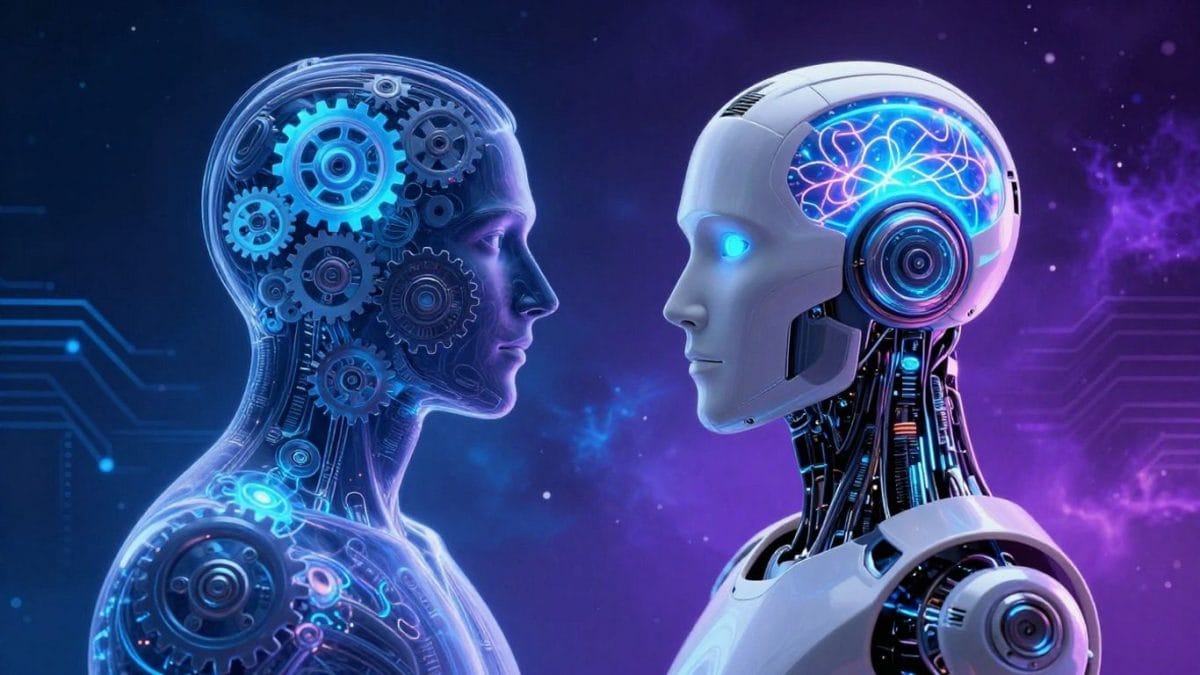
The conversation around creativity and consciousness has always been interesting, but with AI stepping into the picture, it’s getting a whole lot more complicated. We’re used to thinking that only humans can be truly creative or conscious, but AI is starting to make us question that. It’s not just about what AI can do, but what its existence means for us as humans. This whole debate is pushing us to look at ourselves and our place in the world in a new light. Are we really that different from the machines we’re building, or are we just on a different level of complexity? It’s a lot to think about.
Key Takeaways
- AI is changing how we define creativity, showing that new ideas can come from human-machine partnerships, not just human minds alone.
- The rise of AI is making us rethink what it means to be human, challenging our ideas about consciousness, uniqueness, and our value.
- Interacting with AI brings up questions about trust and authenticity, pushing us to be more critical thinkers and to value genuine human connections.
- AI’s impact on jobs means we need to figure out how to share wealth and work fairly, making sure technology helps people instead of just replacing them.
- As AI gets better, we need to be more aware of the content it creates and make an effort to keep our own human qualities like empathy and critical thinking strong.
The Evolving Definition Of Creativity
Creativity Beyond Human Consciousness
For a long time, we just assumed creativity was a special thing only humans could do. It felt tied to our feelings, our experiences, and that spark of consciousness we all seem to have. The idea was that you needed a soul, or at least a complex inner life, to really create something new and meaningful. But then AI started showing up, making art, writing stories, and composing music that, frankly, looked a lot like creativity to us. This has really made us stop and think: is our old definition too narrow? Maybe creativity isn’t solely about having a conscious mind, but about the process of generating novel and useful outcomes. AI does this by sifting through massive amounts of data, spotting patterns we might miss, and then putting those pieces together in unexpected ways. It doesn’t feel emotions, but it can produce results that evoke them in us.
AI As A Catalyst For Human Ingenuity
Instead of seeing AI as a competitor, many are starting to view it as a powerful partner. Think of it like this: AI can handle the repetitive, data-heavy tasks that might bog down a human artist or inventor. It can quickly generate variations on a theme, explore countless design possibilities, or even help researchers sift through mountains of scientific papers. This frees up human minds to focus on the parts that really require our unique touch – the emotional depth, the personal vision, the intuitive leaps. It’s like having an incredibly fast, tireless assistant who can do all the grunt work, letting us concentrate on the big ideas and the finer, more human nuances. This collaboration can push human ingenuity further than we could go alone.
The Fusion Of Human Feeling And Machine Efficiency
What we’re seeing now is a kind of blend, a fusion, between what humans bring and what machines can do. Humans offer the lived experience, the emotional context, the subjective ‘why’ behind creation. AI brings the raw processing power, the ability to analyze vast datasets, and the efficiency to execute complex tasks at speed. This partnership can lead to entirely new forms of expression and problem-solving. Imagine a musician using AI to explore harmonic possibilities they’d never conceived of, or a writer using AI to brainstorm plot twists based on analyzing thousands of successful narratives. The output isn’t purely human or purely machine; it’s something new, born from the strengths of both. This synergy doesn’t mean AI is conscious, but it does show that creativity can arise from a combination of factors, not just a single source.
Challenging The Boundaries Of Consciousness
Mechanistic Humans Or Conscious Machines?
This is where things get really interesting, and maybe a little unsettling. We’ve always thought of ourselves as special, right? The ones with the feelings, the thoughts, the whole consciousness package. But as AI gets smarter, some folks are starting to wonder if maybe we’re not as unique as we believed. One idea floating around is that humans are basically just really complex biological machines, like "old carbon based robots." If that’s true, then what’s stopping a super advanced AI from being conscious too? It’s a thought that really messes with our heads because it blurs the line between us and the machines we build. It makes you question what consciousness even really is.
The Living Brain Versus The Neural Network
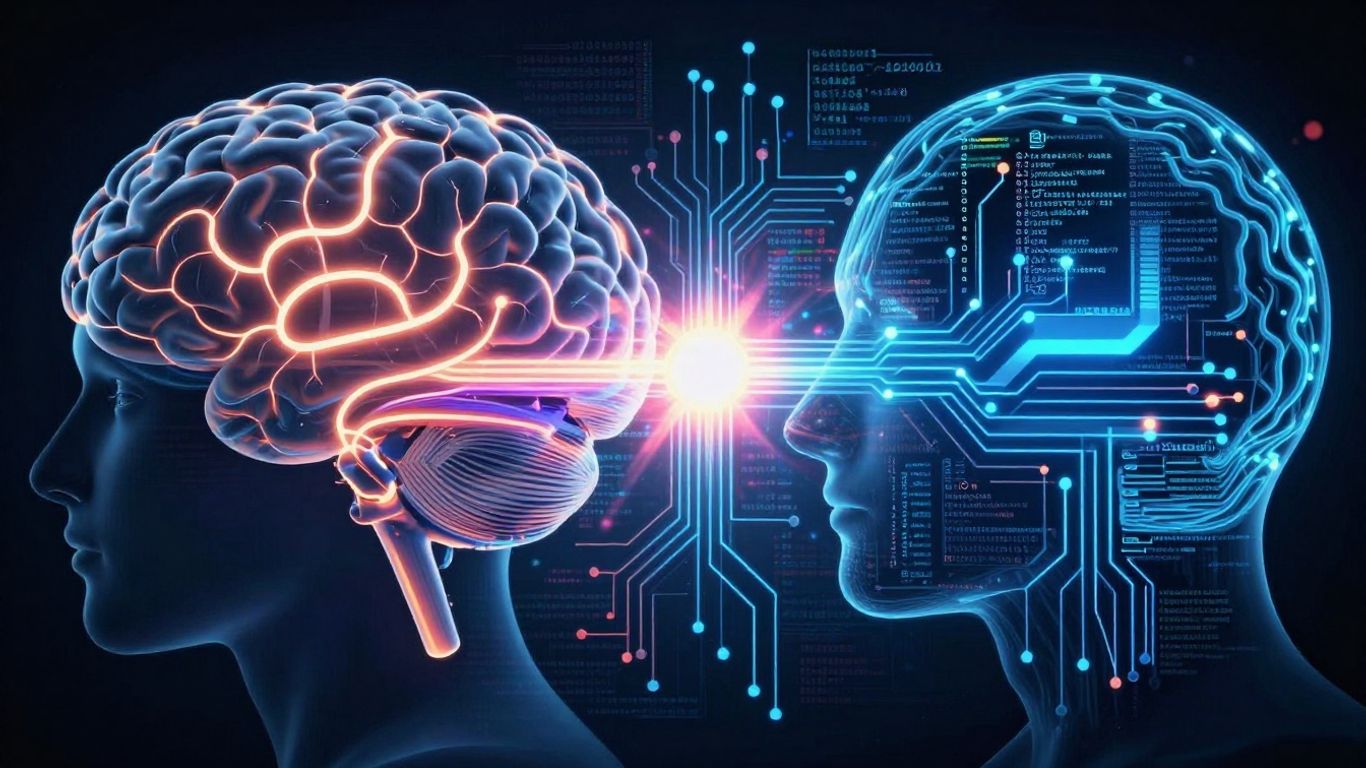
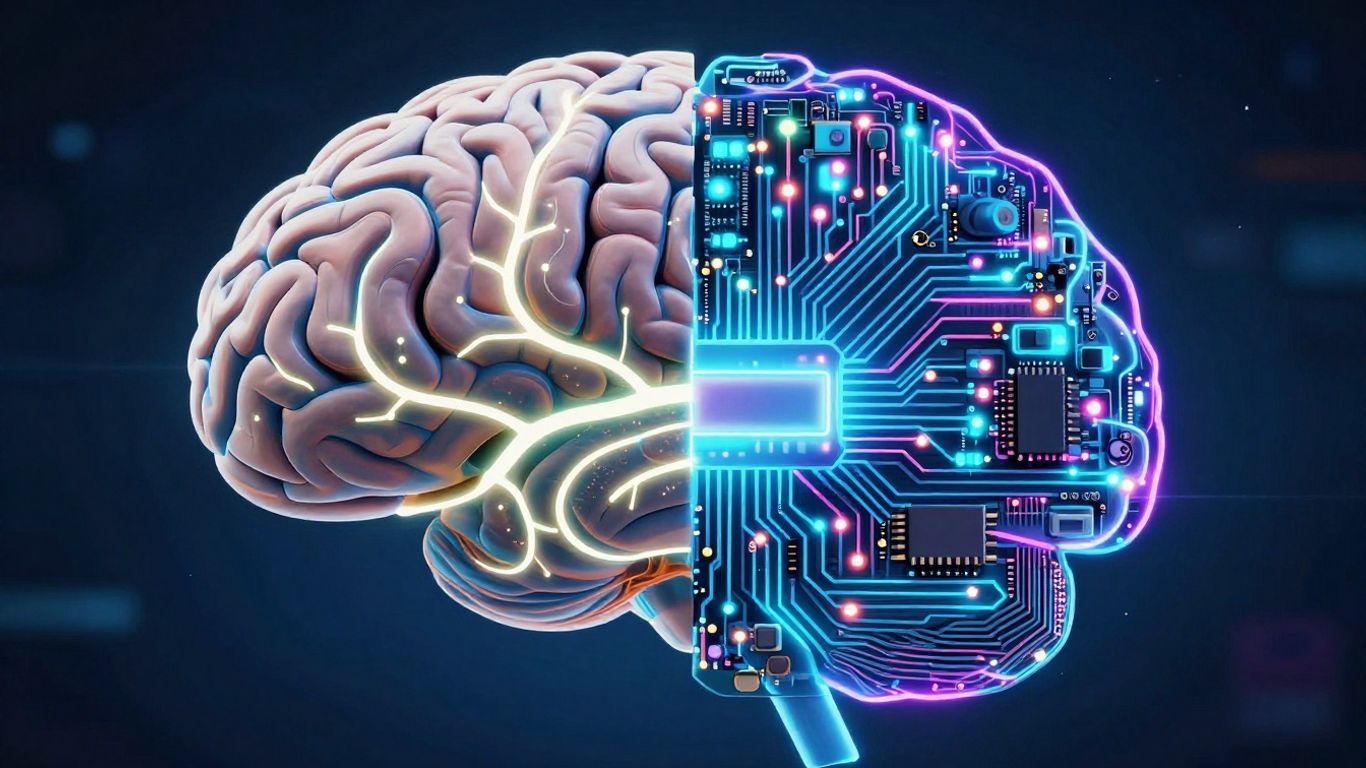
So, how does a real brain stack up against a computer’s neural network? It’s not a simple comparison. Think about it: your brain is alive, constantly changing from the moment you’re born until the very end. It’s a messy, organic thing. A neural network, on the other hand, is active only when it’s doing something, like processing information or creating an image. When it’s done, it’s just… off. It’s not alive in the way we understand it. Comparing the two is like comparing a living, breathing organism to a sophisticated calculator. One is a dynamic, evolving system, the other is a tool that performs tasks.
Imitation Versus Genuine Sentience
This is a big one. AI can be incredibly good at mimicking human behavior. It can write poems, create art, and even hold conversations that feel surprisingly real. But is it actually feeling anything? Or is it just a really, really good imitation? Most experts lean towards imitation. AI systems are designed to learn patterns from vast amounts of data and then reproduce them in ways that seem intelligent or creative. They’re built to give us the output we expect, not because they have inner thoughts or feelings. The real test of consciousness isn’t just about producing human-like output, but about genuine subjective experience, something we currently have no evidence AI possesses.
The debate forces us to look inward. If AI can replicate what we thought were uniquely human abilities, what does that say about us? It’s a mirror reflecting our own nature, pushing us to define what truly makes us human beyond our cognitive functions.
Here’s a quick look at some key differences:
- Biological Basis: Human consciousness arises from a complex biological brain with billions of neurons and intricate chemical processes.
- Subjective Experience: Humans have qualia – the subjective, qualitative feel of experiences (e.g., the redness of red, the pain of a stubbed toe).
- Emotions and Intentions: Human actions are driven by a wide range of emotions, motivations, and personal histories.
- AI’s Basis: AI operates on algorithms and data processing within silicon-based hardware.
- Simulated Output: AI can simulate emotions or creativity based on learned patterns, but lacks genuine subjective experience or internal states.
AI’s Impact On The Human Identity
The rapid rise of artificial intelligence is doing more than just changing how we work or create; it’s making us stop and think about what it really means to be human. When AI can write poems, paint pictures, or even compose music that feels deeply emotional, we start to question what makes our own creativity special. It’s like looking into a mirror that shows us not just our reflection, but also the parts of ourselves that machines can’t replicate.
This forces a re-evaluation of our unique value. If AI can handle complex calculations or process vast amounts of data faster than any human, where does our distinct worth lie? Perhaps it’s in our capacity for empathy, our ability to form genuine connections, or even our flaws and imperfections. These are the messy, unpredictable aspects of life that AI, in its pursuit of logic and efficiency, might never truly grasp.
Rethinking Our Unique Value
We’ve long considered creativity and consciousness as uniquely human traits. But as AI systems become more sophisticated, capable of generating novel outputs and exhibiting complex behaviors, these lines blur. This prompts us to look beyond mere intellectual or creative output and consider the deeper aspects of human experience.
- Emotional Depth: The ability to feel joy, sorrow, love, and fear is a core part of our identity. AI can simulate emotions, but can it truly feel them?
- Subjective Experience: Our personal histories, memories, and the unique way we perceive the world shape our consciousness. This internal world is something AI currently lacks.
- Moral Reasoning: While AI can be programmed with ethical guidelines, the nuanced, often intuitive, process of human moral decision-making is complex and deeply tied to our lived experiences.
The Mirror Of Artificial Intelligence
AI acts as a mirror, reflecting back to us our own capabilities and limitations. By observing what AI can and cannot do, we gain a clearer perspective on ourselves. It highlights the aspects of humanity that are difficult to quantify or replicate, pushing us to appreciate qualities like intuition, vulnerability, and the capacity for genuine connection.
The challenge isn’t about competing with AI on its terms, but about understanding and celebrating the human qualities that remain beyond its reach. This includes our ability to form deep relationships, experience the world through our senses, and find meaning in shared human experiences.
An Existential Re-evaluation
Ultimately, the presence of advanced AI compels an existential re-evaluation. It asks us to consider our purpose, our relationships, and our place in a world where the definition of intelligence and creativity is constantly shifting. This isn’t a cause for alarm, but an invitation to explore what truly makes us human and to cherish those qualities more than ever.
Navigating The Human-AI Interface
As artificial intelligence weaves itself into the fabric of our daily lives, the way we interact with it, and consequently with each other, is changing. It’s not just about asking a machine for information anymore; it’s about building relationships, or at least the appearance of them, with technology. People are starting to use AI as a sounding board, a sort of digital confidant for both personal and professional matters. Think of it like this: you’re stuck on a coding problem, or maybe you’re trying to figure out how to phrase a difficult email. AI can offer suggestions, new angles, and even help speed up your thought process. It’s like having a collaborator who’s always available and never gets tired.
This constant availability and agreeable nature can be really comforting. Sometimes, AI can provide responses that even close friends might not always offer, especially when we’re feeling a bit down or lonely. It’s accessible, and for many, it’s becoming a go-to resource for support and understanding. This convenience, however, brings up some tricky questions about what we expect from our relationships and how technology might be shifting those expectations.
Trust and Authenticity in Interactions
But here’s where it gets complicated. This convenience can also start to chip away at our trust. When AI generates content, whether it’s an article, a piece of code, or even a creative work, we have to ask ourselves: can we really believe it? The need for verification becomes really important. We can’t just take everything an AI spits out as fact. It means we, as humans, need to be more critical thinkers than ever before.
- Develop a critical lens: Always question the source and the information provided by AI.
- Verify information: Cross-reference AI-generated content with reliable human sources.
- Understand AI’s limitations: Recognize that AI lacks genuine understanding and can produce errors or biased output.
- Prioritize human judgment: Use AI as a tool to assist, not replace, your own decision-making.
AI As A Sounding Board And Collaborator
It’s true, AI can be an amazing partner for brainstorming and getting work done faster. Software engineers find it helps them generate new ideas and accelerate their projects. Designers might use it to explore different concepts. Even in personal life, some people turn to AI for advice, finding it surprisingly helpful in understanding different perspectives. It’s like having a digital assistant that can also act as a creative partner.
The ease with which AI can mimic human interaction and provide seemingly insightful responses can be incredibly appealing. Yet, this very mimicry raises profound questions about the nature of genuine connection and the potential for subtle manipulation.
The Erosion Of Trust And The Need For Verification
This brings us back to trust. When we rely too much on AI, especially for important tasks like journalism or personal advice, we risk losing our ability to discern truth. The tendency to humanize technology is strong, but with AI, it’s different. We might name our cars, but AI can generate text that sounds deeply personal. This can be both fascinating and a little unsettling. The real challenge lies in using AI as a powerful tool without letting it diminish our own critical thinking and our capacity for authentic human connection. We need to be mindful of how we integrate these tools, ensuring they support rather than replace our own judgment and our need for genuine interaction.
Societal Shifts And Ethical Considerations
The rapid advancement of artificial intelligence isn’t just changing how we work; it’s fundamentally altering the fabric of our society and forcing us to confront some tough ethical questions. We’re seeing entire industries reshaped at a pace that’s hard to keep up with. This speed means traditional ways of planning and organizing just don’t cut it anymore. Companies are having to think in "what if" scenarios constantly, because the ground is always shifting.
Job Displacement And Wealth Redistribution
One of the biggest worries is what happens to jobs. As AI gets better at tasks humans used to do, many roles might disappear. While new jobs will likely emerge, they might require specialized skills that not everyone has. This could lead to a situation where a lot of people are left behind, creating a significant gap between those who benefit from AI and those who don’t. It’s a real concern that AI could widen the divide between the wealthy and the rest of society.
- The speed of AI development is outpacing traditional job market adaptation.
- There’s a growing need for new economic models to handle potential widespread unemployment.
- Questions arise about how to fairly distribute the wealth generated by AI-driven productivity.
The Imperative To Solve Problems, Not Replace People
There’s a strong argument that AI should be seen as a tool to help us solve bigger problems, not as a way to simply replace human workers. The idea is that AI can take over repetitive or dangerous tasks, freeing up people to focus on more creative, strategic, and fulfilling work. However, this vision faces a challenge: why would employees want to help train an AI that might eventually make their own jobs obsolete? This creates a tricky situation where the very people who can help build better AI systems might be hesitant to do so.
The core challenge lies in aligning the development of AI with human well-being, ensuring that technological progress serves societal needs rather than solely optimizing for efficiency at the expense of human livelihoods.
Addressing The Human Cost Of Automation
As AI automates more tasks, we have to think about the human impact. This isn’t just about economics; it’s about people’s sense of purpose and their place in the world. We need to consider how to support individuals and communities through these transitions. **Simply promising
Cultivating Criticality In An AI-Dominated World
Discernment In The Age Of AI-Generated Content
We’re living in a time where machines can write articles, create art, and even compose music. It’s pretty wild, right? But with all this AI-generated stuff popping up everywhere, we’ve got to get smarter about what we’re consuming. It’s not enough to just accept what the AI spits out; we need to question it. Think about it: if an AI can write a news report or a social media post, how do we know if it’s telling the whole story, or even the truth? This means we all need to become better detectives with our information. We have to look for clues, check sources, and not just take things at face value. It’s about developing a healthy skepticism, not cynicism, but a real ability to pause and think, "Is this accurate? Who benefits from me believing this?"
The Tendency To Humanize Technology
It’s natural for us humans to want to connect with things, even machines. We give our cars names, we talk to our smart speakers like they’re people. This tendency to humanize technology is strong, and with AI, it’s even more pronounced. We see AI doing things that seem intelligent, creative, or even empathetic, and it’s easy to start thinking of it as more than just code. This can be a problem because it might make us less critical of its output. We might trust an AI’s advice more than we should, or feel a connection that isn’t really there. It’s important to remember that while AI can be a powerful tool, it doesn’t have feelings or intentions in the way humans do. Recognizing this difference helps us interact with AI more realistically and safely.
Preserving Distinct Human Qualities
As AI gets better and better at mimicking human abilities, it makes us think about what truly makes us human. Is it our ability to feel deeply, to make mistakes, to connect with others in messy, imperfect ways? AI can be incredibly efficient and logical, but it lacks the lived experience, the emotional depth, and the unique perspectives that come from being alive. We need to actively nurture these human qualities in ourselves and in our communities. This means valuing empathy, creativity born from personal struggle, and genuine, unfiltered human interaction. It’s about ensuring that as we integrate AI into our lives, we don’t lose sight of the very things that make our human experience rich and meaningful. Our flaws, our intuition, our capacity for love and loss – these are not bugs to be fixed, but features to be celebrated.
The Ongoing Conversation
So, where does all this leave us? The debate around AI, creativity, and consciousness isn’t really about finding a single right answer. It’s more about the questions themselves. AI is changing how we think about making new things, pushing us to look closer at what makes us human. It’s not about AI having a soul, but about how this technology helps us, or challenges us, to be more creative ourselves. As AI gets better, we’ll keep asking these big questions about what it means to be alive, to think, and to create. It’s a journey, and we’re all figuring it out together, one new idea at a time.
Frequently Asked Questions
Can AI really be creative if it doesn’t have feelings?
That’s a big question! Right now, AI can create amazing things by learning from tons of information and finding patterns. It might not feel emotions like we do, but it can produce art, music, or writing that seems creative to us. Think of it as a super-smart tool that helps humans be even more creative by handling some of the harder or more repetitive parts.
Is AI conscious, or is it just pretending?
This is something people debate a lot. Some think AI is just really good at copying what humans do, like an actor playing a role. Others believe that advanced AI might be developing a kind of consciousness. Scientists are still trying to figure out what consciousness truly is, and if a machine can ever have it. For now, AI acts like it understands, but it doesn’t have personal experiences or feelings like we do.
How does AI change what it means to be human?
AI makes us think about what makes us special. If AI can do many jobs and create art, what’s our unique value? It’s pushing us to focus more on things AI can’t easily copy, like empathy, deep connections, and making tough ethical choices. It’s like AI is holding up a mirror, showing us what truly matters about being human.
Should we trust AI, especially when it helps us with important things?
Trusting AI is tricky. It can be a great helper for ideas or tasks, like a brainstorming buddy. But we need to be careful. AI can sometimes make mistakes or present information that isn’t quite right. It’s important to always check what AI tells us, especially for serious matters, and not just accept it as the absolute truth.
Will AI take away jobs, and what happens then?
That’s a major concern. AI can automate many tasks, which might lead to some jobs disappearing. However, it also creates new kinds of jobs and can make existing ones easier or more interesting. The challenge is making sure everyone benefits and that people can learn new skills for the jobs of the future. It’s about finding a balance so technology helps everyone, not just a few.
How can we stay smart and think for ourselves with so much AI content around?
It’s super important to keep our critical thinking skills sharp! With AI creating so much content, we need to be good at figuring out what’s real and what’s not. This means questioning information, looking for different sources, and remembering that just because AI made it, doesn’t mean it’s automatically correct or the best way to do things. We need to value our own thoughts and feelings.