
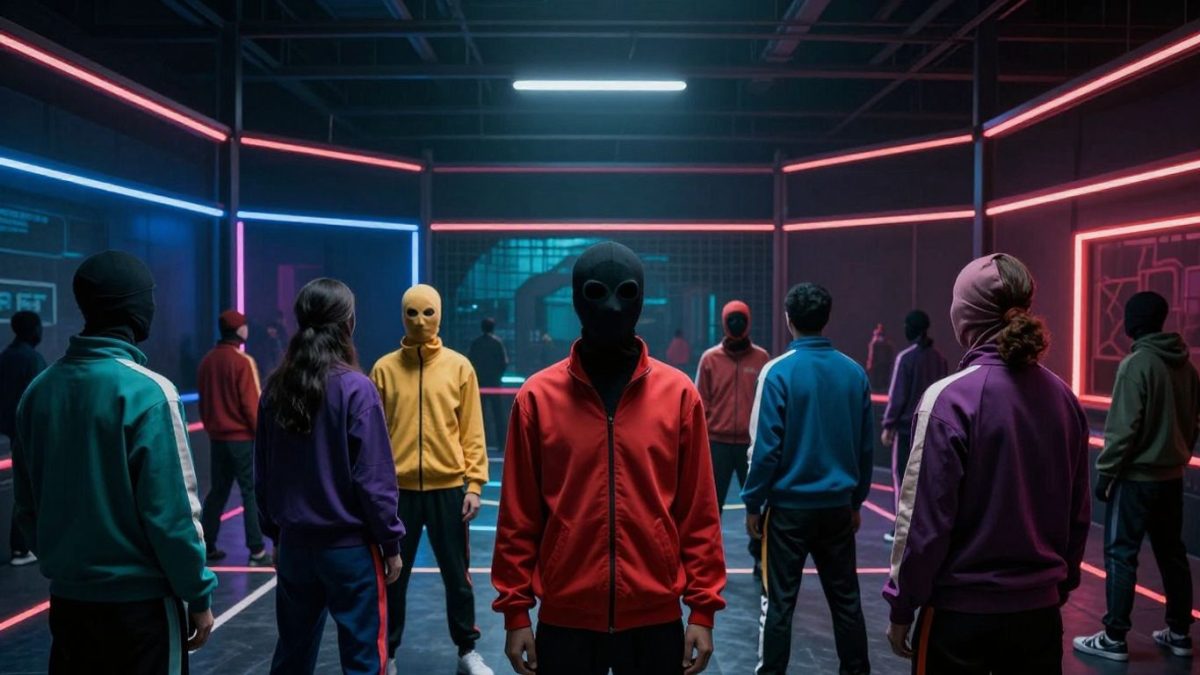
Alright, so Squid Game season 3 is here, and let me tell you, it’s a wild ride. If you thought the previous seasons were intense, buckle up. We’re talking about new, brutal games, familiar faces facing impossible choices, and a whole lot of questions finally getting some answers. It feels like the end of an era, and honestly, it’s a bit of a mixed bag, but definitely worth watching if you’ve been following along.
Key Takeaways
- Squid Game season 3 introduces three new, deadly games: a twisted Hide and Seek, a perilous Jump Rope challenge, and a strategic Sky Squid Game focused on negotiation.
- The season explores Seong Gi-hun’s evolving moral compass and his ultimate sacrifice, while also shedding light on the Front Man’s true identity and motivations.
- Themes of capitalism’s impact on morality, the burden of inherited wealth, and the concept of sacrifice for a greater good are central to the narrative.
- Lingering plot threads, including the role of the mysterious VIPs and the fate of key operatives, are addressed, providing some closure.
- The ultimate winner is a newborn baby, a symbolic choice by the creator to represent the future generation and the hope for a better world, despite the brutal context.
The New Games of Squid Game Season 3
Squid Game returns for its third and final season, and with it comes a fresh set of brutal challenges designed to test the limits of human endurance, morality, and cunning. Creator Hwang Dong-hyuk has once again reimagined familiar childhood pastimes into deadly trials, pushing the remaining players to their breaking points in pursuit of the life-altering cash prize. This season introduces three particularly harrowing games, each with unique mechanics and psychological pressures.
Hide and Seek: A Twisted Classic
This iteration of Hide and Seek takes the simple game and injects it with a deadly maze-like structure and a critical element of strategic cooperation. Players are divided into hiders and seekers through a random draw. The hiders are given a head start to navigate a complex labyrinth of rooms and corridors. Their only tools are keys, each corresponding to a specific shape: square, circle, or triangle. To progress, hiders must use these keys to unlock doors, but they cannot lock them behind them. This means each unlocked door provides a clue to the seekers about their potential path. The twist? To truly escape, hiders must either find all three key shapes or form groups of three, as each group member can hold a different key shape. Seekers, meanwhile, have the grim task of finding and eliminating a hider before the timer runs out. Failure means elimination for both seekers and hiders.
Jump Rope: A Perilous Leap of Faith
Moving from complex strategy to a test of physical coordination and nerve, Jump Rope is a deceptively simple challenge. Players must cross a deep chasm by traversing a narrow beam. The catch is a giant, mechanical skipping rope that swings aggressively. Success hinges on precise timing and a steady hand; a mistimed jump or a loss of balance means a fatal fall into the chasm below. This game preys on fears of heights and tests players’ physical capabilities under extreme duress. The narrow path and the relentless rope create an environment where even the slightest error can lead to immediate and irreversible consequences.
Sky Squid Game: A Test of Negotiation and Deceit
This final game bears little resemblance to its namesake playground activity. Sky Squid Game is less about physical prowess and more about sharp negotiation, manipulation, and the dark side of human nature. The traditional shapes used in the original game are now represented by high-storey platforms. The core mechanic requires players to collectively decide, at each stage, which among them will be eliminated. A minimum number of players must be removed at each level. While it’s theoretically possible for multiple players to reach the end and share the prize, the inherent greed and distrust among the contestants quickly surface. The game is designed to provoke selfish behavior, forcing players into impossible ethical dilemmas as they attempt to secure a larger share of the winnings by eliminating others. The Front Man orchestrates these scenarios, banking on the contestants’ own avarice to ensure the game’s bloody conclusion.
The introduction of these new games highlights a shift in the challenges. While previous seasons focused on direct physical elimination or simple rule-following, Season 3 emphasizes psychological warfare, strategic alliances, and the exploitation of human flaws like greed and fear. The games are no longer just about survival, but about who can best navigate the moral compromises demanded by the system.
Key Character Arcs and Developments

Season 3 really digs into what makes our main players tick, and honestly, it’s a mixed bag. We see some familiar faces grapple with their pasts and make some pretty tough choices. It’s not just about surviving the games anymore; it’s about who they become when the pressure is on.
Seong Gi-hun’s Sacrifice and Moral Compass
Gi-hun’s journey this season is all about his conscience. After everything he’s been through, he’s really wrestling with whether to get involved again. He’s trying to find a way out, not just for himself, but for the idea of a better future, symbolized by the baby he ends up protecting. It’s a heavy burden, and you can see the toll it takes. He’s not the same impulsive player from Season 1; he’s more thoughtful, more aware of the ripple effects of his actions. His arc is less about winning and more about what he’s willing to give up to do what he thinks is right, even when it’s the hardest path.
The Front Man’s Revealed Identity and Motivations
We finally get a much clearer picture of the man behind the mask, the Front Man. It turns out his story is more complex than we thought, tied deeply to the very system he upholds. We learn about his past and what led him to this position, and it adds a layer of tragedy to his role. It’s not just about power; it’s about a twisted sense of duty and perhaps even a warped form of protection. Understanding his background helps explain why he’s so committed to the games, even as they cause so much suffering.
Emerging Heroes and Tragic Fates
This season introduces some new faces and gives others a chance to shine, but not everyone makes it out. We see characters like the transgender contestant, Hyun-ju, step up in unexpected ways, showing incredible bravery and selflessness. She becomes a real standout, proving that heroism can come from anywhere. However, the show doesn’t shy away from its brutal nature. Many characters who show promise or have compelling backstories meet untimely ends. It’s a stark reminder that in these games, even the most heroic actions can lead to a tragic conclusion. The show really makes you feel the weight of these losses, showing how easily good people can be consumed by the system.
Thematic Exploration in the Final Season
Capitalism’s Influence on Morality
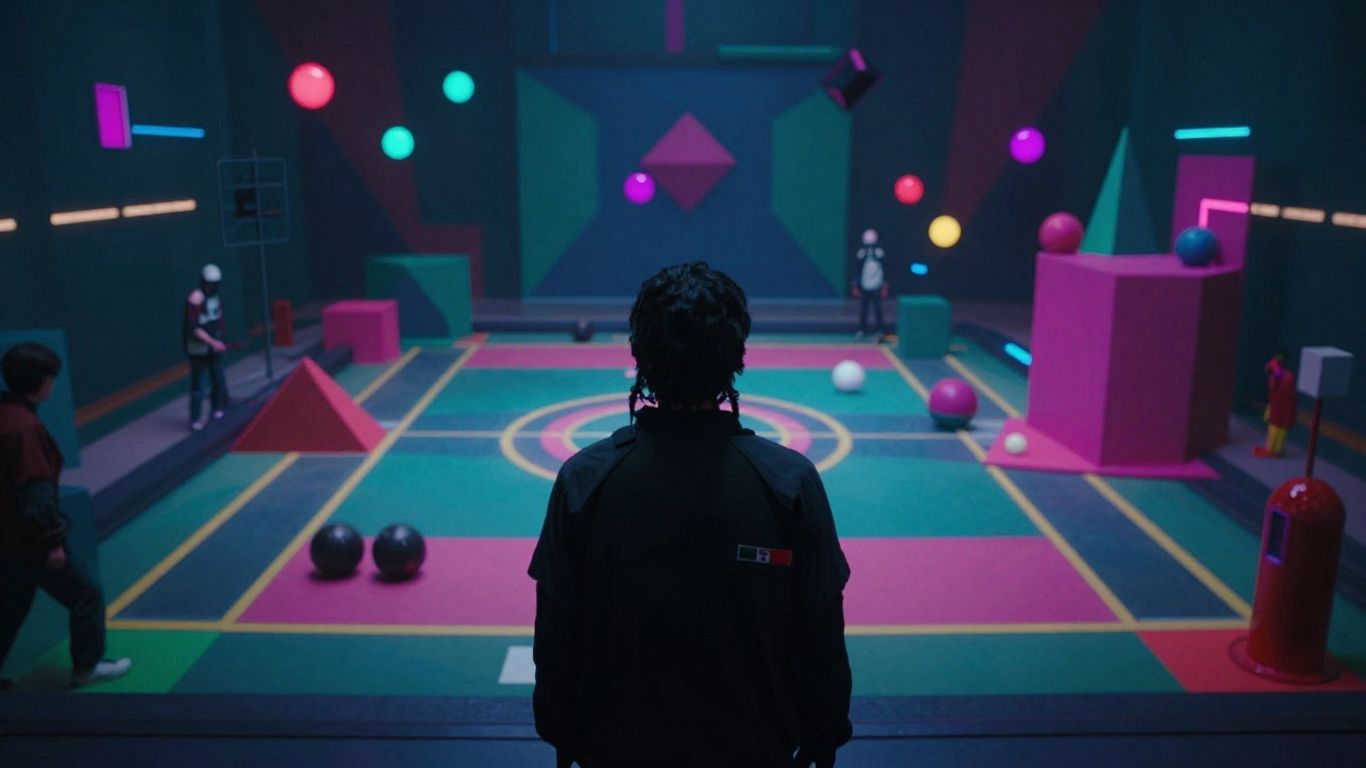
Squid Game has always been a show about the dark side of capitalism, and the third season really hammers this home. It’s not just about rich people betting on poor people’s lives; it’s about how the system itself corrupts everyone involved. We see characters pushed to their absolute limits, forced to make impossible choices that blur the lines between right and wrong. The show asks if anyone can truly maintain their moral compass when survival means sacrificing everything, including their humanity. It’s a tough question, and the season doesn’t offer easy answers. The games themselves become a twisted reflection of the economic disparities in the real world, where the powerful exploit the vulnerable for their own gain.
The Future Generation and Inherited Wealth
Season three also looks at what happens to the next generation caught in this cycle. The children of the players, like Gi-hun’s daughter and Jun-hee’s newborn, represent the future. However, this future is tainted by the games. They might inherit wealth, but they are left with no understanding of the immense suffering and moral compromise that went into acquiring it. This raises questions about inherited privilege and the hidden costs of wealth built on exploitation. It’s a stark reminder that the consequences of these games, and the system they represent, extend far beyond the players themselves.
Sacrifice for the Greater Good
Sacrifice is a recurring theme, but in the final season, it takes on new dimensions. Characters are forced to consider what they are willing to give up, not just for themselves, but for others. This can manifest in different ways:
- Personal Sacrifice: Players choosing to give up their own chance at survival to protect someone else.
- Familial Sacrifice: The difficult decisions parents make, sometimes with devastating consequences, to ensure their child’s future.
- Societal Sacrifice: The idea that perhaps true change requires immense personal loss, questioning if individual lives are worth less than the potential for a better future for many.
The show constantly forces us to confront the idea that sometimes, the most selfless acts can lead to the most tragic outcomes. It’s a brutal examination of whether the ends can ever truly justify the means, especially when those means involve such profound human cost.
This season really digs into the idea that the system is designed to break people, and the ultimate question is whether any act of sacrifice can truly dismantle it, or if it just becomes another part of the game.
Unraveling Plot Threads and Mysteries
Addressing Lingering Questions
Season three aimed to tie up loose ends, and while some questions found answers, others were left hanging. The fate of Detective Hwang Jun-ho, for instance, was a significant point of curiosity. After his brother, the Front Man, seemingly spared him, Jun-ho’s storyline felt somewhat sidelined. His investigation into the games’ operations, while present, didn’t quite reach the dramatic confrontation many expected. The show touched upon the organ trading subplot, offering a glimpse into the darker corners of the game’s operations, but it didn’t fully explore the implications.
The Role of the VIPs
The enigmatic VIPs, who bet on the games, remained largely underdeveloped. While their presence added a layer of global corruption, their motivations and identities were only hinted at. We learned they are likely influential international figures, but their dialogue and on-screen presence felt somewhat superficial, missing an opportunity to deepen the critique of wealth and power.
The Fate of Key Operatives
Several characters who played significant roles behind the scenes, like the Front Man, had their backstories and motivations explored. However, the show struggled to give satisfying conclusions to many supporting characters. Some, like the recruiter who initially invited players, were reduced to plot devices rather than fully realized individuals. The showrunners seemed to prioritize Gi-hun’s journey, sometimes at the expense of providing closure for other characters who had outlived their immediate narrative purpose.
The show’s structure in later seasons often felt like it was clearing the board for the main protagonist, leading to resolutions that served the plot more than the characters themselves. This approach, while understandable for focusing the narrative, left some character arcs feeling incomplete or abruptly ended.
Here’s a look at some of the unresolved threads:
- Detective Hwang Jun-ho’s Investigation: While he survived, his direct impact on dismantling the game’s operations felt limited.
- The Front Man’s True Allegiance: His complex relationship with his brother and his role within the organization were explored, but the full extent of his personal motivations remained somewhat ambiguous.
- The Global Network: The VIPs represent a larger, international system, but the specifics of this network were never fully detailed.
Ultimately, the season sought to provide closure, but the execution left some viewers wishing for more depth in resolving the intricate web of mysteries surrounding the games.
The Ultimate Winner and Its Significance
The Newborn Champion
The final moments of Squid Game Season 3 brought a twist that few could have predicted: the ultimate victor wasn’t a seasoned player or a cunning strategist, but a newborn infant. Player 222, the baby of Jun-hee, emerged as the sole survivor after a series of brutal games. This outcome was not a mere accident of fate, but a carefully orchestrated conclusion designed to carry significant thematic weight. The baby’s victory, secured through the ultimate sacrifice of Seong Gi-hun, represents a profound statement about hope and the future.
Symbolism of the Final Outcome
The choice of a baby as the winner is rich with symbolism. It directly addresses the show’s exploration of generational responsibility and the future of society. The infant, untouched by the greed and desperation that drove the adult players, embodies a fresh start, a symbol of what humanity could be if uncorrupted. Gi-hun’s decision to sacrifice himself, ensuring the baby’s survival, highlights the theme of protecting the innocent and the hope for a better world for future generations. It’s a stark contrast to the self-serving actions of many other participants, like Myung-gi, who prioritized personal gain over the well-being of others, even his own child.
Hwang Dong-hyuk’s Intentions
Creator Hwang Dong-hyuk has stated that the newborn champion was intended to inspire hope. He views the baby as representing the future generation and believes that it is our duty to create a better world for them. The win, therefore, is not just about the prize money but about the potential for a new beginning. It’s a message that even in the darkest of circumstances, there is a possibility for a brighter future, and that protecting that future is the most important game of all. The final outcome serves as a powerful commentary on societal values, greed, and the enduring human capacity for sacrifice and hope.
The Final Round
And so, the curtains close on Squid Game, leaving us with a final season that, while perhaps not reaching the dizzying heights of its predecessor, certainly provided a thought-provoking conclusion. The games themselves, from a twisted Hide and Seek to a perilous Jump Rope and the strategic Sky Squid Game, pushed the remaining players to their absolute limits, forcing impossible choices and revealing the true depths of human nature under extreme pressure. While the series finale offered a surprising twist with the newborn winner, it ultimately aimed to leave viewers contemplating the future and the responsibility we have in shaping a better world. Though the games are over, the questions they raised about morality, capitalism, and sacrifice will likely linger long after the credits roll.
Frequently Asked Questions
What are the new games in Squid Game Season 3?
Season 3 brings back the thrill with three new, super-tough games! First up is ‘Hide and Seek,’ a scary twist on the game you know, where finding your way through a maze and avoiding seekers is key. Then there’s ‘Jump Rope,’ played on a narrow path over a huge drop – one wrong move and you’re out! Finally, ‘Sky Squid Game’ is all about talking and tricking others on tall platforms, not just playing a game.
Who wins Squid Game Season 3?
In a surprising twist, the winner of Squid Game Season 3 isn’t one of the adult players. It’s actually the newborn baby of player Jun-hee! The show’s creator wanted this to show that the baby represents the future and that we should try to make the world better for the next generation.
Does Seong Gi-hun win or die in Season 3?
Sadly, Seong Gi-hun doesn’t win the grand prize. He makes a big sacrifice in the final game to help save the baby. While he doesn’t survive, his actions show his good heart even in the face of terrible choices.
What happens to The Front Man in Season 3?
The identity of The Front Man is revealed, and it turns out he’s someone Gi-hun knew from the games. He plays a big role in the final challenges, showing a cold side but also hinting at complex reasons for his actions. He eventually steps down after the games end.
Are there any new heroes or tragic characters this season?
Yes, Season 3 introduces and develops characters with powerful stories. We see brave acts and heartbreaking endings. Some characters who try to help others face terrible fates, reminding us that even good people can be caught in the game’s cruelty. There are also characters who show how society’s problems can lead to tragedy.
Does Squid Game have a Season 4?
No, Squid Game will not be returning for a Season 4. The creator has confirmed that Season 3 is the planned and final end to the story. This season was made to wrap up all the main plot points and mysteries.