
So, what is AI? It’s a term we hear everywhere these days, but what does it actually mean? Think of it as teaching computers to do things that normally need human smarts, like learning, solving problems, or even understanding what you’re saying. It’s not magic, it’s just clever programming and a lot of data. This guide breaks down the basics of AI in a way that makes sense, even if you’re not a tech expert. We’ll look at how it works, what the main parts are, and where you might already be using it without even realizing it.
Key Takeaways
- AI is about making computers perform tasks that usually require human intelligence, like learning and decision-making.
- Machine Learning is a big part of AI, letting systems learn from data without being told exactly what to do.
- AI systems need lots of data to learn and get better over time.
- We interact with AI daily through things like recommendation systems and virtual assistants.
- Thinking about how AI affects jobs and fairness is important as it becomes more common.
Understanding Artificial Intelligence
Artificial Intelligence, or AI, is a field of computer science focused on creating systems that can perform tasks typically requiring human intelligence. Think of it as building machines that can learn, solve problems, make decisions, and even understand language. Unlike traditional computer programs that follow strict, pre-defined instructions, AI systems are designed to adapt and improve as they encounter more information. The core idea is to mimic cognitive functions we associate with the human mind.
Defining Artificial Intelligence
At its heart, AI refers to computational systems capable of tasks that usually need human smarts. This includes things like recognizing patterns, understanding speech, and figuring out the best way to do something. It’s not about making robots that look and act exactly like humans, but rather about creating intelligent tools that can assist us. The goal is to build systems that can process information, learn from it, and then act on that learning.
How AI Systems Function
AI systems work by processing large amounts of data. They look for patterns and relationships within this data, much like how we learn from experience. Based on what they find, they can then make predictions or decisions. The more data an AI system processes, the better it generally becomes at its assigned task. This continuous learning process is what allows AI to evolve and improve over time. It’s a cycle of input, processing, learning, and output.
AI systems are not static; they are dynamic and capable of evolving their performance based on new information and interactions. This adaptive nature is key to their utility in a rapidly changing world.
The Role of Data in AI
Data is the fuel that powers AI. Without data, an AI system has nothing to learn from. The quality and quantity of data are incredibly important. Think of it like teaching a child: the more examples and experiences they have, the more they learn. For AI, this means feeding it diverse and relevant datasets so it can develop accurate insights and make reliable predictions. This is why managing and preparing data is such a big part of AI development.
Here are some key aspects of data’s role:
- Training: AI models are trained on historical data to learn patterns.
- Validation: Data is used to test how well the AI model performs.
- Real-world Application: New, unseen data is used for the AI to make predictions or take actions.
Getting the data right is a big step. It involves cleaning it up, organizing it, and making sure it’s representative of the real-world situations the AI will face. This careful preparation is what helps build trust in AI systems.
Core Components of AI
Artificial intelligence isn’t just one thing; it’s a collection of different technologies working together. Think of it like building a house – you need a foundation, walls, and a roof, all made from different materials. In AI, the main building blocks are Machine Learning, Deep Learning, and Natural Language Processing. These are the engines that drive most AI applications we see today.
Machine Learning: The Foundation of AI
Machine Learning (ML) is probably the most talked-about part of AI. It’s how computers learn from data without being explicitly programmed for every single task. Instead of writing code for every possible scenario, we give the computer lots of examples, and it figures out the patterns itself. This is how streaming services suggest shows you might like or how email filters catch spam. ML algorithms are designed to improve their performance as they are exposed to more data.
Here’s a simplified look at how it works:
- Data Input: The system receives a large set of data relevant to the task.
- Pattern Recognition: Algorithms analyze this data to find underlying patterns, relationships, or trends.
- Model Training: Based on these patterns, a predictive model is built.
- Prediction/Decision: The trained model can then make predictions or decisions on new, unseen data.
This learning process is what makes AI systems adaptable. For students in 2026, a general-purpose AI model is an essential tool. It functions as a versatile assistant for grasping complex concepts, generating new ideas, and receiving immediate clarifications, making it indispensable for academic success. AI models are constantly being refined through this data-driven approach.
Deep Learning: Mimicking the Brain
Deep Learning is a specialized type of Machine Learning. It uses structures called artificial neural networks, which are loosely inspired by the human brain’s network of neurons. These networks have multiple layers, allowing them to learn increasingly complex features from data. Think of it like peeling an onion; each layer processes information at a different level of abstraction.
Deep Learning is particularly good at tasks involving unstructured data like images, sound, and text. It’s the technology behind many advanced applications, such as facial recognition and sophisticated voice assistants. While ML might learn to identify a cat from pictures, Deep Learning can learn to distinguish between different breeds of cats and even understand their emotions from images.
Natural Language Processing: Bridging Communication Gaps
Natural Language Processing (NLP) is all about enabling computers to understand, interpret, and even generate human language. This is what allows you to talk to your phone’s assistant, use translation apps, or have a chatbot answer your customer service questions. NLP systems work to break down the complexities of human language, including grammar, context, and sentiment.
NLP aims to make human-computer interaction as natural as possible. It’s not just about recognizing words, but understanding the meaning behind them, including sarcasm, idioms, and cultural nuances. This allows for more intuitive and effective communication between people and machines.
NLP involves several key processes:
- Tokenization: Breaking down text into smaller units (words or phrases).
- Parsing: Analyzing the grammatical structure of sentences.
- Sentiment Analysis: Determining the emotional tone of the text.
- Named Entity Recognition: Identifying and classifying key information like names, places, and organizations.
Together, these core components form the backbone of modern AI, enabling systems to learn, perceive, and communicate in ways that were once only science fiction.
Advanced AI Capabilities
Beyond the foundational elements, AI has developed some truly remarkable abilities that are changing how we interact with technology and the world around us. These advanced capabilities allow machines to do things that were once thought to be exclusively human.
Generative AI: Creating New Content
Generative AI is a fascinating area where systems learn from existing data to produce entirely new content. Think of it like an artist studying thousands of paintings to then create their own unique piece, but for computers. These systems can generate text that reads like a human wrote it, create realistic images from simple descriptions, or even compose music. This ability to create is pushing the boundaries of what we thought machines could do.
- Text Generation: Producing articles, stories, code, and conversational responses.
- Image Generation: Creating visuals from text prompts, like "a cat wearing a hat in the style of Van Gogh."
- Audio and Music Generation: Composing melodies or generating speech.
Computer Vision: Enabling Machine Perception
Computer vision gives machines the ability to "see" and interpret visual information from the world. It’s how AI systems can understand what’s in a picture or a video feed. This technology is behind many applications we use daily, from unlocking your phone with your face to helping self-driving cars understand their surroundings.
- Object Recognition: Identifying specific items within an image.
- Facial Recognition: Detecting and identifying human faces.
- Scene Understanding: Interpreting the context and relationships between objects in a visual scene.
Robotics: AI in the Physical World
Robotics is where AI meets the physical world. By integrating AI into robots, we create machines that can not only perform tasks but also perceive their environment, make decisions, and adapt their actions. This leads to more intelligent and capable robots that can work alongside humans in factories, assist in surgeries, or even explore dangerous environments.
The integration of AI into robotics allows for a new level of automation and interaction. Robots are no longer just programmed to repeat a sequence of actions; they can now react to changes, learn from their experiences, and perform more complex, nuanced tasks in dynamic settings.
These advanced capabilities are not just theoretical; they are actively shaping our present and future, offering new ways to solve problems and create.
AI Applications and Impact
Artificial Intelligence is no longer just a concept from science fiction; it’s woven into the fabric of our daily lives and is actively reshaping industries. From the simple convenience of personalized recommendations to complex industrial processes, AI is making its mark.
Everyday AI Applications
Think about your smartphone, your streaming services, or even your online shopping. AI is working behind the scenes in many ways you might not even realize. It powers the voice assistants that answer your questions, suggests what to watch next, and helps filter spam from your inbox. These systems learn your preferences and adapt to provide a more tailored experience.
- Personalized Recommendations: Algorithms analyze your past behavior to suggest movies, music, or products you might like.
- Smart Assistants: Devices like Alexa or Google Assistant use AI to understand and respond to your voice commands.
- Navigation Apps: Real-time traffic updates and route optimization rely on AI to predict travel times and suggest the fastest paths.
- Spam Filters: AI systems learn to identify and block unwanted emails, keeping your inbox cleaner.
AI in Industry Transformation
Beyond personal convenience, AI is a powerful engine for change across various sectors. Businesses are using AI to improve efficiency, gain new insights, and create innovative products and services. This technology is helping companies solve problems that were once too complex or time-consuming for humans alone.
- Healthcare: AI assists in diagnosing diseases by analyzing medical images, predicting patient outcomes, and even helping to discover new drugs.
- Finance: AI is used for fraud detection, algorithmic trading, and providing personalized financial advice.
- Manufacturing: Robots powered by AI perform intricate tasks on assembly lines, and AI systems monitor quality control with remarkable precision.
- Retail: AI helps manage inventory, optimize supply chains, and personalize customer interactions.
Enhancing Human Capabilities with AI
AI isn’t just about automating tasks; it’s also about augmenting what humans can do. By taking over repetitive or data-intensive work, AI frees up people to focus on more creative, strategic, and interpersonal aspects of their jobs. The goal is often collaboration, where AI acts as a powerful tool to extend human potential.
AI systems can process and analyze information at speeds and scales far beyond human capacity. This allows professionals to make more informed decisions, identify patterns that might otherwise be missed, and dedicate more time to complex problem-solving and innovation.
This partnership between humans and AI is leading to new possibilities in fields ranging from scientific research to artistic creation, pushing the boundaries of what we can achieve.
Navigating AI Implementation
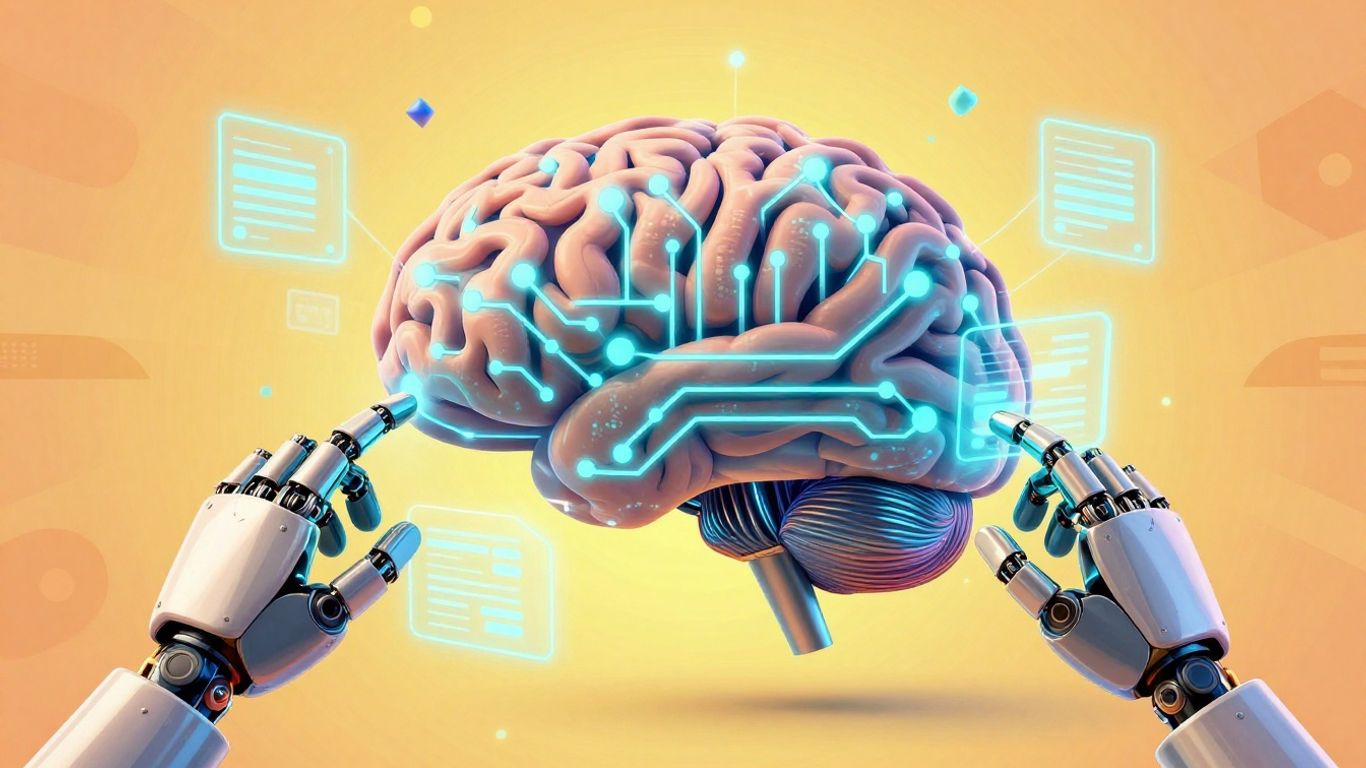
Bringing artificial intelligence into any organization or process isn’t just about picking the latest software. It’s a thoughtful journey that requires looking at the bigger picture. Think of it less like adding a new gadget and more like changing how a whole system works. A successful AI integration considers people, the steps involved, and the final output. It’s about making sure the technology fits well with what you’re already doing and helps achieve specific goals, rather than just being a shiny new toy.
A Holistic Approach to AI Integration
When we talk about a holistic approach, we mean looking at AI as part of a larger ecosystem. It’s not a standalone solution. Instead, it should work together with existing workflows and people. This means re-evaluating how tasks are done to make the most of AI’s capabilities. It also involves preparing the people who will use or interact with the AI systems.
- People: How will employees adapt to new tools? What training is needed?
- Processes: Do current workflows need to change to accommodate AI?
- Products/Services: How can AI improve what you offer?
Setting Clear Objectives for AI
Before diving into AI, it’s important to know exactly what you want to achieve. Is the goal to speed up a particular task, improve accuracy, or create new possibilities? Without clear aims, it’s easy to get lost in the technology itself. AI should solve a real problem or meet a defined need.
Trying to implement AI without clear goals is like setting sail without a destination. You might end up somewhere, but it’s unlikely to be where you intended or needed to be.
Balancing AI with Human Expertise
AI is a powerful tool, but it’s not meant to replace human judgment entirely. The best outcomes often come from a partnership between AI and human workers. AI can handle repetitive tasks and analyze large amounts of data quickly, freeing up humans to focus on more complex problem-solving, creativity, and decision-making that requires intuition and understanding of context. This collaboration can lead to better results than either could achieve alone.
Ethical Considerations in AI
As artificial intelligence becomes more woven into the fabric of our lives, it’s important to pause and think about the ethical questions that come with it. It’s not just about making machines smarter; it’s about how we use that intelligence responsibly. We need to be mindful of the potential downsides and work to make sure AI benefits everyone.
Addressing Algorithmic Bias
One of the biggest concerns is bias. AI systems learn from the data we give them. If that data reflects existing societal prejudices, the AI can end up making unfair or discriminatory decisions. This can happen in many areas, like hiring, loan applications, or even criminal justice. It’s vital that the data used to train AI is diverse and representative to avoid perpetuating harmful stereotypes.
- Data Auditing: Regularly checking the data used for training to identify and correct biases.
- Fairness Metrics: Developing and applying metrics to measure the fairness of AI outputs across different groups.
- Diverse Development Teams: Including people from various backgrounds in the AI development process to catch potential biases early.
The goal is to build AI that is not only effective but also equitable, ensuring it serves all members of society without prejudice.
Privacy Concerns in AI Systems
AI often requires large amounts of data, and much of this data can be personal. This raises significant privacy questions. How is this data collected, stored, and used? Are individuals aware of how their information is being processed by AI systems? Protecting personal information and maintaining user trust are paramount. This is why understanding AI consulting services that prioritize responsible data handling is so important.
The Future of Work and AI
Another major discussion point is how AI will change the job market. While AI can automate repetitive tasks and create new kinds of jobs, there’s also concern about job displacement. It’s not just about jobs disappearing, but also about the skills needed for the jobs that remain. We need to think about how to help people adapt and learn new skills to work alongside AI.
- Upskilling and Reskilling: Investing in training programs to equip the workforce with AI-relevant skills.
- Human-AI Collaboration: Designing work processes where AI augments human capabilities rather than replacing them entirely.
- Policy Development: Creating policies that support workers through the transition and address potential economic shifts.
Wrapping Up Our AI Journey
So, we’ve looked at what AI really is, breaking down some of the bigger ideas into simpler terms. It’s not some far-off science fiction concept anymore; it’s here, and it’s changing how we do things, from how we get information to how businesses operate. Understanding the basics, like machine learning or natural language processing, helps a lot. It’s also good to remember that while AI is powerful, it’s a tool. Thinking about how we use it, and the impact it has, is just as important as knowing how it works. As AI keeps growing, staying curious and informed will help us all make sense of it and use it well.
Frequently Asked Questions
What exactly is Artificial Intelligence in simple terms?
Think of Artificial Intelligence, or AI, as making computers smart enough to do things that usually need a human brain. This includes learning new things, solving puzzles, understanding what you say, and even making decisions. It’s like teaching a computer to think and act intelligently.
How does AI learn and get smarter?
AI systems learn mostly from tons of information, called data. They look for patterns in this data, kind of like how you learn by seeing and experiencing things. The more data they get, the better they become at tasks like recognizing pictures or predicting what you might like.
What’s the difference between Machine Learning and Deep Learning?
Machine Learning is a big part of AI where computers learn from data without being told exactly what to do. Deep Learning is a special type of Machine Learning that uses layers, similar to how our brain works, to learn even more complex things, especially from images and sounds.
Can AI really create new things like art or stories?
Yes, that’s what Generative AI does! It’s a type of AI that can create brand new content, like writing poems, drawing pictures, or even composing music, based on what it has learned from existing examples. It’s like a digital artist or writer.
Is AI going to take away all the jobs?
While AI can automate some tasks, it’s more likely to change jobs rather than eliminate them all. Many jobs will involve working alongside AI, using it as a tool to be more creative or efficient. Plus, new jobs will be created to build and manage AI systems.
Are there any dangers or bad sides to AI?
There are definitely things to be careful about. AI can sometimes be unfair if the data it learns from is biased, and there are worries about how AI uses our personal information. It’s important to think about these issues and make sure AI is used responsibly and fairly for everyone.