

So, AI is changing how we build websites. It’s not about robots taking over design jobs, not really. Think of it more like having a super-smart assistant that can handle the grunt work, leaving you free to be more creative. This shift means building a website with AI is becoming easier and faster for everyone, from pros to people just starting out. Let’s look at how this is all shaking out.
Key Takeaways
- AI acts as a helper, not a replacement, for designers by automating repetitive tasks so people can focus on creative ideas.
- Building a website with AI makes the process quicker and simpler, opening up web design to more people who don’t have deep technical skills.
- Websites can now adapt to each user in real-time, offering personalized experiences based on their behavior and preferences.
- The future involves AI and humans working together, with AI handling data and complex processes while people provide the strategy and creative touch.
- As AI gets better, we’ll see more immersive web elements and websites that can update themselves, but keeping the human element is still important.
Understanding AI’s Role in Modern Web Design
Artificial intelligence is changing how we build websites, and it’s not about replacing people. Think of it more like getting a really smart assistant. AI can handle a lot of the repetitive work that used to take up so much time, like resizing images or making sure a design looks good on different phones and computers. This frees up designers and developers to focus on the more creative and strategic parts of building a website.
AI as a Creative Partner, Not a Replacement
It’s easy to worry that AI will take over jobs, but in web design, it’s more about working together. AI tools can suggest different layouts, help pick color palettes, or even write basic text. This doesn’t mean the human designer is out of the picture. Instead, they can use these AI suggestions as a starting point or inspiration. The final decisions, the unique ideas, and the overall vision still come from the human touch. AI is there to speed things up and offer options, not to make all the choices.
Automating Tedious Tasks for Enhanced Creativity
Web design involves a lot of tasks that are necessary but not exactly exciting. Things like making sure a website is accessible to everyone, checking for broken links, or optimizing images for faster loading can be time-consuming. AI is really good at these kinds of jobs. By letting AI handle the grunt work, designers and developers have more energy and time to think about the user experience, the overall message of the site, and how to make it truly stand out. It’s about making the design process more efficient so that creativity can flourish.
The Evolution of Web Design Tools
We’re seeing new tools pop up all the time that use AI. Some tools can help write code, others can generate design mockups based on a few prompts, and some can even analyze how users interact with a website to suggest improvements. These aren’t just fancy gadgets; they represent a real shift in how websites are made. Instead of spending hours on manual tasks, designers can now use these intelligent tools to achieve results much faster. This means the focus is shifting from the technical execution to the conceptualization and refinement of the design.
Building Your Website with AI: Key Capabilities
AI is changing how we build websites, making things faster and more efficient. It’s not about replacing people, but about giving them better tools to work with. Think of it as having a super-smart assistant that can handle a lot of the grunt work.
Accelerating Design and Development Workflows
One of the biggest wins with AI is how it speeds things up. Instead of starting from a blank page, AI can give you a solid starting point. This means less time spent on repetitive tasks and more time for creative thinking and problem-solving.
- AI can generate initial website layouts and structures based on simple prompts. This helps overcome the initial hurdle of getting started.
- It assists in creating variations for A/B testing, allowing for quicker optimization.
- Tools can help with code suggestions and bug detection, reducing development time.
Generating Layouts and Content Suggestions
Staring at a blank screen can be tough. AI tools can help by suggesting design layouts, color schemes, and even initial content drafts. This is especially helpful for those who aren’t professional designers or writers. For example, platforms can ask a few questions about your needs and then generate a functional site. This gives you a foundation to build upon, and you can then refine it to match your specific brand and vision. You can even use AI image creators to blend into your design process, generating visuals for your site.
AI excels at providing starting points for layouts and content, helping to eliminate the ‘blank canvas’ problem and giving teams a foundation to build from.
Streamlining Production-Heavy Tasks
Many parts of website creation involve tasks that are necessary but can be quite time-consuming. AI is great at handling these. Think about resizing images for different devices, generating placeholder text, or optimizing graphics. These are tasks that AI can perform quickly and accurately, freeing up human teams to focus on more strategic and creative aspects of the project. This means faster turnaround times and often, a reduction in overall project costs.
- Automating image resizing and optimization.
- Generating basic alt text for images.
- Assisting with setting up simple forms and data validation.
AI can help with many of these production tasks, but it’s important to remember that human oversight is still key. Professionals use AI to handle the heavy lifting, but they apply their judgment to ensure the final product is high-quality, secure, and meets specific project goals. This blend of AI efficiency and human creativity is where the real power lies in modern web development.
The Democratization of Web Design Through AI
For a long time, making a website meant you needed to know how to code, understand design rules, and figure out how people would use your site. It was a specialized skill. But AI is changing that. It’s making web design something more people can do, no matter their background. Whether you’re a pro designer or just someone with a business idea and no tech skills, AI is making it easier for anyone to build a good-looking, working website with less effort.
Empowering Non-Designers to Create Websites
AI is opening up website creation to people who aren’t designers by trade. Think small business owners, marketers, or content creators. With tools that simplify the process, anyone with a vision can bring their ideas online. A shop owner, for instance, can now create a site that truly represents their brand without needing to hire a web designer. Marketers can build pages that encourage people to take action, and writers can design attractive blogs or portfolios without outside help. This shift means more people can build websites, and they can do it faster and for less money.
Reducing Technical Barriers to Entry
AI-powered platforms are making it simpler to build websites. Tools like Wix ADI or The Grid can take basic information – like the type of site you want, your style preferences, and what it needs to do – and handle the rest. They can suggest layouts, pick colors, and even create a working website in minutes. For beginners, this means getting a site online step-by-step without writing any code. For those with more experience, these tools often allow for adjustments, letting you fine-tune the AI’s suggestions to fit your specific vision. This approach removes the need for deep technical knowledge, making web creation accessible to a much wider audience.
Enabling Faster and More Cost-Effective Creation
The rise of no-code and low-code platforms, often working with AI, is a big reason why web design is becoming more accessible. These platforms let you build websites using visual tools, like drag-and-drop interfaces, instead of complex coding. Platforms such as Webflow or Carrd use AI to help with things like layout ideas and making sure the site looks good on any device. Because AI handles much of the complicated technical work, users can focus on the creative side, even without a technical background. This means entrepreneurs and small businesses can get their ideas online quickly and without spending a lot on professional services. A small business owner might build an online store, or a new blogger could launch their personal site, in a fraction of the time and cost it would have taken just a few years ago.
AI is not just about making websites look good; it’s about making the process of creating them available to more people. This means more diverse ideas can come to life online, leading to a richer and more varied digital landscape for everyone.
Here’s a look at how AI is changing the creation process:
- Simplified Interface: AI tools often present a user-friendly interface, allowing users to input preferences and content without needing to understand underlying code.
- Automated Design Elements: AI can generate multiple design options, including layouts, color palettes, and typography, based on user input and best practices.
- Responsive Design: AI assists in creating websites that automatically adapt to different screen sizes and devices, a task that traditionally required significant coding effort.
- Content Integration: Some AI tools can even suggest or generate basic content, helping users fill out their website structure more quickly.
Enhancing User Experience with AI-Driven Design
AI is changing how websites feel and work for people visiting them. It’s moving beyond just looking good to actually being helpful and smart. Think about how apps on your phone seem to know what you want before you even type it – that’s the kind of intelligence we’re talking about for websites now.
Dynamic and Data-Driven Website Adaptation
Websites used to be pretty much the same for everyone. Now, AI lets them change on the fly based on who’s looking and what they’re doing. This means a website can adjust its layout, show different pictures, or even change the text to better fit what a visitor might be interested in. It’s like having a website that learns about you as you use it.
- Content Prioritization: AI can figure out which articles or products a user is most likely to click on and show those first.
- Layout Adjustments: If a user is on a small phone screen, the site can automatically rearrange itself to be easier to read and use.
- Color and Style Shifts: Some AI tools can even tweak the website’s colors or fonts to match user preferences or the time of day.
This constant, subtle adjustment makes the website feel more personal and less like a generic brochure. It helps users find what they need faster and makes them more likely to stick around.
Hyper-Personalization for Individual Users
Going a step further than just adapting, AI can create truly unique experiences for each person. Instead of just guessing what a group might like, AI looks at individual behavior. This means if you’ve bought running shoes before, the site might show you new running gear when you visit, not just general sports equipment.
- Personalized Recommendations: Showing products or content that align with a user’s past interactions.
- Tailored Calls-to-Action: Buttons or links that change based on what the user has already done on the site.
- Customized Onboarding: New users might get a guided tour that’s different from someone who’s visited many times.
Seamless Cross-Device and Cross-Channel Experiences
People don’t just use one device anymore. They might start on their phone, then switch to a laptop, or even interact via a smart speaker. AI helps make sure the experience stays consistent and smooth across all these different ways of connecting. If you add something to a cart on your phone, it should still be there when you log in on your computer. AI works behind the scenes to keep track of this and make sure the transition is easy, no matter how the user chooses to interact with your brand.
The Future of AI in Web Design: Innovation and Collaboration
Emergence of 3D and Immersive Web Elements
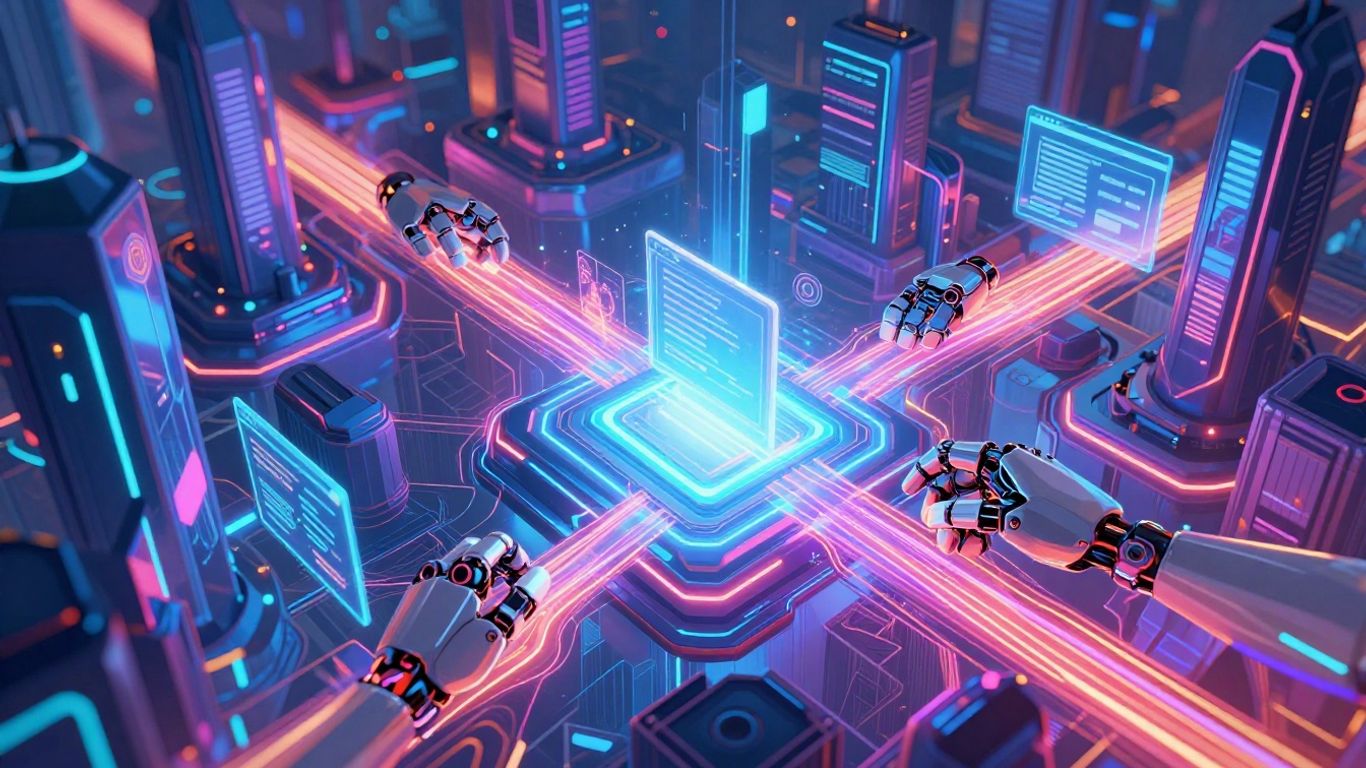
AI is opening doors to entirely new ways of building websites. Think beyond flat pages; we’re talking about 3D environments and immersive experiences that pull users in. AI tools can help generate these complex visual assets, making it easier for designers to experiment with virtual spaces and interactive elements that were once incredibly difficult to create. This means websites could soon feel less like looking at a screen and more like stepping into a digital world.
Autonomous Websites and Continuous Optimization
Imagine websites that can actually improve themselves over time. AI is moving towards creating ‘autonomous websites’ that learn from user behavior in real-time. Every click, scroll, and interaction provides data that the AI uses to tweak layouts, content, and even functionality. This means your website won’t just be built; it will continuously adapt and get better, offering a more relevant experience to each visitor without constant manual updates. It’s like having a dedicated team working on your site 24/7, making small adjustments to keep things running smoothly and effectively.
The Human Element in AI-Assisted Design
Despite all the advancements, the human touch remains incredibly important. AI is a powerful assistant, but it doesn’t replace the need for human creativity, strategy, and empathy. Designers will work alongside AI, using it to handle repetitive tasks and generate ideas, but they’ll be the ones making the final decisions. They’ll guide the AI, interpret its suggestions, and ensure the website connects with users on an emotional level. The goal is to blend AI’s efficiency with human insight to create websites that are not only functional and innovative but also genuinely meaningful and user-friendly.
The future of web design isn’t about AI taking over; it’s about a partnership. AI handles the heavy lifting and data analysis, freeing up human designers to focus on creativity, strategy, and building genuine connections with users. This collaboration leads to websites that are more dynamic, personalized, and effective than ever before.
Ethical Considerations and Challenges in AI Web Design
Prioritizing Data Privacy and Transparency
As AI becomes more integrated into web design, handling user data responsibly is a big deal. AI systems often need a lot of information to work well, but this data must be protected. Think about rules like GDPR or CCPA – following them is not just a good idea, it’s required. Being open with users about how their data is collected and used builds trust. This means making sure data is kept safe, maybe by anonymizing it or using strong encryption. It’s about building AI into websites in a way that respects people’s privacy from the start.
Navigating the Learning Curve of New Technologies
AI is moving fast, and keeping up can feel like a challenge. For teams new to machine learning or advanced AI tools, getting started might seem overwhelming. The trick here is to start small. Using simpler AI platforms first can help build confidence. It’s also smart to get help from experts when you need it and to train your team gradually. This way, everyone can get comfortable with the new tools without feeling lost.
Maintaining the Human Touch in Automated Processes
While AI can speed things up and handle a lot of the heavy lifting, it’s important not to lose the human element. AI can suggest designs or write content, but the real heart of a website comes from human creativity, understanding, and storytelling. The best results usually come from a mix: AI does the repetitive work, and people add the strategy, emotion, and unique voice. It’s about finding that balance so the website feels both smart and genuinely human.
Looking Ahead: Your AI-Powered Web Design Journey
So, we’ve seen how AI is changing the game for web design. It’s not about machines taking over, but about giving us, the creators, better tools to work with. Think of it as having a super-smart assistant that handles the tedious stuff, letting you focus on the big ideas and making your website truly connect with people. Whether you’re a seasoned pro or just starting out, exploring these AI tools can really speed things up and open up new creative paths. The future is about working smarter, not harder, and AI is definitely a big part of that. It’s an exciting time to build for the web, and embracing these changes will help you create experiences that are not only functional but also memorable for your visitors.
Frequently Asked Questions
Will AI take over web design jobs?
No, AI isn’t here to replace designers. Think of AI as a helpful assistant. It can handle the boring, repetitive tasks, like resizing images or suggesting layouts, so designers have more time to be creative and focus on making websites awesome for people.
Can people without design experience build websites with AI?
Yes! AI tools make it much easier for anyone, even if they’ve never designed before, to create a website. It’s like having a smart helper that guides you through the process, making it simpler and faster to bring your ideas online.
How does AI make websites better for users?
AI can make websites really smart. It can learn what people like and automatically change the website to fit them better, like showing them different things based on what they’ve looked at before. It also helps websites work well on any device, from phones to computers.
What are some cool new things AI is doing in web design?
AI is helping create amazing 3D elements for websites, making them feel more real and interactive. It’s also making websites super personalized, so each visitor gets a unique experience. Plus, AI can help websites update themselves automatically!
Is it hard to start using AI for my website?
It’s easier than you might think! Many AI tools are designed to be user-friendly. You can start by trying out simple AI features in design programs or using AI website builders. Just experiment and see how it can help your projects.
What are the important rules for using AI in web design?
It’s super important to be careful with people’s information. We need to protect privacy and be clear about how data is used. Also, even with AI doing a lot, we still need to make sure websites feel human and are easy for everyone to use, not just machines.