
So, have you heard about Character AI? It’s this really cool thing that lets you chat with AI characters that feel surprisingly real. It’s not just your basic chatbot; these AIs have personalities, remember what you talk about, and can even learn. People are using it for all sorts of stuff, from writing stories to just having a fun conversation. It’s pretty wild how far this tech has come, and it’s definitely changing how we think about talking to computers.
Key Takeaways
- Character AI platforms let you talk to AI characters with unique personalities, unlike standard chatbots.
- These AIs use advanced tech to understand and generate human-like conversations, keeping things interesting.
- You can find Character AI used in many areas, like making customer service better, helping people learn languages, and creating new forms of entertainment.
- The big deal with Character AI is how real the conversations feel and how much you can customize the characters.
- It’s becoming a whole creative space where people can build characters, share them, and even work with AI on creative projects.
Understanding Character AI Chat
Character AI chat represents a significant step forward in how we interact with artificial intelligence. Unlike the chatbots of the past, which often felt rigid and predictable, Character AI platforms are built to simulate human-like personalities and conversational styles. These systems are designed to go beyond simple question-and-answer formats, aiming for more dynamic and engaging interactions. The core idea is to create AI companions that feel more like distinct individuals than mere tools.
Defining Character AI Platforms
Character AI platforms are sophisticated systems that allow users to create and converse with AI entities possessing unique personas. These platforms typically utilize advanced large language models (LLMs) and deep learning techniques. They are not just about processing information; they are about embodying a character. This means an AI might adopt a specific tone, recall past interactions, and even exhibit simulated emotions or quirks, making each conversation feel more personal and less transactional. Think of it as talking to a digital character that has its own backstory and way of speaking.
Core Technologies Behind Character AI
The magic behind Character AI lies in a few key technological components. At its heart are advanced Natural Language Processing (NLP) and Natural Language Generation (NLG) models. These allow the AI to understand the nuances of human language – not just the words, but the intent and sentiment behind them – and to generate responses that are coherent, contextually relevant, and stylistically appropriate for the character it embodies. Furthermore, these platforms often incorporate memory systems and adaptive learning algorithms. This enables the AI to remember previous parts of the conversation and even learn from user interactions over time, refining its responses and personality. This continuous learning is what helps Character AI chat feel so alive.
Key Differentiators from Traditional Chatbots
What truly sets Character AI apart from traditional chatbots is its focus on personality and individuality. Traditional chatbots are often designed for specific, functional tasks, like answering FAQs or processing orders. Their responses are usually pre-programmed or follow strict logical paths. Character AI, however, prioritizes creating a sense of presence and personality. This involves:
- Personality Emulation: AI characters are designed with distinct traits, backstories, and conversational styles.
- Dynamic Interaction: Conversations are less scripted and more fluid, adapting to user input in a way that feels natural.
- Emotional Simulation: While not truly feeling emotions, these AIs can simulate emotional responses, adding depth to interactions.
- User Creation: Many platforms allow users to create and customize their own AI characters, a feature rarely found in standard chatbots.
The shift from functional AI to personality-driven AI marks a change in how we perceive and interact with artificial intelligence, moving towards more relational and engaging digital experiences.
This focus on personality makes Character AI suitable for a much wider range of applications, from entertainment and companionship to education and creative exploration, going far beyond the utility of a typical customer service bot.
Exploring Character AI Communication Capabilities
Natural Language Understanding and Generation
Character AI platforms excel at understanding and generating human-like text. They use advanced natural language processing (NLP) to interpret user input, grasping not just the words but also the intent and context behind them. This allows for more natural and flowing conversations. The AI can then generate responses that are coherent, relevant, and often indistinguishable from human dialogue. This capability is key to making interactions feel genuine and engaging.
Adaptive Learning and Personalization
One of the standout features of Character AI is its ability to learn and adapt. With each interaction, the AI refines its understanding of the user’s communication style, preferences, and even emotional cues. This means that over time, the chatbot can tailor its responses to be more personal and effective for each individual user. It’s like having a conversation partner who gets to know you better with every chat. This adaptive nature makes the experience feel unique and dynamic, moving beyond generic responses. You can chat without message limits and benefit from faster processing times for media OurDream AI Coins.
Maintaining Conversational Coherence
Keeping a conversation on track, especially over extended periods, is a significant challenge for AI. Character AI platforms are designed with sophisticated memory systems that allow them to recall previous parts of the conversation. This helps maintain context and coherence, preventing the AI from repeating itself or going off-topic. The ability to remember past exchanges and weave them into current responses makes the dialogue feel more like a genuine, continuous interaction rather than a series of disconnected statements.
The capacity for AI to remember past interactions and use that information to inform present responses is what truly bridges the gap between artificial and human conversation. It creates a sense of continuity and understanding that is often missing in simpler chatbot designs.
Here’s a look at how these capabilities stack up:
- Understanding Nuance: Interpreting slang, idioms, and subtle emotional tones.
- Contextual Memory: Recalling details from earlier in the conversation.
- Personalized Tone: Adjusting language style to match the user.
- Creative Generation: Producing novel and engaging text, not just pre-programmed answers.
Diverse Applications of Character AI
Character AI isn’t just a novelty; it’s a versatile tool finding its way into many different areas. Think about how it can change things for businesses, students, and even people just looking for a new way to have fun.
Enhancing Customer Experiences
Businesses are starting to see how AI characters can make customer interactions much better. Instead of a generic chatbot, imagine a customer service agent with a specific personality, trained to handle inquiries with a particular tone – maybe friendly and helpful, or direct and efficient. This makes the interaction feel less like talking to a machine and more like a real conversation. It can help build stronger connections with customers because the AI can remember past conversations and tailor its responses. This means customers feel understood and valued, which is a big win for any company.
Personalized interactions can significantly boost customer loyalty and satisfaction. When an AI can recall previous issues or preferences, it creates a sense of continuity and care that standard automated systems often miss.
Revolutionizing Language Learning
Learning a new language can be tough, and practicing speaking is often the hardest part. Character AI offers a solution. You can create AI characters who speak the language you’re learning, acting as practice partners. These characters can be programmed with different accents, speaking speeds, and vocabulary levels. This allows learners to practice listening and speaking in a safe, low-pressure environment. They can ask questions, get corrections, and engage in role-playing scenarios, like ordering food or asking for directions, all without the fear of making mistakes in front of a real person. It’s like having a patient, always-available tutor.
Transforming Entertainment and Storytelling
For anyone who loves stories or games, Character AI opens up a whole new world. Writers can use it to brainstorm ideas, develop character dialogue, or even create interactive narratives where the story changes based on what the user says to the AI characters. Gamers can immerse themselves in role-playing games with AI characters that react realistically to their actions and choices, making the game world feel more alive. Imagine talking to your favorite fictional character from a book or movie and having a genuine conversation – that’s now possible. It adds a layer of depth and personalization to entertainment that was previously hard to achieve.
Supporting Education and Training
Beyond language learning, Character AI has a lot to offer in education and job training. Students can interact with AI characters representing historical figures to learn about the past, or with virtual tutors who can explain complex subjects in different ways until the student understands. In professional settings, companies can use Character AI to create realistic training simulations. For example, new employees could practice sales pitches with an AI customer, or emergency responders could train for crisis situations by interacting with AI characters playing different roles. This provides a safe space to practice skills and learn from mistakes without real-world consequences.
The Innovative Edge of Character AI
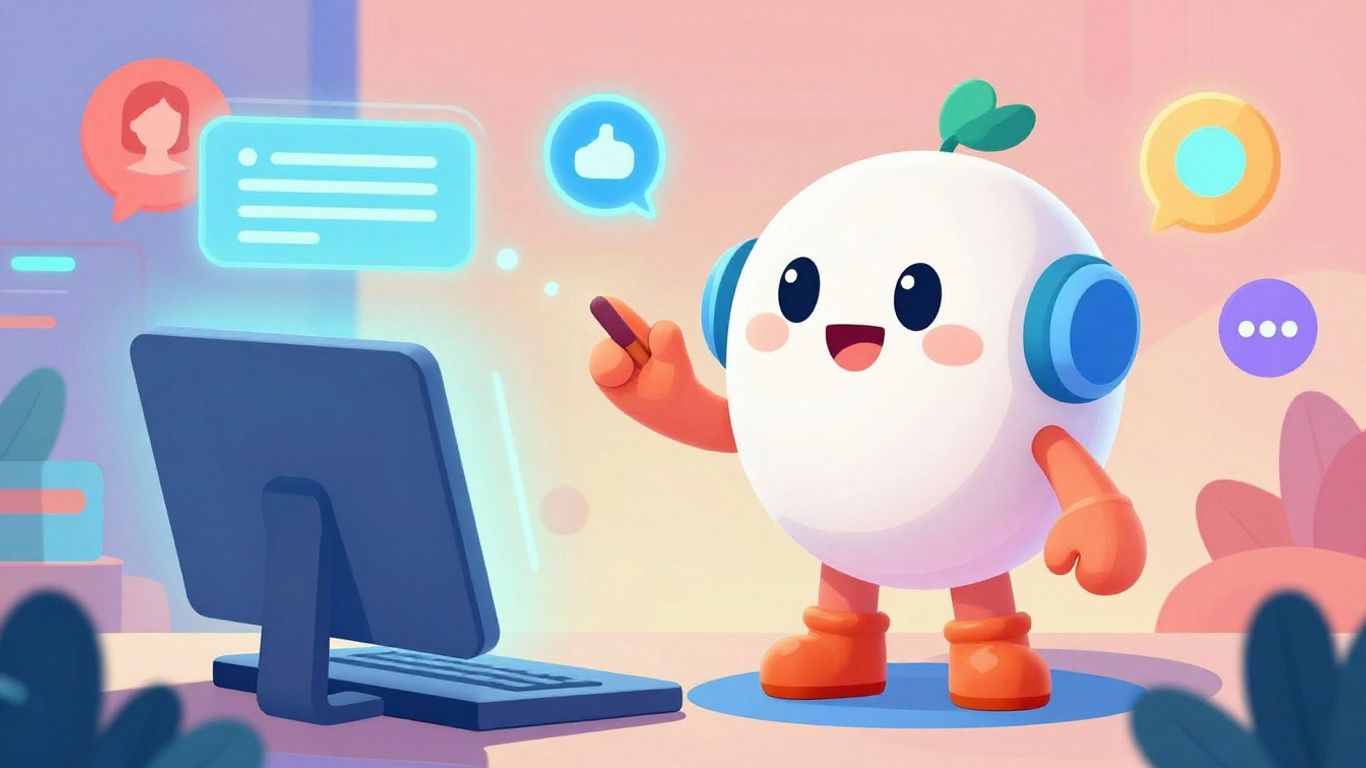
Character AI stands out from the crowd due to its unique approach to conversational technology. It’s not just about generating text; it’s about creating believable, dynamic personalities that can engage users in meaningful ways. This innovation is built on a few key pillars that set it apart.
Achieving Human-Like Realism in Dialogue
One of the most striking aspects of Character AI is its ability to mimic human conversation with remarkable accuracy. This goes beyond simply understanding words; it involves grasping nuance, tone, and context to produce responses that feel natural and unscripted. This level of realism makes interactions feel less like talking to a machine and more like conversing with an individual. The underlying models are trained on vast datasets, allowing them to learn complex conversational patterns, emotional expression, and even subtle humor. This makes platforms like ChatGPT a good example of advanced text generation.
Unparalleled Customization for Unique Personalities
Unlike many AI systems that offer a one-size-fits-all experience, Character AI excels in its customization capabilities. Users can define specific traits, backstories, and conversational styles for their AI characters. This allows for the creation of highly specialized personas, whether for entertainment, education, or professional training. Imagine creating a historical figure to teach about a specific era or a fictional character to help brainstorm story ideas. The flexibility here is immense, enabling a wide range of creative applications.
Scalability Across Various User Needs
Character AI’s architecture is designed to be adaptable, serving a broad spectrum of users. From individual creators developing personal projects to larger organizations implementing AI for customer service or training, the technology can scale effectively. This means that the core innovation isn’t limited to a niche audience; it’s accessible for diverse applications.
Here’s a look at how this scalability plays out:
- Individual Creators: Crafting unique characters for personal enjoyment, writing assistance, or role-playing.
- Educators: Developing interactive tutors or historical figures for engaging lessons.
- Businesses: Simulating customer interactions for training or creating virtual assistants with specific brand voices.
- Developers: Integrating AI personalities into games, apps, or other digital experiences.
The ability to tailor AI personalities and scale their deployment is a significant leap forward. It moves AI from being a tool that simply processes information to one that can embody specific characteristics and adapt to a multitude of scenarios, making digital interactions richer and more personalized.
This focus on realism, deep customization, and broad applicability is what truly defines the innovative edge of Character AI. It’s a technology that not only understands but also embodies, opening up new avenues for human-computer interaction.
Character AI as a Creative Ecosystem
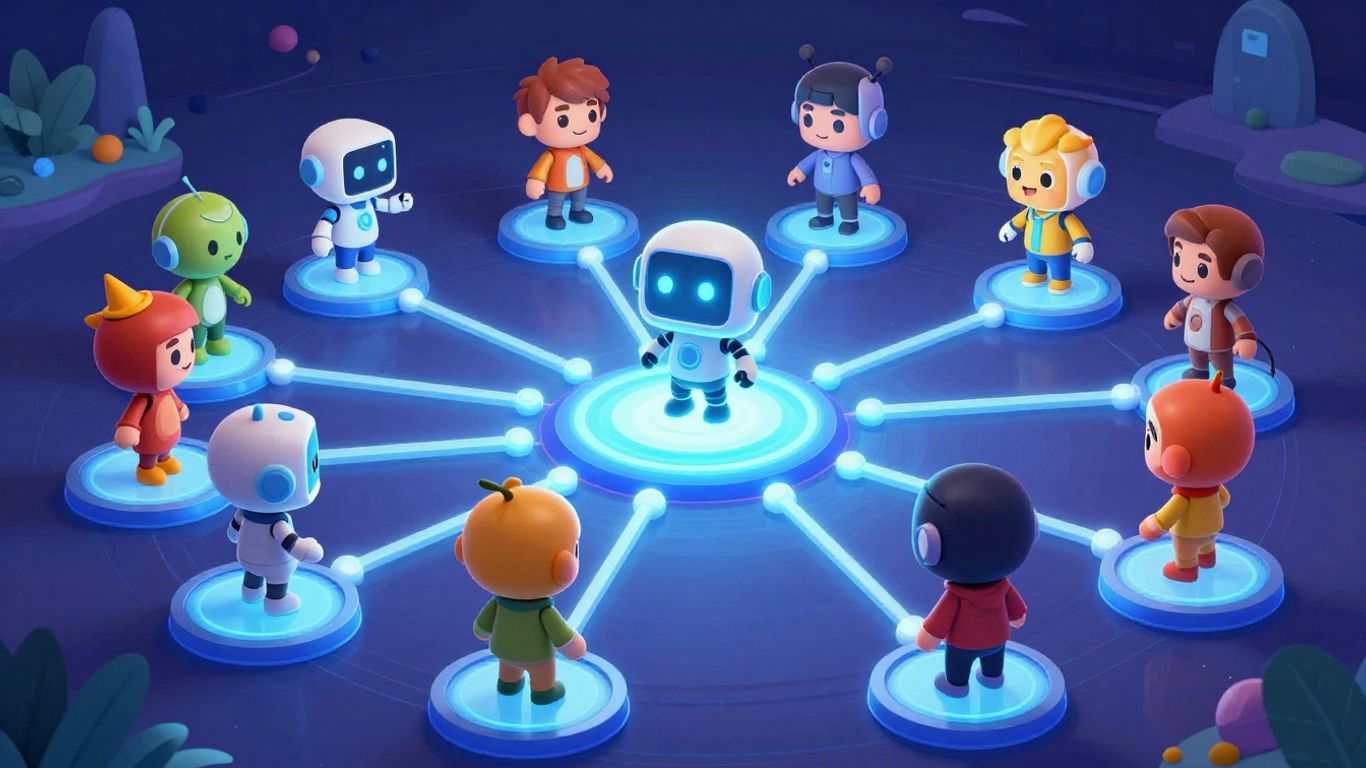
Character AI isn’t just a tool for talking; it’s becoming a whole environment where people can make and share creative ideas. Think of it like a digital studio combined with a community art space. This platform lets users build their own AI characters, giving them specific traits, ways of talking, and even backstories. It’s more than just picking options; it’s about crafting a unique personality that can then interact with others.
Personalized Character Development Tools
Creating a character in this system involves more than just assigning a name. Users can define a wide range of attributes, from the character’s basic personality type and interests to their specific speaking style and even their emotional responses. This level of detail allows for the creation of truly distinct personalities. For example, you could build:
- A wise, old mentor figure who speaks in proverbs.
- A quirky, enthusiastic inventor with a fast-paced, jargon-filled way of talking.
- A shy, introspective artist who communicates more through subtle hints than direct statements.
These tools allow creators to bring their visions to life, making characters that feel more real and engaging.
Fostering a Collaborative Community
What really makes Character AI a creative ecosystem is its community. People don’t just create characters for themselves; they share them with others. This means you can find and interact with thousands of different AI personalities created by users worldwide. This sharing aspect is key. It allows for:
- Discovering new types of interactions and conversations.
- Learning from how other users design their characters.
- Getting inspiration for your own creations.
Users can rate characters, provide feedback, and even suggest improvements, creating a dynamic feedback loop that helps refine the AI personalities over time.
Facilitating Co-Creative Processes
Character AI opens up new ways for humans and AI to work together on creative projects. Writers, for instance, can use AI characters to brainstorm plot points, test dialogue, or even roleplay entire scenes. The AI doesn’t just respond; it can actively contribute to the narrative, sometimes in unexpected ways. This interaction can feel like a genuine collaboration.
The process of building and refining AI characters, with their distinct personalities and conversational styles, can itself be seen as an artistic endeavor. It’s a back-and-forth where the creator shapes the AI, and the AI’s responses, in turn, influence the creator’s next steps. This dynamic relationship blurs the lines between tool and collaborator.
This co-creative aspect means that the final output is often a blend of human intention and AI-generated spontaneity, leading to unique and often surprising results that might not have been possible otherwise.
The Future Impact of Character AI
Advancements in Natural Language Processing
Character AI is pushing the boundaries of how machines understand and use language. Think about it: instead of just recognizing keywords, these systems are getting better at grasping context, tone, and even subtle nuances in human conversation. This means future interactions with AI will feel much more natural, less like talking to a program and more like chatting with someone who actually gets what you’re saying. This leap in natural language processing is key to making AI more useful and approachable for everyone.
We’re seeing AI characters that can:
- Remember past conversations and build on them.
- Adapt their communication style based on who they’re talking to.
- Generate text that’s not just grammatically correct, but also creative and contextually relevant.
This progress isn’t just about making chatbots sound smarter; it’s about creating tools that can genuinely assist us in more complex ways, from drafting emails to helping us learn new skills.
Evolving Virtual Assistants and Chatbots
Virtual assistants and chatbots are set to become far more sophisticated. Imagine an assistant that doesn’t just set reminders but can also help you brainstorm ideas, offer personalized advice based on your past interactions, or even act as a practice partner for a job interview. Character AI’s ability to imbue these assistants with distinct personalities and conversational memory makes them more than just tools; they become more like digital companions.
The development of AI characters with consistent personalities and memory will transform how we interact with digital services. Instead of repetitive, generic responses, we can expect more engaging and personalized support.
This evolution means we’ll likely see specialized AI assistants for almost any task, from managing your schedule to providing mental health support or acting as a tutor for a specific subject. The goal is to move beyond simple command-and-response interactions to truly collaborative dialogues.
Enabling More Immersive Digital Interactions
Character AI is a big part of making our digital lives feel more real and engaging. Think about video games where non-player characters (NPCs) can hold dynamic conversations, or educational simulations where you can interact with historical figures. This technology allows for experiences that are not only entertaining but also deeply educational and interactive.
| Area of Impact | Current State | Future Potential |
|---|---|---|
| Gaming | Scripted dialogue, limited NPC interaction | Dynamic, unscripted conversations with NPCs |
| Education | Static learning modules, basic Q&A | Interactive tutors, historical simulations |
| Virtual Companionship | Basic chat, limited emotional range | Empathetic, memory-driven companions |
| Customer Service | Rule-based responses, long wait times | Personalized, context-aware support, proactive help |
By creating AI characters that can learn, adapt, and converse naturally, we’re opening the door to digital experiences that are more personalized, more effective, and frankly, a lot more interesting. It’s about making technology feel less like a tool and more like a participant in our lives.
Looking Ahead with Character AI
So, we’ve seen how Character AI chatbots are more than just simple programs. They can help us learn languages, write stories, and even just have a chat. It’s pretty neat how these AI characters can feel so real, remembering what we say and responding in ways that make sense. As this technology keeps getting better, it’s going to open up even more possibilities for how we use computers and talk to each other online. It’s an exciting time to see what creators and users come up with next.
Frequently Asked Questions
What exactly is Character AI?
Character AI is like a super-smart computer program that lets you talk to characters that feel almost real. You can chat with famous people from history, characters from your favorite stories, or even make up your own characters to talk to. It’s different from regular chatbots because these characters have their own personalities and remember what you talk about.
How does Character AI understand what I’m saying?
It uses special computer smarts, like really advanced language understanding, to figure out what you mean. It looks at the words you use, how you say them, and what you’re talking about to give you a good answer. It’s like it’s learning how to chat with you better each time.
Can I create my own characters?
Yes, absolutely! One of the coolest things about Character AI is that you can be the creator. You can pick what your character is like, what they talk about, and how they act. This lets you make characters for games, stories, or just for fun.
Is Character AI just for playing games?
Not at all! While it’s super fun for games and entertainment, people also use it to learn new things, like practicing a language. Businesses use it to train employees, and writers use it to come up with new story ideas. It’s a really versatile tool.
Does Character AI remember our conversations?
Yes, it does! Unlike some chatbots that forget everything after you stop talking, Character AI can remember past chats. This helps the conversations feel more natural and like you’re really talking to someone who knows you.
Will Character AI get better over time?
Definitely. The more people use Character AI and chat with the characters, the more it learns. It gets better at understanding different ways people talk and can give more helpful and interesting responses. It’s always improving!