Alright, so 2026 is here, and let me tell you, the way students are tackling their studies and getting ready for jobs has really changed. It’s not just about hitting the books anymore. We’ve got all these smart AI tools popping up that can help with everything from writing papers and doing research to planning your whole week and even getting you ready for job interviews. It feels like having a super-smart assistant right there with you. But, like anything new, it’s easy to get lost in all the options. This guide is here to help you figure out the best AI tools out there for students right now, and more importantly, how to actually use them without messing things up, especially when it comes to things like ai tests.
Key Takeaways
- AI tools in 2026 are more than just chatbots; they’re specialized assistants for studying, writing, and creative work.
- These tools can help with everything from drafting essays and summarizing lectures to designing presentations and managing your schedule.
- Using AI for career growth includes building resumes, practicing interviews, and getting personalized career advice.
- It’s important to use AI tools ethically and maintain academic integrity by not letting them replace your own thinking.
- Integrating AI tools effectively means starting small and finding what works best for your personal study habits.
Writing, Research & Academic Assistance Tools
In 2026, the landscape of academic work has been reshaped by AI. Gone are the days of endless hours spent wrestling with essay drafts or sifting through mountains of research papers. AI-powered tools now act as intelligent assistants, streamlining these processes and allowing students to focus more on critical thinking and original ideas. These platforms don’t just fix typos; they help you structure arguments, find relevant sources, and refine your writing style.
Several categories of tools are particularly helpful:
- Grammar and Style Enhancers: Beyond basic spell check, tools like Grammarly and Wordtune analyze your text for clarity, tone, and audience appropriateness. They can suggest alternative phrasing to make your sentences more impactful or adjust your writing to sound more formal or persuasive, which is great for essays and reports.
- Research Assistants: Platforms such as Elicit and Semantic Scholar AI can sift through vast academic databases to find relevant papers, summarize key findings, and even identify research gaps. This dramatically cuts down the time spent on literature reviews, helping you build a stronger foundation for your work.
- Citation and Plagiarism Checkers: Maintaining academic integrity is paramount. Tools like QuillBot and Ref-N-Write automate the generation of citations in various formats (APA, MLA, IEEE) and help ensure your work is original. Some advanced tools can even detect AI-generated text, promoting authentic scholarship.
The real power of these tools lies in their ability to handle the mechanical aspects of writing and research, freeing up your cognitive energy for deeper analysis and creative thought.
Consider how these tools can integrate into your workflow:
- Drafting: Use AI to generate an initial outline or a first draft when facing writer’s block. Then, refine and personalize it with your own insights.
- Research: Employ AI research assistants to quickly identify key papers and understand their main points before diving into detailed reading.
- Revision: Utilize grammar and style enhancers to polish your final draft, ensuring it is clear, concise, and academically sound.
These AI assistants are best used as collaborators. They can manage the heavy lifting of data organization, grammar correction, and source identification, but the core ideas, critical analysis, and unique voice must come from you. This partnership allows for more efficient and higher-quality academic output.
Note-Taking, Summarisation & Productivity Platforms
Forget the days of frantically scribbling notes during lectures or trying to piece together scattered thoughts after a long study session. In 2026, AI-powered platforms are completely changing how we handle information, making note-taking, summarisation, and overall productivity much simpler.
These tools go way beyond just recording audio. Think of them as intelligent assistants that can transcribe entire lectures in real-time, identify key speakers, and even tag important moments with timestamps. This means you can revisit specific parts of a lecture with ease, which is a huge help when you’re cramming for exams or reviewing project details. Tools like Otter.ai and Notta are leading the charge here, turning spoken words into searchable text almost instantly. This ability to quickly capture and organize information is a game-changer for students trying to keep up with their coursework.
Summarisation is another area where AI is making a big impact. Instead of spending hours reading through lengthy articles or research papers, AI tools can extract the main points and present them in a clear, concise summary. This allows you to grasp the core ideas much faster. Platforms such as Upword and Glasp help you condense information from web pages and PDFs, saving you significant time. This frees up your mental energy to focus on understanding and applying the material, rather than just processing it.
Beyond just capturing and condensing, AI is also revolutionizing how we manage our knowledge. Tools like Notion AI and Obsidian help you organize your notes, link related ideas, and even visualize connections between different topics. This creates a personal knowledge base that’s easy to search and navigate, turning a jumble of notes into a structured learning resource. It’s like building a second brain that helps you see the bigger picture.
Here’s a quick look at how these platforms can help:
- Smart Transcription: Automatically convert lectures and meetings into text.
- AI Summarisation: Get the key takeaways from long documents and articles quickly.
- Knowledge Management: Organize and connect your notes to build a personal knowledge graph.
- Task Integration: Link notes and summaries directly to your calendar and to-do lists.
Using these AI tools effectively means treating them as partners in your learning process. They handle the heavy lifting of organizing and summarizing, allowing you to concentrate on critical thinking and developing your own insights. This collaborative approach ensures you’re not just passively consuming information but actively engaging with it.
Integrating these platforms into your daily routine can significantly boost your academic performance and reduce stress. They help ensure that no important detail gets lost and that your study materials are always organized and accessible, making your learning journey more efficient and effective. You can find more information on how AI aids in academic tasks at AI tools for students.
AI Tools for Creativity, Design & Presentation
In 2026, making things look good is a big part of student life. Whether you’re putting together a project presentation, designing a poster for an event, building a portfolio, or trying to explain a complicated idea with visuals, AI tools are here to help. You don’t need to be a design whiz anymore to create professional-looking stuff quickly. These platforms make it easier for anyone to turn their ideas into something visually appealing.
AI is democratizing design, making high-quality visual content accessible to all students.
Design Platforms
- Canva Magic Studio: Just describe what you need, like "an infographic about AI in education," and Canva generates several design options. It’s great for quick projects and presentations.
- Fotor AI: This tool focuses on making things simple and fast. It has AI features for editing photos, like removing backgrounds or improving image quality. It can also create images from text descriptions, which is handy for visualizing abstract concepts.
- Adobe Firefly: For more professional work, Firefly uses generative AI to create unique images, patterns, or backgrounds from text. It works well with other Adobe programs, helping you make polished visuals for research posters or presentations.
Presentation Creation
Tools like Tome, Gamma, and Beautiful.ai are changing how presentations are made. Instead of starting from scratch, you can type in your topic, and the AI will build a structured presentation with images and talking points. This helps keep your presentation flowing well and looking good without a lot of effort.
- Tome: This platform is all about telling a story. You give it your topic or notes, and it creates a presentation with visuals and concise points. It’s good for explaining complex subjects clearly.
- Gamma: Gamma helps you make sleek, interactive slide decks just by describing your topic. The AI handles the layout and visual balance, which is useful for case studies or project pitches.
- Beautiful.ai: This tool uses design rules to make sure every slide looks professional. It automatically arranges elements and adjusts to your content, so you can focus on your ideas instead of formatting.
Video Creation
AI is also making video creation much simpler. Tools like Synthesia, Pika Labs, and Runway ML can turn your scripts into videos with AI avatars and animations. You can even use them to edit existing footage or add special effects. For example, you can use a digital avatar that speaks your script, acting as a virtual presenter [93a5].
These AI tools save a lot of time and make your work more engaging. A good visual can often communicate an idea better than a lot of text. For students managing many tasks, these tools add a professional touch without needing advanced skills.
AI Tools for Task Management & Workflow Automation
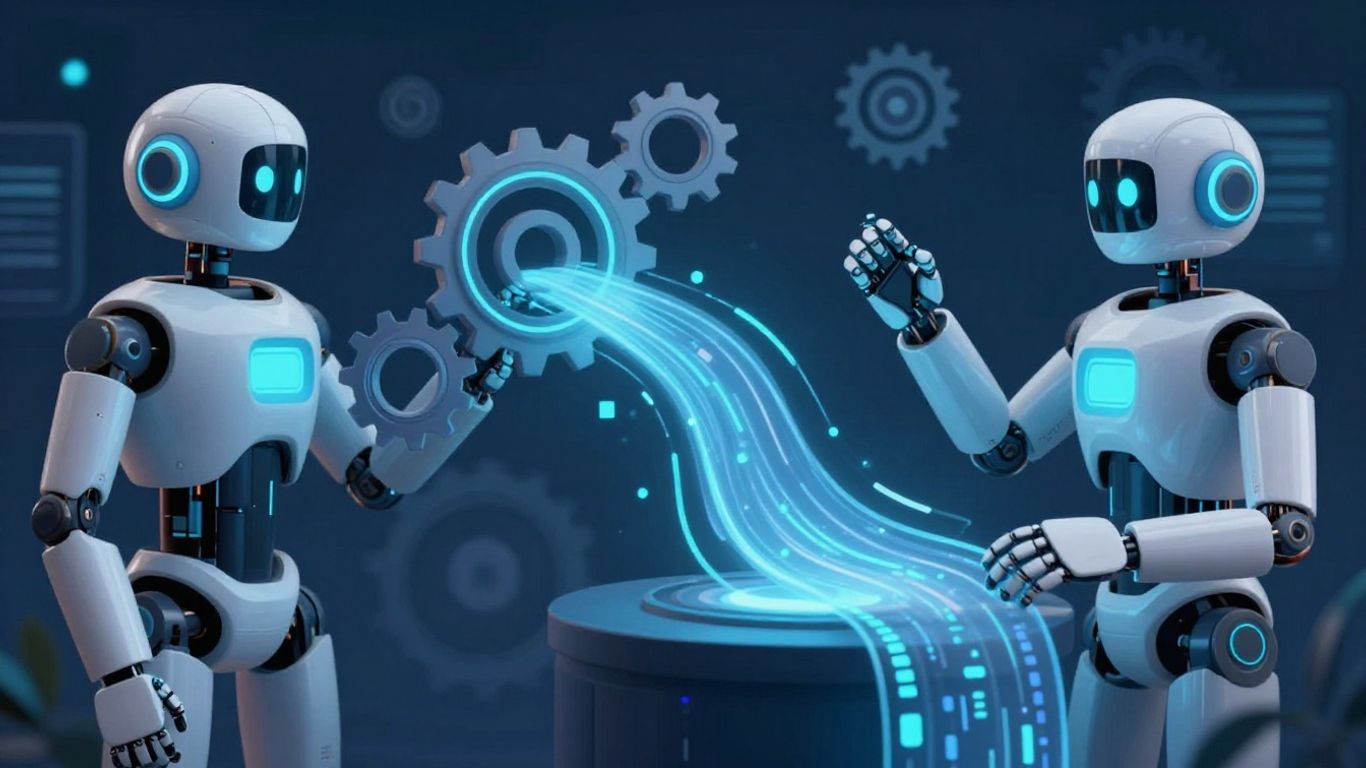
In 2026, managing coursework, projects, internships, and personal learning all at once is the norm for students. Trying to keep track of everything manually is just not practical anymore. This is where AI-driven task management and workflow automation tools come in. Think of them as smart assistants that help plan, schedule, and optimize your entire academic and work life.
These tools can significantly streamline your daily activities. AI helps automate repetitive digital tasks that used to eat up hours of your time. For example, you can set up automations to send assignment reminders to your preferred messaging app, automatically save notes generated by AI into your cloud storage, or even upload completed project files to your note-taking platform. By cutting down on this manual effort, you free up more time for thinking and problem-solving.
Here are some ways AI is changing task management:
- Smart Scheduling: Tools like Motion and Reclaim.ai analyze your calendar, deadlines, and to-do lists to create a dynamic schedule. They prioritize high-impact tasks and automatically block out time for study sessions, breaks, and meetings, adapting as new items are added.
- Workflow Automation: Platforms such as Zapier, Make, and n8n connect different apps to automate multi-step processes. You can create custom workflows, like summarizing lecture recordings and sending them to your notes, or syncing deadlines across all your academic tools.
- AI Personal Assistants: Advanced assistants can understand the context of your schedule, generate task lists, and even suggest when you might need a break or should review specific material based on your study history.
These intelligent systems learn your patterns and adapt to your pace, offering a personalized workflow that helps you stay consistent without leading to burnout. They aim to balance your academic responsibilities with personal time, which is really important for doing well over the long haul.
Integrating these tools means less time spent on planning and more time executing. It’s about making your digital life work for you, keeping everything organized and connected without constant manual updates. You can find more information on how artificial intelligence is changing work by looking at AI’s impact on work.
AI Tools for Career Growth & Skill Development
In 2026, AI is changing how students think about their futures. It’s not just about getting good grades anymore; it’s about building a career path and picking up the skills you’ll actually need. AI tools are becoming like personal career advisors, helping you figure out what you’re good at and where you want to go.
These tools can help you get ready for the job market in a few key ways:
- Resume and Portfolio Building: AI can help you create resumes that stand out. Tools can analyze job descriptions and suggest keywords to include, making sure your application gets noticed by hiring software. They can also help you build a personal website to showcase your projects.
- Interview Practice: Getting ready for interviews can be stressful. AI simulators can mimic real interviews, letting you practice answering questions and getting feedback on how you sound and what you say. This helps you feel more confident when the real interview comes around.
- Skill Development Guidance: Some AI tools can look at your current skills and career goals, then suggest specific areas you should focus on learning. This personalized advice helps you use your study time more effectively to gain job-ready abilities.
AI is transforming the job search from a daunting task into a structured, personalized journey. It helps translate your academic achievements into tangible professional assets.
AI career coaches and practice platforms offer a unique advantage. They provide objective feedback and tailored advice, helping students identify blind spots and refine their approach to job applications and interviews. This proactive preparation is key to standing out in a competitive field.
For instance, platforms like Jobscan AI can help you tailor your resume to specific job openings, increasing your chances of passing initial screenings. Similarly, AI interview simulators provide a safe space to practice your responses and build confidence. By integrating these tools, students can gain a significant edge as they transition from education to the professional world.
AI-Powered Resume & Portfolio Builders
Getting your foot in the door after graduation often means presenting yourself in the best possible light. Thankfully, AI tools are making the creation of resumes and portfolios much simpler and more effective. These platforms go beyond basic templates, using artificial intelligence to help you highlight your skills and experiences in a way that catches the eye of potential employers or clients.
These tools can significantly speed up the application process and improve your chances of getting noticed. They analyze job descriptions, identify keywords that Applicant Tracking Systems (ATS) look for, and suggest ways to rephrase your accomplishments to better match what companies are seeking. It’s like having a personal career advisor helping you tailor your application for each specific role.
Here’s a look at what some of these builders can do:
- Keyword Optimization: AI scans job postings and suggests relevant terms to include in your resume, helping you pass automated screening systems.
- Content Generation: Tools can help draft bullet points describing your responsibilities and achievements, often suggesting stronger action verbs and quantifiable results.
- Design and Formatting: Many platforms offer AI-driven design suggestions, ensuring your resume looks professional and is easy to read. Some can even help create a matching personal website or online portfolio.
- Cover Letter Assistance: AI can generate personalized cover letters based on your resume and the job description, saving you time and ensuring a consistent tone.
Building a strong resume and portfolio is a key step in launching your career. AI tools can take a lot of the guesswork out of this process, helping you create polished documents that truly represent your abilities and potential. They are designed to make you stand out in a competitive job market.
For students, especially those entering the job market for the first time or looking for internships, these AI-powered builders are a game-changer. They help translate academic achievements into professional language and present your qualifications in a clear, compelling format. It’s about making sure your application materials work as hard as you do.
AI Interview Preparation & Career Coaching
Getting ready for job interviews can feel like a big hurdle, but AI is making it a lot more manageable. Think of it as having a personal coach available anytime, anywhere. These tools are designed to help you practice, get feedback, and build confidence before you even step into a real interview.
AI interview simulators are a game-changer. They can mimic the experience of a real interview, asking you questions relevant to the job you’re applying for. Some even use speech analysis to check how clearly you’re speaking, how confident you sound, and if your answers are well-structured. You can practice answering common questions, and even tricky behavioral ones, and get suggestions on how to respond better. It’s a low-pressure way to get used to the interview format and improve your communication skills.
Here’s how these tools can help:
- Simulated Interviews: Practice with AI that asks domain-specific questions.
- Performance Feedback: Get instant analysis on your answers, clarity, and confidence.
- Response Suggestions: Learn how to answer difficult questions effectively.
- Confidence Building: Repeated practice in a safe environment reduces interview anxiety.
Beyond just practice, AI career coaches are also becoming popular. These platforms can help you think about your career path, figure out which skills are most important to develop, and even give advice on how to network. It’s like having a mentor who knows the job market and can guide you based on your goals and strengths. This kind of personalized guidance is invaluable for students transitioning from education to the professional world.
AI tools for interview prep and career coaching are not about replacing human interaction, but about augmenting your preparation. They provide objective feedback and consistent practice opportunities that can significantly boost your chances of success in the job market.
Ethical Use, Academic Integrity & Best Practices
As we get more comfortable using AI tools for schoolwork in 2026, it’s super important to think about how we use them right. These tools can help a lot with things like summarizing readings or getting ideas for projects, but they shouldn’t do the actual thinking for you. The main idea is to use AI as a helper, not as a replacement for your own brain.
Always be upfront about when and how you’ve used AI in your schoolwork. This means telling your teachers or professors if AI played a part in your research or writing, especially for assignments. If AI-generated content is part of your work, make sure to cite your sources properly, just like you would with any other information you found.
Here’s a quick guide to staying on the right side of academic honesty:
- Understand the Limits: AI is great for drafting, brainstorming, or checking grammar, but it can’t replace your unique perspective or critical analysis. Don’t submit AI-generated work as your own without significant review and personal input.
- Cite Your Sources: If you use AI to help generate ideas or text, and it forms a significant part of your submission, you need to acknowledge it. Check your institution’s guidelines on how to do this.
- Focus on Learning: The goal of school is to learn. Use AI to help you understand concepts better or to practice skills, rather than just getting answers quickly.
- Use Plagiarism Checkers: Tools like Turnitin AI and Scribbr are now advanced enough to spot AI-generated text. Using them can help you ensure your work is original and properly attributed.
Responsible AI use is about building good habits for the future. The workplaces of tomorrow will need people who can guide AI effectively, not just rely on it blindly. It’s about finding that balance between what technology can do and what your own skills and insights bring to the table.
Think of AI as a smart assistant that can help you work more efficiently, but the final product and the learning process should always be yours.
How to Integrate These Tools into Your Workflow
Alright, so you’ve got this whole arsenal of AI tools ready to go. That’s awesome. But how do you actually make them work for you without turning your study life into a chaotic mess? It’s all about smart integration, not just piling on more tech.
Start small and build up. Don’t try to use ten new AI apps on day one. Pick one or two that address your biggest pain points. Maybe you struggle with taking notes during lectures? Try Otter.ai or Notion AI for transcription and summarization. Or perhaps you spend too much time planning your study sessions? Look into Motion or Reclaim.ai for automated scheduling. Once you get comfortable with those, then you can explore adding others.
Here’s a simple way to think about it:
- Information Capture: Use AI for transcribing lectures, summarizing readings, or pulling key points from long documents. Tools like Otter.ai or Upword are great here.
- Organization & Planning: Let AI help structure your notes, create to-do lists, and schedule your study time. Notion AI, Motion, or Reclaim.ai fit this role.
- Idea Generation & Refinement: When you’re stuck on an assignment or need to brainstorm, use AI like ChatGPT or Perplexity to get ideas, clarify concepts, or even help structure your arguments. Remember to always review and add your own critical thinking.
- Content Creation: For presentations or projects, AI can assist with design, generating visuals, or even drafting initial content. Tools like Runway ML or Canva’s AI features can speed this up.
Think of these tools as your personal assistants. You wouldn’t ask an assistant to do everything without direction, right? You give them specific tasks. Similarly, direct your AI tools. Use them to automate repetitive tasks, speed up research, or overcome creative blocks, but always maintain oversight. Your unique perspective and critical judgment are what make your work truly yours.
The goal isn’t to replace your thinking process with AI, but to augment it. By strategically incorporating these tools, you can free up mental energy, reduce busywork, and focus on the parts of your studies that require genuine human insight and creativity. It’s about working smarter, not just harder, and building a workflow that supports your learning and personal growth.
Regularly check in with yourself. Are the tools actually saving you time? Are they making your work better? If not, it’s okay to adjust your approach or try different tools. The best workflow is one that evolves with your needs and helps you achieve your academic goals more effectively.
Conclusion: The Future Belongs to AI-Savvy Students

As we wrap up this look at AI tools for students in 2026, it’s clear that those who learn to work with these technologies are setting themselves up for success. Think of AI not as a shortcut, but as a smart assistant that can help you learn more effectively and manage your workload better. It’s about using these tools to boost your own abilities, not replace them.
The students who will thrive are the ones who understand how to guide AI, ask the right questions, and critically evaluate the output. This means using AI to brainstorm ideas, clarify complex topics, or even help organize your research, but always applying your own judgment and critical thinking to the results.
Here’s a quick look at how AI can support your journey:
- Writing & Research: Use AI to refine your writing, check grammar, or find relevant sources, but always do the core thinking yourself.
- Productivity: Automate note-taking and summarization to free up time for deeper learning.
- Creativity: Explore AI for design and presentation ideas, then add your unique touch.
- Career Prep: Practice interviews and get feedback to build confidence for the job market.
The real skill in 2026 and beyond isn’t just knowing how to use AI, but knowing when and how to use it responsibly. It’s about building a partnership where AI handles the repetitive tasks, allowing you to focus on the higher-level thinking, creativity, and problem-solving that truly matters.
Embracing these tools now means you’ll be better prepared for whatever comes next in your academic and professional life. It’s about becoming a more capable, efficient, and adaptable learner.
Additional Reading: Explore More from AlmaBetter
As you wrap up this guide on mastering AI tests and tools, you might be curious about where to go next. The world of AI and data science is always moving, and staying updated is key. If you found this information helpful and want to dig deeper into how AI can shape your academic and professional journey, AlmaBetter has a wealth of resources.
AlmaBetter offers programs designed to give you hands-on experience with AI and data science, preparing you for the jobs of tomorrow. They focus on practical skills and real-world projects, which is exactly what you need to stand out.
Here are a few areas you might want to explore further:
- AI for Productivity: Learn how to use AI tools to manage your time better and get more done.
- Content Creation with AI: Discover how AI can assist in writing, research, and generating creative content.
- Machine Learning Fundamentals: Get a grasp of the core concepts behind machine learning, a big part of AI.
- AI Project Ideas: See examples of AI projects to get inspiration for your own work.
Continuing your education in AI is more than just learning new software; it’s about developing a mindset that embraces technological change. The skills you gain will be useful whether you’re working on a school project or starting your career.
To get started, check out the Data Science and AI programs at AlmaBetter. They are built to help students like you become ready for the future.
Looking Ahead: Your AI-Powered Future
As we wrap up this look at AI tools for 2026, it’s clear these technologies are more than just helpful additions; they’re becoming fundamental parts of how students learn and prepare for their careers. From making study sessions more efficient to getting ready for job interviews, AI offers a helping hand. Remember, though, that these tools work best when you guide them. Think of them as smart assistants that can boost your own abilities, not replace them. By learning to use AI thoughtfully, you’re not just keeping up; you’re setting yourself up to lead in whatever field you choose. So, keep exploring, keep practicing, and embrace the possibilities AI brings to your academic and professional journey.
Frequently Asked Questions
What are AI tools for students in 2026?
In 2026, AI tools for students are like super-smart helpers. They go way beyond just answering questions. Think of them as assistants that understand what you need for school, learn how you study best, and do boring tasks for you. This makes learning faster, way more fun, and helps you get your work done more easily.
How can AI help with writing and research?
AI can be a great buddy for writing and research! Tools can help fix your grammar, suggest better ways to say things, and even help you find information for your projects. Some AI can even help you organize your research notes and make sure your citations are correct, saving you tons of time.
Can AI help me take better notes and stay organized?
Absolutely! AI can record your lectures and turn them into written notes. It can also create quick summaries or mind maps of what you learned. Some AI tools can even remind you to review important topics. It’s like having a personal assistant for all your school stuff.
How do AI tools help with creativity and making presentations?
Even if you’re not an artist, AI can help you make cool stuff! It can help you design awesome presentations, turn your notes into eye-catching pictures, or even create short videos to explain ideas. This makes your projects look great and helps people understand your ideas better.
What are AI interview prep tools?
These tools are like practice interviews that are always available. They let you practice answering tough questions, and the AI gives you feedback on how clearly you speak and how well you organize your thoughts. Some even show you examples of good answers, helping you feel more confident for real job interviews.
Is it okay to use AI for schoolwork?
Using AI for school is okay, but you have to be smart about it. Think of AI as a helper, not someone who does the work for you. Use it to get ideas, organize thoughts, or improve your writing. Always do your own thinking and make sure the final work is yours. Being honest about using AI is super important for staying on the right track.