
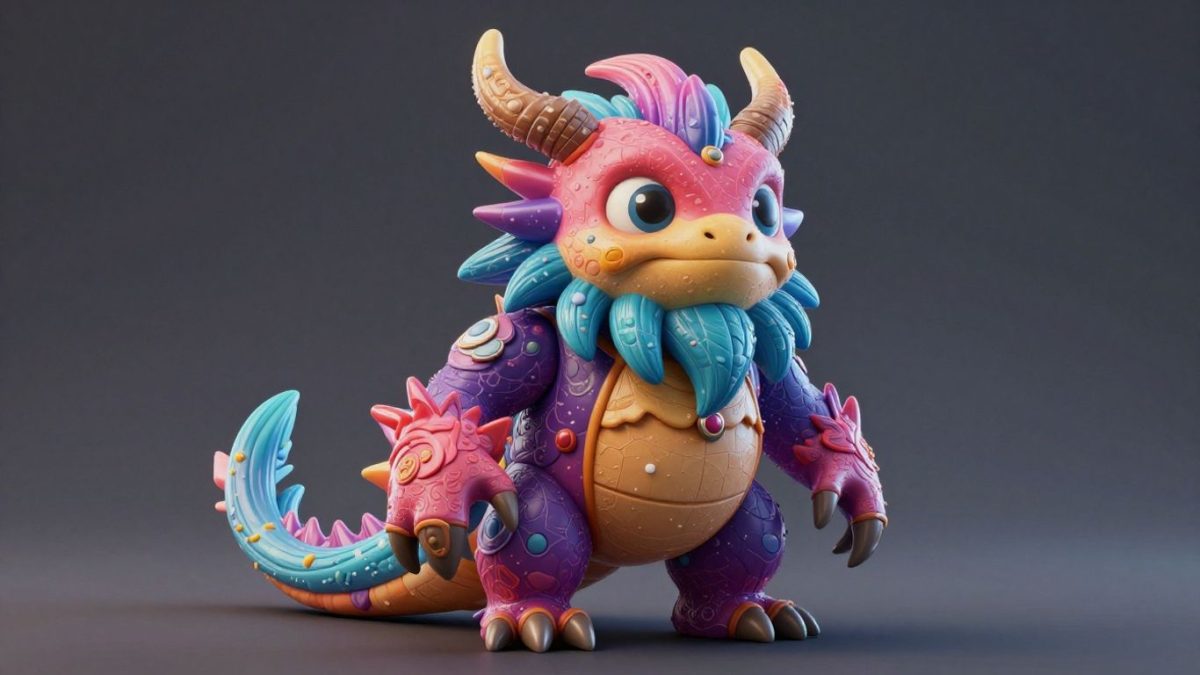
So, 3D models. They’re everywhere, right? From video games to the stuff you see in movies, and even those cool product views online. Making them used to take ages and a lot of skill. But now, there’s this thing called Meshes AI, and it’s changing the game. It uses smart computer programs to help create these 3D models way faster and, honestly, pretty impressively. We’re going to look at how Meshes AI works and why it’s becoming such a big deal.
Key Takeaways
- Meshes AI uses advanced AI, like neural networks and GANs, to create detailed 3D models.
- It automates many of the slow, repetitive parts of making 3D models, freeing up creators.
- This technology is making big waves in industries like gaming, film, and online shopping by speeding up production and improving visuals.
- Meshes AI helps create unique textures and complex shapes that would be hard to do by hand.
- The future looks bright, with AI getting even better at creating and collaborating on 3D designs.
Understanding Meshes AI Fundamentals
When we talk about 3D models, the first thing that comes to mind is the underlying structure, and that’s where meshes come in. Think of a mesh as the digital skeleton of an object. It’s built from tiny pieces: points called vertices, lines connecting them called edges, and flat surfaces made of these edges, known as faces or polygons. Most often, these faces are triangles or quadrilaterals.
The Core Components of 3D Meshes
The complexity and detail of a 3D model are directly tied to how many polygons it has. A model with millions of polygons can show incredibly fine details, but it also needs a powerful computer to run smoothly. On the flip side, models with fewer polygons are lighter and faster, which is great for real-time applications like video games, though they won’t look as intricate.
- Vertices: These are the individual points in 3D space that define the corners of your polygons.
- Edges: Lines that connect two vertices, forming the boundaries of faces.
- Faces (Polygons): The flat surfaces created by connecting three or more vertices. Triangles are the most common because they’re simple and efficient for computers to process.
Texturing and Shading for Realism
Just having the shape isn’t enough to make a 3D object look real. That’s where texturing and shading come into play. Texturing is like painting a detailed image onto the surface of the mesh. This image can mimic anything – the grain of wood, the shine of metal, or the weave of fabric. Shading, however, deals with how light interacts with that surface. It determines if the surface looks smooth, rough, shiny, or dull. Together, textures and shading give 3D models their visual identity and make them believable.
The Rendering Process Explained
Finally, to see your 3D creation as a flat image or a moving animation, you need to render it. Rendering is essentially the computer’s way of calculating how light, shadows, and reflections should appear on the model’s surfaces. It takes all the information about the mesh, its textures, and the lighting in the scene and figures out the final pixels for your screen. This can be a really demanding process, often requiring significant computing power. However, modern rendering techniques, often boosted by AI, can now produce incredibly lifelike visuals very quickly, sometimes even in real-time, which is a game-changer for many industries.
AI’s Transformative Role in 3D Model Generation
Artificial intelligence is really changing how we make 3D models. Before AI, creating detailed 3D objects meant a lot of manual work, often taking ages. Now, AI tools can speed things up dramatically, making the whole process more accessible and efficient.
Automating Repetitive 3D Modeling Tasks
Think about all the little, time-consuming jobs in 3D modeling. Things like creating basic shapes, cleaning up geometry, or even applying standard textures. AI can take over a lot of this. It’s like having a tireless assistant who can handle the grunt work, letting human artists focus on the creative vision. This automation doesn’t just save time; it also means fewer mistakes can creep in.
- Mesh Generation: AI can build the basic structure of a model from simple inputs.
- Texture Application: Applying materials and surface details can be automated.
- UV Unwrapping: Preparing models for texturing is often a complex, manual step that AI can simplify.
- Retopology: AI can help create cleaner, more efficient mesh structures from scanned or sculpted data.
The ability of AI to handle repetitive tasks is a significant shift. It frees up creative professionals to concentrate on the artistic and conceptual aspects of their work, rather than getting bogged down in technical minutiae.
Enhancing Accuracy and Precision with AI
Manual 3D modeling is prone to human error. Even the steadiest hand can introduce slight inaccuracies. AI algorithms, on the other hand, can work with incredible precision. They analyze data and make adjustments down to the smallest detail, leading to models that are much closer to the intended design. This is a big deal for fields like engineering and architecture, where even small errors can have major consequences.
| Task Area | Traditional Method | AI-Assisted Method |
|---|---|---|
| Shape Definition | Manual vertex manipulation | Algorithmic generation |
| Detail Placement | Hand-sculpted/modeled | Data-driven placement |
| Measurement | Human measurement | Precise digital analysis |
Leveraging Machine Learning for Model Quality
Machine learning, a subset of AI, is particularly good at learning from examples. By training on vast datasets of existing 3D models, AI can learn what makes a model look good, realistic, or functional. This allows it to predict how to best construct complex shapes or apply textures that fit a particular style. The result is higher quality models, created more efficiently. It’s like teaching a computer to understand aesthetics and technical requirements simultaneously.
Advanced AI Algorithms Powering Meshes AI
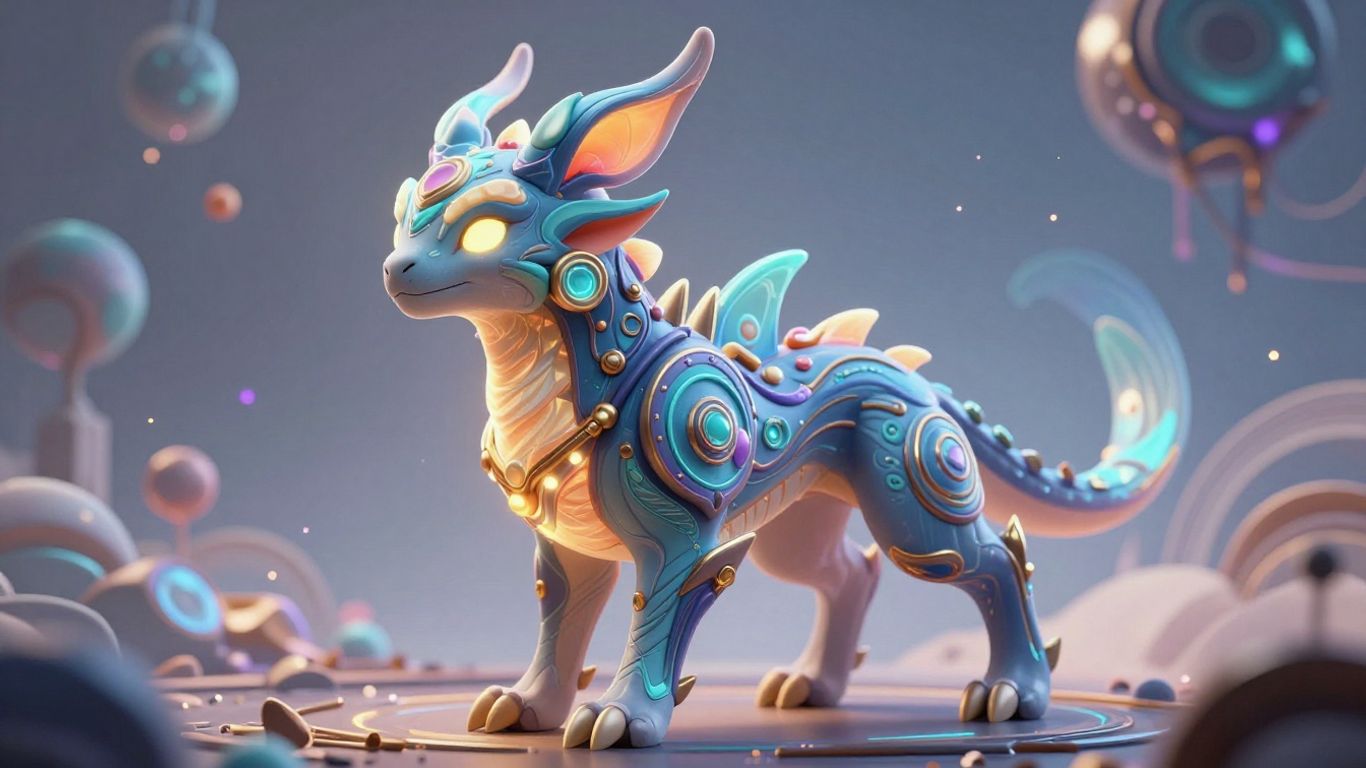
Meshes AI isn’t just about using AI; it’s about the specific, powerful algorithms that make it all happen. Think of these as the engines driving the whole operation, turning complex ideas into tangible 3D forms.
The Power of Neural Networks in 3D
Neural networks are a big deal in AI, and they’re especially good at handling the kind of data that makes up 3D models. They’re structured a bit like the human brain, with layers that process information. This layered approach lets them pick up on subtle patterns, textures, and shapes that would be hard for traditional software to grasp. When applied to 3D modeling, neural networks can help generate incredibly detailed surfaces and understand how different parts of a model should connect. This ability to learn and replicate complex visual information is what makes them so effective for creating realistic 3D assets.
Generative Adversarial Networks for Detail
Generative Adversarial Networks, or GANs, are a fascinating type of neural network. They work by pitting two networks against each other: a generator and a discriminator. The generator tries to create new 3D data – like model shapes or textures – while the discriminator tries to tell if that data is real or fake. This constant back-and-forth pushes the generator to get better and better, producing incredibly convincing and detailed results. It’s like having an artist constantly trying to fool an art critic, and in the process, becoming a master artist.
Procedural Generation with AI
Procedural generation is a technique where content is created using algorithms rather than manual design. AI takes this a step further. Instead of just following a set of rules, AI can learn from existing data to generate new, unique content that fits specific criteria. For 3D models, this means AI can create vast landscapes, intricate architectural details, or varied character assets based on high-level descriptions or examples. This is super useful for making large game worlds or populating scenes with diverse objects without needing to model each one by hand.
AI algorithms are not just automating tasks; they are fundamentally changing how we think about creating 3D content. They allow for a level of detail, variation, and efficiency that was previously unimaginable, opening doors for new creative possibilities.
Here’s a look at how these algorithms contribute:
- Neural Networks: Excellent for understanding and generating complex surface details and forms.
- GANs: Drive the creation of highly realistic and intricate textures and model variations.
- Procedural AI: Enables the generation of large-scale, diverse, and rule-based 3D environments and assets.
Practical Applications of Meshes AI Tools
Meshes AI isn’t just a theoretical concept; it’s actively changing how we create and use 3D models across many fields. Think about it – what used to take teams of artists weeks or months can now be done much faster, and often with better results. This technology is making 3D modeling more accessible and efficient than ever before.
Revolutionizing the Gaming Industry
The gaming world has been an early adopter of Meshes AI, and for good reason. Creating the vast, detailed worlds and characters players explore requires an enormous amount of 3D assets. AI tools can now generate these assets at a speed that was previously unimaginable. This means developers can spend less time on repetitive modeling tasks and more time on gameplay and overall player experience. Imagine games with more intricate environments, more unique character designs, and faster development cycles – that’s the impact AI is having.
- Faster asset creation: AI can generate basic models, textures, and even animations, significantly cutting down production time.
- Increased detail and variety: Developers can create a wider range of assets, leading to more diverse and immersive game worlds.
- Improved performance: AI can optimize models for real-time rendering, ensuring smooth gameplay even with complex visuals.
Enhancing Film and Animation Production
In film and animation, the demand for photorealistic visuals is constant. Meshes AI is a game-changer here, helping to create everything from fantastical creatures to realistic historical settings. The ability to generate complex geometry and realistic textures quickly means that even smaller studios can achieve high-end visual effects. This technology helps artists focus on the creative storytelling aspects, rather than getting bogged down in the technicalities of modeling.
AI’s role in film and animation is about augmenting human creativity, not replacing it. It provides powerful tools that allow artists to realize their visions more effectively and efficiently, leading to more compelling visual narratives.
Applications in E-Commerce and Product Visualization
For businesses, especially in e-commerce, presenting products in the best possible light is key. Meshes AI allows for the rapid creation of high-quality 3D models of products. This is incredibly useful for online stores, where customers can view products from all angles, zoom in on details, and even see them in a virtual environment. This level of visualization can significantly improve customer engagement and reduce returns. It also aids in rapid prototyping, allowing designers to quickly iterate on product designs before committing to physical production.
| Application Area | Benefit |
|---|---|
| Online Retail | Interactive 3D product views, virtual try-ons |
| Manufacturing | Rapid prototyping, design iteration |
| Marketing & Advertising | Engaging visual content, virtual showrooms |
Optimizing and Refining Models with Meshes AI
Once a 3D model is generated, the work isn’t necessarily done. Meshes AI tools step in to help polish and perfect these digital creations, making them ready for their intended use. This stage is all about fine-tuning the details, ensuring the model looks its best and performs as expected.
Creating Intricate Shapes with AI
Manually crafting highly complex or organic shapes can be incredibly time-consuming and requires a high level of artistic skill. Meshes AI can significantly simplify this process. By providing specific parameters or even rough sketches, AI algorithms can generate detailed and intricate forms that would be difficult to achieve through traditional modeling techniques. This allows for the creation of unique assets for games, films, or product designs that truly stand out.
AI-Generated Textures for Unique Designs
Textures are what give a 3D model its surface appearance, simulating materials like wood, metal, or fabric. AI can generate custom textures based on simple inputs, such as a description or a reference image. Imagine needing a specific type of weathered stone or a futuristic metallic sheen; AI can produce these unique textures, saving artists the effort of finding or creating them from scratch. This capability is a game-changer for projects requiring a distinct visual style.
Performance Optimization for Real-Time Use
For applications like video games, virtual reality, or augmented reality, model performance is key. A model that looks great but runs slowly isn’t very useful. Meshes AI includes tools that can optimize models for speed without sacrificing visual quality. This often involves intelligently reducing the number of polygons (the building blocks of a 3D mesh) or simplifying the mesh structure. The AI can identify and remove unnecessary details that the human eye won’t notice, resulting in a lighter, faster model.
Here’s a look at how AI helps optimize models:
- Polygon Reduction: AI algorithms can analyze a mesh and reduce its polygon count while preserving the overall shape and important details.
- Mesh Simplification: Unnecessary vertices and edges are identified and removed, streamlining the model’s structure.
- Texture Compression: AI can help optimize texture files, reducing their size for faster loading times.
- Level of Detail (LOD) Generation: AI can automatically create multiple versions of a model with varying levels of detail, allowing the system to display the most appropriate version based on the viewer’s distance.
Optimizing models with AI ensures that complex, visually rich 3D assets can be used effectively in real-time environments, bridging the gap between artistic vision and technical performance requirements.
The Future Landscape of AI in 3D Modeling
Emerging Trends in Generative AI
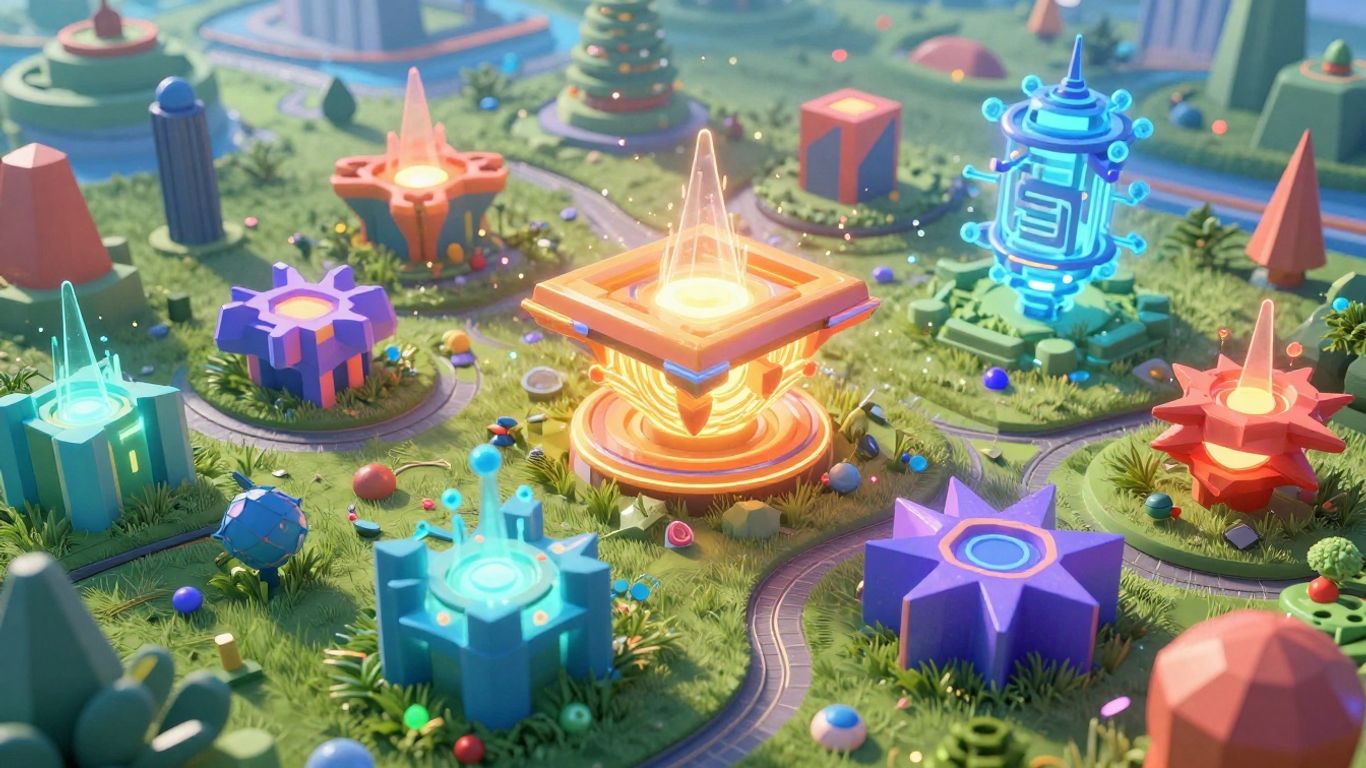
Generative AI is rapidly changing how we think about creating 3D models. Instead of manually shaping every polygon, we’re seeing tools that can build entire objects or scenes from simple text descriptions. Imagine typing "a medieval castle on a rocky hill" and having a detailed 3D environment appear. This isn’t science fiction anymore; it’s becoming a reality. These systems learn from massive datasets of existing 3D models and images, allowing them to produce novel designs that can be surprisingly intricate and unique. This shift means that the barrier to entry for 3D content creation is lowering significantly.
Collaborative AI and Human-AI Interaction
Looking ahead, the relationship between humans and AI in 3D modeling is evolving towards collaboration. Rather than AI replacing artists, it’s becoming a powerful assistant. Think of AI handling the repetitive, time-consuming tasks, like generating variations of a character’s outfit or populating a scene with background elements, freeing up human artists to focus on the creative direction, fine-tuning details, and adding that essential artistic touch. This partnership allows for faster iteration and the exploration of more creative possibilities than either human or AI could achieve alone.
- AI can automate the creation of LOD (Level of Detail) models.
- Human artists can guide AI generation with sketches or reference images.
- Real-time feedback loops allow for immediate adjustments to AI-generated assets.
The Path Towards Sustainable 3D Modeling
Sustainability is becoming a more significant consideration in all fields, and 3D modeling is no exception. AI can play a role here by optimizing models for efficiency. This could mean designing 3D printable objects that use less material, or creating digital assets that require less processing power to render, thereby reducing energy consumption. As AI gets better at understanding physical constraints and material properties, it can help create 3D models that are not only visually appealing but also environmentally conscious.
The integration of AI into 3D modeling is not just about speed and detail; it’s also about making the creation process more accessible and potentially more responsible. The future will likely see a blend of human creativity guided by intelligent tools, leading to more diverse and efficient 3D content.
| Area of Impact | Current AI Capability | Future AI Potential |
|---|---|---|
| Content Generation | Basic object creation | Complex scene generation from text/voice prompts |
| Workflow Automation | Repetitive task aid | Fully automated asset pipelines |
| Model Optimization | Basic mesh refinement | Material-aware, eco-friendly design generation |
| Human-AI Interaction | Tool assistance | Intuitive, collaborative creative partnerships |
Looking Ahead: The Evolving Landscape of 3D Model Generation
As we’ve seen, artificial intelligence is really changing how we make 3D models. Tools are getting smarter, faster, and easier to use, which is great news for everyone from game designers to engineers. AI helps automate the tricky, time-consuming parts, letting creators focus more on the actual design and less on the technical grind. While there are still things to figure out, like making sure AI tools work well with human creativity, the direction is clear. We’re heading towards a future where creating detailed, realistic 3D worlds and objects is more accessible than ever before, opening up new possibilities across so many different fields.
Frequently Asked Questions
What exactly are 3D meshes?
Think of 3D meshes as the building blocks of 3D models. They are made up of tiny points, lines, and flat surfaces, like triangles or squares, all connected together. These pieces form the shape of an object. The more pieces you have, the more detailed the object looks, but it also needs more computer power to run. Fewer pieces make it simpler and faster, but less detailed.
How does AI help make 3D models better?
AI is like a super-smart assistant for 3D artists. It can do the boring, repetitive jobs, like creating basic shapes or adding colors and textures, super fast. This means artists can spend more time on the really creative parts. AI also helps make sure models are super accurate and precise, which is important for things like engineering or game design.
What kind of AI technology is used for making 3D models?
A lot of the magic comes from special types of AI called neural networks. These are inspired by how our brains work. Another cool type is Generative Adversarial Networks, or GANs. They work like a team where one AI tries to create models and another tries to spot fakes, making the created models really good and realistic.
Can AI help create realistic textures and colors for 3D models?
Absolutely! AI is fantastic at creating textures, which are like the ‘skin’ of a 3D model, giving it color and material details like wood grain or metal shine. You can even describe the texture you want, like ‘old, rusty metal,’ and the AI can generate it. This makes models look much more real and unique.
How is AI used in games and movies?
In gaming, AI helps create huge, detailed worlds and characters much faster, making games look amazing and immersive. For movies and animation, AI speeds up the creation of special effects and realistic characters, saving a lot of time and money. It helps bring fantastic stories to life with incredible visuals.
Is AI making 3D modeling easier for beginners?
Yes, AI tools are making 3D modeling much more accessible. You can now create complex 3D models just by typing in a description or using a simple image. This means people who aren’t 3D experts can still create impressive models, opening up 3D creation to more people than ever before.