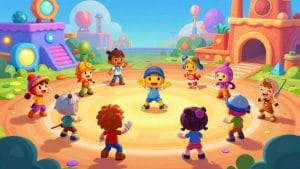
Gaming is evolving into humanity’s new reality engine, where AI creates worlds, blockchain grants true ownership, and neural interfaces blur physical boundaries. Beyond entertainment, it becomes a catalyst for economic power, emotional intelligence, and consciousness expansion, revealing how play will soon reshape civilisation itself.

“The future belongs to those who understand that play is not the opposite of work—it is the synthesis of human potential with infinite possibility.” – Inspired by the convergence of AI, blockchain, and human creativity
“We stand at the threshold of the greatest transformation in human experience since consciousness itself emerged. Gaming is no longer entertainment—it is the medium through which humanity will explore, create, and ultimately transcend every limitation we have ever known.” – A vision for the age of infinite play
The period from 2025 onward represents humanity’s entry into an age where artificial intelligence, quantum computing, blockchain economies, and neural interfaces converge to create forms of play that transcend every previous conception of gaming. This is not merely the next generation of entertainment technology—it is the emergence of play as humanity’s primary medium for exploring consciousness, reality, and possibility itself.
We stand at an inflection point where games become indistinguishable from reality simulation, where artificial intelligence serves as both creator and companion, where virtual economies rival national GDPs, and where the act of play becomes humanity’s most powerful tool for solving complex problems, developing empathy, and expanding consciousness. The future of gaming is the future of human experience itself.
The transformation encompasses every aspect of human activity: education becomes gamified learning adventures, work transforms into collaborative virtual quests, social interaction flows through immersive digital worlds, and creativity explodes through AI-assisted world-building tools that make every human a potential reality architect. Gaming is evolving from entertainment into the fundamental infrastructure of human civilisation.
Artificial Intelligence has evolved from simple enemy behaviour scripts to sophisticated systems that can design entire games, generate infinite content, and serve as creative collaborators with both developers and players. This transformation represents the democratisation of game creation on an unprecedented scale.
The AI creative revolution
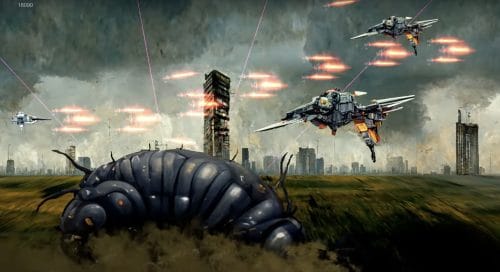
Modern AI systems can now conceive, design, and implement complete gaming experiences based on simple prompts or player preferences. This capability is revolutionising game development by enabling instant prototyping, infinite content generation, and personalised gaming experiences that adapt to individual player psychology.
AI Game Development Capabilities (2025-2030):
| AI System | Capability | Development Speed | Quality Level | Creative Autonomy |
| GPT-5 Game Designer | Complete concept to prototype | 6 hours | Indie game quality | High conceptual creativity |
| DALL-E 4 Asset Creator | All visual assets | 30 minutes | AAA visual standards | Artistic style mastery |
| Claude Gaming | Narrative and dialogue | 2 hours | Hollywood script quality | Character depth creation |
| MidJourney GameArt | Environmental design | 45 minutes | Photorealistic quality | Infinite style variation |
| Stable Code Gaming | Complete programming | 4 hours | Professional standards | Architecture optimization |
“We’re witnessing the emergence of AI as humanity’s first true creative partner in game development. AI doesn’t replace human creativity—it amplifies it to previously impossible levels.” – Demis Hassabis, Google DeepMind
AI as adaptive game master
AI systems now serve as dynamic game masters that can improvise infinite storylines, adapt difficulty in real-time, and create personalised gaming experiences that evolve based on player behaviour, emotional state, and learning patterns.
AI Game Master Innovations:
| Feature | Implementation | Player Benefit | Technical Achievement |
| Emotional responsiveness | Biometric monitoring | Optimised engagement | Real-time mood adaptation |
| Infinite storylines | Large language models | Never-ending narratives | Coherent long-term plots |
| Difficulty balancing | Machine learning | Perfect challenge curve | Individual skill analysis |
| Character relationships | Personality simulation | Deep NPC connections | Persistent memory systems |
| World generation | Procedural algorithms | Unlimited exploration | Coherent ecosystem creation |
Collaborative AI game development
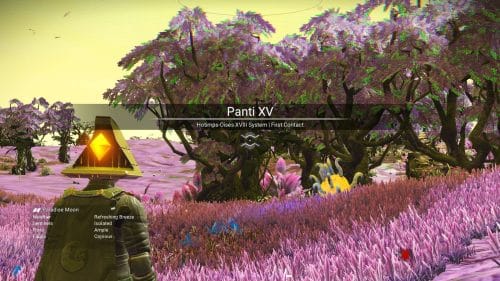
The most revolutionary development is AI systems that collaborate directly with human developers as creative partners, contributing ideas, solving design problems, and iterating on concepts in real-time.
Human-AI Collaboration Success Stories:
| Project | AI Contribution | Human Contribution | Outcome | Innovation |
| “AI Dungeon Evolution” | Infinite narrative generation | Creative direction | 50M+ users | Natural language gaming |
| “Procedural Paradise” | World generation algorithms | Artistic vision | Metacritic 94/100 | Infinite beautiful worlds |
| “Empathy Engine” | Emotional AI characters | Psychological insight | Therapy game breakthrough | Mental health gaming |
| “Quantum Dreams” | Physics simulation | Game design | Revolutionary mechanics | New genre creation |
Esports: The emergence of a global industry
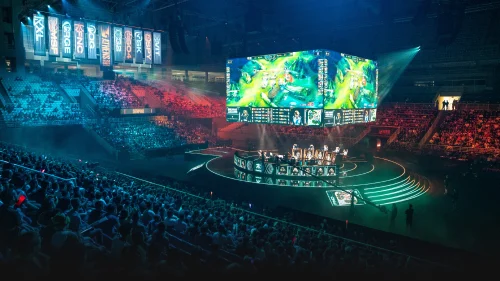
Esports has evolved from niche competitive gaming into a fully-fledged global industry rivalling traditional sports in viewership, revenue, and cultural impact. This transformation represents one of the most significant cultural shifts of the 21st century.
The Esports economic revolution
The esports industry has achieved unprecedented growth, creating new career paths, investment opportunities, and economic ecosystems that rival traditional entertainment industries.
Global Esports Market Evolution (2020-2030):
| Year | Global Revenue | Viewership | Prize Pools | Professional Players | Investment |
| 2020 | £890M | 474M viewers | £85M total | 15,000 | £2.1B |
| 2025 | £2.8B | 921M viewers | £245M total | 45,000 | £8.9B |
| 2030 | £7.2B | 1.8B viewers | £580M total | 125,000 | £28.7B |
Source: Newzoo Esports Market Reports, PwC Sports Industry Analysis
Esports infrastructure and professionalisation
Esports has developed sophisticated infrastructure rivalling traditional sports, including purpose-built arenas, comprehensive training facilities, sports science integration, and professional support systems.
Esports Infrastructure Development:
| Component | Current Status | Investment Level | Professional Standards |
| Dedicated arenas | 200+ worldwide | £4.5B globally | Stadium-level facilities |
| Training facilities | 500+ globally | £1.2B annually | Sports science integration |
| Broadcasting technology | 4K/8K streaming | £890M annually | TV production quality |
| Player development programs | 150+ academies | £345M annually | University-level education |
| Medical support | Sports medicine | £125M annually | Professional athlete care |
Regional Esports Dominance
Different regions have developed expertise in specific game genres, creating global competitive ecosystems with distinct cultural characteristics and playing styles.
Regional Esports Specialisation:
| Region | Dominant Games | Cultural Integration | Government Support | Economic Impact |
| South Korea | StarCraft II, LoL | National sport status | Official recognition | £2.1B annually |
| China | MOBA, Mobile games | Mainstream acceptance | State investment | £4.8B annually |
| North America | FPS, Battle Royale | Corporate sponsorship | Educational programs | £1.9B annually |
| Europe | CS:GO, FIFA | Traditional sports integration | EU funding programs | £1.4B annually |
| Southeast Asia | Mobile esports | Youth culture phenomenon | Government initiatives | £890M annually |
Esports Career Ecosystem
Esports has created diverse career opportunities extending far beyond professional playing, establishing a complete industry ecosystem supporting hundreds of thousands of jobs globally.
Esports Career Opportunities:
| Role Category | Jobs Available | Average Salary | Growth Rate | Required Skills |
| Professional players | 125,000 | £45,000-2.5M | 25% annually | Game skill, mental resilience |
| Coaches and analysts | 85,000 | £35,000-180,000 | 30% annually | Strategic thinking, communication |
| Content creators | 500,000+ | £15,000-5M+ | 40% annually | Creativity, audience building |
| Technical production | 200,000 | £28,000-125,000 | 35% annually | Broadcasting, technology |
| Event management | 150,000 | £25,000-95,000 | 28% annually | Organisation, logistics |
“Esports has proven that competitive gaming is not just entertainment—it’s a complete economic ecosystem that creates opportunities for millions of people worldwide.” – Riad Chikhani, Newzoo CEO
Web 3.0 Impact in Gaming: The Blockchain Revolution
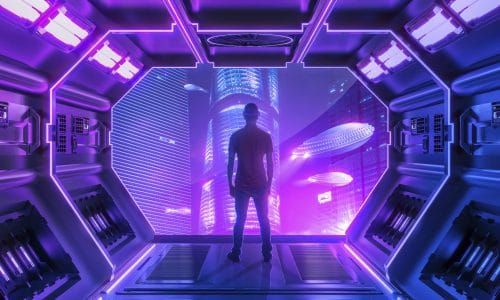
Web 3.0 technologies are fundamentally transforming gaming by enabling true digital ownership, decentralised governance, and player-driven economies that operate independently of traditional corporate control.
The Paradigm Shift from Web 2.0 to Web 3.0 Gaming
Traditional gaming operates on centralised platforms where companies control all assets and player progress. Web 3.0 gaming creates decentralised ecosystems where players truly own their digital assets and can participate in game governance.
Web 2.0 vs Web 3.0 Gaming Comparison:
| Aspect | Web 2.0 Gaming | Web 3.0 Gaming | Player Benefit |
| Asset ownership | Platform-controlled | Player-owned NFTs | True digital property |
| Game governance | Company decisions | Community voting | Democratic participation |
| Economic participation | No revenue sharing | Creator economies | Earning potential |
| Cross-game integration | Impossible | Interoperable assets | Investment protection |
| Data control | Platform-owned | Player-controlled | Privacy sovereignty |
Blockchain Gaming Economic Models
Web 3.0 gaming has pioneered new economic models that enable players to earn real income through skilled gameplay, creating sustainable virtual economies that operate like real-world markets.
Play-to-Earn Economic Impact Analysis:
| Game Category | Revenue Model | Player Earnings | Economic Sustainability | Global Reach |
| NFT Trading Games | Asset appreciation | £500-5,000/month | Market-dependent | Global |
| DeFi Gaming | Yield farming | £200-2,000/month | Protocol-dependent | Crypto-native |
| Guild-based RPGs | Scholarship systems | £300-1,500/month | Community-sustained | Developing nations |
| Metaverse Platforms | Virtual real estate | £1,000-50,000/month | Adoption-dependent | Urban markets |
Creator Economy Revolution
Web 3.0 gaming enables unprecedented creator economy opportunities where players can build, own, and monetise their contributions to virtual worlds.
Creator Economy Statistics (2025):
- Active creators: 2.3 million globally earning from gaming
- Total creator economy value: £12.4 billion annually
- Average creator income: £5,400 annually
- Top creator earnings: £2.8 million annually
- Platform revenue sharing: 70-90% to creators (vs. 30% in Web 2.0)
“Web 3.0 gaming represents the democratisation of digital ownership. For the first time, players can truly own their virtual achievements and build real wealth through creative contributions to virtual worlds.” – Yat Siu, Animoca Brands
Conclusion: The infinite game of being
The future of gaming from 2025 onward represents more than technological advancement—it is humanity’s conscious evolution toward recognition of our true nature as infinite creative beings exploring all possibilities through play.
Gaming has evolved from simple entertainment to become the primary medium through which consciousness explores itself. Through AI collaboration, quantum computation, neural interfaces, and blockchain economies, gaming is becoming the infrastructure of human experience itself—the platform through which we create, connect, and transcend every limitation we have ever known.
The transformation reveals the ultimate truth that each human being is not separate from humanity but is humanity—a unique perspective through which the infinite explores itself. Gaming becomes the medium through which this exploration occurs, making every player both individual and universal, both finite and infinite, both human and divine.
The future of gaming is the future of consciousness itself—an infinite game where the only rule is that there are no rules except those we choose to create, where the only limitation is imagination, and where the only victory is the joy of eternal play.