
So, AI is changing how we build websites. It’s not just for big companies anymore. You can use it to make things faster and maybe even a bit easier. We’re talking about a website with AI that can do some pretty cool stuff. But, like anything new, there are things to watch out for. Let’s break down what this all means for your next online project.
Key Takeaways
- AI tools can speed up website creation, making it easier for people without design backgrounds to build sites.
- The best results come from mixing AI’s speed with human designers’ creativity and strategic thinking.
- AI helps make websites more personal for each visitor and adapt to different devices automatically.
- AI-generated websites might start as basic templates, so adding advanced features and ensuring security needs careful human input.
- AI is making web design more accessible, helping small businesses and creators build their online presence more easily.
How AI Is Revolutionizing Website Creation
Artificial intelligence is changing how we build websites, making the process faster and more accessible than ever before. It’s not just about fancy algorithms anymore; AI is becoming a practical tool that anyone can use. Think about it: what used to take days of work by a whole team can now be started with just a simple text description. This shift is a big deal, especially for small businesses or individuals who don’t have large budgets for web development.
Rapid Prototyping With AI Tools
AI tools can now generate website layouts and even full pages in minutes. You give the AI some basic information – like what your business does, your preferred style, and what you want the site to achieve – and it puts together a draft. This is incredibly useful for quickly testing ideas and getting a feel for what a website could look like. It dramatically cuts down the time spent on the initial design phase. For example, platforms like Wix ADI and Bookmark use AI to create site structures based on your input, speeding up the whole process.
- Quickly generate multiple design concepts.
- Visualize website layouts without manual effort.
- Get a functional starting point for further development.
This rapid prototyping means you can move from an idea to a tangible website structure much faster. It’s like having a design assistant that can instantly sketch out ideas for you. This speed is a game-changer for getting your online presence established quickly. You can explore different looks and feels without committing a lot of time or resources upfront. This ability to iterate quickly is a major advantage in today’s fast-paced digital world. The goal is to get a solid foundation that can be built upon, rather than a final, polished product right away. This approach helps in creating a website that meets initial needs efficiently.
Accessibility for Non-Designers
One of the most significant impacts of AI in web design is making it accessible to people without technical or design backgrounds. You no longer need to know how to code or understand complex design principles to create a professional-looking website. AI-powered builders guide you through the process, often using simple question-and-answer formats or drag-and-drop interfaces. This democratizes web design, allowing entrepreneurs, artists, and small business owners to build their own online presence without hiring expensive professionals. It truly levels the playing field, giving more people the tools to succeed online.
AI is removing the technical barriers that previously prevented many from creating a website. This means more diverse voices and businesses can establish a digital footprint.
Reducing Traditional Development Barriers
Building a website traditionally involved a steep learning curve and significant time investment. AI is breaking down these barriers. It automates many of the repetitive and complex tasks that used to require specialized knowledge. This includes generating code, suggesting layouts, and even optimizing content. For instance, no-code and low-code platforms, often enhanced by AI, allow users to build sophisticated websites using visual interfaces. This drastically reduces the need for deep coding knowledge, making website creation more approachable. The result is a faster, more cost-effective way to get a website online, allowing creators to focus on their content and business goals rather than getting bogged down in technical details.
Design Collaboration: The Synergy of AI and Human Expertise
AI as an Assistant, Not a Replacement
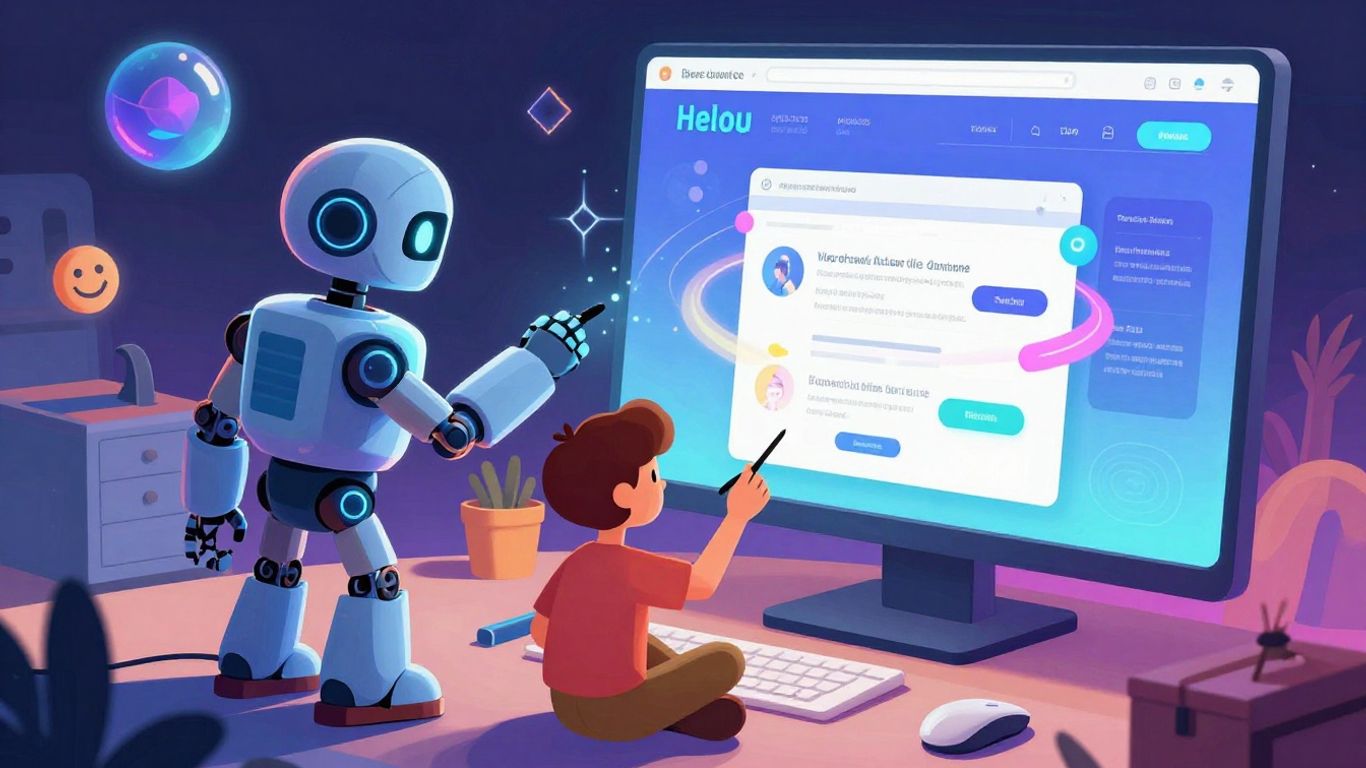
It’s easy to think AI might take over web design completely, but that’s not really the picture. Think of AI more like a really smart intern or a super-powered assistant. It can handle a lot of the repetitive, time-consuming tasks, like generating initial layouts or suggesting color palettes based on data. This frees up human designers to focus on the bigger picture. The real magic happens when AI and human designers work together. AI can churn out options at a speed humans can’t match, but it’s the human touch that brings a unique vision and strategic thinking to the project. For instance, AI might suggest a design based on popular trends, but a human designer will know if that trend actually fits the specific brand’s identity and target audience.
Enhancing Creativity and Productivity
AI tools are changing how creative work gets done. Instead of spending hours on basic coding or layout adjustments, designers can use AI to get a solid starting point. This means more time can be spent on the creative aspects – like developing unique user journeys, crafting compelling brand stories, or experimenting with novel interactive elements. It’s like having a tool that can quickly sketch out dozens of ideas, allowing the designer to pick the best ones and refine them. This partnership speeds up the whole process, letting designers take on more projects or dedicate more time to each client’s specific needs. It’s not about replacing creativity, but about giving it more room to breathe and explore.
The Role of Human Insight in Personalization
While AI is great at processing data and identifying patterns, it doesn’t quite grasp the nuances of human emotion or cultural context. This is where human designers are indispensable. They bring empathy, intuition, and a deep understanding of the target audience that AI can’t replicate. For example, AI can personalize content based on user behavior, but a human designer will understand why a certain user might respond to a particular message or visual style, and how to connect with them on a deeper level. This blend of data-driven personalization and human insight leads to websites that are not only functional and efficient but also genuinely engaging and memorable. It’s about making sure the technology serves the human experience, not the other way around.
The future of web design isn’t about AI versus humans; it’s about how humans can use AI to achieve more than they ever could alone. It’s a collaborative effort where technology handles the heavy lifting, and human creativity guides the direction.
Here’s a look at how this collaboration plays out:
- Rapid Prototyping: AI can generate multiple design mockups in minutes, allowing for quick iteration and feedback.
- Content Generation: AI can assist in writing copy or suggesting image ideas, speeding up content creation.
- Code Assistance: Tools like GitHub Copilot can suggest code snippets, reducing development time for standard features.
- Data Analysis: AI processes user data to inform design decisions, but humans interpret these insights for strategic application.
This approach helps bridge the gap between complex information and communication technology [5bd3], making web development more accessible and efficient for everyone involved.
Optimizing User Experience With Data-Driven Design
Websites used to be static things, built once and then left to gather digital dust. But that’s changing fast. Now, we can build sites that actually pay attention to who’s visiting and what they’re doing. This is where AI really shines, helping us make websites that feel like they’re made just for each person who lands on them.
Personalization at Scale
Remember when only the biggest companies could afford to make their websites feel special for each customer? AI is changing that. It can look at how people use a site – what they click on, what they spend time looking at, what they buy – and then change the website on the fly. This means a new visitor might see a different welcome message or product suggestions than someone who’s been there before. It’s like having a helpful shopkeeper who knows everyone’s tastes.
- AI can adjust content and product recommendations based on past user actions.
- It allows for dynamic changes to layout and messaging for different user segments.
- This makes each visitor feel understood, boosting their connection to the site.
AI helps create websites that aren’t just pages of information, but rather interactive spaces that adapt to the individual, making them feel more relevant and engaging.
Real-Time Adaptation to User Behaviors
Beyond just knowing who a visitor is, AI can watch what they’re doing right now. If someone is browsing a specific category of products, the site can automatically show them more related items or helpful guides. If a user seems stuck on a certain page, the site might offer a pop-up with assistance or a different way to find what they need. This isn’t about guessing; it’s about responding instantly to what the user is showing you they want or need.
Responding to Multi-Device Environments
People use all sorts of devices to get online these days – phones, tablets, laptops, even smart TVs. AI can help make sure your website looks and works great on all of them, without you having to manually tweak every single version. It can automatically adjust layouts, image sizes, and even navigation menus to fit the screen size and type of device being used. This means a smooth experience for everyone, no matter how they’re accessing your site.
Beyond Templates: Limits and Solutions of AI-Generated Websites
AI tools can whip up a website design surprisingly fast, often from just a few text prompts. It’s easy to get excited about this speed and cost savings. However, this quick start often leads to a common pitfall: the "prototype trap." Many AI-generated sites end up looking like generic shells, functional but lacking the unique spark that makes a business stand out. Think of it like buying a pre-fabricated house – it has walls and a roof, but it doesn’t necessarily reflect your personal style or needs.
Understanding the Prototype Trap
AI models learn from vast amounts of data, meaning they tend to create designs based on common patterns. This can result in websites that feel repetitive and unoriginal. Clients often come to human designers after trying AI builders, seeking a site that actually represents their brand. The issue is that AI doesn’t grasp the subtle nuances of a specific business or its target audience. It can assemble the pieces, but it can’t truly understand the vision behind them.
- Generic Layouts: AI often defaults to standard layouts that don’t differentiate a business.
- Stock Imagery: Reliance on generic stock photos can make a site feel impersonal.
- Lack of Brand Personality: AI struggles to translate a unique brand identity into visual design.
While AI can quickly generate a visually acceptable draft, it often misses the deeper strategic thinking and creative intuition that human designers bring to the table. This can lead to a site that looks okay at first glance but fails to connect with users or achieve business goals.
Integrating Advanced Features and Scalability
Beyond aesthetics, AI-generated websites can hit roadblocks when it comes to functionality and growth. Many AI platforms focus on the front-end appearance, leaving the complex back-end work to the user. This means integrating crucial elements like:
- Robust Content Management Systems (CMS)
- E-commerce platforms and payment gateways
- Third-party integrations (e.g., CRM, analytics tools)
- Custom features specific to a business model
can become difficult or even impossible. Furthermore, AI-built sites might not be built on a foundation that allows for easy scaling as a business grows. Updates can sometimes lead to instability, turning a quick solution into a long-term headache. The technical backbone of a website – its performance, security, and ability to evolve – still largely requires human oversight.
Ensuring Security and Stability
Security and stability are non-negotiable for any professional website. AI tools, in their current state, often overlook critical security measures and robust coding practices. This can leave a website vulnerable to threats and prone to performance issues. Aspects like:
- Search Engine Optimization (SEO) best practices
- Mobile responsiveness and performance optimization
- Secure data handling and privacy compliance
- Clean, efficient code for faster load times
are frequently deprioritized in favor of rapid visual output. While an AI might create a site that looks good, a human developer is needed to ensure it’s secure, performs well across all devices, and is optimized for search engines, ultimately protecting the business and its users.
Innovative Trends in AI-Powered Web Aesthetics
AI is really changing how websites look and feel, moving beyond just basic layouts. We’re seeing some cool new directions that make sites more engaging and visually interesting.
Adaptive Color and Typography Choices
Think about a website where the colors and text style subtly change based on who’s visiting or even the time of day. AI can analyze user preferences or environmental factors, like screen brightness, to adjust these elements. This means the website can feel more personal and comfortable for each visitor. For example, a color palette might shift to warmer tones for someone who prefers them, or the font size could adjust slightly to be easier to read on a bright screen. It’s about making the design work for the user, not just presenting a static look.
Incorporating 3D and Immersive Elements
Websites are getting a lot more depth. AI is making it much simpler to add 3D graphics and interactive elements that used to require specialized skills and a lot of processing power. Imagine browsing an online store and being able to spin a product around in 3D, or exploring a virtual space. AI helps create these elements and makes sure they run smoothly on different devices. This opens the door for more engaging experiences, like virtual try-ons or interactive product demonstrations, pulling users deeper into the content.
Balancing Creativity and Usability
AI tools are helping designers push creative boundaries while keeping things user-friendly. They can generate complex visual designs, like those with intricate textures or bold color schemes, and then automatically optimize them. This means a visually rich site doesn’t have to be slow or hard to use. AI can help fine-tune things like animation speed or the placement of elements based on how people interact with the site. The goal is to make creative choices that also improve the user’s journey, ensuring that a beautiful design is also a functional one.
The trend is moving towards websites that are not just visually appealing but also intelligent and responsive. AI allows for a level of dynamic adaptation that was previously impossible, making each user’s experience unique and tailored.
Democratization of Web Design: Expanding Participation
The world of web design used to feel like it was only for a select few. You needed to know how to code, understand design principles, and spend a lot of time making things look just right. But AI is changing all of that, making it much easier for more people to get involved.
Empowering Small Businesses and Content Creators
Think about a small business owner who just wants to sell their handmade crafts online. Before AI, they might have had to hire someone, which could be expensive, or try to learn complicated software themselves. Now, AI tools can help them build a professional-looking online store quickly. They can input basic information about their business, and the AI can suggest layouts, color schemes, and even write some initial text. This means more small businesses can have a strong online presence without needing a big budget. Content creators, like bloggers or photographers, can also benefit. They can create visually appealing websites to showcase their work or share their thoughts without needing to be coding wizards. AI is essentially leveling the playing field, allowing anyone with a good idea to bring it to life online.
Lowering the Barrier to Entry
AI-powered platforms are making it simpler to create websites. Many now use a ‘no-code’ or ‘low-code’ approach. This means you can often build a site using drag-and-drop interfaces instead of writing lines of code. AI helps by suggesting designs, making sure the site looks good on phones and computers, and handling many of the technical details behind the scenes. This makes web design accessible to people who might not have any technical background at all. It’s a big shift from needing specialized skills to just needing a clear vision for your website. For example, tools like Wix ADI can help you get a site up and running in minutes, which is a huge step forward for accessibility in web design. You can explore these kinds of tools to see how they work for your own projects.
Promoting Diversity in Design Approaches
When fewer people can create websites, the internet can start to look a bit samey. But with AI making design more accessible, we’re seeing a wider range of voices and ideas represented online. People from different backgrounds, with unique perspectives and needs, can now build their own digital spaces. This leads to a more varied and interesting internet. It means that a local community group can create a website just as easily as a large corporation. This expansion means more diverse ideas can be shared and more people can connect with content that speaks to them directly. It’s not just about making websites; it’s about making the internet a more inclusive place for everyone to share their story.
The move towards AI in web design isn’t about replacing human creativity. It’s about providing tools that allow more people to express their ideas digitally. This opens up possibilities for individuals and small organizations that previously lacked the resources or technical know-how to establish a significant online presence.
Here’s a look at how AI is helping different groups:
- Small Business Owners: Quickly create professional e-commerce sites or service pages.
- Content Creators: Build portfolios, blogs, or personal websites to share their work.
- Non-Profits: Establish an online presence to reach more supporters and share their mission.
- Individuals: Launch personal projects, event pages, or online resumes with ease.
This widespread participation is transforming the digital landscape, making it a richer and more representative space for everyone.
Implementing AI Responsibly in Website Development
Aligning AI With Business Objectives
AI tools can generate website designs and content at an impressive speed, but without clear direction, they might miss the mark. It’s important to remember that AI doesn’t inherently understand your company’s specific goals or what makes your business unique. The key is to guide the AI with precise instructions that reflect your business strategy. Think about what you want your website to achieve: Is it to sell products, generate leads, or provide information? Clearly defining these objectives upfront helps ensure the AI-generated output serves your purpose.
- Define Clear Goals: Before using any AI tool, list your primary website objectives. Are you aiming for increased sales, better customer engagement, or brand awareness?
- Understand Your Audience: Know who you’re trying to reach. AI can help tailor content, but it needs your input on audience demographics and preferences.
- Set Performance Metrics: How will you measure success? Define key performance indicators (KPIs) like conversion rates, bounce rates, or time on site.
Ethics and Data Privacy Considerations
When AI is involved in website development, especially with user data, ethical considerations and data privacy become very important. You need to be mindful of how user information is collected, stored, and used. This is particularly true for sensitive industries like finance or healthcare. Making sure your website complies with data protection laws, such as GDPR or CCPA, is not just a legal requirement but also builds trust with your users.
Building trust means being transparent about data usage and giving users control over their information. This approach is vital for long-term customer relationships.
Building Trust in Automated Design Processes
While AI can speed up development, it’s not a complete replacement for human oversight. AI might miss subtle nuances or complex issues that a human developer would catch. For instance, AI can help with basic code checks, but intricate bugs arising from system interactions often require human critical thinking. Therefore, a hybrid approach, where AI assists human developers, often yields the best results. This combination allows for efficiency while maintaining the quality and strategic insight that only humans can provide, ultimately leading to a more reliable and effective website.
- Human Review is Necessary: Always have a human expert review AI-generated code and designs for quality and security.
- Address Complexities: AI struggles with unique client needs or complex integrations. Human developers are needed to handle these.
- Iterative Refinement: Use AI for initial drafts or repetitive tasks, then refine the output with human creativity and technical skill.
The Road Ahead: Human Ingenuity Meets AI
So, where does this leave us? It’s pretty clear that AI isn’t going to take over web design entirely. Instead, think of it as a really smart assistant. It can whip up ideas, draft content, and handle a lot of the repetitive stuff super fast. This frees up human designers and developers to focus on the big picture – the creative spark, the user’s journey, and making sure the website actually works for your business goals. The best websites of the future will likely come from this partnership, where AI handles the heavy lifting and humans bring the strategy and unique touch. It’s not about AI versus people; it’s about AI and people working together to build something better.
Frequently Asked Questions
What is AI in web design?
AI in web design means using smart computer programs to help create websites. These programs can do things like suggest designs, write text, or even build parts of a website really fast. Think of it like having a super helpful assistant for building your website.
Can AI build a whole website by itself?
AI can build a basic website pretty quickly, almost like a starting point. But to make it look great, work perfectly, and truly represent your business, a human designer still needs to add their special touch and make sure everything is just right.
Will AI take away web designer jobs?
No, AI is more like a tool to help designers work faster and be more creative. It handles the boring, repetitive tasks so designers can focus on the fun and important parts, like making the website look amazing and connect with people.
Can I use AI to build my own website if I’m not a designer?
Yes! AI tools are making it much easier for people who aren’t designers to create their own websites. You can give the AI some ideas, and it can help build a good-looking site without you needing to know complicated coding or design rules.
What are the downsides of using AI for websites?
Sometimes, websites made only by AI can look a bit too similar to others or might not have all the special features you need. They can also be harder to update or add new things to later on. That’s why having a human expert involved is important.
How does AI make websites better for users?
AI can help make websites more personal for each visitor. It can change what you see based on what you like or how you use the site, and make sure the website looks good and works well on any device, like your phone or computer.