
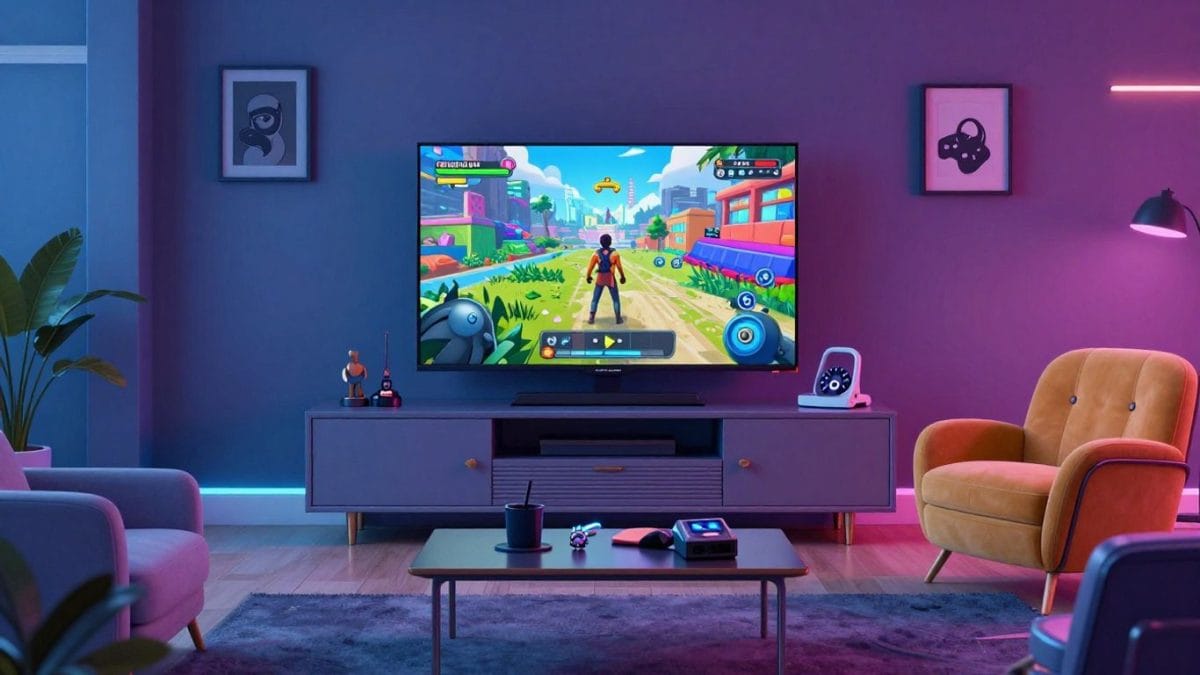
Finding the right entertainment center can really change your living room. It’s more than just a place for your TV; it’s a spot where you relax, hang out, and maybe even show off some cool stuff. We’re going to look at different ways to pick one that fits your space, holds all your gear, and looks good doing it. Let’s make your living room the best it can be with a center entertainment center that works for you.
Key Takeaways
- Measure your space carefully and know what electronics you need to fit before you start shopping for a center entertainment center.
- Think about the style you want – modern, rustic, or classic – to make sure your entertainment center matches your room’s look.
- Storage is important; mix open shelves for display with closed cabinets to hide clutter and keep things tidy.
- Consider materials that are durable and easy to clean, and plan for how you’ll manage cables to keep everything neat.
- Don’t forget to budget and think about how your center entertainment center might need to change as technology or your needs evolve.
Choosing Your Ideal Entertainment Center
Finding the right entertainment center is like picking the perfect spot for your living room’s main event. It’s not just about where the TV goes; it’s about creating a functional, stylish hub that fits your life and your room. Let’s break down how to get this right.
Assessing Your Living Room Space
Before you even look at styles, grab a tape measure. You need to know what you’re working with. Measure the wall where the entertainment center will go – both the length and the height. Also, consider the overall depth of your room and how much space you have to work with in front of the unit. Don’t forget to measure doorways and hallways; you’ll need to get the furniture into the room, after all.
- Wall Dimensions: Length and height of the intended space.
- Room Depth: How far the unit can extend into the room.
- Access Points: Doorways, stairwells, and hallway widths.
- Existing Furniture: How will the new piece fit with your sofa, chairs, etc.?
Think about airflow. Electronics generate heat, and a cramped space can lead to overheating and shorter lifespans for your devices. Give your setup some breathing room.
Identifying Your Media Needs
What exactly are you housing? Make a list of all your electronic devices: TV, game consoles, streaming boxes, soundbars, speakers, and any other gadgets. Note down their dimensions. This helps you figure out how much shelf space, cabinet space, and overall size you’ll need. Also, consider what else needs to be stored – remotes, game controllers, DVDs, or even books and decorative items.
| Device Type | Quantity | Approximate Dimensions (W x H x D) | Storage Requirement | Cable Management Needed? |
|---|---|---|---|---|
| Television | 1 | 55" x 30" x 3" | Wall mount/Stand | Yes |
| Gaming Console | 2 | 12" x 10" x 2" | Shelf/Cabinet | Yes |
| Soundbar | 1 | 36" x 4" x 5" | Shelf/Top | Yes |
| Streaming Device | 1 | 5" x 1" x 5" | Shelf/Behind TV | Yes |
Planning for TV Placement
Where your TV sits is a big part of the puzzle. Are you mounting it on the wall above the entertainment center, or will it sit on top? If it’s going on top, make sure the unit’s surface is wide and deep enough to support it safely. If you’re mounting it, consider the height – you want the screen to be at a comfortable viewing level from your seating area. The center of your TV screen should ideally be at or slightly below eye level when you’re seated. This prevents neck strain during long viewing sessions.
Exploring Diverse Entertainment Center Styles
When picking out an entertainment center, the style you choose really sets the tone for your whole living room. It’s more than just a place for your TV; it’s a piece of furniture that should speak to your personal taste and fit with the rest of your decor. Think about what vibe you’re going for – do you like things clean and simple, or do you prefer something with a bit more character?
Modern and Minimalist Designs
These designs are all about clean lines, simple shapes, and a lack of unnecessary clutter. They often use materials like sleek wood veneers, metal, or glass. The focus is on a streamlined look that doesn’t overpower the room. Think of units with smooth surfaces, hidden hardware, and a generally understated appearance. They’re great for making a space feel larger and more open.
- Key Features:
- Geometric shapes and straight lines
- Neutral color palettes (whites, grays, blacks, natural wood tones)
- Minimal ornamentation
- Often feature floating elements or legs that lift them off the floor
A minimalist entertainment center can make a small room feel bigger by reducing visual noise and creating a sense of order. It keeps the focus on your media and the overall room design, rather than the furniture itself.
Rustic and Farmhouse Accents
If you lean towards a cozier, more traditional feel, rustic and farmhouse styles might be your best bet. These often incorporate natural wood, sometimes with visible grain or distressed finishes, to give a warm, inviting look. Think of pieces that look like they could have been in a country home for generations. They bring a sense of comfort and character to a space.
- Common Materials:
- Solid wood (pine, oak, reclaimed wood)
- Metal accents (black iron, brushed nickel)
- Natural textures
- Design Elements:
- Exposed hardware (like barn door sliders or chunky knobs)
- Shaker-style doors or open shelving
- Warm, earthy color tones
Classic and Elegant Setups
For those who appreciate timeless design, classic and elegant entertainment centers offer a sophisticated look. These pieces often feature richer wood finishes, detailed moldings, and a more traditional silhouette. They tend to be more substantial and can add a sense of grandeur to a room. These are the kinds of units that feel like a permanent, well-loved fixture in a home.
- Characteristics:
- Darker wood stains (cherry, walnut, mahogany)
- Intricate details like fluting, carvings, or decorative trim
- Glass-fronted cabinets for displaying items
- Often have a more formal, symmetrical design
Choosing the right style is about finding a balance between your personal aesthetic and the overall atmosphere you want to create in your living space. It’s the first step in making your entertainment area both functional and a true reflection of your home’s personality.
Maximizing Functionality and Storage
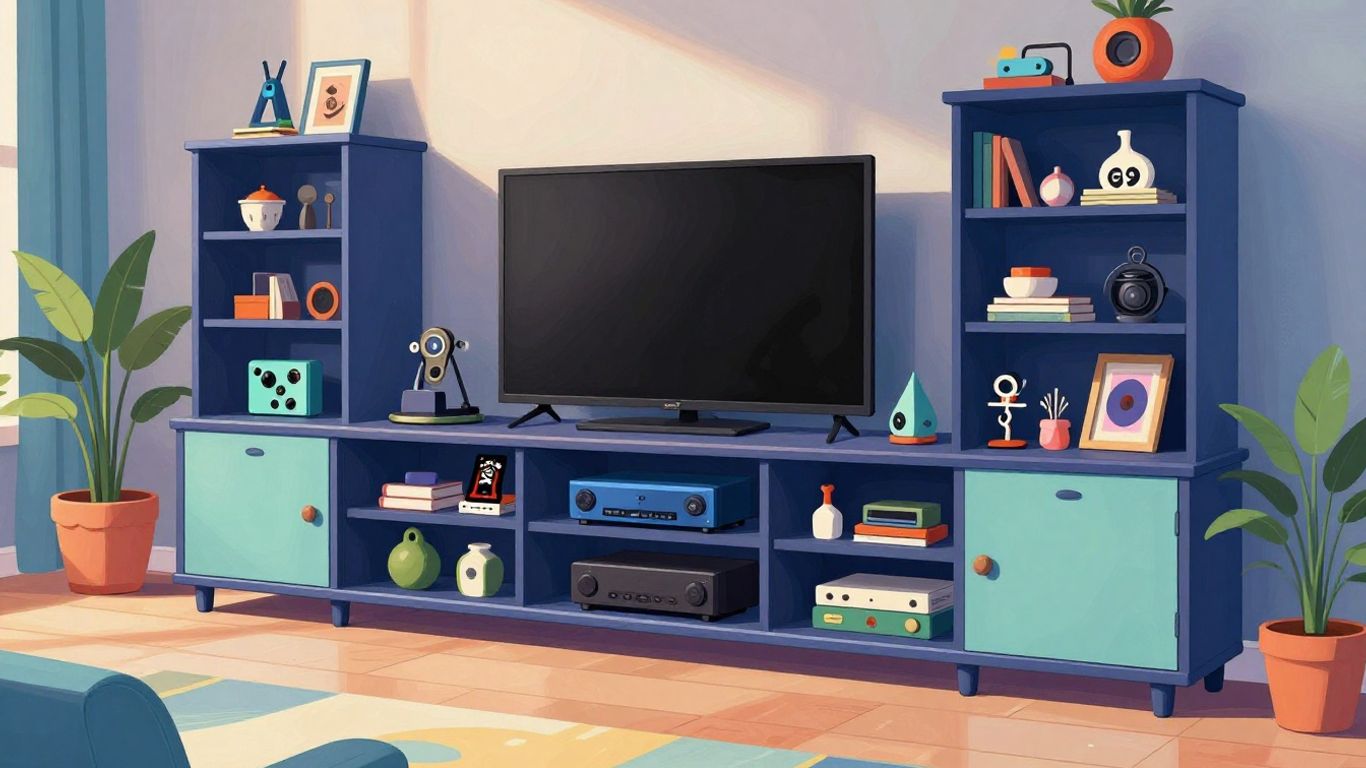
An entertainment center isn’t just about holding your TV; it’s about making your living space work better for you. Getting the storage right means keeping clutter away and making sure everything you need is easy to find. It’s about creating a system that looks good and functions well.
Integrating Open and Closed Storage Solutions
Think about what you need to store. Some items look great on display – think decorative pieces, favorite books, or framed photos. These are perfect for open shelving. Other things, like gaming consoles, extra cables, or less attractive media equipment, are better tucked away. Closed cabinets or drawers keep these items out of sight, helping to maintain a tidy appearance. A good mix of both open and closed storage gives you the best of both worlds, allowing for both display and discreet organization.
- Open Shelves: Ideal for books, decorative items, plants, and easily accessible media players.
- Closed Cabinets/Drawers: Perfect for hiding away cables, remotes, gaming accessories, and less visually appealing equipment.
- Combination Units: Many entertainment centers offer a blend, providing flexibility for different storage needs.
Utilizing Bins and Baskets for Organization
Even with cabinets and shelves, smaller items can get lost. Bins and baskets are fantastic for corralling these things. You can use them on open shelves to group similar items, like remote controls or game controllers. Inside cabinets, they help keep drawers and shelves from becoming a jumbled mess. Look for bins that fit the style of your entertainment center, whether they’re woven baskets for a rustic feel or sleek metal bins for a modern look. This simple step makes a big difference in keeping things organized and easy to find.
Considering Built-In Features and Cabinets
When you’re looking at entertainment centers, think about what extra features could make your life easier. Some units come with built-in cable management systems, which means holes or channels designed to hide wires. This keeps things looking neat and prevents a tangle of cords. Others might have specific compartments for soundbars, or even integrated lighting to highlight displays. Built-in cabinets can offer more secure storage, and some designs even include features like push-to-open doors for a cleaner look. Considering these built-in functionalities from the start can save you a lot of hassle down the line.
Proper ventilation is also key. Electronics generate heat, and without good airflow, they can overheat and shorten their lifespan. Look for designs that allow air to circulate freely, perhaps with open backs or strategically placed vents. Avoid stacking devices directly on top of each other, as this restricts airflow even further.
Enhancing Your Entertainment Center’s Aesthetics
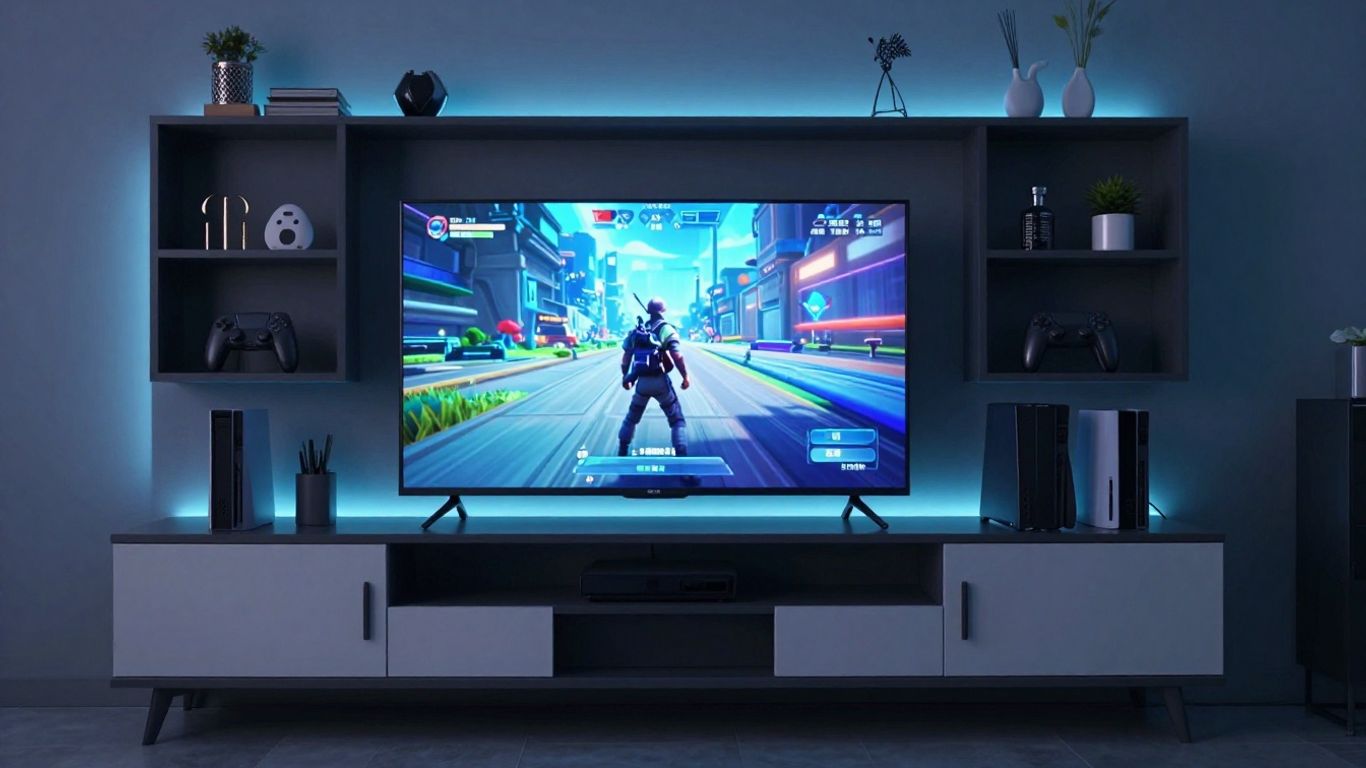
Once you’ve got the layout and storage sorted, it’s time to think about how to make your entertainment center truly shine. This is where you can inject your personal style and turn a functional piece of furniture into a real showstopper in your living room.
Selecting Complementary Materials and Finishes
The materials and finishes you choose for your entertainment center play a big role in its overall look and feel. Think about how the wood grain, metal accents, or painted surfaces will work with the rest of your decor. A sleek, high-gloss finish might suit a modern room, while a distressed wood look could be perfect for a more rustic setting. It’s about creating a cohesive vibe.
- Wood: Offers warmth and can range from light, airy tones to deep, rich hues.
- Metal: Adds an industrial or modern edge, often seen in frames or hardware.
- Glass: Can make a space feel lighter and more open, especially for shelving or cabinet fronts.
- Laminate/Veneer: Provides a cost-effective way to achieve various looks, from wood grains to solid colors.
Consider the durability of the finish, especially in a high-traffic area like a living room. You want something that can withstand daily use without showing wear and tear too quickly.
Incorporating Wall Art and Decorative Elements
Don’t let the wall space around your entertainment center go to waste. Adding artwork or decorative items can really tie the whole area together. Think about pieces that reflect your personality. You could hang a few framed photos, a striking piece of art, or even a collection of interesting objects. Arranging these items thoughtfully can frame your TV and create a more inviting focal point.
- Personal Photos: Displaying family pictures adds a warm, personal touch.
- Artwork: Paintings, prints, or sculptures can introduce color and texture.
- Mirrors: Can help make the space feel larger and reflect light.
- Plants: Greenery adds life and a natural element to the setup.
Using Bold Accent Colors and Stand-Out Wallpaper
Sometimes, the best way to make your entertainment center pop is with a splash of color. You can achieve this in a few ways. Painting the wall directly behind your entertainment unit a bold color can create an instant focal point. Alternatively, you could choose furniture with a vibrant finish or use patterned wallpaper on the wall behind the unit. A well-chosen accent color or wallpaper can transform a plain wall into a dynamic backdrop. Just be sure the colors and patterns complement your existing furniture and overall room scheme to avoid a jarring effect.
- Accent Wall: Paint or wallpaper one wall to draw attention.
- Color Blocking: Use contrasting colors on different parts of the unit or surrounding furniture.
- Textured Wallpaper: Adds depth and visual interest beyond just color.
Innovative Entertainment Center Designs
When you’re looking to really make your living room pop, thinking outside the box with your entertainment center can make a huge difference. Forget the standard cabinet; let’s explore some fresh ideas that blend style with smart use of space.
Creating Built-In Entertainment Walls
Building an entertainment center right into your wall offers a super clean, integrated look. It’s like the unit was always meant to be there, making your TV and media gear the star of the show without looking cluttered. You can design these walls to fit your exact needs, adding shelves for books, cabinets for storage, and even a spot for a fireplace if you’re feeling fancy. This approach is fantastic for hiding wires and making everything look tidy. It really transforms a plain wall into a functional and attractive feature.
Mounting Floating Shelves for a Modern Look
Floating shelves are a great way to get that modern, airy feel. They attach directly to the wall, making them look like they’re just hovering there. This is perfect for displaying decor, holding your media players, or even housing a few books. You can arrange them in different patterns to add visual interest. Plus, they keep the floor space clear, which can make a smaller room feel bigger. It’s a simple way to add storage and style without a bulky piece of furniture. You can find some really cool options that complement modern architecture.
Opting for Low-Profile and Sleek Units
Sometimes, less is more. Low-profile entertainment centers offer a minimalist vibe that works wonders in contemporary spaces. These units keep the focus on your screen and decorative items, rather than the furniture itself. They usually have simple lines and a streamlined look, which is ideal for smaller rooms or open-plan living areas. They provide the necessary storage without taking up too much visual space, keeping your room feeling open and uncluttered.
Thinking about innovative designs often means considering how the unit interacts with the rest of your room. It’s about creating a focal point that is both practical for your electronics and pleasing to the eye, making your living space feel more cohesive and intentional.
Practical Considerations for Your Entertainment Center
Ensuring Material Stability and Surface Durability
When picking out an entertainment center, think about what it’s made of and how well it’ll hold up. You want something sturdy that won’t wobble when you put your TV on it or when kids bump into it. Look for solid wood, good quality engineered wood, or metal frames. The surfaces should be tough enough to handle everyday life – think about spills, scratches from remotes, or even a pet jumping up. A good finish can make a big difference in how long it looks nice.
Planning for Ventilation and Cable Management
It’s easy to forget, but electronics need to breathe! Make sure your entertainment center has enough open space or cutouts for air to circulate around your TV, game consoles, and other devices. Overheating can shorten their lifespan. Also, nobody likes a mess of wires. Look for units with built-in cable management systems, like holes in the back or channels to hide cords. This keeps things tidy and makes it easier to plug and unplug devices.
Budgeting and Planning for Future Upgrades
Before you fall in love with a unit, figure out what you can spend. Entertainment centers come in all price ranges, from simple stands to elaborate built-in units. Having a budget in mind helps narrow down your choices. It’s also smart to think about what you might need down the road. Will you get a bigger TV? Add more gaming consoles? Choosing a flexible design or one that allows for additions can save you money and hassle later on.
- Assess your current needs: What electronics do you have now?
- Consider future growth: What might you add in the next few years?
- Measure your space: Make sure the unit fits comfortably.
- Check weight limits: Can it support your TV and other items?
Don’t just look at how good it looks; think about how it will work in your daily life. A unit that’s hard to clean or manage cables in will become a frustration, no matter how stylish it is.
Bringing It All Together
Finding the right entertainment center is about more than just picking out a piece of furniture. It’s about creating a space that works for you, looks good, and holds all your important stuff. Whether you’re going for a minimalist vibe or something more cozy, there are tons of options out there. Think about what you need to store, how much space you have, and what style fits your home best. By considering these things, you can find an entertainment center that makes your living room both more organized and more enjoyable. Happy decorating!
Frequently Asked Questions
How do I know what size entertainment center to get?
First, measure the wall where you want to put it. Also, think about the size of your TV and how many gadgets you need to store. Make sure there’s enough room to walk around it comfortably.
What’s the difference between modern and rustic styles?
Modern styles usually have clean lines, simple shapes, and materials like metal or glass. Rustic styles often use natural wood, have a cozy feel, and might include details like barn doors or distressed finishes.
How can I hide all the cords?
Many entertainment centers have built-in cable management systems, like holes or channels. You can also use cord covers, zip ties, or even decorative baskets to keep wires tidy and out of sight.
Should I choose open or closed storage?
It’s best to have both! Open shelves are great for showing off decorations or books. Closed cabinets are perfect for hiding things like game controllers, remotes, or less attractive items, helping to keep your space looking neat.
What materials are best for an entertainment center?
Look for sturdy materials that can handle heat from electronics. Things like solid wood, metal, or engineered wood with good finishes are usually a safe bet. They’re less likely to warp or get scratched easily.
How can I make my entertainment center look stylish?
You can add personal touches with things like framed photos, plants, or artwork. Choosing a bold color for the wall behind it or using interesting wallpaper can also make it a cool focal point in your room.