
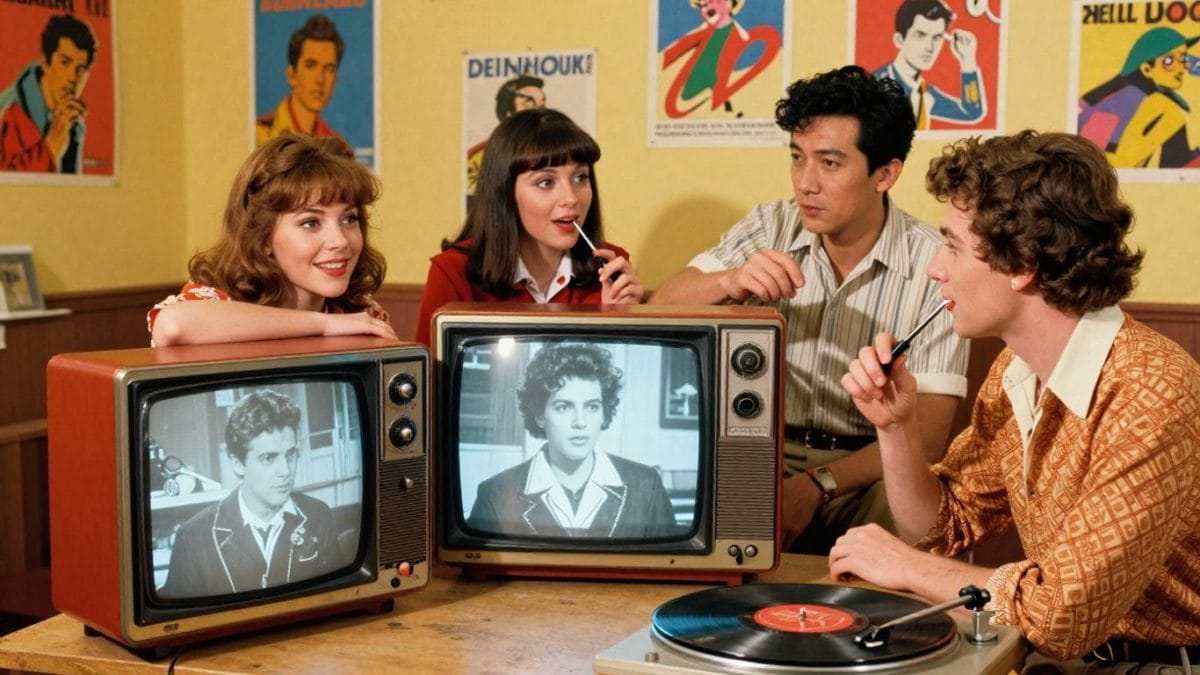
Stepping back into 1960 feels like opening a time capsule, doesn’t it? This year was a really interesting time for entertainment. Things were changing fast, from what we watched on TV to the music blasting from our radios. It was a period where old ways met new ideas, shaping a lot of what we still enjoy today. Let’s take a look at what made entertainment in 1960 so special.
Key Takeaways
- Television in 1960 was really starting to find its feet, showing more of everyday life and trying out new kinds of shows.
- Music was a huge deal, with radio playing a mix of pop and the beginnings of rock and roll, setting the stage for big changes.
- Fashion was getting bold, with new styles like the miniskirt and early hippie looks starting to appear.
- Print media like magazines and comics offered sharp commentary and new forms of storytelling.
- Movies were starting to hint at the big franchises we know today, and filmmakers were experimenting with how they told stories visually.
The Evolving Landscape of Television in 1960
Pioneering Television Programming
In 1960, television was rapidly moving beyond its early experimental phase, becoming a more sophisticated and influential medium. Networks were starting to understand the power of the small screen to shape public opinion and entertain millions. This era saw the rise of programming that was not only groundbreaking in its content but also in its production techniques. Shows began to experiment with more complex narratives and a wider range of genres, moving beyond simple variety acts and quiz shows.
The year 1960 marked a significant shift towards more ambitious television production. This was evident in the development of new formats and the increasing investment in talent and technology. Broadcasters were keen to capture a growing audience, leading to a competitive environment that pushed creative boundaries. The introduction of color television, though still in its infancy and not widely adopted, also hinted at the future visual possibilities.
- Expansion of Broadcast Hours: More programming became available throughout the day, not just in prime time.
- Rise of the Sitcom: Family-oriented sitcoms gained popularity, offering relatable characters and lighthearted storylines.
- Early Science Fiction: Shows like The Twilight Zone continued to explore imaginative and thought-provoking themes, pushing the envelope for what television could tackle.
Television in 1960 was a dynamic space, where established formats met new creative energies, laying the groundwork for the diverse programming we see today. It was a time of learning and growth for the industry.
Documentaries and Dramatizations
Documentaries and dramatized historical events found a more prominent place on television screens in 1960. Broadcasters recognized the medium’s potential to educate and inform the public about current events and historical moments. These programs often combined factual reporting with dramatic reenactments to create compelling narratives that engaged viewers on an emotional level.
This period saw an increase in the production of serious, in-depth documentaries that tackled social issues, political events, and scientific discoveries. They aimed to provide a window into worlds that many viewers would otherwise never experience. Similarly, dramatizations brought history to life, making past events more accessible and understandable. The quality of these productions improved significantly, with better cinematography and more polished storytelling.
- Investigative Journalism: Programs began to delve deeper into complex topics, sometimes sparking public debate.
- Historical Recreations: Events from wars to significant cultural moments were brought to life through dramatic retellings.
- Biographical Features: The lives of notable figures, both contemporary and historical, were explored.
Exploring Everyday Life Through the Screen
Television in 1960 also became a mirror reflecting the everyday lives and aspirations of its audience. Programming started to focus more on relatable situations and characters, allowing viewers to see themselves and their communities on screen. This shift helped to solidify television’s role as a central part of the home.
Sitcoms, dramas, and even game shows began to incorporate elements of contemporary life, from family dynamics to social trends. This made the medium feel more personal and engaging. The advertising that accompanied these shows also played a role, showcasing the products and lifestyles that were becoming aspirational for many households. The shared experience of watching these programs created a common cultural touchstone for millions.
- Family Dynamics: Shows often centered on the challenges and joys of family life.
- Social Norms: Portrayals of dating, work, and community life reflected the prevailing social attitudes.
- Consumer Culture: Advertising and product placement began to highlight the growing consumer economy.
Musical Revolutions and Radio’s Reach
The 1960s were a time when music really started to shake things up, and radio was the main way most people heard it. It wasn’t just about listening anymore; it was about experiencing the sounds that defined a generation. From the pop charts to the beginnings of something wilder, radio waves carried it all.
The Soundtrack of a Decade
Radio stations in 1960 were the gatekeepers of popular music. They played a mix of established stars and emerging artists, shaping what millions of people listened to every day. The songs that hit the airwaves became the soundtrack to everyday life, marking moments big and small.
- Top Hits: Radio surveys from the era show a blend of genres. For instance, in March 1969, stations like WQAM in Florida reported "Proud Mary" by Creedence Clearwater Revival holding the number one spot, while "This Magic Moment" by Jay & The Americans also charted well. Even older tunes found new life.
- DJ Influence: Radio personalities, or DJs, had a huge impact. Figures like Cousin Brucie on the East Coast and The Real Don Steele in the West were trusted voices who introduced listeners to new music and kept them updated on the latest hits.
- Regional Differences: What was popular in one part of the country might differ elsewhere. Charts from Los Angeles’s KHJ might show different trends than New York’s WABC, reflecting diverse local tastes.
Radio was more than just a broadcast medium; it was a cultural force. It connected people through shared musical experiences, creating a collective memory that still influences us today.
From Pop to Psychedelic Sounds
As the decade progressed, the music played on the radio began to evolve. While pop music remained strong, new sounds started to emerge, hinting at the more experimental music to come. This shift was often driven by the artists themselves and how they pushed creative boundaries.
- Emerging Genres: The seeds of psychedelic rock were being sown, though they hadn’t fully bloomed on mainstream radio by 1960. Early influences from blues and jazz were also being reinterpreted.
- Album Impact: While singles dominated radio play, the concept of the album was gaining traction. Artists began to craft more cohesive bodies of work, and radio sometimes featured tracks from these albums, giving listeners a taste of something more.
- The British Invasion: Later in the decade, the arrival of British bands significantly changed the musical landscape, introducing new styles and energy that quickly dominated radio charts.
The Influence of Rock and Roll Radio
Rock and roll wasn’t just a genre; it was a phenomenon that radio helped to spread. Early rock and roll DJs played a significant role in popularizing the music, and by the late 1960s, rock radio was a powerful force.
- Pioneering Broadcasts: Some radio stations even began airing "histories of rock and roll," recognizing the music’s growing cultural significance. These early retrospectives, like one aired on KHJ in Los Angeles in February 1969, showed an awareness that this music was already becoming history.
- Chart Dynamics: Radio charts reflected the changing tastes. By November 1969, The Beatles’ "Something" and "Come Together" were so popular that Billboard revised its charting policies to combine points for both sides of a single, creating a unified #1 hit. This shows how impactful certain artists and songs had become.
- Roots of Rock: The connection between rock and roll and its predecessors, like blues and jazz, was also acknowledged. Radio played a part in tracing these musical lineages, helping listeners understand the foundations of the music they loved.
Fashion Forward: Trends and Designers
The 1960s were a whirlwind of change, and fashion was right there in the thick of it, mirroring the era’s shifting social currents and youthful energy. It was a time when clothing moved from the more structured styles of the previous decade to something far more liberated and expressive. This decade saw fashion become a powerful statement of identity and rebellion.
Miniskirts and Mod Styles
The miniskirt, arguably the most iconic fashion item of the 1960s, burst onto the scene and quickly became a symbol of youthful liberation. Popularized by designers like Mary Quant, this daringly short hemline was a stark contrast to the longer skirts of the 1950s. Alongside the miniskirt, the Mod style emerged, particularly in London. Think clean lines, geometric patterns, bold colors, and a generally futuristic aesthetic. A-line dresses, shift dresses, and tailored suits in vibrant hues defined this look. It was sharp, modern, and undeniably chic.
The Rise of Hippie Chic
As the decade progressed, a different fashion movement began to take hold: hippie chic. This style was a reaction against the more polished Mod look, embracing a more relaxed, bohemian, and individualistic approach. Flowing fabrics, ethnic prints, bell-bottom trousers, peasant blouses, and natural materials like cotton and denim became popular. Tie-dye, fringe, and handcrafted accessories like beaded necklaces and headbands were also key elements. It was all about comfort, self-expression, and a connection to nature and global cultures.
Influential Fashion Designers
Several designers played a significant role in shaping the fashion landscape of the 1960s. Mary Quant, as mentioned, is credited with popularizing the miniskirt and bringing a youthful, playful spirit to fashion. André Courrèges offered a futuristic vision with his space-age designs, often featuring clean, architectural shapes and innovative materials. Yves Saint Laurent introduced the "Le Smoking" tuxedo for women, challenging traditional gender norms in fashion, and also brought elements of haute couture to ready-to-wear. Pierre Cardin was another designer known for his avant-garde, futuristic designs, often incorporating geometric shapes and bold colors.
Here’s a look at some key trends and their associated designers:
| Trend | Key Designers |
|---|---|
| Miniskirt | Mary Quant |
| Mod Style | Mary Quant, André Courrèges |
| Space Age | André Courrèges, Pierre Cardin |
| Bohemian/Hippie | Various independent designers |
| Women’s Tuxedo | Yves Saint Laurent |
The fashion of the 1960s was more than just clothing; it was a visual language that communicated a desire for change, freedom, and individuality. It reflected a generation eager to break away from the past and embrace a new, more dynamic future.
The Power of Print: Magazines and Comics
Satirical Journalism Takes Center Stage
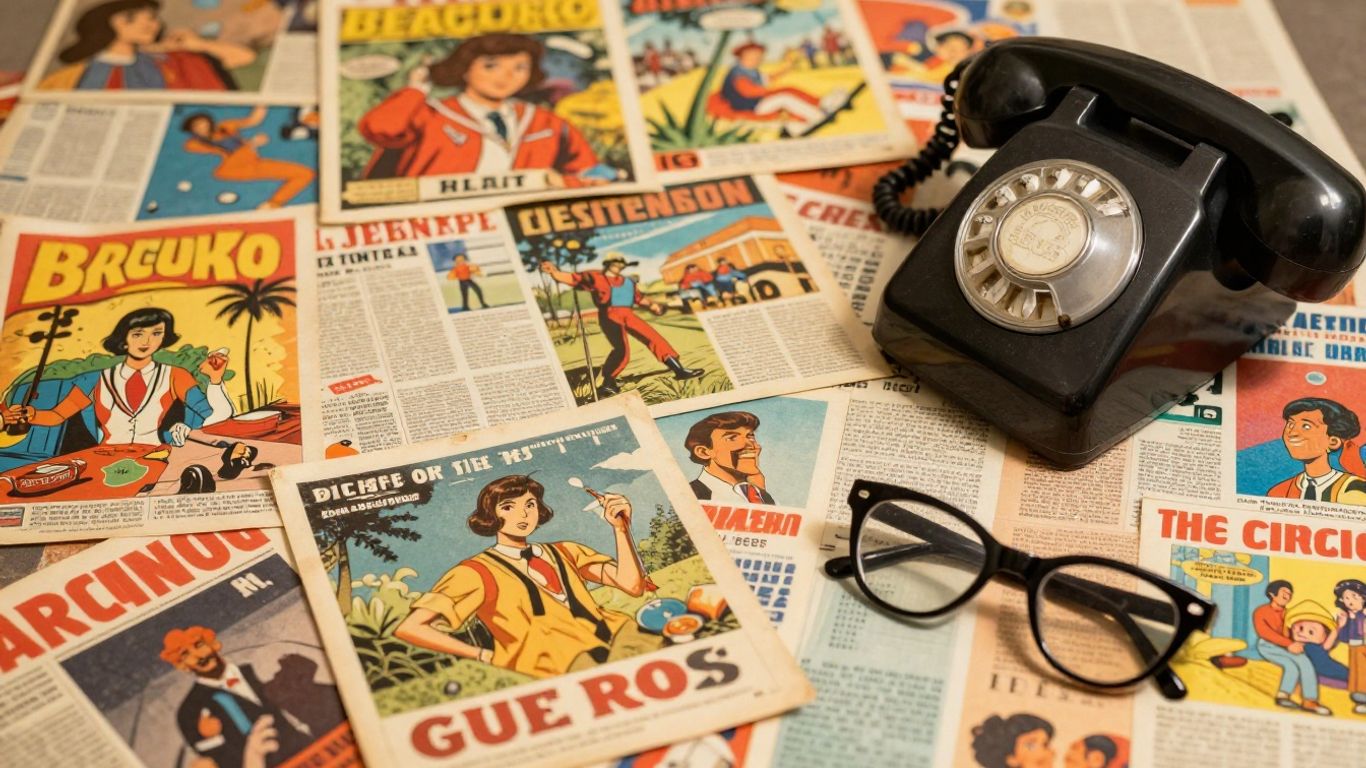
In 1960, print media was still a major force, and magazines played a big role in shaping public opinion and culture. Beyond just news, many publications started using humor and satire to comment on the world. Think of magazines that weren’t afraid to poke fun at politicians or social trends. This kind of journalism offered a different way to look at events, encouraging readers to think critically and perhaps even laugh at the absurdities of the time. It was a way for people to engage with serious topics through a lighter, more accessible lens.
The printed word held a unique authority, capable of both informing and challenging the status quo. In 1960, this power was amplified by a growing willingness among journalists and editors to use wit and satire as tools for social commentary.
The Art and Appeal of Comic Books
Comic books in 1960 were more than just kids’ stuff; they were a vibrant part of popular culture. Marvel Comics, in particular, was hitting its stride, creating characters and stories that felt new and exciting. These comics often took old myths and gave them a modern twist, or invented entirely new narratives that captured the imagination. The combination of colorful art, engaging plots, and relatable heroes (or anti-heroes) made them incredibly popular. It wasn’t just about escapism; it was about new kinds of stories that spoke to a generation.
- Superheroes with complex lives: Characters like those in the Fantastic Four weren’t just fighting villains; they had personal struggles and team dynamics.
- Mythological retellings: Stories drew inspiration from Norse gods (like Thor) and other ancient tales, making them feel both epic and familiar.
- Innovative art styles: Artists like Jack Kirby and Jim Steranko brought a dynamic and unique visual flair to the pages.
Literary Innovations and Movements
Beyond comics, the literary world in 1960 was buzzing with new ideas. Writers were experimenting with form and content, pushing the boundaries of what literature could be. This era saw the continued influence of earlier thinkers who explored how print itself changed the way we think, moving from oral traditions to more linear, structured ways of processing information. Books were becoming more accessible, spreading knowledge and ideas outside of traditional institutions. This period laid groundwork for new ways of thinking and storytelling that would influence decades to come.
| Literary Trend | Key Characteristics |
|---|---|
| Experimental Fiction | Non-linear narratives, stream of consciousness, new forms |
| Social Commentary | Addressing contemporary issues, political themes |
| Rise of Science Fiction | Exploring future possibilities, technological impact |
Cinematic Adventures and Visual Storytelling
The year 1960 was a fascinating time for movies, a period where filmmakers were really starting to push the boundaries of what was possible on screen. It wasn’t just about telling a story anymore; it was about how that story was told, using new techniques and visual flair to grab the audience’s attention.
The Dawn of Iconic Film Franchises
While not as widespread as today, 1960 saw the seeds of what would become major film series. Studios began to see the potential in characters and worlds that could be revisited, laying the groundwork for the franchise model we know so well. This era was about establishing memorable characters and settings that audiences wanted to see more of, moving beyond standalone films.
Innovative Title Sequences and Graphics
Title sequences were evolving from simple text on screen to elaborate visual introductions. Artists and designers started treating the opening credits as a mini-art form, using animation, creative typography, and striking imagery to set the tone for the film. Think of the stylish, graphic-heavy openings that hinted at the film’s themes or genre. Maurice Binder’s work on the James Bond films, starting with Dr. No in 1963, is a prime example of this emerging trend, blending action and design.
The Evolution of Visual Effects in Cinema
Visual effects in 1960 were undergoing a significant shift. While practical effects and miniatures were still common, filmmakers were experimenting with new ways to create illusions. This included advancements in matte painting, compositing, and even early forms of stop-motion and animation integrated into live-action. The goal was to create more believable and immersive worlds, whether in science fiction epics or fantastical adventures. The experimental spirit of the time meant that even smaller productions were trying out new tricks to achieve a cinematic wow factor.
The way films looked and felt was changing. Directors and their teams were becoming more aware of how visual elements could shape a viewer’s experience, not just in terms of special effects, but in the overall aesthetic and mood of a movie. This focus on visual storytelling was a key part of cinema’s growth during this decade.
Cultural Shifts and Artistic Expression
The Counterculture Movement Emerges
The 1960s wasn’t just about new gadgets and music; it was a time when people started questioning a lot of the old ways of doing things. A big part of this was the rise of the counterculture. Think of it as a movement where younger generations pushed back against established norms, often embracing different lifestyles, ideas, and forms of expression. This wasn’t a small thing; it touched everything from how people dressed to how they thought about society and art. It was a period of real change, and you could feel it in the air.
This era saw a significant questioning of societal norms and a search for alternative ways of living and thinking.
Avant-Garde Art and Mixed Media
Artists in the 1960s were getting really experimental. They weren’t content with just painting or sculpting anymore. Many started mixing different art forms together – think music, film, performance, and visual art all in one piece. This was called ‘mixed media’ or ‘intermedia’ art. Groups like Fluxus were all about this, blurring the lines between art and everyday life. They used new technologies, too, like early computers and audio tape, to create things nobody had seen before. It was a time of breaking boundaries and seeing what was possible when you combined different creative tools.
- Performance Art: Artists would create live events, often spontaneous and interactive, that challenged traditional art forms.
- Happenings: These were often theatrical events that blurred the lines between art and audience participation.
- Video Art: Early experiments with video technology began to emerge, offering new ways to create and display moving images.
The fusion of technology and art was a defining characteristic of the avant-garde in the 1960s. Artists explored how new tools could expand creative possibilities, leading to innovative forms of expression that were both challenging and exciting.
The Influence of Blues and Jazz
While rock and roll was getting all the attention, the roots of much of this music lay in older, deeply influential genres like blues and jazz. These styles, with their improvisational nature and emotional depth, continued to be a major force. Jazz, in particular, was evolving, with new subgenres emerging that pushed its boundaries. Musicians were drawing inspiration from these rich traditions, weaving them into the fabric of the decade’s soundscape. The soulful melodies and complex rhythms of blues and jazz provided a foundation for much of the musical innovation happening at the time, influencing not just musicians but also writers and artists.
Looking Back, Moving Forward
As we wrap up our look at entertainment in 1960, it’s clear the decade was a turning point. From the music that defined a generation to the television that brought the world into our living rooms, the era offered a vibrant mix of new ideas and classic styles. The fashion, the films, and even the emerging technologies all played a part in shaping what was to come. It wasn’t just about looking back; it was about understanding the roots of so much of the culture we still enjoy today. This journey through 1960 reminds us how entertainment can reflect and influence society, leaving a lasting mark long after the credits roll.
Frequently Asked Questions
What made 1960s television so special?
TV in the 1960s was really starting to show people what life was like. Shows featured real-life stories, documentaries, and even dramas that felt very relatable. It was like looking through a window into everyday life back then.
How did music change in the 1960s?
Music exploded in the 60s! You had everything from catchy pop songs to the beginnings of psychedelic rock. Radio stations played the big hits, but also introduced listeners to new artists who would become super famous. It was a time of big musical changes.
What were the big fashion trends of the 1960s?
Fashion got really exciting in the 60s. Think short miniskirts and the cool, clean ‘mod’ look. Later, styles became more relaxed and colorful with the ‘hippie’ vibe. Designers were creating new looks that reflected the changing times.
Were magazines and comics important back then?
Yes, definitely! Magazines offered sharp, funny commentary on what was happening, and comic books were full of amazing art and exciting stories. They were a big part of how people got their news and entertainment.
What was new about movies in the 1960s?
Movies started creating famous series that people loved. They also got creative with how they showed titles and graphics at the beginning of films. Even the special effects started getting more advanced, making stories look more real.
How did culture and art change in the 1960s?
The 60s saw a big shift in culture, with new ideas and a growing ‘counterculture’ movement. Art became more experimental, mixing different styles and ideas. Music like blues and jazz also played a big role in shaping the artistic scene.