
Before Studio Ghibli and global anime fame, Japan’s animation revolution began with three scrappy pioneers and a dream. How 1917’s primitive doodles – crafted with chalk, scissors, and sheer grit – sparked a billion-dollar industry? From silent film benshi narrators to wartime propaganda machines, let’s explore the untold origins of anime and how Japan turned moving pictures into a cultural superpower.

In the early decades of the 20th century, the world saw a dramatic shift in the way stories were told. Cinema, already making waves in the West, had roots deeply embedded in experimentation, technology, and cultural exchange.
But here’s the kicker, while the West was busy evolving cinema, it was Japan, with its own rich traditions and a mix of imported influences, that would go on to completely revolutionise animation.
And this wasn’t just about moving pictures, no, it was about changing the way people could dream and imagine their worlds through motion, form, and a little bit of magic.
Imagine a time before celluloid flickered in Tokyo’s darkened theatres, before those cute little mascots graced every train station, or before anime became a worldwide sensation.
Japan’s moving pictures weren’t even a dream; they were a glimmering possibility, hidden within the lines of woodblock prints, the flicker of shadow puppets, and centuries of artistic heritage. The stage was set for something big, but it was waiting for the right moment to burst to life.
And that moment?
That’s when tradition collided with cutting-edge technology. A group of daring artists jumped at the chance to animate not just static images, but entire worlds. They breathed life into their creations, and in doing so, they crafted a whole new medium, one that would go on to capture the very essence of human imagination.
So, here we are, talking about how Japanese animation came to be, evolving from those humble beginnings in the 1910s to the fervent nationalism of the 1940s.
This period set the stage for what would grow into the global powerhouse of anime that we know and love today. Cool, right? From ancient traditions to modern techniques, it all came together, creating a revolution that would forever change the way stories were told and how we all dream.
The Historical Canvas: Japan’s Early Cinematic Landscape
Imported Magic:
The transformation that led to the creation of Japan’s animated dream began long before the first flickers of moving pictures in the nation. In fact, the late 19th century was a time of profound change for Japan.
The Meiji Restoration, which began in 1868, catapulted the country into the modern era, opening up trade, technology, and cultural exchange with the West. This was a period of rapid transformation in Japan’s industrialisation, with railways, telegraphs, and a fascination with foreign technology revolutionising the nation.
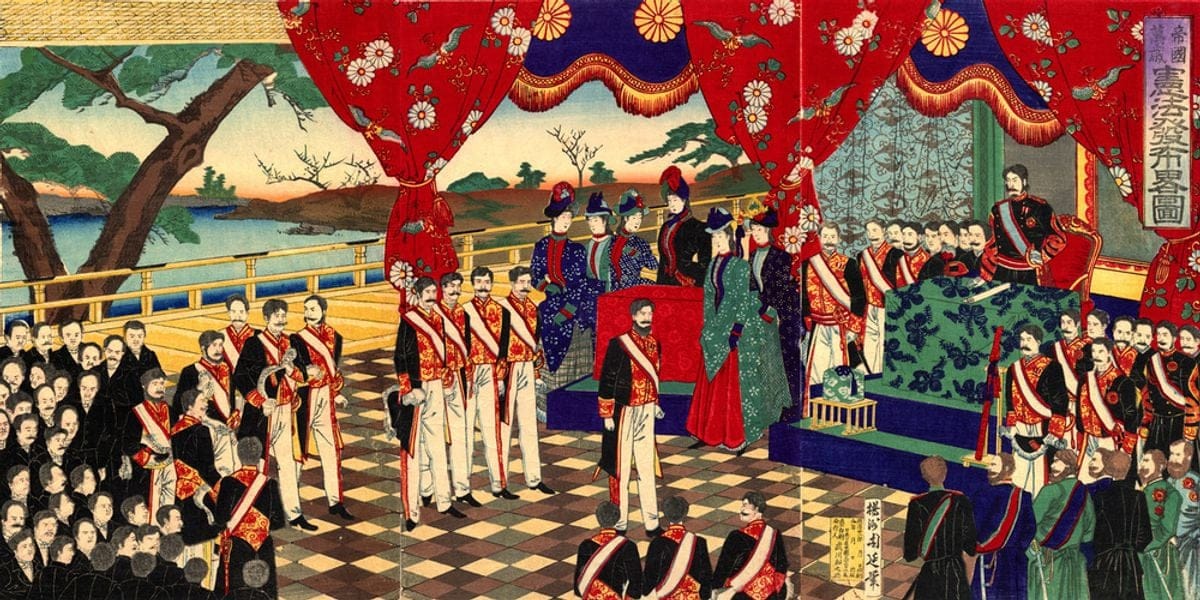
Amongst these newly imported wonders were the kinetoscope and the cinematograph. These were the precursors to film and moving images, which would take hold of the imagination of the Japanese public, already familiar with storytelling through traditional arts such as kabuki theatre and ukiyo-e (woodblock prints).
The idea that an image could move on a screen was, quite literally, magic. In 1897, Tokyo’s Kanda district hosted Japan’s first screenings of motion pictures.
For years, foreign films dominated the Japanese cinema landscape, with silent movies from America and Europe enchanting the public, who had never before seen such a spectacle. Early audiences were captivated, but Japan’s relationship with the moving image was still young.
Though films from abroad were popular, the Japanese were not content to remain passive viewers of imported content. A new medium of storytelling was emerging, one that would bear Japan’s unmistakable signature.
The Benshi Tradition

By the turn of the century, Japan had developed a unique addition to the cinematic experience: the benshi. These orators provided live narration during silent films, dramatising the action, enhancing emotions, and often altering the script to suit local tastes.
This practice reflected Japan’s love for live storytelling, especially in theatre, and would leave an indelible imprint on the development of animation as it developed into a medium where voice and visual storytelling were bound together.
The benshi tradition is crucial in understanding how Japanese animators approached their craft.
Where Western cinema had often employed film as an isolated storytelling tool, Japanese films were often narratives performed through voice, movement, and spectacle, a tradition that would eventually inform Japanese animation, where character and voice blended seamlessly.
The First Flickers: Dawn of Japanese Animation (1917)
While European and American animators had already begun experimenting with the medium in the 1910s, Japan’s journey into animation was more gradual.
Due to financial and technological limitations, the country lagged behind, but that would change with the groundbreaking work of a few pioneering figures. In 1917, a watershed moment occurred in Japanese animation with the release of the country’s first known animated films.
These were short and simple, composed mostly of hand-drawn images or cut-outs, painstakingly shot frame by frame:
- Jun’ichi Kōuchi’s “Namakura Gatana” (1917)
- Ōten Shimokawa’s “Imokawa Mukuzō Genkanban no Maki” (1917)
- Seitarō Kitayama’s “Sarukani Gassen” (“The Monkey and the Crab,” 1917)
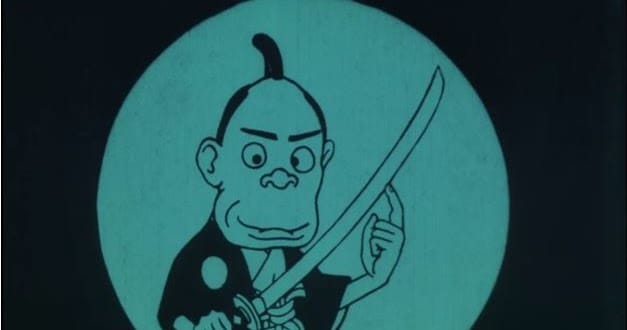
Though short, lasting only a few minutes each, these films marked the birth of Japanese animation (nihon animēshon). Kōuchi, Kitayama, and Shimokawa created these pioneering works amidst great constraints, limited film stock, small budgets, and scarce resources.
Despite these barriers, they saw the potential of moving pictures and began exploring how they could bring animation to life in ways that resonated with Japan’s unique cultural sensibilities.
These early animators, though working with rudimentary tools, tapped into a rich tradition of visual arts that was uniquely Japanese, combining Western techniques with native practices such as shadow puppet theatre (kage-e) and ukiyo-e prints.
Technological Constraints as Catalysts for Creativity
The technological constraints faced by these early animators were not only limitations—they were catalysts for creativity. With the cost of film stock prohibitive and celluloid difficult to access, Kōuchi and his peers turned to other materials, such as paper and chalk.
Backgrounds were often reused, and figures were traced and retraced to create the illusion of movement. These restrictions forced them to innovate, pushing them to develop creative shortcuts that would define early Japanese animation.
Moreover, the minimalist aesthetics of Japanese art, such as the subtle lines of ukiyo-e and the simplicity of traditional brushwork, emerged in the animated films of this period.
Rather than seeking fluidity of motion, Japanese animators often favoured visual transitions that were measured and deliberate, a reflection of the pacing seen in kabuki and noh theatre. Animation, in this sense, was about suggesting movement, not merely showing it.
Early Pioneers: Modern-Day Shamans
For the early animators of Japan, the act of animating was almost ritualistic. It was as though they were modern-day shamans, breathing life into static images. Jun’ichi Kōuchi’s simple cut-out animations, although crude, seem to pulse with a quiet vitality.
His figures, though jerky, convey a sense of possibility, a flicker of life in every frame. Ōten Shimokawa’s use of chalk and blackboard is equally charming in its ephemeral magic; the figures appear, then disappear, as if to suggest the fleeting nature of existence.
In these early films, there was a palpable sense of hope: these animators were not just creating entertainment; they were engaging in a form of alchemy, capturing the fleeting moments between stillness and movement.
And this was their strength, though the figures in their films moved jerkily and imperfectly, they held a power that was unlike anything the world had seen before.
The Interplay of East and West: Importing and Transforming Techniques
As Japan’s animators sought to refine their craft, they began to look to the West for inspiration. Western animators like Winsor McCay and Émile Cohl were pivotal influences, with their fluid character movements and innovative storytelling techniques.
These early Western animators demonstrated the technical possibilities of animation, and Japanese artists adapted them, often combining these techniques with their own sensibilities.
However, the fusion of East and West in Japanese animation was not one of simple imitation. Where Western animation often prioritised spectacle and fluid motion, Japanese animators embraced the slower, more deliberate pace of their native traditions.
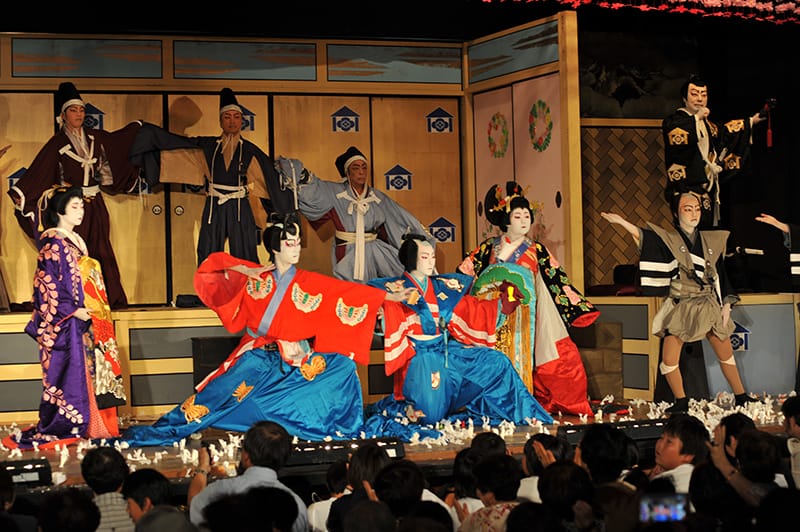
The pacing of a kabuki play or the careful composition of a emakimono scroll became central to the rhythm of Japanese animation. The result was a hybrid style that was at once both modern and timeless, shaped by imported techniques but imbued with the soul of Japanese cultural heritage.
Shadows Over the Land: Prewar and Wartime Animation
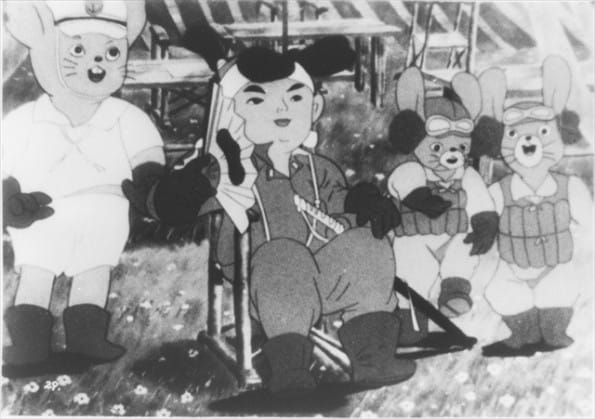
As Japan entered the 1930s and 1940s, the nation’s film industry began to be swept up in the nationalist fervour of the time. With the rise of militarism and the onset of war, the government began to exert greater control over all forms of media, including animation.
These pressures would lead to the use of animation as a tool for propaganda, as films began to serve the dual purpose of entertainment and political indoctrination.
Despite the overtly political nature of many wartime films, the period saw important technological leaps. In 1943, Momotarō: Umi no Shinpei (“Momotaro, Sacred Sailors”) was released, Japan’s first feature-length animated film.
Directed by Mitsuyo Seo and funded by the Imperial Navy, this film sought to promote Japanese nationalism and military support through the allegorical story of Momotaro, the mythical peach boy who battles foreign invaders.
While the film’s content was overtly nationalistic, its technical achievements, especially the lush backgrounds and smoother animation, marked a significant milestone in Japanese animation.
The Seeds Planted
While the period between 1917 and 1945 did not witness the full flowering of the anime industry as we know it today, it laid the foundation for all that would come later. It was a period of innovation, adaptation, and, at times, nationalistic fervour.
Through the determination of early animators like Jun’ichi Kōuchi, the primitive animations they created became the seeds from which an entirely new visual language would sprout.
The aesthetic DNA of modern anime was encoded in the works of these early animators, from the fluidity of McCay’s characters to the deliberate pacing of traditional Japanese art.
Every later master, whether Osamu Tezuka, who pioneered cinematic panel layouts, or Hayao Miyazaki, who lingers on small moments of stillness, owes a debt to the early animators who first brought motion to stillness.
The Long Shadow of the Primordial Dream

The legacy of Japan’s early animators is not merely historical. It lives on in the very essence of the anime genre today. The animation that began as an underdog’s art, crafted with limited resources and powered by ingenuity, would go on to redefine how stories are told.
Through these first flickering films, Japan demonstrated not just its technical prowess but also its capacity for reinvention, blending the modern with the traditional to create something entirely new.
The work of Japan’s first animators is a testament to creativity’s power to transcend limitations and to redefine what is possible. It is this primordial spark.
The moment when stillness became movement, that continues to fuel Japan’s animation industry, inspiring generations of animators and dreamers who have inherited the torch passed on by the likes of Kōuchi, Shimokawa, and Kitayama.
The modern shamans of animation, with their intricate designs and deeply human stories, have taken up the legacy of their forebears, creating worlds where anything is possible and where dreams, both big and small, can come to life on screen.
And it all began in the land of the rising sun, where the first flickers of animated light sparked a revolution that would continue to unfold for generations to come.