
Can you guess the internet’s mind? Google Feud turns search autocomplete into a viral trivia challenge. It’s more than a game; it’s a data-driven window into collective curiosity. It’s a fun, insightful dive into the data that shapes our digital lives. Learn how to play, score big, and see why understanding autocomplete is key to grasping online behaviour.
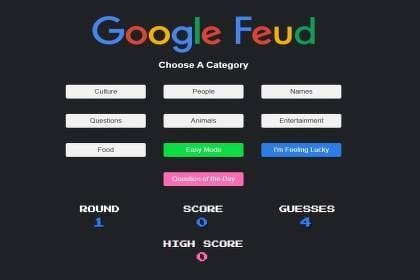
If you’ve ever found yourself typing a question into Google and been intrigued by the autocomplete suggestions that pop up, you’re not alone. These suggestions are based on what others have searched before, and they can be surprisingly revealing, amusing, or downright bizarre. Enter Google Feud, a game that takes these autocomplete suggestions and turns them into a fun, competitive challenge.
Google Feud is a browser-based trivia game created by Justin Hook, a writer known for his work on Bob’s Burgers. Released in 2013, the game is inspired by the American television game show Family Feud. In Google Feud, instead of guessing the most popular answers to survey questions, players guess the most common autocomplete suggestions for incomplete Google search queries.
The game is simple yet addictive. Players are presented with a partial search query, and their task is to predict how Google would autocomplete it based on the most common searches. For example, if the prompt is “Why do people…”, the player needs to guess the top autocomplete suggestions like “Why do people yawn?” or “Why do people lie?”.
How to Play Google Feud
Playing Google Feud is straightforward:
1. Choose a category: The game offers several categories, including:
- Culture: Questions about societal norms, trends, and customs.
- People: Queries related to individuals, celebrities, and public figures.
- Names: Autocomplete suggestions for names of people or places.
- Questions: Open-ended questions that people commonly search for.
2. Guess the autocomplete: Each round presents a partial search query. Players have three chances to guess the top autocomplete suggestions. Each correct guess earns points, with more popular suggestions yielding higher scores.
3. Earn points: Points are awarded based on the popularity of the autocomplete suggestion. The more common the search, the higher the points. However, if a player makes three incorrect guesses, the round ends.
4. Compete with friends: After completing a round, players can share their scores with friends to see who can guess the most popular autocomplete suggestions.
The Appeal of Google Feud
So, why has Google Feud become so popular?
- Relatable content: The game taps into the everyday experience of using Google search. Players are familiar with autocomplete suggestions, making the game accessible and relatable.
- Humour and surprise: The autocomplete suggestions can be unexpectedly funny or absurd, leading to moments of laughter and surprise.
- Competitive fun: The game’s scoring system encourages friendly competition, whether playing solo or with friends.
- Cultural insight: The game offers a glimpse into what people are curious about, providing insights into societal trends and interests.
Variations and Features
Over time, Google Feud has introduced various features to enhance gameplay:
- Easy mode: Provides hints to help players guess the autocomplete suggestions.
- Question of the day: Offers a daily challenge where players can compete to guess the most popular autocomplete suggestion for a specific query.
- Mobile app: In addition to the browser version, Google Feud is available as a mobile app, allowing players to enjoy the game on the go.
- Multiplayer mode: Some versions of the game offer multiplayer options, enabling players to compete against each other in real-time.
Google Feud has not only entertained millions but also sparked discussions about internet culture and human curiosity. The game highlights the peculiarities of online search behaviour and the diverse questions people seek answers to.
Moreover, the game’s success has inspired similar games and quizzes, further embedding Google Feud into popular culture.
Final thoughts
In a world where digital interaction is ubiquitous, Google Feud offers a lighthearted way to engage with the quirks of online search behaviour. By turning autocomplete suggestions into a game, it transforms everyday internet usage into a source of entertainment and insight.
So, the next time you’re curious about what people are searching for, why not turn it into a game? Play Google Feud and see how well you can predict the internet’s autocomplete suggestions.