

Spider Solitaire is a pretty popular card game, and honestly, it can be a bit tricky to get the hang of. If you’re looking to get better and actually win some games, you need a plan. It’s not just about moving cards around randomly. We’ll go over some ways to approach this solitaire card game spider, from the very beginning moves to some more advanced stuff that might just help you win more often. Let’s see if we can untangle this game together.
Key Takeaways
- Focus on revealing hidden cards early to get more options, and try to clear at least one column for a free space.
- Use empty columns wisely; only place a King or a King-starting sequence in them to keep your options open.
- Prioritize building same-suit sequences and use the undo button if a move complicates things.
- Manage the stockpile carefully and try to free up low-value cards like Aces and Twos early on.
- Avoid common mistakes like filling empty columns with non-Kings and don’t rush your moves; patience is key.
Understanding the Fundamentals of Spider Solitaire
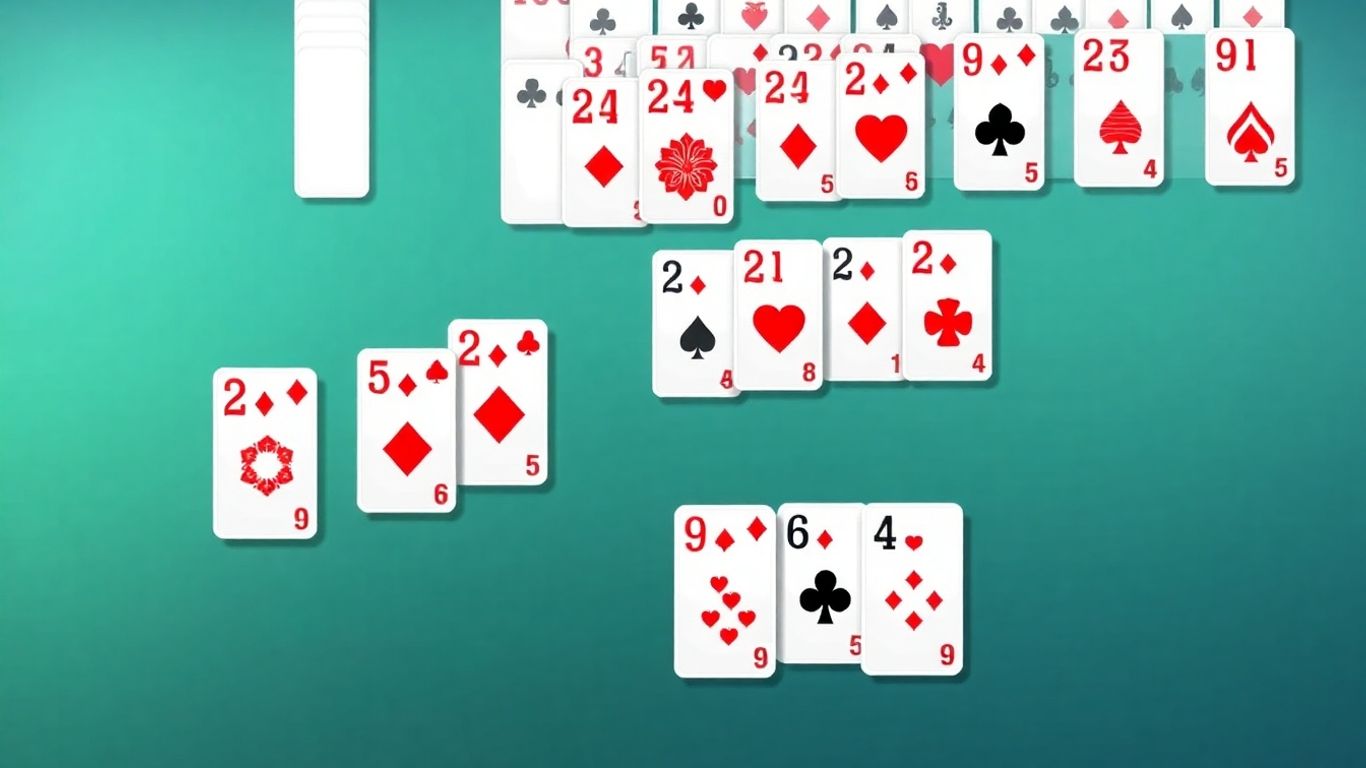
Spider Solitaire might look a bit intimidating at first, with all those cards spread out, but getting the hang of it is simpler than you might think. It’s a game that really rewards a bit of planning and patience. Let’s break down what you need to know to get started.
The Objective of the Game
The main goal in Spider Solitaire is to clear all the cards from the table by building complete sequences. You’ll be working with two decks of cards, totaling 104 cards. These are dealt into 10 columns on the table. Your task is to arrange these cards into sequences that run from King down to Ace, all within the same suit. Once a full sequence of a single suit is completed, it’s removed from play. The game is won when all cards have been successfully sequenced and cleared.
Game Setup and Card Distribution
When you start a game, 10 columns are laid out. The first four columns get six cards each, and the remaining six columns receive five cards. Importantly, only the very top card of each column is turned face-up. The rest are face-down, hidden from view. You’ll also have a stockpile of remaining cards, usually 10 cards at a time, which you can draw from when you run out of available moves on the table.
Difficulty Levels Explained
Spider Solitaire offers different challenges based on the number of suits you’re playing with. This is how the difficulty is adjusted:
- Easy (One Suit): This is the simplest version, where all cards are of the same suit. You only need to worry about building sequences of that single suit.
- Medium (Two Suits): Here, you’ll be dealing with two different suits. This adds a layer of complexity as you need to manage and separate the suits while building sequences.
- Hard (Four Suits): This is the most challenging level, using all four suits. You’ll need to be very strategic about sorting and sequencing cards from different suits to clear the board.
The key to success in Spider Solitaire lies in managing the cards you can see and strategically revealing the ones you can’t. Every move counts, and thinking ahead is always a good idea.
Strategic Approaches for Early Game Success
The start of a Spider Solitaire game can feel a bit overwhelming, with all those cards laid out. But how you begin can really set the stage for the rest of your play. It’s not just about moving cards; it’s about making smart moves that open up possibilities.
Prioritizing Hidden Card Revelation
When you first look at the tableau, you’ll see a mix of face-up and face-down cards. Your main goal early on should be to flip over as many of those hidden cards as you can. Why? Because each face-up card gives you more options for making moves and building sequences. Think of it like clearing fog – the more you see, the better you can plan.
- Focus on moves that expose a face-down card. Even if another move seems tempting, if it doesn’t reveal a new card, it might not be the best choice right now.
- Clear out at least one column if possible. Having an empty column is a huge advantage, giving you a place to temporarily store cards and rearrange others.
- Don’t rely too heavily on the stockpile early. Drawing from the stockpile adds more cards to the tableau, potentially burying more face-down cards. Try to make as many moves as possible with the cards already showing.
Strategic Use of Empty Columns
Empty columns are like a blank canvas in Spider Solitaire. They are incredibly valuable, but you need to use them wisely. Don’t just put any card into an empty column. The best use for an empty column is to place a King there, or a sequence that starts with a King. This keeps the column open for future strategic moves and doesn’t block it with a card that could be used elsewhere.
Using an empty column effectively means thinking about what card should go there, not just what card can go there. A King is ideal because it’s the highest-ranking card and can only be placed in an empty space or on a card of the next highest rank (which is impossible in Spider Solitaire, hence the empty column rule).
The Importance of Patience and Observation
It’s easy to get excited and start making moves as soon as you see them. However, Spider Solitaire rewards a calm, observant approach. Before you move a card, take a moment to look at the entire tableau. See if there’s a move that might trigger a chain reaction, freeing up multiple cards or creating a longer sequence. Sometimes, waiting just one extra second to assess the situation can lead to a much better outcome than a hasty move.
- Look for "waterfall" effects: Can one move free up several other cards or sequences?
- Consider the consequences: Will this move block a card you need later?
- Don’t be afraid to undo: If a move doesn’t work out as planned, use the undo function to try a different path. It’s a learning tool, not a sign of weakness.
Mastering Card Stacking and Sequencing
Building sequences of cards is the heart of Spider Solitaire. It’s not just about moving cards around; it’s about creating order from the initial chaos. Getting this right can make the difference between a frustrating game and a satisfying win.
Building Same-Suit Sequences
Focusing on building sequences of cards all of the same suit is your primary goal. When you have a run of cards, say, a 7, 6, and 5 of spades, and you can place them in that order on a 6, 5, and 4 of spades respectively, you’re on the right track. This is the most efficient way to clear cards from the tableau. The more same-suit sequences you complete, the more cards you remove, and the closer you get to winning.
- Always prioritize creating same-suit sequences whenever possible.
- Look for opportunities to combine cards that already form a partial same-suit run.
- Be aware that sometimes you might need to temporarily break a same-suit sequence to reveal a hidden card, but aim to re-establish it as soon as you can.
Handling Mixed-Suit Stacks
Sometimes, you won’t have a choice but to stack cards of different suits on top of each other. This is often necessary to reveal face-down cards or to make a move when no other options are available. However, these mixed stacks can become problematic if not managed carefully. The key is to treat them as temporary holding areas. The goal is always to convert these mixed stacks into same-suit sequences as soon as the opportunity arises.
For instance, you might have a 7 of hearts on top of a 6 of spades, which is on top of a 5 of hearts. If you can move this entire stack onto an 8 of spades, you’ve made a move. But if later you get a 6 of hearts from the stockpile, you should try to move the 5, 6, and 7 of hearts together onto a 7 of spades or another suitable card, breaking up the mixed stack and creating a more useful same-suit sequence.
Utilizing the Undo Function Effectively
Don’t be afraid of the undo button. It’s a tool, not a sign of weakness. If you make a move that you immediately regret, perhaps because it blocks a better sequence or makes it impossible to form a same-suit stack, just hit undo. You can go back one or several moves to try a different approach. This is especially helpful when you’re trying to figure out the best way to rearrange mixed-suit stacks or when you’re unsure if a particular move will open up more possibilities or close them off.
The undo button is your best friend for experimenting with different sequences and learning from your mistakes without penalty. Use it to explore options you might otherwise shy away from.
Advanced Tactics for Enhanced Play
Strategic Stockpile Management
The stockpile in Spider Solitaire is a powerful tool, but it’s easy to overuse it. Think of each click of the stockpile as introducing a bit of chaos. Before you draw, take a good look at the tableau. Have you made every possible move with the cards currently showing? Are there any sequences you can build or break apart? Minimizing unnecessary stockpile draws is key to maintaining control. Each card dealt from the stockpile can bury needed cards or create awkward layouts. Use it only when you’re truly stuck or when a draw is likely to open up significant new possibilities.
Uncovering Low-Value Cards Early
While building sequences is important, don’t forget about the power of low-value cards, especially Aces and Twos. These cards can often be hidden beneath higher cards. Prioritizing moves that reveal these low-value cards can be beneficial. For instance, an Ace can only have a King placed on it, and a Two can only have an Ace or a King (depending on the game’s rules for mixed suits). If you can move a card onto a low-value card, freeing it up, you might be able to then use that low-value card to clear a column or start a new sequence. It’s a bit like clearing out the small obstacles first to make way for bigger constructions.
Anticipating Future Moves
Spider Solitaire isn’t just about the move you make right now; it’s about how that move affects the next five, ten, or even twenty moves. Before you move a card, ask yourself: What will this open up? Will this create a useful empty column? Will it block a potential sequence I want to build later? Will it allow me to reveal a hidden card? Thinking a few steps ahead can prevent you from getting into dead ends. It’s like playing chess; each piece has a purpose, and you need to see how they all fit together.
Planning ahead is more than just looking at the next move. It involves visualizing how different card placements will impact your ability to build same-suit sequences and clear columns. A seemingly small move now could be the key to unlocking a cascade of successful plays later on, or it could be the move that traps you.
Here’s a quick look at how different card types influence your planning:
- Kings: Cannot be placed on any other card. They are best moved to empty columns or placed on Queens if building mixed-suit sequences. Their placement is often a signpost for future moves.
- Aces: Often act as roadblocks. While they are the lowest card in a sequence, they can only have Kings placed on them. Clearing columns with Aces can be a priority.
- Empty Columns: These are your most valuable resource. Use them strategically to temporarily store cards, break up difficult stacks, or to make space for Kings. Avoid filling them with low-value cards that limit future placements.
Common Pitfalls and How to Avoid Them
Even experienced players can stumble in Spider Solitaire. Recognizing common mistakes is the first step to sidestepping them and improving your game. Let’s look at a few traps to watch out for.
Mistakes in Filling Empty Columns
Empty columns are like gold in Spider Solitaire; they offer the most flexibility for rearranging cards. A common error is filling these valuable spaces with just any card. It’s best to reserve empty columns for Kings, as they are the only cards that can start a new stack. Placing a lower-value card, like a two or a seven, into an empty column severely limits what you can place on top of it later, potentially blocking off future moves. Always think about what card you’re placing and what it allows you to do next.
Over-Reliance on Hints
Many Spider Solitaire versions offer a hint button. While hints can point out an available move, they don’t always show the best move. Relying too heavily on hints can prevent you from developing your own strategic thinking and pattern recognition skills. Hints might suggest a move that clears a card but doesn’t contribute to building a sequence or revealing hidden cards effectively. It’s better to use hints sparingly and focus on analyzing the board yourself.
The Danger of Rushing Moves
Spider Solitaire is a game that rewards patience and careful consideration. It’s easy to get caught up in the flow and make quick, impulsive moves, especially when you think you’re on a roll. However, a hasty move can often lead to a cascade of problems, blocking important cards or creating unmanageable stacks. Take your time with each decision. Scan the entire tableau, consider the potential outcomes of different moves, and don’t be afraid to pause and think before you click.
Here are some key points to keep in mind:
- Empty Columns: Always aim to place a King in an empty column. This maximizes the potential for future card placements on top.
- Hint Button: Use hints as a last resort or a way to find an available move, not necessarily the optimal one. Develop your own analytical skills.
- Pacing: Avoid rapid clicking. Each move should be deliberate. If you’re unsure, take a moment to review your options.
Rushing through a game of Spider Solitaire is like trying to read a book by flipping through the pages. You might see the pictures, but you’ll miss the story. Each card placement matters, and a moment of thoughtful consideration can prevent hours of frustration later on.
Developing Consistent Winning Habits
Getting good at Spider Solitaire isn’t just about knowing the rules; it’s about building smart habits that lead to more wins over time. Think of it like learning any skill – the more you practice and reflect, the better you become. It’s not about luck; it’s about a thoughtful approach.
The Value of Replaying Difficult Games
When a game doesn’t go your way, it’s easy to just hit ‘new game’ and forget about it. But that’s a missed opportunity. Taking the time to revisit a game you lost can be incredibly insightful. Instead of just moving on, pause and look back at the board. Where did things start to go wrong? Were there specific moves that boxed you in? By analyzing these tough spots, you start to see patterns in your own play and identify areas where your strategy could be stronger. Sometimes, you can even replay the exact same game scenario to try a different approach and see if it leads to a win.
Tracking Performance Metrics
Many Spider Solitaire versions offer statistics, and paying attention to them can really help you see your progress. It’s not just about winning; it’s about how you win. Are you clearing games faster? Is your win percentage improving, especially on harder difficulties? Setting personal goals, like aiming to win a certain number of games in a week or reducing the average time it takes you to finish a game, can give you something concrete to work towards.
Here’s a look at some common metrics you might track:
- Win Percentage: The total number of games won divided by the total games played.
- Average Game Time: The average duration of your completed games.
- Difficulty Level Performance: Tracking wins specifically for one-suit, two-suit, and four-suit games.
- Moves Per Game: A measure of efficiency; fewer moves often indicate better planning.
Paying attention to these numbers isn’t about obsessing over stats; it’s about gaining objective feedback on your gameplay. It helps you understand what strategies are actually working for you and where you might need to adjust your focus.
Consistent Practice for Improvement
Like anything worthwhile, consistent practice is key. Playing regularly, even if it’s just for a short period each day, helps keep your mind sharp and your strategies fresh. It builds muscle memory for common card movements and helps you recognize advantageous setups more quickly. Don’t be afraid to try different difficulty levels as you improve, but always remember to play mindfully. Rushing through games without thinking can lead to bad habits, so take your time with each move, especially when you’re learning or trying to break through a plateau.
Keep Playing and Improving
So, there you have it. Spider Solitaire might seem a bit tricky at first, especially when you’re dealing with two decks and trying to sort out all those suits. But with a bit of practice and by keeping these tips in mind – like focusing on uncovering hidden cards, using empty columns wisely, and planning your moves – you’ll find yourself getting better. Don’t get discouraged if you don’t win every game; even experienced players learn from their mistakes. The important thing is to keep playing, try out different strategies, and enjoy the challenge. Before you know it, you’ll be clearing those decks like a pro.
Frequently Asked Questions
What’s the main goal in Spider Solitaire?
The main goal is to arrange all the cards into complete suits, from King down to Ace. Once you build a full suit sequence, it disappears from the game. You win when all the cards are cleared from the table.
How many decks of cards are used in Spider Solitaire?
Spider Solitaire usually uses two full decks of cards, which means you’re working with 104 cards in total. These cards are spread out into 10 columns on the table.
What’s the best way to start a game of Spider Solitaire?
When you begin, focus on uncovering the hidden cards as quickly as you can. Having more cards face-up gives you more options for moves. Also, try to clear out at least one column completely to create an empty space, which is super helpful.
Should I always use the ‘hint’ button?
Hints can be useful, but don’t rely on them completely. They often just show you *a* possible move, not necessarily the *best* move. It’s better to think through your options yourself and trust your own strategy.
What’s the deal with empty columns?
Empty columns are like gold in Spider Solitaire! You should only place a King (or a sequence starting with a King) into an empty column. This keeps your options open and helps you organize your cards better. Avoid filling them with just any card.
How can I get better at Spider Solitaire?
Like anything, practice makes perfect! Play regularly, try replaying games you lost to see where you went wrong, and pay attention to your moves. Thinking ahead and being patient are key to improving your game.