So, is gaming a sport? It’s a question that pops up a lot, and people have strong feelings about it. Some say no way, sports are about sweat and physical effort. Others argue that the skill, strategy, and competition in video games make them just as valid as any traditional sport. This article will lay out 10 reasons why video games should be a sport, looking at different angles of this debate.
Key Takeaways
- Video games demand high-level hand-eye coordination and quick reactions, much like many physical sports.
- Just like chess, video games involve deep strategic thinking and planning, which are key parts of sports.
- Games like those on the Wii show that video games can involve body movement and physical activity.
- Specialized equipment, like VR treadmills, can add a physical part to gaming, making it more like traditional sports.
- Games like FIFA are direct digital versions of real sports, requiring similar game sense and competitive drive.
1. Controller
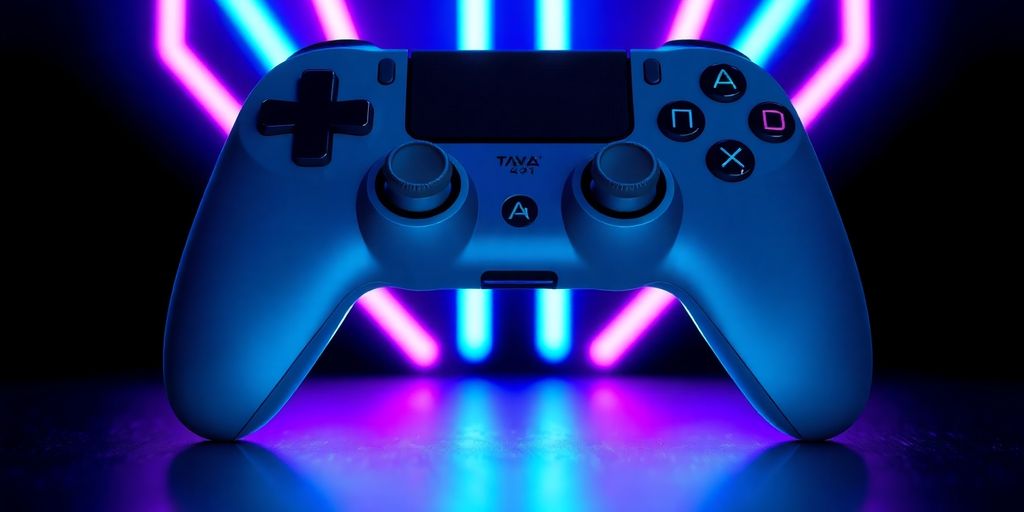
So, you wanna argue video games are sports? Let’s start with the basics: the controller. It’s not just some plastic thing you mash buttons on; it’s the athlete’s tool. Think of it like a tennis racket or a baseball bat. It’s how players interact with the game, and mastering it takes serious skill.
The controller is the direct interface between the player’s intent and the game world. It requires precision, dexterity, and a whole lot of practice to use effectively. It’s not just about knowing what buttons to press, but when and how to press them.
Consider these points:
- Reaction Time: Pro gamers have insane reaction times, often measured in milliseconds. This is honed through countless hours of practice with the controller.
- Muscle Memory: Complex maneuvers and combos become second nature, thanks to the development of muscle memory. It’s like a pianist playing a complicated piece without looking at the keys.
- Customization: Many pro gamers customize their controllers to fit their specific needs and playstyles. This can involve changing button layouts, stick tension, and even the physical shape of the controller itself.
It’s easy to dismiss the controller as a simple input device, but it’s so much more than that. It’s the key to unlocking a player’s potential and achieving peak performance in the game. It’s the tool that separates the casual player from the pro.
Here’s a simple comparison of controller skills in different game genres:
| Skill | FPS (e.g., CS:GO) | MOBA (e.g., LoL) | Fighting (e.g., Street Fighter) |
|---|---|---|---|
| Aiming | High | Low | Low |
| Button Mashing | Low | Medium | High |
| Combo Execution | Low | Medium | High |
| Resource Management | Low | High | Low |
2. Chess
Okay, so chess is often brought up in these discussions, and for good reason. It’s a game of strategy, planning, and mental fortitude. But is it really a sport? That’s the question, isn’t it?
Some people argue that sports need physical exertion, and chess doesn’t exactly have you breaking a sweat (unless you’re really stressed about that checkmate). But others point out that the mental strain of a high-level chess match is intense. Think about it: hours of concentration, calculating possibilities, and trying to outsmart your opponent. That’s gotta count for something, right?
It’s easy to dismiss chess as "just a board game," but that ignores the dedication and skill required to compete at a high level. Players spend years studying openings, endgames, and famous matches. They train their minds to think several steps ahead and anticipate their opponent’s moves. It’s a serious commitment.
Now, I’m not saying video games are exactly the same as chess. But there are definitely parallels. Many games require strategic thinking, quick reflexes, and the ability to adapt to changing situations. And just like in chess, top-level players spend countless hours practicing and honing their skills.
The mental game is strong in both.
To make things clearer, let’s look at a quick comparison:
| Feature | Chess | Video Games |
|---|---|---|
| Physical Exertion | Minimal | Varies (some more than others) |
| Mental Acuity | High | High |
| Strategy | Complex, long-term planning | Complex, often real-time |
| Reaction Time | Important, but less critical | Crucial in many genres |
| Practice | Years of study and memorization | Hours of gameplay and skill refinement |
Ultimately, whether you consider chess a sport or not, it highlights the importance of mental skill and strategic thinking in competitive activities. And that’s something that many video games share.
3. Wii
The Nintendo Wii brought motion controls into the mainstream, and it’s worth considering in the context of video games as sports. When it was released, the Wii was a phenomenon. People who had never touched a video game before were suddenly bowling, playing tennis, and even boxing in their living rooms.
It’s easy to dismiss the Wii as a casual gaming device, but some games required real physical exertion and skill. Wii Sports, for example, demanded players to mimic real-world movements, which could lead to genuine physical fatigue.
Consider these points:
- The Wii introduced a new level of accessibility to gaming, attracting a broader audience.
- Games like Wii Fit promoted physical activity and exercise.
- Some Wii games required timing, coordination, and strategy, similar to traditional sports.
While the Wii might not be the most intense example of physical gaming, it demonstrated the potential for video games to incorporate physical activity. It blurred the lines between virtual and real-world sports, paving the way for future developments in motion-controlled gaming and virtual reality fitness.
4. Treadmills
Okay, so hear me out. When we think of video games, we often picture someone sitting on a couch, controller in hand. But what if that wasn’t the whole picture? What if gaming could actually get you moving?
That’s where the idea of treadmills comes in. Now, I’m not talking about just casually walking on a treadmill while playing a simple game on your phone. I’m talking about dedicated VR setups that sync your movement in the real world with your avatar in the game. Imagine exploring a virtual world by actually walking, running, and even jumping on a specially designed treadmill.
This isn’t just some far-off concept either. There are companies developing these kinds of systems right now. Think about the possibilities for fitness. Instead of dreading your daily workout, you could be exploring a fantasy world, fighting monsters, or racing against other players, all while getting your heart rate up. It’s a way to make exercise fun and engaging, and that’s something that traditional sports often struggle with for many people.
It’s easy to dismiss this as just a gimmick, but consider the potential for rehabilitation. People recovering from injuries could use these systems to gradually regain their mobility in a safe and controlled environment. Athletes could use them to train in specific scenarios that are difficult or impossible to replicate in the real world.
Of course, there are challenges to overcome. The technology is still relatively new and expensive, and there are questions about motion sickness and user comfort. But the potential is there, and as the technology improves, I think we’ll see more and more people embracing the idea of active gaming.
5. Fifa
Fifa, the long-running soccer simulation franchise, has a massive following. It’s not just casual players either; there’s a huge competitive scene. The question is, does that make it a sport? It’s a bit more complicated than just saying ‘yes’ or ‘no’.
The level of skill and dedication required to compete at a high level in Fifa is undeniable. Players spend countless hours mastering the game’s mechanics, learning formations, and studying their opponents. It’s more than just button-mashing; it’s about strategy, reflexes, and mental fortitude.
Consider this:
- The top Fifa players have incredible reaction times, often making split-second decisions that can determine the outcome of a match.
- They possess a deep understanding of soccer tactics, translating real-world strategies into the virtual realm.
- The competitive scene is global, with tournaments offering substantial prize pools and attracting viewers from around the world.
It’s easy to dismiss Fifa as ‘just a game,’ but that overlooks the dedication and skill involved in playing at a professional level. The mental and strategic elements are definitely there, and the competition is fierce. It’s not the same as physical exertion, but it’s a different kind of challenge.
6. Youtube
YouTube has changed the game, no pun intended. It’s not just about cat videos anymore; it’s a massive platform for gaming content. Think about it: tutorials, live streams, esports tournaments – it’s all there. This accessibility is a huge factor in legitimizing video games as a sport. Anyone can watch, learn, and get involved.
YouTube provides a global stage for gamers to showcase their skills and build a following.
It’s wild to see how many people tune in to watch others play video games. It’s like watching a traditional sport, but instead of a field, it’s a digital arena. The engagement is real, and the community is thriving.
Here’s why YouTube matters:
- Accessibility: Anyone with an internet connection can watch gaming content.
- Variety: From beginner guides to professional tournaments, there’s something for everyone.
- Community: YouTube fosters a sense of community among gamers.
YouTube channels dedicated to gaming often see incredible viewership. For example, channels focusing on digital transformation and esports can have millions of subscribers, generating significant revenue and further professionalizing the gaming scene. It’s a whole ecosystem that supports and promotes video games as a serious competitive activity.
7. Twitch
Twitch has changed the game, no pun intended. It’s not just about playing video games anymore; it’s about watching other people play them, and that’s a big deal when we’re talking about sports. Think about it: how many people actually play professional basketball versus how many watch it? The viewership is what drives a lot of the sports world, and Twitch provides that for video games.
Twitch provides a platform for gamers to showcase their skills, build a community, and even make a living. It’s like a digital stadium where fans can gather to watch their favorite players compete. This accessibility is key. Not everyone can afford tickets to a live event, but anyone with an internet connection can tune into a Twitch stream.
The interactive nature of Twitch also sets it apart. Viewers can chat with the streamer, ask questions, and even influence the gameplay through donations or polls. This creates a sense of community and engagement that’s hard to replicate in traditional sports broadcasting.
Twitch also allows for a level of granularity that traditional sports media doesn’t. You can find streams of players practicing, analyzing their gameplay, or just hanging out and chatting with their fans. This gives viewers a deeper understanding of the game and the players involved.
Here’s a quick look at the top games on Twitch as of today:
| Game | Average Viewers |
|---|---|
| League of Legends | 150,000 |
| Fortnite | 120,000 |
| Valorant | 100,000 |
| Counter-Strike 2 | 80,000 |
| Dota 2 | 60,000 |
This shows the scale of viewership that some games can achieve, rivaling some traditional sports broadcasts. The numbers don’t lie; people are watching, and they’re engaged. This level of engagement and viewership is a strong argument for considering video games as a legitimate sport.
8. Money

Money is a huge factor in any sport, and video games are no different. Think about it: professional sports leagues generate billions of dollars each year. Video games are catching up fast.
The potential for revenue is a major reason why video games should be considered a sport. It attracts sponsors, investors, and players who are looking for financial opportunities. The money involved creates a competitive environment and drives innovation.
Consider these points:
- Sponsorship deals with major brands.
- Prize pools in tournaments reaching millions of dollars.
- Salaries for professional gamers comparable to traditional athletes.
The financial aspect of video games isn’t just about the big bucks at the top. It also creates jobs and opportunities for people at all levels, from amateur players to coaches and analysts. This economic impact is undeniable and contributes to the legitimacy of video games as a serious competitive activity.
It’s not just about winning; it’s about building a career and a sustainable ecosystem around the game.
9. Clubs
So, you might be thinking, "Okay, video games, sure, but where’s the community?" That’s where clubs come in. Think about it: every sport has its local leagues, teams, and associations. Video games are no different, and the rise of gaming clubs is a huge indicator of their growing legitimacy as a sport.
These aren’t just casual hangouts (though those are great too!). We’re talking organized groups with regular practice schedules, tryouts, and even coaches. It’s a structured environment where players can hone their skills, learn strategies, and compete as a team.
The existence of these clubs provides a framework for aspiring professional gamers to develop their talents and gain exposure. It’s a stepping stone to higher levels of competition.
Plus, clubs offer a sense of belonging and camaraderie. It’s a place where people who share a passion can connect, support each other, and build lasting friendships. This social aspect is just as important as the competitive one.
The growth of gaming clubs mirrors the development of traditional sports leagues. It’s a sign that video games are being taken seriously as a competitive activity, and it’s creating opportunities for players to pursue their dreams.
Consider this:
- High school esports clubs are becoming increasingly common, offering students a chance to compete and represent their schools.
- Colleges and universities are establishing varsity esports programs, providing scholarships and resources for talented gamers.
- Community-based gaming clubs are popping up in cities and towns around the world, creating local hubs for competitive gaming.
And it’s not just about playing. Clubs also provide opportunities for coaching, team management, and event organization. These are all valuable skills that can translate to other areas of life. If you are looking for gamer program, there are many options available.
10. Voice
Video games aren’t just about what you see; they’re also about what you hear, and increasingly, what you say. Think about it: professional athletes are constantly communicating, strategizing, and reacting verbally. The same is true in many competitive games.
Sound cues are important, but voice communication takes things to another level. It’s about teamwork, coordination, and real-time decision-making. It’s about leadership and the ability to stay calm under pressure.
Voice communication adds a layer of complexity and skill that’s often overlooked. It’s not just about being good at the game; it’s about being a good communicator, a good teammate, and a good leader.
Consider these points:
- Strategic Calls: Players use voice to call out enemy positions, plan attacks, and coordinate defenses.
- Real-Time Adjustments: Voice allows teams to adapt to changing situations on the fly.
- Psychological Warfare: Sometimes, a well-timed taunt or word of encouragement can make all the difference.
Voice communication is a skill, and like any skill, it can be honed and improved. It’s a crucial element in many competitive games, and it’s one of the reasons why video games deserve to be considered a sport. Effective communication can be the difference between victory and defeat.
The Final Word: Why Video Games Fit the Sport Mold
So, we’ve looked at a bunch of reasons why video games really do line up with what we think of as sports. It’s not just about running around or throwing a ball. Think about it: there’s serious competition, teams working together, and players putting in tons of practice to get good. They need quick thinking, good aim, and the ability to plan ahead. Plus, there are big tournaments, fans, and even coaches, just like in regular sports. The world of video games keeps growing, and it’s clear that the skills and dedication involved are pretty similar to what you see in other athletic fields. It just makes sense to see them as a sport.
Frequently Asked Questions
Don’t sports need to be physical? Video games just involve sitting.
While traditional sports often involve a lot of running and jumping, many video games, especially competitive ones, demand incredible hand-eye coordination, quick thinking, and strategic planning. These skills are just as important as physical strength in other sports.
Do video game players really train like athletes?
Absolutely! Just like athletes train for marathons or basketball games, professional gamers practice for many hours to improve their skills, learn new strategies, and work together as a team. It’s not just about playing for fun; it’s about serious dedication.
Are video games competitive enough to be called a sport?
Yes, many video games are highly competitive, with clear rules, winners, and losers. There are big tournaments with huge prizes, and players often compete in organized leagues, just like in soccer or football.
Can people actually make money from playing video games?
Many people earn a living by playing video games, either through winning tournaments, streaming their gameplay online, or getting sponsorships. It’s a growing industry with lots of opportunities for talented players.
Do video game teams have coaches and strategies like regular sports teams?
Just like traditional sports teams, esports teams have coaches, managers, and even analysts who help players improve. They work on team strategies, communication, and individual player development.
Are there any video games that make you move your body?
While some video games might not require a lot of movement, games like those on the Wii or virtual reality games can be very active. Some even use special treadmills that let you run and move around in the game, making them quite physical.