Learning the alphabet is a big step for kids, and honestly, it can be a bit of a chore sometimes. But what if it didn’t have to be? There are actually some pretty neat ways to make it fun, especially with the internet. We’re talking about games that help kids get to know their letters, from A to Z and back again. It’s all about making learning feel like playing, which is way better for everyone involved. Let’s check out how an a to z game online can be a real game-changer for your little one.
Key Takeaways
- Kids can learn letters by playing fun games, not just by sitting down with flashcards. Making it a game helps them pay attention.
- Knowing the order of the alphabet, forwards and backwards, is a skill that can be practiced with speed challenges. This helps their brains work faster.
- Games connect letters with sounds and pictures, which is a big help for reading later on. They also help kids learn to trace letters, which is good for their hands.
- Understanding that letters have both big (uppercase) and small (lowercase) forms is part of learning. Games can show how these pairs work.
- Playing an a to z game online lets kids practice their alphabet skills anytime, anywhere, and even try to beat their own best times.
Engaging Your Child with the Alphabet
Getting kids excited about learning their ABCs is the first big step. It’s not just about memorizing letters; it’s about making that process fun and interactive. When children see learning as a game, they absorb information so much better. Think about it – no one enjoys being lectured, especially little ones. That’s where playful approaches come in.
Introducing Letter Recognition Through Play
This is where the magic really starts. Instead of just showing flashcards, we can turn letter recognition into a treasure hunt. Imagine hiding letter cutouts around the room and having your child find them, or using magnetic letters to spell out simple words. The key is to make each letter a discovery. This hands-on interaction helps solidify the visual form of each letter in their mind. It’s about building that initial connection between a symbol and its identity.
Building Foundational Literacy Skills
Letter recognition is more than just knowing ‘A’ is ‘A’. It’s the bedrock for everything that follows in reading and writing. When kids can identify letters, they start to see patterns. This leads to understanding that letters make sounds, and those sounds combine to form words. It’s a building block approach, and getting it right early on makes a huge difference later. Think of it like building with LEGOs; you need a solid base before you can construct anything tall.
The Joy of Learning with Interactive Games
Games are fantastic for this. They provide a low-pressure environment where mistakes are just part of the process. Online games, in particular, can offer a wide variety of activities. You might find games where kids match letters to pictures, complete letter mazes, or even sort letters. These activities keep children engaged because they’re actively participating, not just passively receiving information. It’s this active involvement that sparks curiosity and a genuine interest in learning more.
Mastering Alphabetical Order
Once children start recognizing individual letters, the next step is understanding how they fit together. This involves learning the standard sequence from A to Z, a core part of early literacy. It’s not just about knowing the letters; it’s about knowing their place in the grand scheme of the alphabet.
Navigating the Alphabet A to Z
This is where the familiar "Alphabet Song" really comes into play. Children learn to recite the letters in their correct order, which helps them build a mental map of the alphabet. This sequence is the foundation for many other language skills, like spelling and reading.
- Singing the alphabet song regularly.
- Using visual aids like alphabet charts.
- Playing games that require putting letters in order.
Exploring Reverse Alphabetical Sequences
After mastering the forward order, challenging kids with the reverse sequence (Z to A) adds another layer of cognitive exercise. This backward journey helps solidify their understanding of each letter’s identity and its relationship to others, regardless of direction.
Going from Z to A requires a different way of thinking about the letter order. It’s like looking at a familiar road from the opposite direction – you still know where you’re going, but the perspective is new.
Enhancing Cognitive Skills with Speed Challenges
Introducing timed activities can make learning more exciting. Seeing how quickly a child can identify letters in order, or even in reverse, adds a fun competitive element. It’s a way to test their recall and processing speed in a playful manner.
Here’s a look at some impressive speed records:
| Task | Fastest Time | Record Holder |
|---|---|---|
| Typing Alphabet A-Z | 3.37 seconds | SK Ashraf (India) |
| Typing Alphabet Z-A (Tablet) | 6.82 seconds | Amal AlJabry (UAE) |
These challenges, even in a simplified form for children, help build quick thinking and reinforce letter recognition in an engaging way.
The Educational Benefits of Alphabet Games
Connecting Letters with Sounds and Images
Learning the alphabet is more than just memorizing a sequence of letters. It’s about building connections. When children see a letter, like ‘B’, and then a picture of a ball, and hear the "buh" sound, they start to understand how letters work in the real world. This linking of visual symbols, sounds, and objects makes learning stick. It’s like solving a fun puzzle where each piece fits together to create a bigger picture of language. Games that show a picture and say the word help kids figure out which letter makes which sound. They also learn that some letters can make different sounds, which is a big step.
Developing Fine Motor Skills Through Tracing
Many alphabet games involve tracing letters. This isn’t just about making the letter look right; it’s a workout for a child’s hands and fingers. When kids trace letters, they practice the specific movements needed to form them correctly. This builds the small muscle control, or fine motor skills, that they’ll need later for writing words, drawing, and even using scissors. It’s a hands-on way to prepare them for more complex tasks. Being able to write their own name or draw specific letters feels like a big accomplishment for them.
Reinforcing Learning with Puzzle-Like Activities
Children naturally enjoy games and activities that feel like a challenge to figure out. Alphabet games often have this puzzle-like quality. Whether it’s finding all the ‘A’s on a page, matching uppercase and lowercase letters, or completing a maze by following a specific letter, these activities keep kids engaged. They’re learning without feeling like they’re doing homework. This playful approach helps solidify what they’ve learned, making the knowledge more permanent.
Alphabet games turn learning into play. They help kids see how letters, sounds, and words fit together, build important hand skills, and make learning feel like a fun discovery rather than a chore. This makes the whole process much more effective and enjoyable for young learners.
Understanding Uppercase and Lowercase Letters
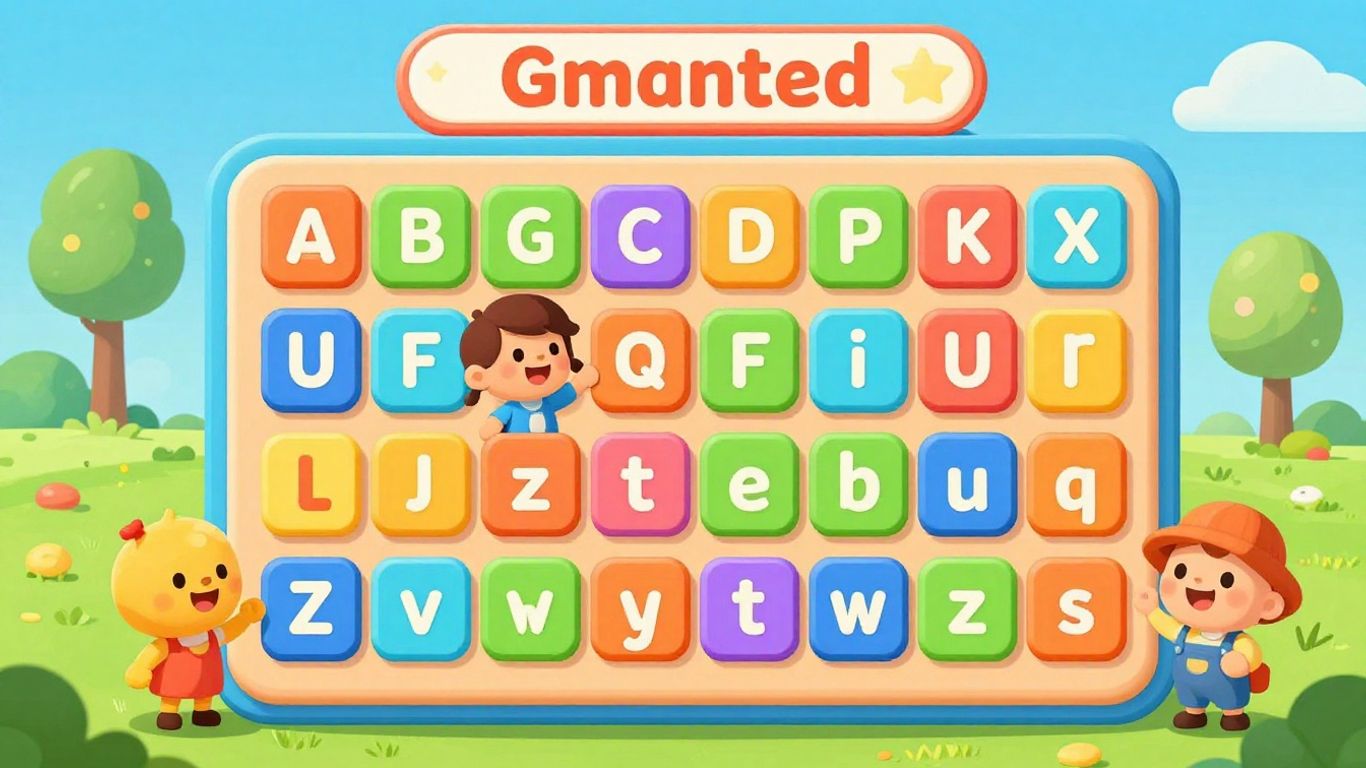
Children often first learn to write their names using all capital letters. It’s a common starting point. Then, they begin to see that letters come in two forms: uppercase (capital) and lowercase (small). Recognizing that ‘A’ and ‘a’ are the same letter, just different sizes, is a big step. This understanding is key for reading and writing.
Identifying Paired Letter Forms
Kids need to learn that each letter has a capital and a small version. Think of it like a pair. For example, ‘B’ is the uppercase form, and ‘b’ is its lowercase partner. Games can help children match these pairs. They might see a picture of a ball and have to connect it to both ‘B’ and ‘b’. This helps them see the connection.
Recognizing Usage in Writing
Why do we have two kinds of letters? Uppercase letters usually start sentences and proper nouns, like names and places. ‘My dog, Max, lives in London.’ See how ‘M’, ‘M’, and ‘L’ are capitalized? Lowercase letters fill in the rest of the words. Learning when to use each type comes with practice.
Progressing from Capital to Small Letters
Most children start by recognizing and writing uppercase letters. They might master writing their name in big letters first. After they get comfortable with those, they move on to lowercase letters. It’s a gradual process. Online games can make this transition smoother by presenting both forms side-by-side and asking kids to identify or match them.
The Role of Phonics in Early Learning
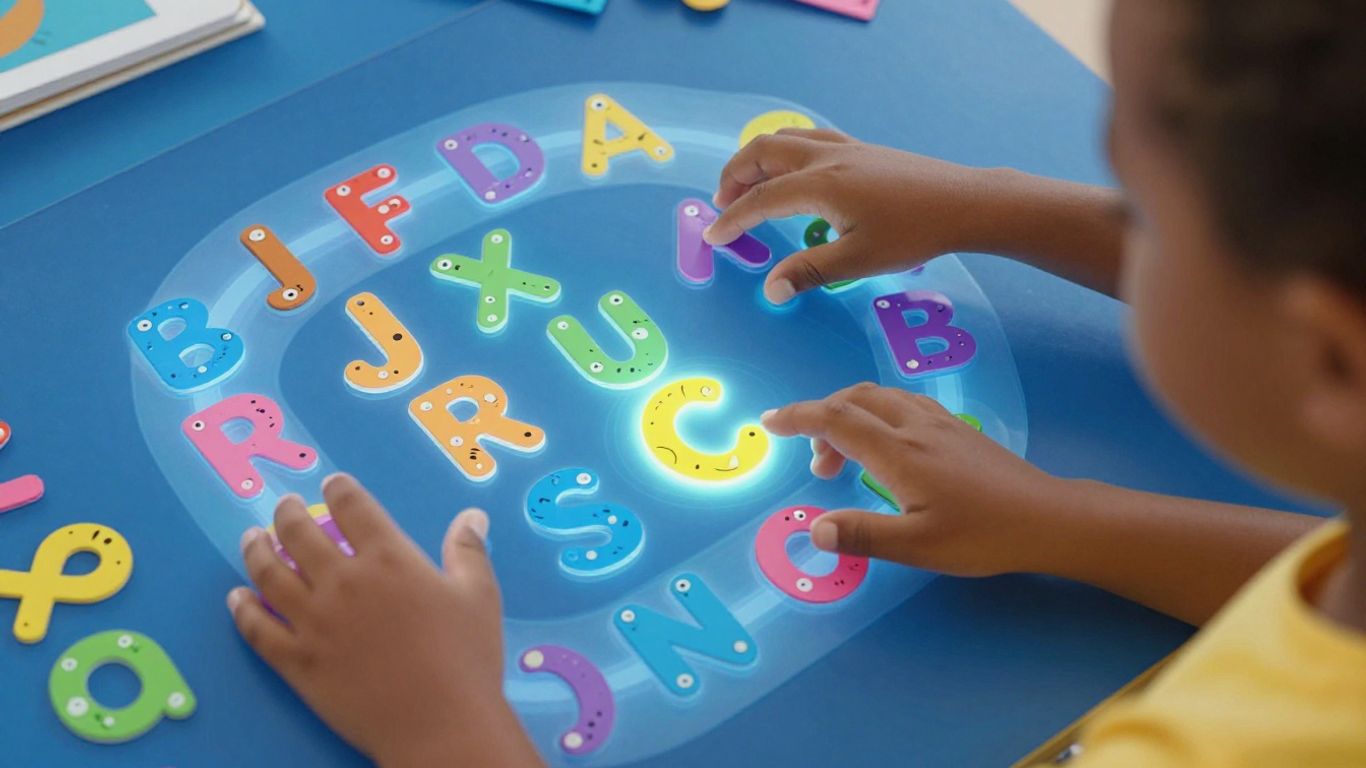
Phonics is a way of teaching reading that focuses on the connection between letters and the sounds they make. It’s a big part of how kids learn to read and spell. When children understand that ‘b’ makes a /b/ sound, and ‘a’ makes a /a/ sound, they can start putting those sounds together to read words like ‘bat’.
Exploring Vowel and Consonant Sounds
Letters are generally divided into two groups: vowels and consonants. Vowels are the letters A, E, I, O, and U, and sometimes Y. They make a clear, open sound. Consonants are all the other letters, and they make sounds that are often made by blocking air in the mouth. Learning these distinct sounds is the first step.
- Vowels: A (/a/), E (/e/), I (/i/), O (/o/), U (/u/)
- Consonants: B (/b/), C (/k/ or /s/), D (/d/), F (/f/), and so on.
- Diphthongs: Sometimes vowels combine to make a new sound, like ‘oi’ in ‘coin’ or ‘ou’ in ‘house’.
Matching Letters to Beginning Sounds
This is where the fun really starts. Games can help children link a letter they see with the sound it makes at the start of a word. For example, seeing the letter ‘S’ and then hearing a word like ‘sun’ helps them connect the visual ‘S’ with the /s/ sound. This connection is a building block for reading.
- Show a picture of a cat. Ask, "What sound does ‘cat’ start with?" Guide them to the /k/ sound and the letter ‘C’.
- Present the letter ‘M’. Ask, "Can you think of a word that starts with the /m/ sound?" (e.g., ‘moon’, ‘mouse’).
- Use objects: a ball for ‘B’, a doll for ‘D’.
Developing Auditory Discrimination Skills
This means learning to hear the difference between sounds. It’s not just about recognizing the sounds letters make, but also distinguishing between similar sounds. For instance, telling the difference between the /b/ sound in ‘ball’ and the /p/ sound in ‘pool’ is important.
Children who can hear the subtle differences in sounds are better equipped to decode words. This skill helps them avoid confusion when reading words that look alike but have different meanings, like ‘pat’ versus ‘bat’.
Games that involve listening carefully, like identifying the odd sound out in a series, can really help with this. It’s like training their ears to be super-listeners for language.
Achieving Alphabetical Proficiency Online
The Appeal of the A to Z Game Online
Online alphabet games offer a dynamic way for children to solidify their knowledge of letters. These games often present letters in various contexts, moving beyond simple recognition to active engagement. The interactive nature of these platforms makes learning feel less like a chore and more like play. Children can explore letter shapes, sounds, and even their order in a fun, low-pressure environment. This approach helps build confidence and a positive association with learning.
Setting Personal Speed Records
Many online alphabet games include timed challenges that encourage speed and accuracy. These can be particularly engaging for children who enjoy a bit of friendly competition, even if it’s just against themselves. For instance, a game might ask players to type the alphabet forwards or backward as quickly as possible. This type of activity not only reinforces letter order but also helps develop quick recall and reflexes. It’s a great way to see progress over time as children aim to beat their previous best scores.
Here’s a look at how speed can be measured:
- Forward Alphabet Typing (A-Z): Focuses on sequential recall and typing speed.
- Reverse Alphabet Typing (Z-A): Challenges memory and the ability to think in reverse order.
- Timed Letter Identification: Quickly selecting specific letters or letter groups as they appear.
While the fastest recorded times for typing the alphabet are impressive, the real goal for young learners is consistent improvement and building a solid foundation. The focus should always be on accuracy and understanding, with speed developing naturally over time.
Practicing Alphabet Skills Anytime, Anywhere
One of the biggest advantages of online alphabet games is their accessibility. Children can practice their letters whenever they have a moment, whether it’s at home, on a tablet during a car ride, or even during a short break. This flexibility means learning can happen consistently, without being tied to a specific time or place. It allows for repeated practice, which is key to mastering new skills. Children can revisit games that focus on their weaker areas or challenge themselves with new activities, all at their own pace.
Keep Practicing!
So, we’ve explored how games can make learning the alphabet fun and effective. Whether it’s recognizing letters, matching sounds, or even a quick speed test, these activities help build a strong foundation for reading. Remember, consistent practice is key. Keep playing, keep learning, and watch those alphabet skills grow!
Frequently Asked Questions
What is the main goal of the A to Z game online?
This game is all about helping kids get super familiar with the alphabet! It’s designed to make learning letters fun and easy, whether you’re going forward from A to Z or backward from Z to A. You can even race against the clock to see how fast you can type them all!
How does this game help kids learn the alphabet better?
It helps by making learning feel like playing a game. Kids get to see letters, hear their sounds, and sometimes even match them with pictures. This makes it easier to remember letters and how they sound, which is super important for reading later on.
What’s the difference between uppercase and lowercase letters, and how does the game teach this?
Uppercase letters are the big ones, like ‘A’, and lowercase are the smaller ones, like ‘a’. The game helps kids learn to spot both and understand that they are the same letter, just written differently. It’s like learning two ways to write the same thing!
Does the game teach letter sounds (phonics)?
Yes, it does! Many alphabet games connect letters with the sounds they make. This is called phonics. Learning these sounds helps kids start to read because they can sound out words.
Can playing this game help with other skills besides just knowing the alphabet?
Absolutely! When kids trace letters or play matching games, they’re also working on their fine motor skills – that’s the small muscle control in their hands needed for writing. Plus, speed challenges help improve focus and quick thinking.
Is this game good for practicing anytime, anywhere?
Definitely! Since it’s an online game, you can play it on a computer or tablet whenever you have a moment. It’s a great way to keep practicing alphabet skills and even try to beat your own speed records, making learning convenient and accessible.