
Tired of the same old detective games? Move beyond the mainstream. We’ve uncovered five brilliant hidden gems that reinvent the genre with mind-bending puzzles, procedurally generated crimes, and stories that will leave you stunned.
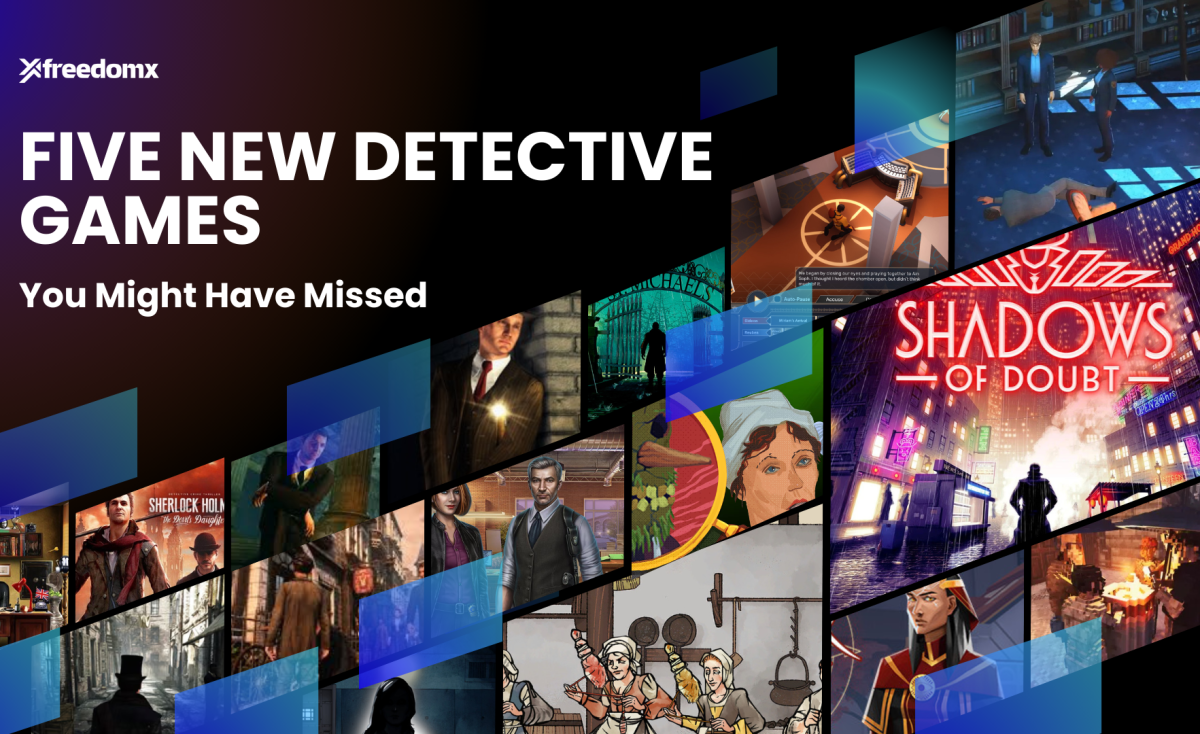
There’s something unique about detective games that sets them apart. That rush when a player notices a tiny overlooked detail, connects a couple of odd clues, and then, suddenly, the entire mystery falls into place. In those moments, it feels less like playing a game and more like channelling Sherlock Holmes, Hercule Poirot, or even Benoit Blanc from Knives Out.
And really, who doesn’t love the thrill of feeling like the smartest person in the room?
Of course, the heavyweights like L.A. Noire, Disco Elysium, and the iconic Ace Attorney series usually take centre stage. They deserve it, no doubt, they’re brilliant. But while those titles dominate the spotlight, there’s a whole undercurrent of detective games quietly bubbling away beneath the surface.
Many of these are crafted by smaller indie studios without big marketing campaigns or flashy hype trains, which means they often slip under the radar. And that’s a real shame, because hidden among them are gems with fresher ideas, bolder storytelling, and twists players never see coming.
For anyone who loves diving into mysteries, solving clever puzzles, and playing amateur sleuth from the comfort of the sofa, there’s plenty to discover.
Here’s a spotlight on five detective games that might have been missed, ranging from quirky experiments to full-fledged atmospheric thrillers that unfold like binge-worthy crime dramas.
5 New Detective Games
1. The Case of the Golden Idol

For those who haven’t come across The Case of the Golden Idol yet, it’s a genuine hidden gem. Released quietly yet quickly gaining cult status, the game is often described as a spiritual cousin to Return of the Obra Dinn. Picture a collection of 18th-century paintings brought vividly to life, each concealing a grim murder scene, with the player tasked with unravelling exactly what transpired.
The art style is intentionally unsettling, almost grotesque, with distorted faces and macabre tableaux. Far from being off-putting, this distinctive aesthetic is part of its charm, instantly setting it apart from traditional detective titles that strive for realism. Each scene is frozen in time: a suspicious poisoning at a dinner table, a duel gone awry, or a strange ritual deep in the woods. Players can click through the environments, gather evidence, inspect objects, and gradually piece together names, motives, and methods.
What elevates The Case of the Golden Idol is its remarkable sense of escalation. The early puzzles are relatively straightforward, but as the narrative progresses, the crimes grow more intricate, the cast of characters expands, and the conspiracies deepen. It is not simply a matter of “whodunnit”; it is a journey through the ripple effects of one cursed artefact, the titular Golden Idol, as it passes through scheming hands over the course of decades.
Unlike conventional detective games that conclude once the culprit is revealed, this title weaves a tapestry of interlocking stories. Each solved mystery contributes to a grander picture, rewarding keen observation and patience. And when everything finally clicks into place, when that elusive detail from three chapters earlier suddenly makes sense, it delivers the pure satisfaction of feeling like a master detective.
For admirers of Obra Dinn, or for those who relish poring over the minutiae of a crime novel, The Case of the Golden Idol is nothing short of essential.
2. Pentiment
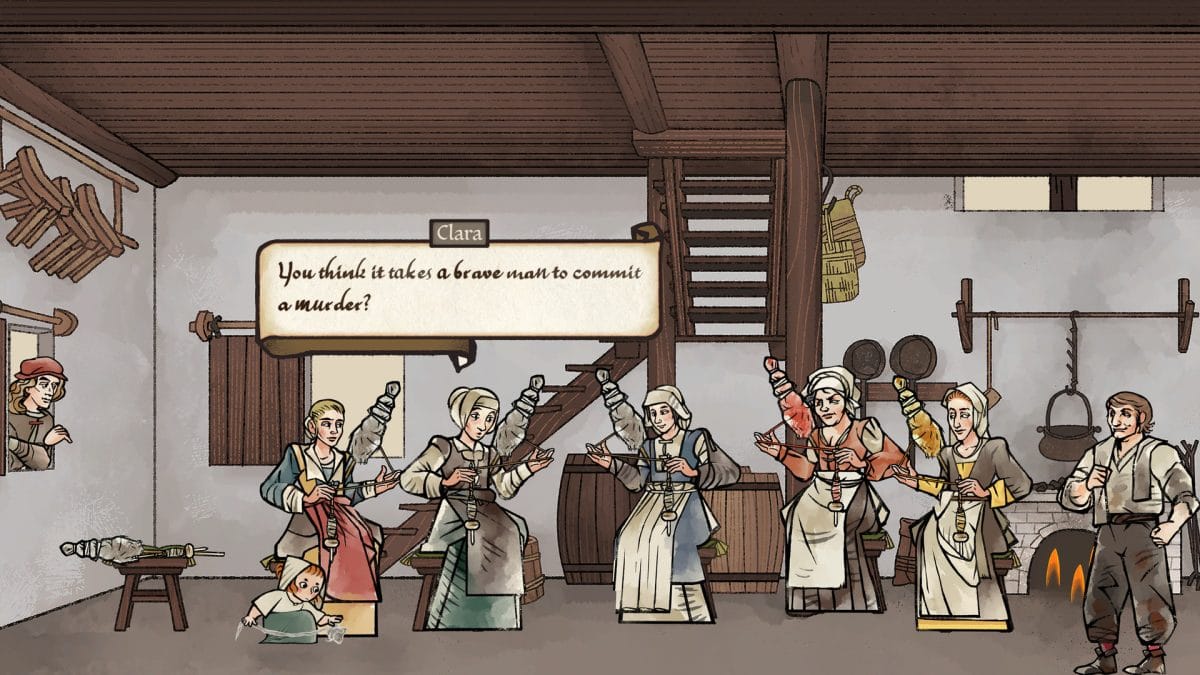
Pentiment may not have entirely slipped under the radar, it is, after all, developed by Obsidian Entertainment, the studio best known for Fallout: New Vegas. Yet, compared with the blockbuster releases of the past year, it received surprisingly little attention. That’s something of a crime, considering how distinctive and ambitious it is.
Set in 16th-century Bavaria, the game follows Andreas Maler, an artist working in a monastery during a time of religious and political upheaval. When a murder shakes the small town of Tassing, Andreas finds himself cast into the role of investigator. However, this is no conventional detective story; instead, it is a richly historical, meticulously researched narrative that delves into truth, morality, and the ways in which people choose to remember events.
The art style is the first striking feature. The world resembles a medieval manuscript or illuminated text brought vividly to life. Dialogue appears as though written in ink on parchment, complete with smudges and flourishes tailored to the speaker. The lettering itself reflects social class and education, a subtle but brilliant detail that reinforces the authenticity of the setting.
As Andreas, players interview townsfolk, gather evidence, and identify suspects. The twist, however, lies in the uncertainty: the game never confirms whether the player has chosen the correct culprit. Instead, one must make a case, present reasoning, and accept the consequences. Years later, the narrative reveals how the town remembers those choices, whether they led to justice, or an irreparable mistake.
What sets Pentiment apart is its treatment of detective work not simply as puzzle-solving, but as an exploration of storytelling itself. It raises profound questions: can we ever truly know what happened? How much of history is objective fact, and how much is shaped by perspective? It is a detective game, yes, but also a thoughtful meditation on memory and truth.
For those who have ever wished to step inside a living history book whilst unravelling a centuries-old mystery, Pentiment offers a rare and unforgettable experience.
3. Shadows of Doubt
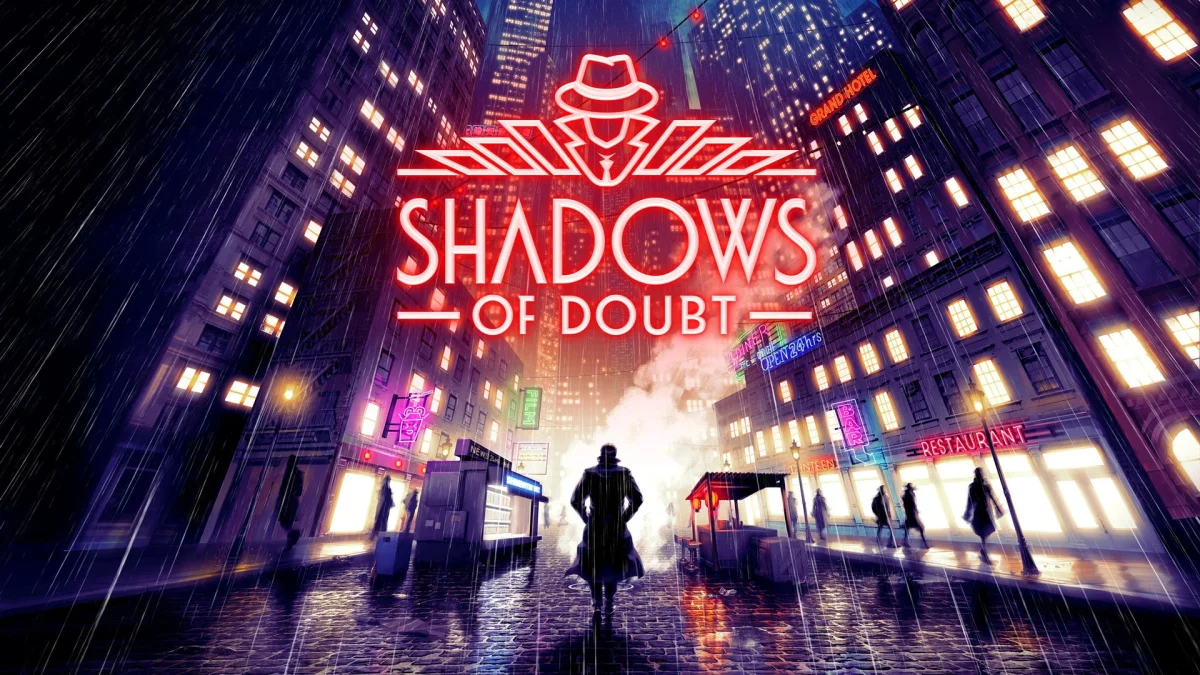
If The Case of the Golden Idol is about frozen snapshots and Pentiment is about historical narrative, then Shadows of Doubt is about freedom, total freedom.
This indie gem describes itself as an “immersive detective sim,” and that is no exaggeration. It generates a fully procedurally built city, every apartment, every citizen, every dingy back alley and drops the player into it as a private investigator. There is no tidy “solve this puzzle” framework; instead, one is free to tail suspects, break into flats, sift through rubbish bins, hack computer systems, or slip a bribe to a bartender in exchange for information.
The result feels like a heady mix of Blade Runner, L.A. Noire, and a cyberpunk sandbox. The atmosphere drips with neon-soaked rain, the city thrums with secrets, and every inhabitant has their own routines, lives, and potential skeletons to unearth.
The cases themselves are procedurally generated, meaning no two investigations are ever alike. One player may uncover the grim trail of a serial killer, while another might stumble upon a case of corporate espionage or a missing person whose disappearance is not all it seems.
What makes Shadows of Doubt so compelling is its refusal to hold the player’s hand. Success demands genuine detective work: following leads, connecting evidence, and occasionally taking risks that may backfire. There is no convenient “press X to solve mystery” shortcut—fail to put the effort in, and the trail can go cold. That unpredictability is precisely what makes each case so exhilarating.
For anyone who has ever fantasised about stepping into the trench coat of a noir detective in a sprawling cyberpunk city, Shadows of Doubt delivers the dream. Messy, unpredictable, and immensely satisfying, it captures the essence of detective work in a way few games ever dare.
4. Lucifer Within Us

This one is a little different. Lucifer Within Us takes the familiar detective formula and fuses it with spiritual mystery and psychological drama. Imagine Phoenix Wright crossed with the unsettling atmosphere of The Exorcist, and you begin to get the picture.
The player assumes the role of a digital exorcist in a futuristic, tech-religious society. The premise is striking: individuals are haunted by so-called “daemons,” which serve as metaphors for corruption rather than literal demons. The task is to interrogate suspects, scrutinise their timelines, and expose inconsistencies in order to uncover the truth.
Unlike traditional detective games that revolve around gathering physical clues, here the focus lies on contradictions in testimony. Each suspect provides alibis and sequences of events, and it is the player’s job to untangle the narrative threads and discover whose story does not hold up. The experience feels part logic puzzle, part courtroom drama, but with a darker, spiritual undercurrent.
What makes Lucifer Within Us particularly engaging is its refusal to provide easy answers. Players often sift through conflicting accounts, replaying timelines and cross-examining evidence, until the sudden realisation strikes: “They couldn’t have been there at that time!” That lightbulb moment is immensely rewarding.
Beneath its mechanics, the game delves into profound themes, exploring the blurred boundaries between truth, faith, and manipulation. It is less about simply identifying a culprit and more about peeling back layers of human corruption.
Though not the longest title on this list, Lucifer Within Us stands out as one of the most original. For those seeking something cerebral, unsettling, and utterly compelling, it is well worth the experience.
5. Murder Mystery Machine

Sometimes, all one wants is a classic detective story: crime scenes, red-string boards, interrogations, the full package. That is precisely what Murder Mystery Machine delivers.
Developed by Blazing Griffin, the studio behind The Ship and Murderous Pursuits, this title offers a straightforward yet stylish episodic detective experience. Players take on the role of Cass, a rookie investigator, partnered with the more world-weary Nate. Together, they tackle cases ranging from back-alley killings to political conspiracies, gradually pulling at threads that unravel into something far larger.
The central mechanic is the evidence board. Every clue uncovered and each testimony gathered is pinned to the board, and it is up to the player to draw connections between suspects, motives, weapons, and timelines. Gradually, the bigger picture emerges. It evokes the feel of a True Detective-style corkboard, only far more organised, and without the risk of overwhelming one’s living room.
What distinguishes Murder Mystery Machine is its episodic structure. Each case plays out like an instalment of a television crime drama, complete with cliffhangers, twists, and occasional shocking revelations. The cases also feed into a larger narrative, ensuring that each success feels like progress towards exposing something far darker than any isolated murder.
Polished, atmospheric, and cleverly designed, Murder Mystery Machine scratches the itch for anyone who craves a classic procedural detective experience.
Why anyone should explore these games
What unites The Case of the Golden Idol, Pentiment, Shadows of Doubt, Lucifer Within Us, and Murder Mystery Machine is the way they demonstrate that detective games need not adhere to a single formula. Some capture frozen moments in time, others simulate vast living cities; some demand logical arguments in courtroom-like exchanges, while others encourage reflection on history itself.
These titles are not merely about “catching the killer.” They immerse players in the mindset of a detective, curious, sceptical, methodical, and, at times, reckless. In a gaming landscape dominated by shooters and role-playing games, such smaller, story-driven experiences feel particularly refreshing.
For anyone with a detective itch to scratch, the usual suspects are not the only option. These five games may not have dominated headlines, but each offers its own distinctive take on mystery-solving and deserves recognition.
So, whether with notebook in hand, a steaming mug of coffee, or perhaps a glass of whisky for those wishing to embrace the full noir aesthetic, there has never been a better time to step into the role of detective. One of these overlooked gems may well become a new favourite.