
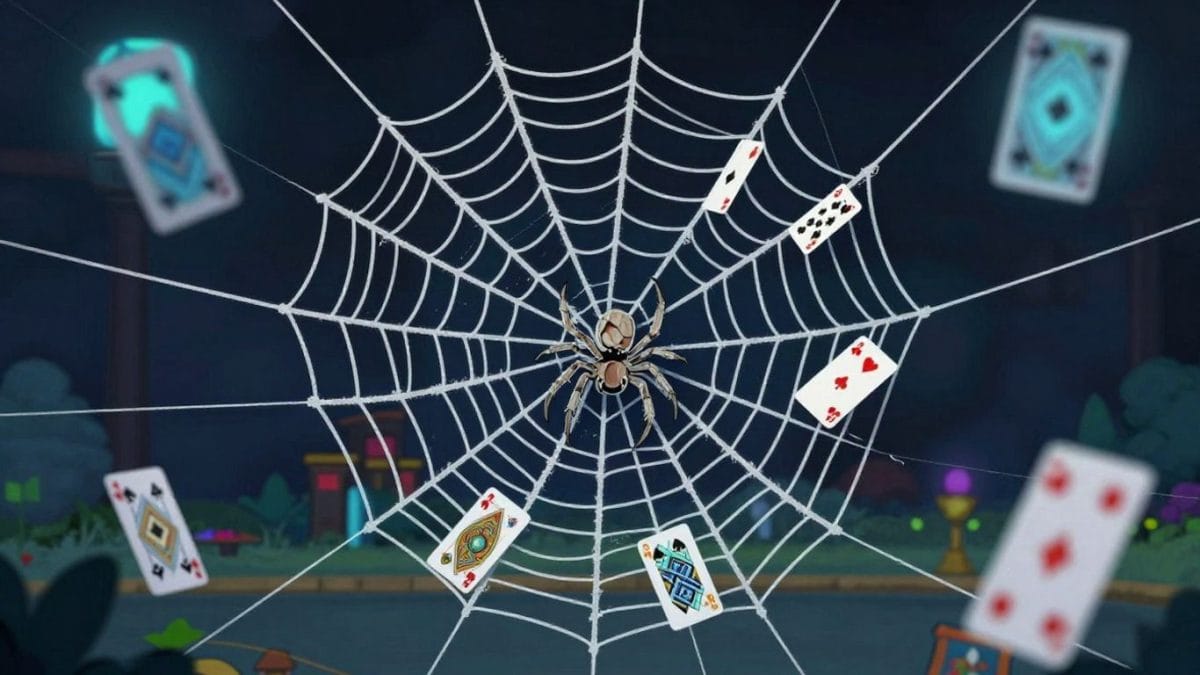
So, you want to get better at the game card spider, huh? It’s a fun game, but sometimes it can feel like you’re just moving cards around without a real plan. Don’t worry, we’ve all been there. Whether you’re just starting out or you’ve been playing for a while, there are some smart ways to approach the game that can really help you win more often. Let’s break down some of these tips so you can start playing like a pro.
Key Takeaways
- Focus on uncovering hidden cards early on. The more cards you can see, the more moves you’ll have available.
- Empty columns are super useful. Try to keep them open for moving cards around, and only fill them with a King if you have to.
- Try to build sequences using cards of the same suit. This makes it much easier to complete sets and clear them from the board.
- Don’t be afraid to use the ‘undo’ button if you make a mistake. It’s better to try a different move than to get stuck.
- Start with easier versions of the game card spider (like one suit) to practice your strategies before tackling the harder ones.
Mastering the Game Card Spider: Foundational Strategies

Welcome to the foundational strategies for Spider Solitaire! Before you can tackle the trickier aspects of the game, it’s important to get a solid grasp on the basics. This section will set you up for success by covering the core elements that every winning player needs to know.
Understanding the Objective of Spider Solitaire
The main goal in Spider Solitaire is to arrange all the cards on the board into complete sequences, ordered from King down to Ace, and all within the same suit. Once a full sequence of 13 cards (King through Ace) of a single suit is formed, it’s removed from play. The game is won when all cards have been successfully cleared from the tableau. While the game is often played with two decks (104 cards total) spread across ten columns, the core objective remains the same: build those perfect, suit-specific sequences.
The Importance of Revealing Hidden Cards
When the game begins, many cards are face down. Your primary task early on should be to flip these cards over. The more cards you can reveal, the more options you’ll have for making moves and building sequences. Think of it like opening up possibilities. If you leave too many cards hidden, you might find yourself stuck with limited choices, unable to make progress. Aim to expose cards whenever a sensible move presents itself, especially if it helps clear a column.
Strategic Use of Empty Columns
Empty columns are incredibly valuable in Spider Solitaire. They act as temporary holding spaces, giving you the flexibility to move larger groups of cards around. However, how you use them matters. It’s generally best to only place a King (or a sequence starting with a King) into an empty column. Filling an empty column with a card that isn’t a King can block that space, preventing you from using it for more advantageous moves later. Preserve these empty spots for the most strategic placements to keep your options open.
Don’t rush to fill empty columns. These spaces are your most powerful tool for rearranging cards and creating opportunities. Use them wisely, and you’ll find the game flows much more smoothly.
Navigating Complex Stacks in Game Card Spider
As you get deeper into a game of Spider Solitaire, the tableau can start to look like a tangled mess. You’ll find yourself with stacks of cards that aren’t in order, and often, they’re made up of different suits. This is where the real challenge begins, and smart play can make all the difference between a win and a frustrating loss.
Prioritizing Same-Suit Sequences
When you have the chance to build a sequence of cards that are all the same suit, take it. These "natural builds" are gold because they can be moved as a single unit. This makes it much easier to clear out columns or to move a whole block of cards to where they need to go. Always look for opportunities to create or extend these same-suit runs. It simplifies your board and opens up more possibilities for uncovering hidden cards.
- Focus on building descending sequences (King down to Ace).
- Keep all cards within a sequence of the same suit.
- These complete sequences can be moved off the board entirely.
Managing Mixed-Suit Stacks Effectively
Sometimes, you just don’t have a choice but to build stacks with mixed suits. This is common, especially when you’re trying to reveal face-down cards. The key here is to be strategic about which mixed-suit stacks you create and where you place them. Try to build these mixed stacks on higher-ranking cards whenever possible. This gives you more flexibility. A mixed stack starting with a 10, for example, has more potential moves than one starting with a 3. Also, be mindful of using these mixed stacks as temporary holding places; don’t let them become permanent obstacles.
When dealing with mixed suits, think of them as temporary solutions. Your ultimate goal is to break them down into same-suit sequences. Use them to uncover cards, but always have a plan to sort them out later.
The Role of Planning in Stack Management
Spider Solitaire isn’t a game you can win by just reacting to what’s in front of you. You need to think ahead. Before you make a move, especially with complex stacks, consider what that move will enable or prevent in the future. Ask yourself: Will this move reveal a hidden card? Will it create an empty column? Will it block a more important sequence later on? Planning even just two or three moves in advance can prevent you from getting stuck in a difficult situation.
- Assess the potential outcomes of your move.
- Consider how the move affects hidden cards.
- Look for opportunities to create empty columns.
- Anticipate how your move might block future plays.
Advanced Tactics for Game Card Spider Success

Once you’ve got a good handle on the basics, it’s time to look at some moves that can really change how you play Spider Solitaire. These aren’t just random tips; they’re about thinking ahead and using the game’s mechanics to your advantage.
Leveraging the Stockpile Wisely
The stockpile, that pile of face-down cards you draw from, can be a game-changer, but you have to use it carefully. It’s tempting to just click it whenever you can’t see any immediate moves. However, if your tableau is a mess of mixed suits and incomplete sequences, drawing more cards can actually make things worse. Before you draw, take a moment to see if you can organize your existing cards even a little bit. Try to create any possible same-suit sequences or clear out a column. The goal is to make the cards you draw from the stockpile as useful as possible, not to bury yourself in more work.
Uncovering and Utilizing Low-Value Cards
Cards like Aces and Twos are often buried deep in the stacks. Getting them out early is a smart move. They are the building blocks for your sequences, and the sooner you can get them into play, the more options you’ll have. Look for opportunities to move cards that will reveal these low-value cards. Sometimes, it might even be worth moving a card that seems useful in the short term if it means freeing up an Ace or a Two.
Strategic Splitting of Card Piles
Normally, you want to keep your sequences together. But sometimes, you’ll find yourself with a pile that’s mostly in order, but breaking it up is the only way to make a much better move elsewhere. For example, you might have a sequence of 7, 6, 5 of Spades, but moving that 5 of Spades to start a new sequence of Hearts will let you clear out a whole column. This is a calculated risk. You need to be sure that the move you’re setting up is worth the temporary disruption of your existing sequence. It’s about seeing the bigger picture and knowing when a short-term sacrifice leads to a long-term gain.
Think of the game board as a puzzle. Sometimes you have to take a few pieces out of place temporarily to see how they fit into a larger, more complete picture. Don’t be afraid to rearrange things if it opens up a clear path to victory.
Here’s a quick look at when splitting might be a good idea:
- When it allows you to move a King to an empty column.
- When it enables you to complete a same-suit sequence.
- When it reveals multiple hidden cards that you couldn’t access otherwise.
- When it helps you to get a crucial low-value card (Ace, 2, 3) into play.
Avoiding Common Pitfalls in Game Card Spider
Even experienced players can stumble in Spider Solitaire. Recognizing and sidestepping common errors is key to improving your win rate. Let’s look at some of the most frequent mistakes and how to steer clear of them.
The Consequences of Improperly Filling Empty Columns
Empty columns are a rare and valuable resource in Spider Solitaire. They offer the most flexibility for rearranging cards and uncovering hidden ones. The biggest mistake players make is filling these empty spaces with just any card. An empty column should ideally only be filled with a King, or a sequence that begins with a King. Filling it with a lower-ranked card, or a card that doesn’t start a potential sequence, severely limits your future options. You might be able to make a quick move, but you’re sacrificing the strategic advantage that an empty column provides for the rest of the game.
Maintaining Suit Integrity During Moves
It’s tempting to move cards between different suits just to clear space or make a temporary connection. While sometimes necessary, constantly mixing suits can create a tangled mess that’s hard to resolve later. Prioritizing same-suit sequences is generally the best approach. When you build sequences of cards that all belong to the same suit, you’re setting yourself up for easier completion and removal of those stacks. If you find yourself breaking suit integrity too often, it might be a sign that your overall strategy needs adjustment.
The Value of Reconsidering Moves with Undo
Many players forget about or hesitate to use the ‘undo’ function. This feature is not a sign of weakness; it’s a smart tool for learning and improving. If you make a move and immediately realize it has blocked a better opportunity or created a difficult situation, don’t hesitate to undo it. Trying a different sequence of moves can often reveal a path to victory that wasn’t apparent at first glance. It’s better to take a moment to correct a mistake than to push forward with a suboptimal play.
Think of the undo button as a second chance to analyze the board. It allows you to test out different possibilities without penalty, helping you learn what works and what doesn’t in specific game states. Don’t be afraid to use it liberally, especially when you’re learning or facing a particularly tricky setup.
Developing Consistent Winning Habits in Game Card Spider
Getting good at Spider Solitaire isn’t just about knowing the rules; it’s about building smart habits that help you win more often. Like any skill, practice makes a difference, but the right kind of practice is what really counts. Let’s look at how to build those winning habits.
The Benefits of Starting with Easier Variants
If you’re new to Spider Solitaire or just want to sharpen your skills without the pressure, starting with easier game modes is a smart move. Playing with just one suit (often called ‘Easy’ mode) lets you focus on the core mechanics of moving cards and building sequences. You can get a feel for how cards interact and how to clear columns without the added complexity of managing multiple suits. This builds a solid foundation.
- Focus on single-suit sequences: Practice building complete runs of one suit.
- Master empty column strategy: Learn the best times to create and use empty columns.
- Develop quick card identification: Get faster at spotting potential moves and sequences.
Once you’re comfortable, you can gradually move up to two-suit and then four-suit games. It’s like learning to ride a bike – you start with training wheels before hitting the open road.
Learning from Replayed Difficult Games
Losing a game can be frustrating, but it’s also a prime learning opportunity. Instead of just hitting ‘new game,’ take a moment to review what happened. Why did you get stuck? Were there specific moves that seemed to lead to dead ends? Sometimes, replaying a challenging game, perhaps with a slightly different approach, can reveal strategies you missed the first time around. This kind of reflection is key to improvement.
Don’t just play games; study them. Every lost game is a lesson waiting to be understood. Identifying the turning point where things went wrong can prevent similar mistakes in the future.
Tracking Progress and Setting Goals
To truly improve, you need to know where you stand. Many Spider Solitaire versions keep track of your statistics, like win rates and average game times. Use this data! Setting specific, achievable goals can give you direction. Maybe you aim to increase your win percentage by 5% this month, or perhaps you want to clear a four-suit game in under 10 minutes. Tracking your progress helps you see how far you’ve come and keeps you motivated.
Here’s a simple way to think about setting goals:
- Assess your current performance: Look at your win rate and average game time.
- Set a realistic target: Aim for a small, measurable improvement.
- Focus your practice: Play games with your goal in mind.
- Review and adjust: See if you’re on track and modify your goals if needed.
Elevating Your Game Card Spider Skills
Once you’ve got a good handle on the basics of Spider Solitaire, it’s time to think about how to really improve your game. This means looking beyond just making any valid move and starting to think more strategically about how each decision impacts your overall progress.
Balancing Multiple Suits for Optimal Play
When you’re playing with more than one suit, things can get complicated fast. The key is to keep an eye on all the suits simultaneously. Don’t get so focused on building one sequence that you forget about the others. Try to make moves that help progress multiple suits at once, if possible. This often involves moving cards around to free up cards of a different suit that you need.
- Look for opportunities to move cards that benefit two different suits. For example, moving a red 7 onto a black 8 might not seem like much, but if that red 7 was blocking a needed black card, it’s a good move.
- Keep track of which cards you still need for each suit. A quick mental check or even jotting down notes can help.
- Don’t be afraid to temporarily break a sequence if it allows you to make a more significant move elsewhere. This is where planning ahead really pays off.
Integrating Isolated Cards into Sequences
Sometimes, you’ll find single cards or small groups of cards that are stuck, unable to be moved because they don’t fit anywhere. The goal here is to find a way to connect them to a larger sequence. This often requires clearing out other cards first to create an opening.
The most effective way to integrate isolated cards is by creating temporary sequences that allow you to move them into a position where they can join their proper suit. This might involve placing a card of a different suit on top of it, just to get it out of the way, and then immediately moving it again.
Cultivating Adaptability and Forward Thinking
Spider Solitaire isn’t just about reacting to the cards you see; it’s about anticipating what might happen next. This means thinking several moves ahead and being ready to change your plan if a better opportunity arises or if a move doesn’t work out as expected.
- Always consider the consequences of your moves. How will this open up or block future plays?
- Practice looking for patterns. Experienced players can often see potential sequences forming even when cards are still hidden.
- Use the undo button, but don’t rely on it exclusively. It’s a tool for learning and correcting mistakes, not a crutch. Try to develop your intuition so you make fewer mistakes in the first place.
Wrapping Up Your Spider Solitaire Journey
So, there you have it. We’ve walked through the essentials of Spider Solitaire, from getting those hidden cards out in the open to strategically using your empty columns. Remember, building same-suit sequences is your main goal, but don’t be afraid to use mixed suits as a temporary step if it helps you make a better move. Patience is really key here; taking a moment to think ahead can save you from a tricky situation later on. Don’t forget about that undo button – it’s a lifesaver! Like any game, the more you play, the more you’ll start to see patterns and develop your own winning rhythm. Keep practicing, try different difficulty levels, and you’ll find yourself clearing those decks more often than you might think.
Frequently Asked Questions
What’s the main goal in Spider Solitaire?
The main goal is to sort all the cards into complete suits, from King down to Ace. Once you make a full suit, it gets cleared from the game. You win when all the cards are gone!
Why is it important to reveal hidden cards?
Revealing hidden cards is super important because it gives you more options for making moves. The more cards you can see, the easier it is to plan and sort them into suits. It’s like opening up more paths in a maze.
What’s the best use for an empty column?
An empty column is like a free parking spot! You can move any card or sequence of cards into it. It’s best to use it to help sort other cards or to make space. Try not to fill it unless it really helps you out, especially with a King.
Should I always try to keep cards of the same suit together?
Yes, whenever you can! Building sequences of the same suit makes it much easier to complete them and clear them from the board. Mixing suits can make things messy and harder to sort later on.
When should I draw from the stockpile (the extra cards)?
It’s best to draw from the stockpile only when you don’t have any other good moves. Before you draw, try to clear up your current stacks as much as possible. Drawing too early can sometimes make your board even more jumbled.
Is it okay to make a mistake and then undo it?
Absolutely! Don’t be afraid to use the ‘undo’ button. If you realize a move you made didn’t work out or made things worse, just go back and try something else. It’s a great way to learn and find better solutions without penalty.