
How a wooden box/gaming console sparked a billion-dollar revolution, why Atari buried thousands of games in the desert, and how did the culture of family game-nights begin? This is the explosive history every gamer should know.
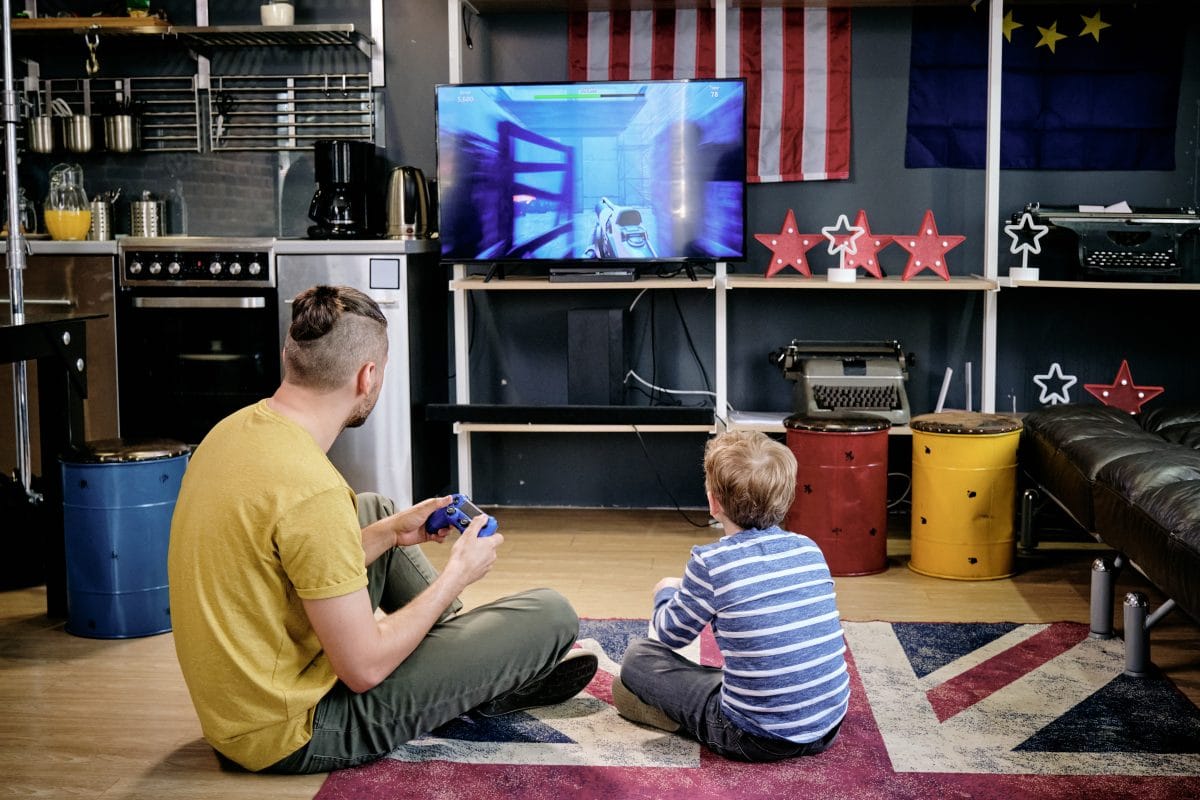
“The home is where the heart is, and soon it would be where the game is. We were not just creating entertainment systems; we were architecting the future of human leisure.” – Ralph Baer, reflecting on the home gaming revolution.
When I think about the evolution of gaming, the shift from public arcades to private home entertainment stands out as one of the most remarkable transformations in entertainment history.
It wasn’t just about technology, it reshaped how families interacted, how children spent their free time, and how society viewed interactive media.
Suddenly, gaming wasn’t something you had to leave home to enjoy, it was right there in the living room.
Picture this: It’s the early 1970s. Arcades are buzzing with the sounds of Pong, Space Invaders, and Pac-Man. Kids (and adults) line up with pockets full of quarters, feeding machines for just a few minutes of playtime. But what if you didn’t have to leave your house? What if you could have that same excitement right in your living room?
That was the dream. And it was about to become reality.
The transition from arcade gaming to home consoles wasn’t just a technological leap, it was a cultural earthquake. Suddenly, gaming wasn’t just for teenagers hanging out in dimly lit arcades. It was for families, for friends, for anyone who wanted to play whenever they felt like it.
But how did we get here?
The Visionary: Ralph Baer and the Brown Box
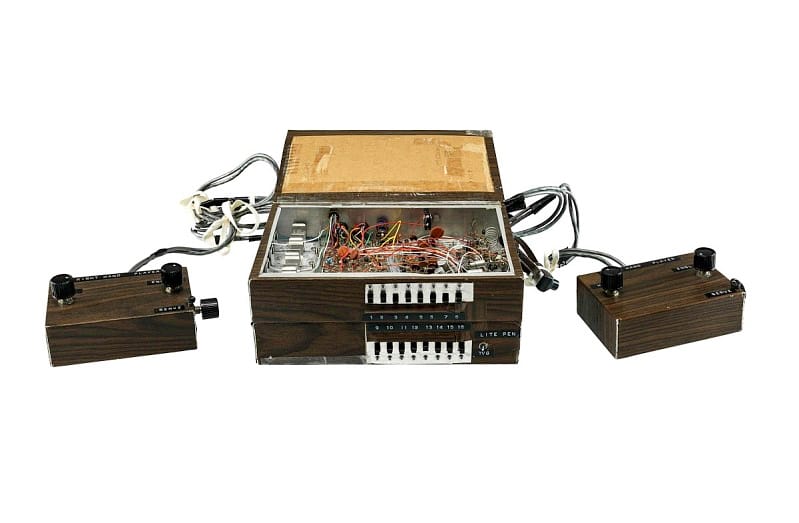
The home gaming revolution owes much to one visionary, Ralph Baer. His journey began with a simple notebook entry in 1966: “Build a game into a TV set.” Such a simple idea required six long years of development, countless prototypes, and plenty of determination to overcome doubts from industry peers.
Ralph, born in Germany in 1922, fled Nazi persecution to America as a teenager. His sheer determination and remarkable talent in engineering led him to Sanders Associates, where his deep understanding of television engineering helped him realise his groundbreaking concept.
The Brown Box:
The “Brown Box” was a fascinating invention. With 1960s technology constraints, Baer’s team crafted a device capable of simple graphics and interactive play without expensive computer hardware.
Here’s what made it tick:
- Processor: Discrete logic circuits (no microprocessor)
- Memory: None (hardwired games)
- Display: Standard black-and-white TV set
- Controls: Two three-position switches per controller
- Games: 12 built-in variations like tennis and hockey
- Power: 120V AC adapter
- Manufacturing Cost: Just $25 (in 1971)
The Magnavox Odyssey: The First Home Console Hits Shelves
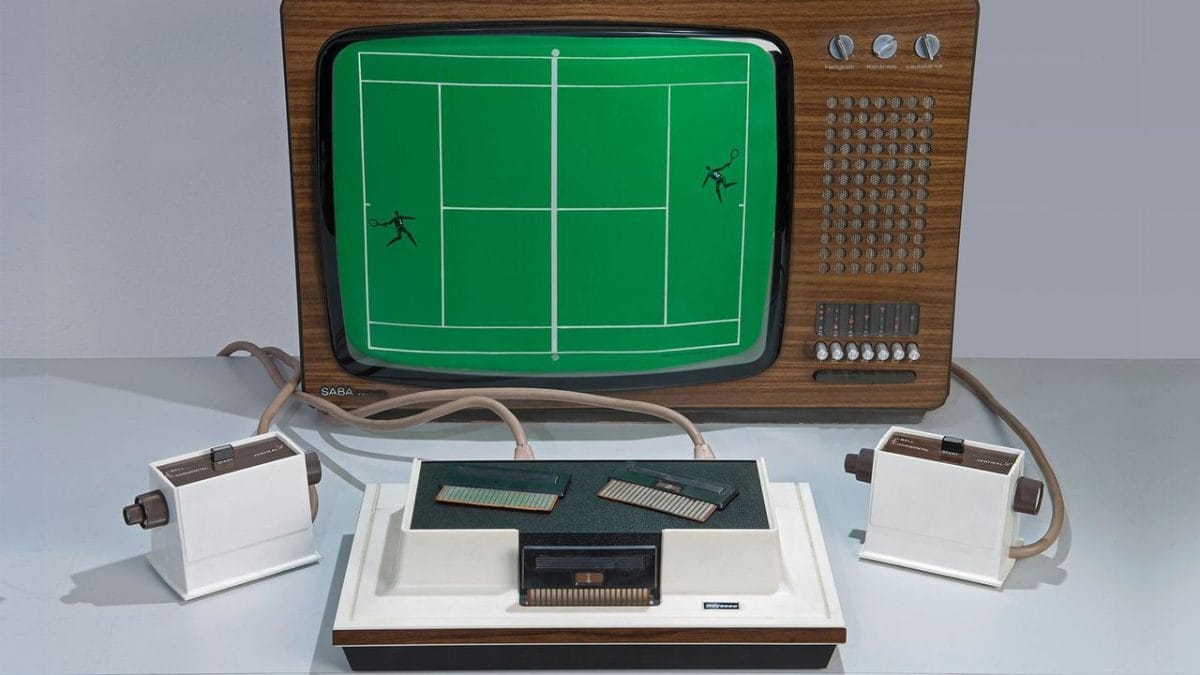
In 1972, Magnavox licensed Baer’s invention and released the Odyssey, the world’s first home gaming console. Priced at $100 (about £600 today), it wasn’t cheap but it offered something revolutionary: unlimited gaming at home.
Marketing Challenges (and Mistakes)
Magnavox made one big blunder: They implied the Odyssey would only work with Magnavox TVs, which scared off potential buyers. Despite this, the console sold 330,000 units in its first year, proving that people wanted home gaming.
Here’s how sales went in those early years:
| Year | Units Sold | Cumulative Sales | Market Penetration |
| 1972 | 100,000 | 100,000 | 0.1% |
| 1973 | 150,000 | 250,000 | 0.3% |
| 1974 | 100,000 | 350,000 | 0.4% |
| 1975 | 50,000 | 400,000 | 0.5% |
(Source: Magnavox Consumer Electronics Division Reports)
The Odyssey wasn’t perfect, but it started the revolution.
The Atari 2600: Defining the Console Experience
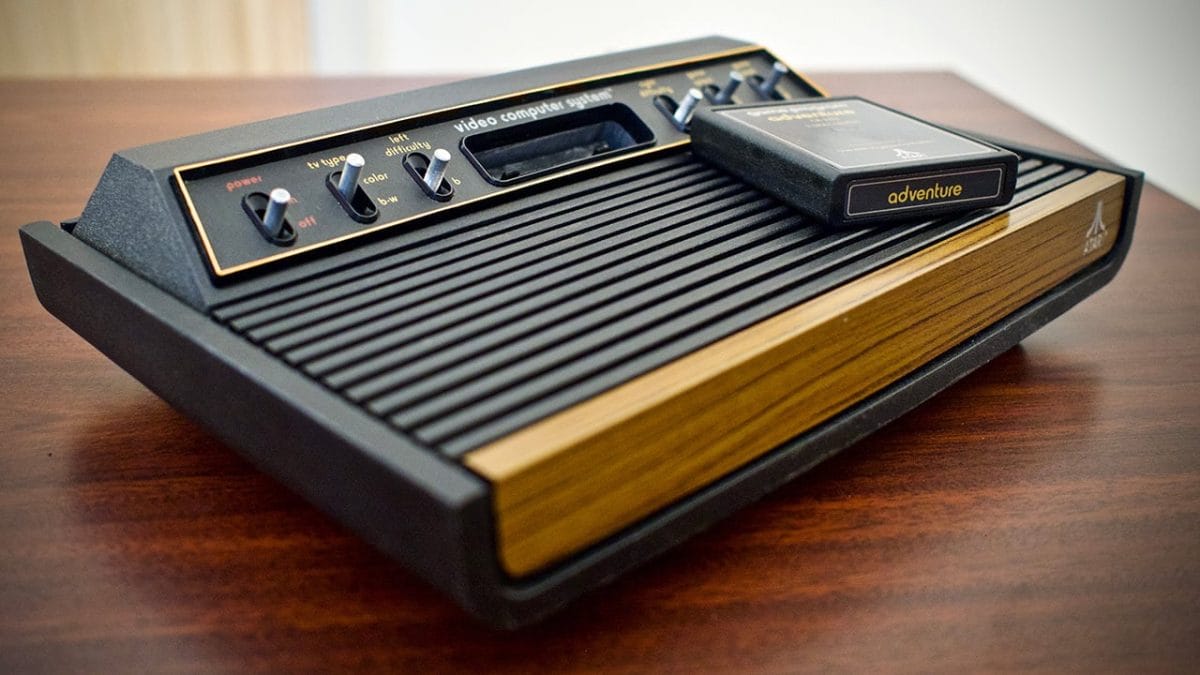
If the Odyssey was the first step, the Atari 2600 (released in 1977) was the giant leap. Originally called the Video Computer System (VCS), it didn’t just play games it defined what a console should be.
This simple idea separated software from hardware, reshaping the entire industry.
Atari 2600 Specifications:
- Processor: MOS 6507 (1.19 MHz)
- Memory: 128 bytes RAM, 4KB ROM
- Display: 160×192 pixels, 128 colours
- Sound: 2-channel audio
- Controls: Joystick, single button
- Cartridge Capacity: 4KB (expandable)
- Launch Price: $199 (~£1,200 today)
Remarkably, despite modest specs, the 2600 remained popular until 1992, proving gameplay trumped graphics.
The golden age of home gaming
Between 1977 and 1982, gaming entered its golden era.
The Atari 2600 sold over 30 million units globally, cementing gaming as mainstream entertainment.
Three games defined this golden age:
- Adventure (1979): Introduced the first “Easter egg,” inspiring open-world gaming.
- Pac-Man (1982): Sold over 7 million copies; addictive gameplay overcame technical limitations.
- Pitfall! (1982): Demonstrated home consoles’ capabilities with innovative gameplay and smooth animation.
The Birth of Third-Party Gaming
The 2600’s success attracted talented programmers who wanted to create games for the system. However, Atari’s policy of not crediting game developers led to the departure of key talent, including David Crane, Larry Kaplan, Alan Miller, and Bob Whitehead, who founded Activision in 1979.
Activision’s formation was revolutionary, it was the first third-party console game developer, establishing the principle that hardware manufacturers did not need to control all software development.
This decision would prove crucial to the industry’s long-term growth and creativity.
Atari initially sued Activision, claiming that third-party development violated their intellectual property. The legal battle lasted three years and ended with a settlement that established the precedent for third-party development.
This victory democratised game development and led to an explosion of creativity and innovation.
The Great Video Game Crash of 1983
It’s 1983, and the gaming industry is flying high.
Atari’s a household name, kids are playing consoles, and arcade hits are moving into living rooms.
Then, boom, the whole thing collapses.
What went wrong?
Three big mistakes:
- Too Many Consoles, Too Little Sense: By 1983, the market was flooded, Atari, Coleco, Intellivision, and a dozen others were all fighting for attention. Consumers were confused. Did a game work on their system? Who knew? It was like the Wild West, but with more joysticks.
- Terrible Games Everywhere: Companies got greedy. They rushed out awful games, buggy, boring, sometimes downright unplayable. The infamous E.T. the Extra-Terrestrial game (made in five weeks) was so bad, Atari reportedly buried unsold copies in a desert.
- Retailers Said, “No More!”: Stores were stuck with shelves of unsold cartridges. They slashed prices, then gave up entirely. Gaming sections vanished. The industry’s lifeline was cut.
The Aftermath:
- Revenue dropped from $3.2 billion to $100 million in just three years.
- Over 30 companies went bankrupt.
- 75% of industry jobs disappeared.
- 90% of retail gaming sections closed.
Gaming was dead… until Nintendo showed up in 1985 with the NES and saved the day.
But that’s another story.
The lesson?
Quality beats quantity. And maybe don’t bury your mistakes in the desert.
How Gaming Invaded Our Living Rooms
Let’s be honest, before home consoles, gaming was a lonely affair. You’d feed quarters into arcade machines, play for three minutes, then slink away when you lose. But when the Atari 2600 crashed into living rooms, something magical happened: gaming became a family affair.
Suddenly, parents were trash-talking kids in Pong. Siblings teamed up in Adventure. Friends gathered for marathon Pac-Man sessions.
Research from the early ‘80s shows these home sessions lasted 45 minutes on average, compared to arcades’ quick-hit 3-4 minute games. That’s the difference between a fast-food snack and a three-course gaming feast.
The clever tricks behind the magic
Here’s the wild part: These social revolutions happened on a machine with less power than your microwave. The Atari 2600 had:
- 128 bytes of RAM (yes, bytes—not GB, not MB)
- Graphics made of blocky squares and flickering sprites
- Sound that went blip and bloop
Yet developers turned these limitations into superpowers. They created:
- Visual shorthand: A square = a hero. A blob = a dragon. Your imagination filled the gaps.
- Addictive gameplay: No fancy cutscenes, just pure “one more try” magic.
- Shared experiences: That janky joystick became a family heirloom.
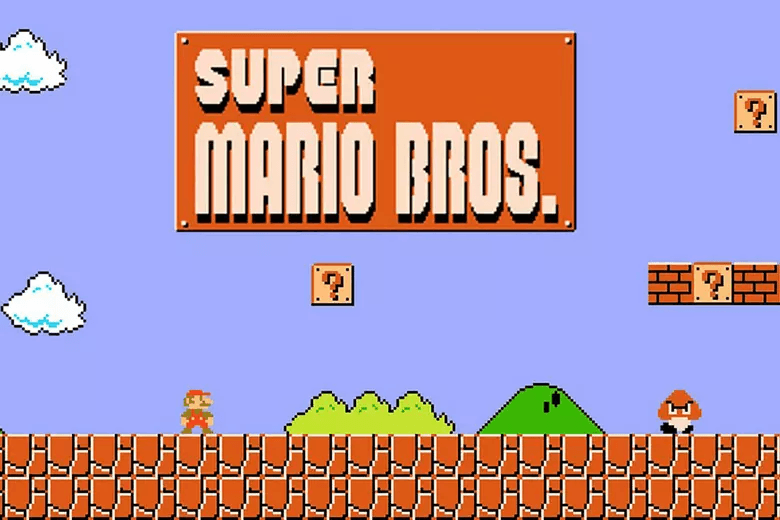
These constraints forced creativity, and trained a generation of developers who’d later build classics like Super Mario Bros. and Zelda.