
So, you wanna get good at the classic snake game, huh? It seems simple enough – just guide a growing snake around a screen, gobbling up dots and trying not to crash. But anyone who’s played for more than a few minutes knows there’s more to it. Getting those really high scores takes some smart moves and a bit of practice. This article is all about giving you the lowdown on how to level up your snake game skills and start racking up those impressive numbers. Let’s get into it!
Key Takeaways
- Start slow and get a feel for how the snake moves before trying fancy stuff.
- Learn how to turn corners well without hitting yourself or the walls.
- Think ahead about where you’re going to move your snake, don’t just react.
- Use the edges of the screen to your advantage; they can be like safe zones.
- Practice a lot! The more you play the snake game, the better you’ll get at it.
Understanding the Core Mechanics of Snake Game
Brief Overview of Snake Game
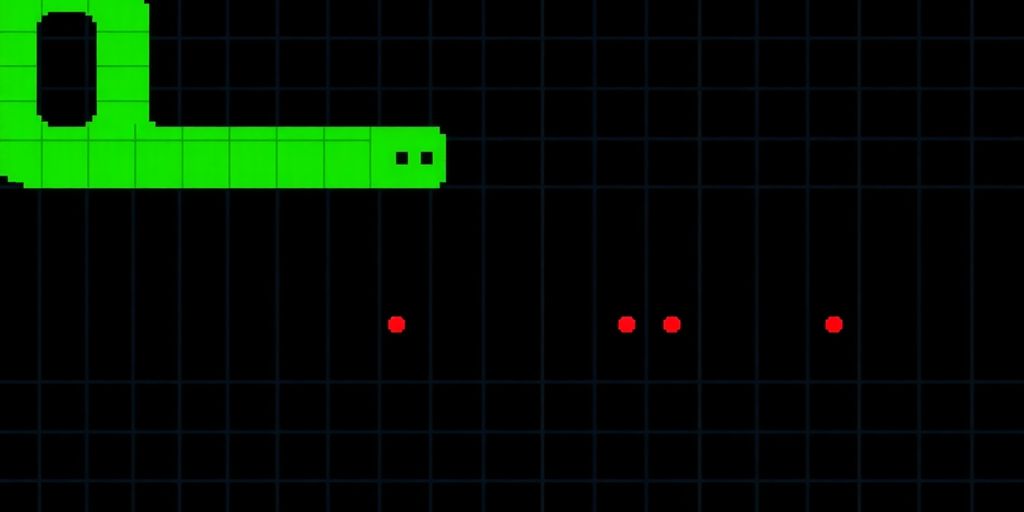
Okay, so the Snake game seems simple, right? You’re a snake, you eat dots, you get longer. But there’s more to it than that. The core idea is to control a continuously moving snake, guiding it to eat food items (usually dots or apples) that appear randomly on the screen. Each time the snake eats, it grows in length, making it harder to maneuver. The game ends when the snake collides with the walls or itself. It’s a test of reflexes, planning, and a bit of luck.
Why High Scores Matter in Snake Game
Why even bother chasing a high score? Well, for some, it’s pure bragging rights. For others, it’s about personal improvement and seeing how far you can push your skills. A high score shows you’ve mastered the game’s mechanics, developed good strategies, and can react quickly to changing situations. Plus, let’s be honest, it’s just satisfying to see your score climb higher and higher. It’s a simple game, but the pursuit of a high score adds a layer of depth and challenge that keeps people coming back.
The Importance of Continuous Movement
One of the most important things to understand about Snake is that the snake is always moving. You can’t stop it, and you can only control the direction it turns. This continuous movement is key to both the challenge and the strategy of the game. You need to plan your moves in advance, thinking several steps ahead to avoid running into walls or your own tail. Mastering this constant motion is the first step to becoming a Snake master. It’s all about anticipating where you’ll be and making quick decisions to keep the snake alive and growing.
Understanding the continuous movement is important. It forces you to think ahead and plan your route. This constant motion is what makes the game challenging and requires quick thinking and precise control.
Mastering Basic Movement and Control
Starting Slowly and Steadily
When you first start playing Snake, it’s tempting to go all-out, trying to gobble up every dot in sight. But trust me, that’s a recipe for disaster. The best approach is to begin with slow, deliberate movements. Think of it like learning to drive a car; you wouldn’t start by speeding down the highway, right? Instead, focus on getting a feel for the controls and how the snake responds to your commands. This helps build muscle memory and prevents those early, frustrating crashes. I remember when I first started, I kept bumping into the walls because I was too eager. Slowing down made a huge difference.
Practicing Cornering Techniques
Cornering is where a lot of players mess up. It’s easy to misjudge the distance and end up running headfirst into the wall or your own body. One thing that helped me was visualizing the snake’s path a few steps ahead. Try to anticipate where the snake will be after each move, especially when approaching a corner. Another good practice is to use small, incremental adjustments to your direction. Instead of making sharp, sudden turns, try easing into the corner with a series of smaller movements. This gives you more control and reduces the risk of oversteering. It’s like parallel parking; small adjustments are key!
Utilizing Screen Edges Effectively
Screen edges can be your best friend or your worst enemy in Snake. Many beginners see them as obstacles to avoid at all costs, but with a little practice, you can turn them into strategic assets. One common tactic is to use the edges to create safe zones. For example, if you’re feeling boxed in, you can guide the snake along the edge of the screen, giving yourself a clear path in one direction. Just be careful not to get trapped in a corner! Another useful technique is to use the edges to set up tail-chasing maneuvers. By positioning the snake near the edge, you can create a predictable path for it to follow, making it easier to control its growth. It’s all about thinking ahead and using the environment to your advantage.
Mastering the basics of movement and control is like learning the alphabet before writing a novel. It might not seem glamorous, but it’s the foundation upon which all your future success will be built. Take the time to practice these techniques, and you’ll be well on your way to becoming a Snake master.
Strategic Planning for Optimal Growth
Arranging Your Path in Advance
Okay, so you’re not just mindlessly munching dots, right? Think of it like chess, but with a snake. Planning several moves ahead is key. Don’t just react to the next dot; anticipate where the next few dots might lead you. This involves considering the snake’s current length and the available space. Are you boxing yourself in? Can you create a larger loop to maximize space later? It’s all about foresight. This is where you start to separate the casual players from those chasing high scores. It’s not just about surviving; it’s about setting yourself up for success several moves down the line. Think long term, not just short term.
Implementing the Tail-Chasing Plan
This is a classic strategy, and for good reason: it works. Once your snake gets long enough, you can effectively loop it around itself, creating a safe zone within the snake’s body. This allows you to control the play area and avoid accidental collisions with the walls. Here’s how to do it:
- Grow your snake to a decent length (at least half the screen).
- Start looping the snake around itself, leaving a one-block gap between the head and the tail.
- Continue to circle, eating dots within the loop. This keeps the snake growing and the loop intact.
The tail-chasing strategy is not foolproof. You need to maintain constant awareness of the snake’s position and adjust the loop as needed. One wrong move, and you’re toast.
Recognizing Dot Placement Patterns
Dots don’t appear randomly. Okay, maybe they seem random, but there’s often a subtle logic to their placement. Pay attention to where the dots tend to spawn. Do they favor open areas? Do they appear more frequently near walls? Understanding these patterns can give you a significant advantage. For example, if you notice that dots often appear in clusters, you can position your snake to quickly grab multiple dots in a row. It’s about developing a sense for the game’s rhythm and using that knowledge to plan strategically. It’s like learning the patterns of a slot machine – not that I’m advocating gambling, of course. But the principle is the same: observation and exploitation.
Advanced Maneuvers for High Scores
Applying the Loop Strategy
The loop strategy is a classic for a reason. It involves circling around a specific area of the game board, effectively trapping food within your snake’s own body. This can be especially useful in smaller game environments where space is limited. The key is to maintain a consistent loop, leaving just enough room for the food to spawn inside. Be careful though, one wrong move and you’ll be eating yourself!
Executing the S-Curve Maneuver
The S-curve is a more dynamic maneuver, useful for quickly changing direction and grabbing food that’s slightly out of reach. It involves making a series of gentle curves, resembling the letter ‘S’, to cover more ground without making sharp, risky turns. This is great for when you need to adjust your position quickly without sacrificing control. It’s all about smooth transitions and anticipating where the next food item will appear.
Controlling Snake Speed Precisely
Speed control is a subtle but important skill. While you can’t directly control the snake’s speed in most versions of the game, you can influence it by how aggressively you pursue food. Sometimes, slowing down and planning your moves is better than rushing headfirst into a potential collision. Mastering this balance between speed and precision is what separates the good players from the great ones.
Knowing when to speed up and when to slow down is key. It’s not just about reflexes; it’s about thinking ahead and making smart choices. Sometimes, the best move is to wait and let the food come to you.
Maximizing Your Score Through Smart Play
Making Good Use of Power-Ups
Power-ups can really change the game in Snake. If your version has them, learn what each one does and when to grab it. Some might speed you up, which can be risky but also let you cover more ground quickly. Others might slow the game down, giving you more time to plan. Knowing how to use these at the right moment is key to a higher score.
Avoiding Self-Collisions
This sounds obvious, but it’s the most common mistake. As the snake gets longer, it’s harder to keep track of where your tail is. Always be aware of your snake’s body. Try to plan moves that give you space to react if things get tight. A good strategy is to think a few steps ahead, especially in crowded areas of the game board. It’s better to miss a food item than to crash into yourself.
Prioritizing Larger Food Items
If you have a choice between a small food item and a larger one, go for the larger one. Larger items give you more points and help you grow faster. This can lead to a higher score in the long run. Keep an eye out for these special items and adjust your path to grab them when possible. Sometimes, it’s worth taking a small risk to get a big reward.
Playing smart in Snake isn’t just about reflexes; it’s about making good decisions. Think about each move, use power-ups wisely, and always be aware of your snake’s position. These small things can add up to a big difference in your final score.
Developing a Winning Mindset
The Crucial Role of Timing
Timing is super important in Snake. It’s not just about reacting fast, but also about predicting what’s going to happen next. Think about where the next dot will appear and how you can get there without boxing yourself in. A split-second decision can be the difference between a new high score and a game over. It’s like a dance, and you need to learn the rhythm.
Setting Personal Objectives
Don’t just aim for the highest score right away. Start small. Maybe your first goal is to reach a length of 50. Then 100. Then try to survive for 5 minutes without hitting a wall. Breaking it down into smaller, achievable goals makes the game less overwhelming and keeps you motivated. Plus, you’ll learn a lot along the way. Here are some example objectives:
- Reach a snake length of 75.
- Survive for 3 minutes on the fastest speed setting.
- Successfully execute the loop strategy 5 times in a single game.
The Power of Consistent Practice
There’s no substitute for practice. The more you play, the better you’ll get. You’ll start to recognize patterns, anticipate movements, and react faster without even thinking about it. Don’t get discouraged if you don’t see results immediately. Just keep playing, keep learning, and keep having fun. Over time, you’ll be amazed at how much you improve.
It’s easy to get frustrated when you keep crashing, but try to see each game as a learning opportunity. What could you have done differently? What mistakes did you make? By analyzing your gameplay, you can identify areas for improvement and develop strategies to avoid those mistakes in the future.
Conclusion
So, that’s pretty much it for getting good at Snake. It’s all about being precise, being able to change what you’re doing, and having a plan. These tips and ideas should help you get better, whether you just play sometimes or you’re really into it and want to win against other people. Just remember, every Snake game is a little different, so be open to new things and want to learn. If you keep practicing and don’t give up, you’ll see yourself getting better and better scores in the Snake game world. So, get ready to move towards winning and have fun every step of the way!
Frequently Asked Questions
How can I avoid getting stuck in corners?
To avoid getting stuck in corners, always plan your next few moves. Try to stay more in the middle of the game area and think ahead about your turns so you don’t get boxed in.
What’s the best way to survive for a long time?
For staying alive longer, focus on smooth, steady movements instead of quick, sharp turns. Go for the bigger food pieces to grow faster, and try to make big loops to keep space open.
What’s the main goal of the Snake game?
The main goal is to eat as much food as you can without hitting walls or your own tail. The more food you eat, the longer your snake gets, and the higher your score will be.
Can I pause the Snake game?
Yes, you can usually pause the game. Look for a pause button or press the ‘P’ key on your keyboard. This lets you take a break without losing your progress.
What are some tricks for getting a really high score?
To get a really high score, you need to be good at steering, plan your moves, and use the whole game area. Don’t be afraid to go near the edges. Also, try to eat food quickly when it appears.
My snake moves too fast, how can I control it better?
If your snake is moving too fast, try to slow down your button presses. Some games let you change the speed setting. A slower speed gives you more time to react and plan your moves.