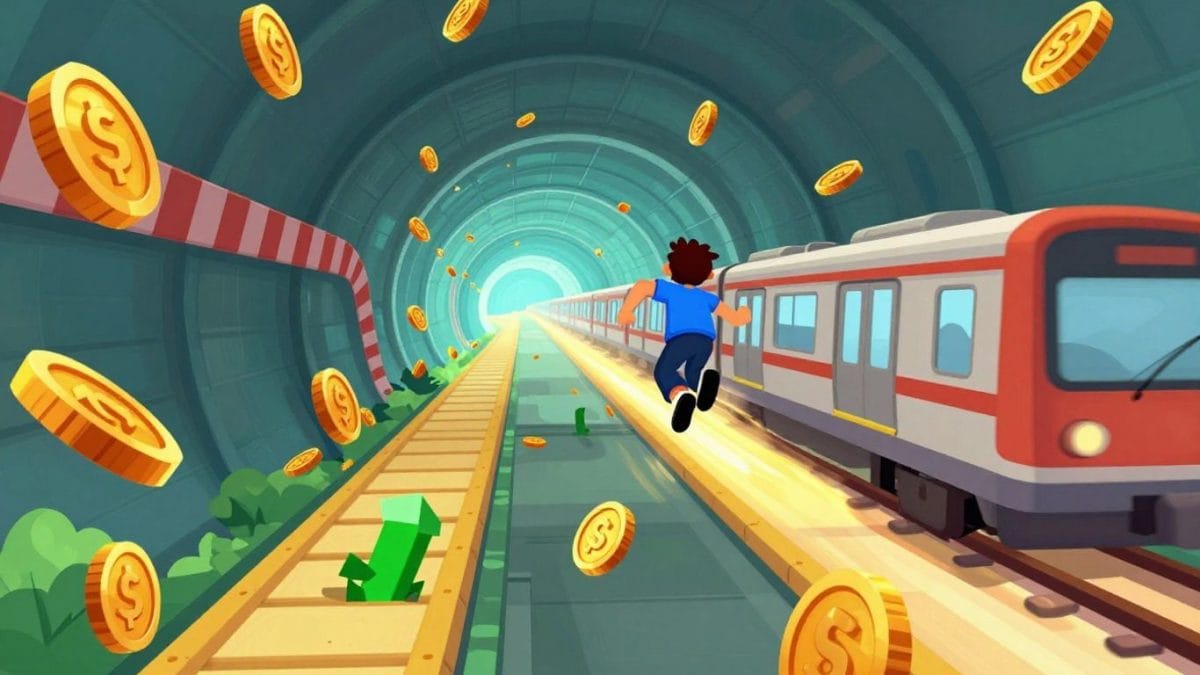
So, you want to get better at that subway run game, huh? It’s one of those games that looks simple but can really get you hooked. You’re running, swiping, trying to grab coins, and then bam! You hit a train. It happens to everyone. The speed picks up, things get a bit crazy, and suddenly your high score feels miles away. But don’t sweat it. We’ve put together some straightforward tips that might just help you stop crashing so much and maybe, just maybe, get that score you’ve been chasing. It’s all about knowing the game a little better.
Key Takeaways
- Get the hang of the basic swipes for moving left, right, up for jumps, and down for slides. Timing these moves, especially as the game speeds up, is super important for not crashing.
- Power-ups like the Jetpack to fly over stuff, the Coin Magnet to grab coins from afar, and the 2x Multiplier to boost your score are your best friends. Use them at the right times.
- Hoverboards are lifesavers! Use them when you’re about to crash, especially during tough parts or when the game gets really fast. You can even chain them for extra protection.
- Missions and daily challenges are not just for fun; they help you increase your score multiplier. Prioritize completing them to get more points per action. Keys can help you skip tough missions.
- Practice is key. The more you play, the better your reflexes will get, and you’ll start to see patterns in the obstacles. Try to focus and avoid distractions when you play.
Mastering the Subway Run Game Controls and Movement
Getting a handle on how to move your character is the first step to really playing Subway Run well. It might seem simple with just swipes, but there’s a bit more to it than just pushing your finger around the screen. You’ve got to be quick and know exactly what to do.
Understanding Basic Swipes for Navigation
At its core, Subway Run uses simple swipe gestures to control your character. These are your main tools for staying out of trouble on the tracks. You’ll use them constantly, so getting them down is key.
- Swipe Left/Right: This is how you switch between the three lanes. If a train is coming in your current lane, a quick swipe to the left or right will move you to an adjacent, hopefully clear, lane. It’s your primary way to dodge.
- Swipe Up: This makes your character jump. You’ll use this to hop over low obstacles like barriers or small gaps in the track.
- Swipe Down: This makes your character slide. This is important for getting under things like low-hanging signs or the legs of approaching trains.
The goal is to make these swipes second nature, so you don’t even have to think about them.
The Importance of Precise Timing for Jumps and Slides
Just knowing the swipes isn’t enough; you have to use them at the right moment. A jump that’s too early or too late, or a slide that doesn’t happen in time, will end your run pretty quickly. The game speeds up, and the gaps between obstacles shrink, making timing even more critical.
- Jumping: You need to swipe up just as you’re about to hit the obstacle you need to clear. If you jump too soon, you’ll land before it and still crash. Jump too late, and you won’t get over it.
- Sliding: Similarly, for slides, you need to initiate the downward swipe just before you reach the obstacle. Sliding too early might mean you pop back up before you’re clear, and sliding too late means you’ll hit it.
It’s all about reacting to what’s right in front of you, and sometimes, what’s just a little bit ahead.
Adapting Movement to Increasing Game Speeds
As you run further, the game doesn’t just throw more obstacles at you; it makes everything happen faster. This means your reaction time needs to improve, and your swipes need to become more decisive. What worked when you were going slow won’t cut it when the trains are whizzing by at top speed.
- Anticipate: Start looking ahead on the track. Don’t just focus on your character. Seeing an obstacle coming gives you more time to prepare the correct swipe.
- Commit to Swipes: Hesitation is your enemy. Once you decide to swipe left, right, up, or down, commit to it. A half-hearted swipe might not register properly or might be too slow.
- Lane Changes: When changing lanes at high speeds, try to make clean, single swipes. Multiple quick swipes can sometimes confuse the game or lead to unintended lane changes.
The key to mastering movement is practice. The more you play, the more your brain and fingers will learn to coordinate with the game’s increasing pace. You’ll start to develop an instinct for when to jump, when to slide, and when to switch lanes without consciously thinking about it. It’s like learning to ride a bike; at first, it’s wobbly, but soon it feels natural.
Strategic Utilization of Power-Ups in Subway Surfers
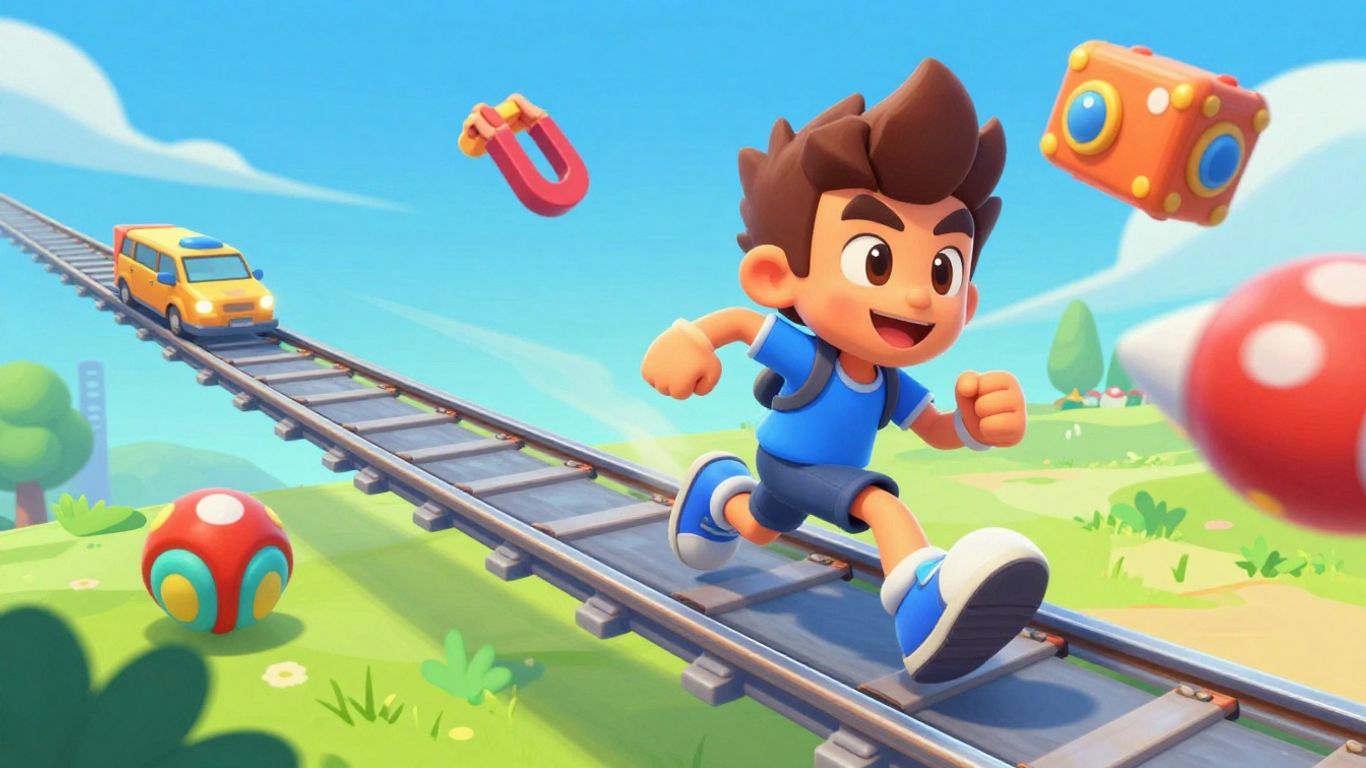
Power-ups are like little helpers that can really change how a run goes in Subway Surfers. Knowing when to grab them and, more importantly, when to use them, makes a big difference between a quick crash and a new high score. Let’s break down the main ones.
Jetpack: Navigating Above Obstacles
The Jetpack is your ticket to flying. When you activate it, you lift off the ground and soar above all the tracks, trains, and barriers for a short time. This is super useful when the game starts speeding up and dodging becomes a real challenge. It’s also a great way to collect a bunch of coins without any risk of hitting something. Think of it as a safe zone where you can just focus on grabbing those shiny coins.
Coin Magnet: Maximizing Coin Collection Efficiency
This power-up is all about making your coin collection easier. Once activated, the Coin Magnet pulls in all the coins within its range, no matter which lane they’re in. This means you don’t have to swerve as much to get them. It’s especially helpful when you see a long stretch with lots of coins but also a lot of obstacles. You can concentrate on staying alive while the magnet does the work of gathering your loot.
2x Multiplier: Accelerating Score Accumulation
If your goal is to get the highest score possible, the 2x Multiplier is your best friend. For a limited time, it doubles whatever score you earn. This means every coin you collect, every obstacle you dodge, and every mission you complete is worth twice as much. The real trick is to use this when your score multiplier is already high from completing missions. That way, you’re multiplying an already boosted score, leading to massive point gains very quickly.
Using power-ups isn’t just about activating them; it’s about timing. A well-timed Jetpack can save you from a tricky situation, while a Coin Magnet can fill your pockets during a chaotic moment. The 2x Multiplier is best saved for when you’re already on a roll, multiplying your success.
Here’s a quick look at how long some common power-ups last:
| Power-Up | Duration (Seconds) |
|---|---|
| Jetpack | 10 |
| Coin Magnet | 10 |
| 2x Multiplier | 10 |
| Hoverboard | 10 |
Leveraging Hoverboards for Survival and Score Enhancement
Hoverboards are your get-out-of-jail-free cards in Subway Surfers. They’re not just for avoiding that one pesky train; they’re a strategic tool that can keep your run going and your score climbing.
Strategic Activation for Critical Moments
Think of a hoverboard as a temporary shield. You get about 30 seconds of protection from any collision. The trick is knowing when to use it. Don’t just pop it the second you get it. Save it for those moments when the speed picks up dramatically, or you see a really tricky series of obstacles coming up that you’re not sure you can dodge. It’s your safety net, giving you a chance to breathe and make it through a tough spot.
Chaining Hoverboards for Continuous Protection
If you’ve managed to collect multiple hoverboards, don’t be afraid to use them back-to-back. This is especially useful during the later stages of a run when the game is moving at its fastest. Activating one right after another creates a continuous bubble of safety, letting you focus purely on collecting coins and maintaining your momentum without the constant fear of crashing.
Exploring Hoverboard-Specific Abilities
Did you know some hoverboards do more than just protect you? While many offer standard protection, others might come with unique perks. Some could give you a slight speed boost, while others might last a little longer. It’s worth experimenting with different hoverboards when you get them to see if any fit your playstyle better. Finding one that complements how you already play can make a big difference in those longer, high-score attempts.
The Role of Missions and Daily Challenges
Missions and daily challenges are more than just side activities; they’re a core part of progressing in Subway Surfers. Think of them as your personal training program, designed to boost your score multiplier and reward you with helpful items. Focusing on these tasks can seriously speed up your journey from a beginner runner to a high-score contender.
Prioritizing Missions for Multiplier Progression
Your score multiplier is your best friend when it comes to racking up big numbers. It starts low, but every time you complete a set of missions, it permanently increases. This means every coin you grab and every obstacle you dodge is worth more points. It’s a snowball effect for your score!
- Target missions that fit your current run: Some missions are easier to finish in a single attempt, like collecting a specific number of coins or performing a certain number of jumps. Prioritize these to get that multiplier boost faster.
- Don’t ignore missions that seem tough: Even if a mission feels challenging, it’s still contributing to your multiplier. Sometimes, a little persistence or a well-timed hoverboard can make all the difference.
- Use keys wisely: If you’re really stuck on a mission and it’s holding back your multiplier progress, consider using keys to skip it. It’s better than wasting time and potentially losing a good run.
Maximizing Rewards from Daily Challenges
Daily challenges are quick wins that offer a variety of rewards. These can include coins, keys, hoverboards, and score boosters. They’re a fantastic way to get resources that help you in your regular runs and with completing other missions.
- Log in daily: Even if you don’t have much time to play, try to complete at least one daily challenge. The rewards add up over time.
- Check the rewards before starting: See what the daily challenge offers. If it’s a reward that will significantly help your current goals, focus on completing it.
- Combine challenges: Sometimes, a daily challenge might align with a regular mission you’re working on, allowing you to progress on both fronts simultaneously.
Efficient Use of Keys for Mission Advancement
Keys are a precious resource. While they can be used to continue a run after a crash, their strategic use in missions can be just as impactful. If a mission is proving to be a major roadblock, preventing you from leveling up your multiplier, spending a few keys to skip it can be a smart move. This keeps your momentum going and ensures you’re always working towards that higher multiplier, which is the ultimate goal for serious players.
Missions and daily challenges are the engine that drives your score multiplier forward. By strategically focusing on completing them, you not only earn valuable in-game currency and items but also significantly increase the point value of every action you take during your runs. It’s a system designed to reward consistent play and smart decision-making.
Developing Reflexes and Track Awareness
Subway Surfers is a game that really tests how fast you can react and how well you pay attention to what’s happening around you. As the game goes on, things get faster and faster, and if you’re not ready, you’ll hit a train or a barrier before you know it. It’s not just about swiping; it’s about knowing when to swipe.
Gradual Adaptation to Increasing Game Speed
At the start of a run, the game moves at a pretty chill pace. This is your chance to get a feel for the controls and the general flow of the track. Don’t try to do too much too soon. Just focus on making clean moves – a simple jump over a low barrier, a slide under a pole. As the speed picks up, you’ll notice the game doesn’t suddenly throw impossible challenges at you. Instead, the obstacles come a bit quicker, and the gaps between them shrink. Your brain and your fingers will start to adjust naturally. Think of it like learning to ride a bike; you start on a flat path, and eventually, you can handle bumpy trails.
The Impact of Regular Practice on Reaction Time
Honestly, there’s no magic trick to getting faster reflexes. It just comes down to playing a lot. Every time you run, you’re training your brain to recognize patterns and your hands to respond without you even having to think about it. You’ll start to see a line of barriers and instinctively know you need to slide, or you’ll see a gap between trains and know exactly when to jump. It’s like practicing a musical instrument; the more you play, the more fluid and automatic your movements become.
Here’s a quick look at how practice helps:
- Pattern Recognition: You start seeing common obstacle setups and knowing what to do.
- Muscle Memory: Your fingers learn the swipes for jumps, slides, and lane changes.
- Anticipation: You begin to predict what’s coming next, not just react to what’s right in front of you.
Minimizing Distractions for Optimal Focus
This is a big one. If you’re playing while watching TV, chatting with someone, or even just thinking about what you’re having for dinner, you’re going to crash. The game demands your full attention, especially when it gets fast. Try to find a quiet spot where you can really concentrate on the screen. It might seem obvious, but cutting out outside noise and visual clutter makes a huge difference in how long you can last and how high your score can get.
When the game speeds up, even a split second of distraction can mean the end of your run. It’s all about staying present and focused on the track ahead. The more you practice this focus, the better you’ll perform when the pressure is on.
Understanding and Exploiting Track Patterns
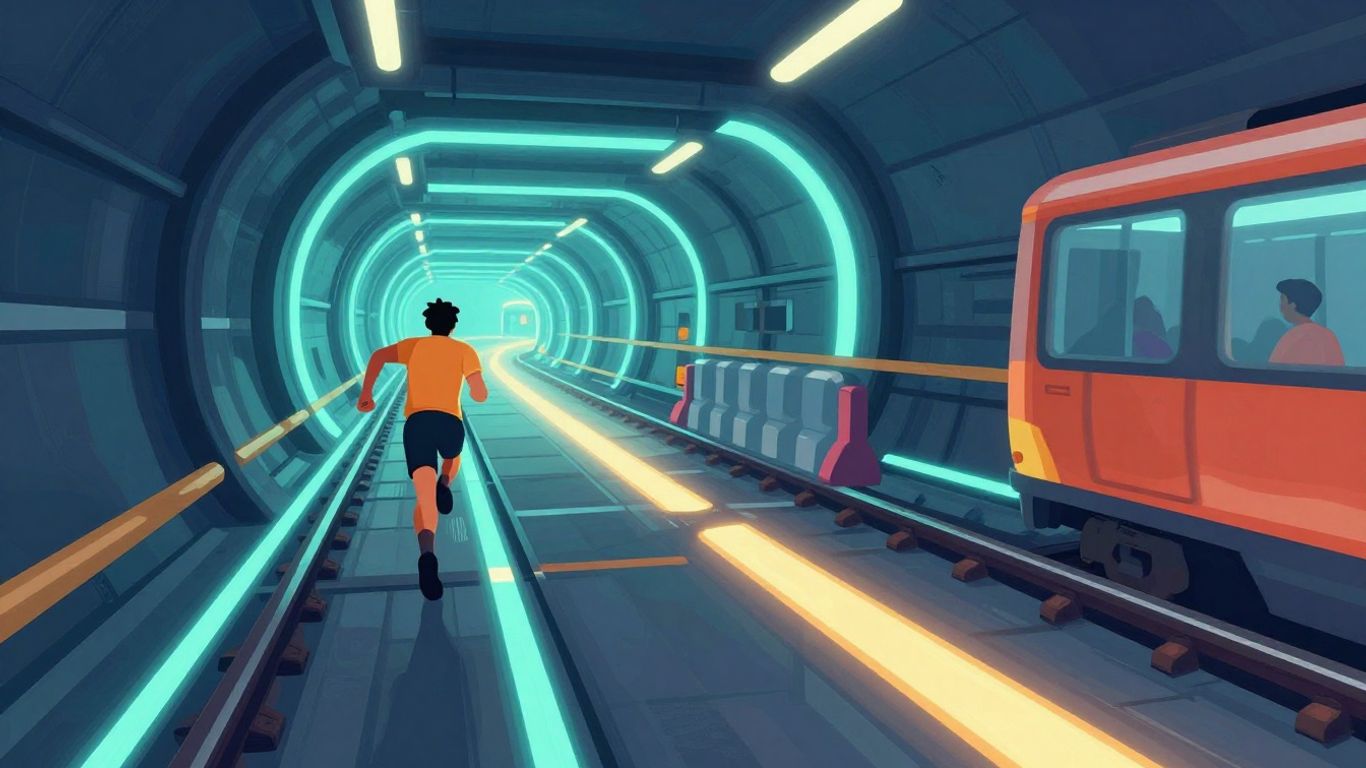
The subway tracks might seem a bit random at first glance, but there’s a rhythm to them if you look closely. The game designers have put in a lot of recurring sequences that, once you spot them, can really help you stay on your feet. It’s like learning the dance steps to a song – once you know them, you can move much more smoothly.
Recognizing Recurring Obstacle Sequences
Over time, you’ll start to see certain combinations of obstacles pop up again and again. For instance, you might notice a specific pattern of barriers followed by a jump, or a series of trains that require quick lane changes. Paying attention to these common setups is the first step. It’s not about memorizing every single inch of track, but about recognizing the general flow.
Here are some common patterns to watch for:
- Train Clusters: Multiple trains appearing in quick succession, often requiring rapid lane switches.
- Barrier Gauntlets: Sections with several barriers lined up, demanding precise jumps or slides.
- Tunnel Transitions: The shift from open track to a tunnel, which often has unique obstacle placements just before or inside.
- Gap Jumps: Openings in the track that require a well-timed jump.
Looking Ahead for Proactive Decision-Making
Instead of just staring at your character, try to shift your focus a bit further down the track. This gives you more time to react. If you see a series of obstacles coming up, you can start planning your moves – maybe a jump followed by a slide, or a lane change. This forward-thinking approach means you’re less likely to be caught off guard.
Think of it like driving: you don’t just look at the bumper in front of you; you look down the road to see what’s happening ahead. This allows for smoother adjustments and fewer sudden braking moments.
Memorizing Obstacle Timings for Advanced Play
As the game speeds up, the timing between obstacles gets tighter. While recognizing patterns is great, truly advanced players start to internalize the rhythm. You’ll begin to feel when a jump is needed or when a slide is the best option, almost instinctively. This comes with practice, of course. The more you play, the more your brain builds an internal clock for the game’s pace.
The key to mastering the track isn’t just about seeing what’s there, but anticipating what’s next. By learning the common sequences and looking ahead, you transform from a reactive player into a proactive one, significantly reducing the chances of a crash and keeping your score climbing.
This kind of pattern recognition and timing is what separates a good run from a great one. It takes a bit of effort to notice these things, but the payoff in terms of longer runs and higher scores is definitely worth it.
Maximizing Score Through Coins and Multipliers
To really rack up a high score in Subway Surfers, you need to pay close attention to two things: coins and your score multiplier. They work together, and getting them both right can make a huge difference in how well you do.
The Significance of Comprehensive Coin Collection
Coins aren’t just for buying stuff; they directly add to your score. The more coins you grab, the higher your score gets. It sounds simple, but it’s easy to miss coins when you’re focused on dodging trains. Always try to grab every coin you see. Using the Coin Magnet power-up is a big help here, as it pulls in coins from nearby lanes, making sure you don’t miss out.
Strategies for Increasing Your Score Multiplier
Your score multiplier is probably the most important thing for getting a really big score. It starts at x1, but you can increase it by completing sets of missions. Each mission set you finish bumps your multiplier up by one, all the way to x30. This means every point you earn is multiplied by 30! It takes time to complete missions, but it’s worth it.
- Focus on missions: Always check what missions are active. Some are easier than others, so try to tackle the ones you can complete quickly.
- Don’t be afraid to skip: If a mission feels impossible, you can spend coins to skip it. This is often better than getting stuck and not progressing your multiplier.
- Prioritize multiplier missions: Missions that involve collecting items or performing specific actions are usually easier to complete than those requiring long distances.
Benefits of Coin-Doubling Upgrades
Beyond collecting coins during a run, you can make them worth more. There are upgrades available in the shop that permanently double the coins you collect. Investing in these upgrades means that every coin you pick up, and every coin collected by power-ups like the Coin Magnet, is worth twice as much. This speeds up how quickly you can buy other upgrades and power-ups, which in turn helps you get more coins and a higher multiplier.
Getting a high score isn’t just about speed and reflexes; it’s about smart resource management. Coins and multipliers are your primary tools for boosting your score significantly. Make every coin count and focus on increasing that multiplier whenever possible.
Here’s a quick look at how upgrades can help:
| Upgrade Category | Benefit |
|---|---|
| Score Multiplier | Permanently increases score earned. |
| Coin Magnet | Collects coins from adjacent lanes. |
| 2x Multiplier Power-up | Temporarily doubles your current multiplier. |
| Coin Doubler | Permanently doubles all coins collected. |
Character and Board Selection for Optimal Performance
Choosing the right character and the perfect hoverboard can really make a difference in your Subway Surfers runs. It’s not just about looking cool; these choices can actually give you an edge, helping you score higher and survive longer.
Choosing Characters with Advantageous Abilities
Different characters come with their own little perks. Some might give you a slightly higher jump, which can be handy for clearing certain obstacles without needing to slide. Others might offer a small boost to your hoverboard’s duration or make coin collection a bit easier. It’s worth experimenting to see which character’s unique trait best fits how you play. For instance, if you find yourself struggling with low barriers, a character with a better jump might be your go-to.
- Look for passive bonuses: Some characters offer small, constant advantages like a slightly longer hoverboard time.
- Consider movement perks: Abilities that affect jump height or slide distance can change how you approach certain obstacles.
- Special event characters: Keep an eye out for characters released during limited-time events, as they often have unique and powerful abilities.
Selecting Boards That Complement Your Playstyle
Hoverboards are your lifesavers, and picking the right one can be just as important as picking the right character. While all hoverboards offer a temporary shield against a crash, some have extra tricks up their sleeve. You might find boards that give you a bit more speed, smoother handling, or even a special effect when activated. If you tend to play aggressively and push your limits, a board that offers extra protection or a speed boost might be ideal. If you’re more about steady collection, a board that extends your run time could be better.
The right board can turn a near-disaster into a minor inconvenience.
| Board Type | Primary Benefit | Secondary Benefit (if applicable) |
|---|---|---|
| Standard | Crash protection | N/A |
| Speed Boost | Increased speed | Crash protection |
| Extended Duration | Longer hover time | Crash protection |
| Coin Magnet Boost | Enhanced coin pickup | Crash protection |
Utilizing Limited-Time Characters and Boards
Game developers often introduce special characters and hoverboards during holidays or other events. These are usually available for a limited time and can offer some really impressive abilities that aren’t found on the regular roster. If you see a character that can double your score for a short period or a board that lets you phase through obstacles, it’s probably a good idea to try and grab them. They can be fantastic for setting new personal bests or completing difficult missions.
Don’t overlook the temporary boosts that special events provide. These can offer a significant advantage for a limited time, allowing you to achieve scores or complete challenges that might otherwise be out of reach. Make sure to check the event details and try to acquire these unique items when they become available.
Wrapping Up Your Subway Surfers Journey
So, you’ve learned a lot about getting better at Subway Surfers. It’s not just about swiping fast; it’s about knowing when to use those power-ups, understanding the track, and keeping your reflexes sharp. Remember to focus on those missions to boost your score multiplier and don’t forget about the hoverboard for those tricky moments. With a bit of practice and by putting these tips into action, you’ll definitely see your scores climb. Now go out there and see how high you can get!
Frequently Asked Questions
What are the basic controls in Subway Surfers?
It’s pretty simple! You swipe left or right to change lanes, swipe up to jump over things, and swipe down to slide under them. Getting good at these quick moves is the first step to a high score.
How do I get a higher score faster?
The best way is to increase your score multiplier. You do this by finishing missions. The higher your multiplier, the more points you get for everything you do, making your score jump up much quicker.
What are power-ups and how should I use them?
Power-ups are special items that help you. The Jetpack lets you fly over everything, the Coin Magnet grabs coins from all lanes, and the 2x Multiplier doubles your points for a short time. Use them when you need them most, like during tough parts or when you want to grab lots of coins.
Why are hoverboards important?
Hoverboards are like a second chance! They save you if you bump into something, stopping you from crashing right away. It’s smart to save them for when the game gets super fast or when you see a really tricky obstacle coming up.
How can I get better at dodging obstacles?
Practice is key! The more you play, the better your reflexes will get. Also, try to look ahead on the track to see what’s coming. You’ll start to notice patterns in how the obstacles appear, which helps you get ready before they even show up.
Should I focus on missions or just collecting coins?
Both are super important! Missions help you level up your score multiplier, which is huge for high scores. Coins let you buy upgrades and power-ups that help you survive longer and collect more. Try to do both whenever you can!