

The call of the wild is strong in the world of tabletop roleplaying games. Many of us love the idea of venturing into uncharted territories, facing down nature’s fury, and relying on our wits to survive. But sometimes, making that wilderness travel exciting and meaningful for players can be a real challenge. This guide is here to help you bring those untamed lands to life and create unforgettable survive rpg adventures.
Key Takeaways
- When running a survive rpg, think about how players move across the map, both big picture (macronavigation) and small scale (micronavigation).
- Give players real choices during travel. How they get from point A to point B should matter and affect the story.
- New character options, like the Shifter class or specific archetypes, can really help players feel like survival experts in your survive rpg.
- Don’t forget about the world itself. Strange places and fey encounters can make travel more interesting than just rolling for random fights.
- Using existing resources, like the Dungeon Master’s Guide or older survival guides, can give you great ideas for your survive rpg, but remember to make it your own.
Embracing The Wild: Core Mechanics Of Survive RPG
The wild is more than just a setting; it’s a character in itself, full of challenges and opportunities. To truly master survival RPGs, we need to understand the fundamental mechanics that bring these untamed lands to life. This involves how players interact with the world on both grand and small scales, and how their choices shape their journey.
Navigating The Campaign World: Macronavigation
Macronavigation is about the big picture – getting your party from one major point to another across the game world. Think of it as plotting a course across continents or vast wildernesses. It’s about making strategic decisions on the overall route, considering factors like distance, known hazards, and the general direction of travel. This isn’t about the nitty-gritty of every step, but rather the overarching plan.
- Choosing the primary route: Will you take the mountain pass, the forest trail, or follow the river?
- Estimating travel time: How long will this major leg of the journey take, and what resources will it consume?
- Identifying major obstacles: Are there known dangers like monster territories, harsh weather zones, or impassable terrain ahead?
The core of macronavigation is making informed decisions about the journey’s broad strokes.
Tactical Movement: Micronavigation
Micronavigation zooms in on the details. Once you’ve decided on your general path, micronavigation deals with the moment-to-moment decisions made during travel. This is where the immediate environment becomes critical. It involves how the party moves through a specific area, reacts to immediate threats, and manages their resources on a smaller scale.
Consider these aspects:
- Pacing: Should the party move quickly to cover ground, or travel slowly and cautiously to avoid detection?
- Scouting: How will you check for ambushes or hidden paths in the immediate vicinity?
- Resource management: How are rations, water, and light sources being used minute-to-minute?
This level of detail transforms travel from a simple narrative transition into an active part of the gameplay, where every decision can have immediate consequences.
The Role Of Player Agency In Exploration
Player agency is the heart of any good RPG, and it’s especially vital in survival games. Players should feel like their choices genuinely matter and influence the outcome of their journey. This means giving them meaningful decisions to make, not just in combat or social encounters, but during exploration and travel.
- Meaningful choices: Present players with options that have tangible risks and rewards, such as choosing between a shorter, more dangerous path or a longer, safer one.
- Consequence: Ensure that decisions have follow-through. If players choose to ignore a warning about a dangerous swamp, they should face the consequences of that choice.
- Information gathering: Allow players to actively seek information about their surroundings, which can then inform their decisions.
When players have a real say in how they navigate the wilderness and overcome its challenges, the experience becomes far more engaging and memorable.
Character Options For Wilderness Survival
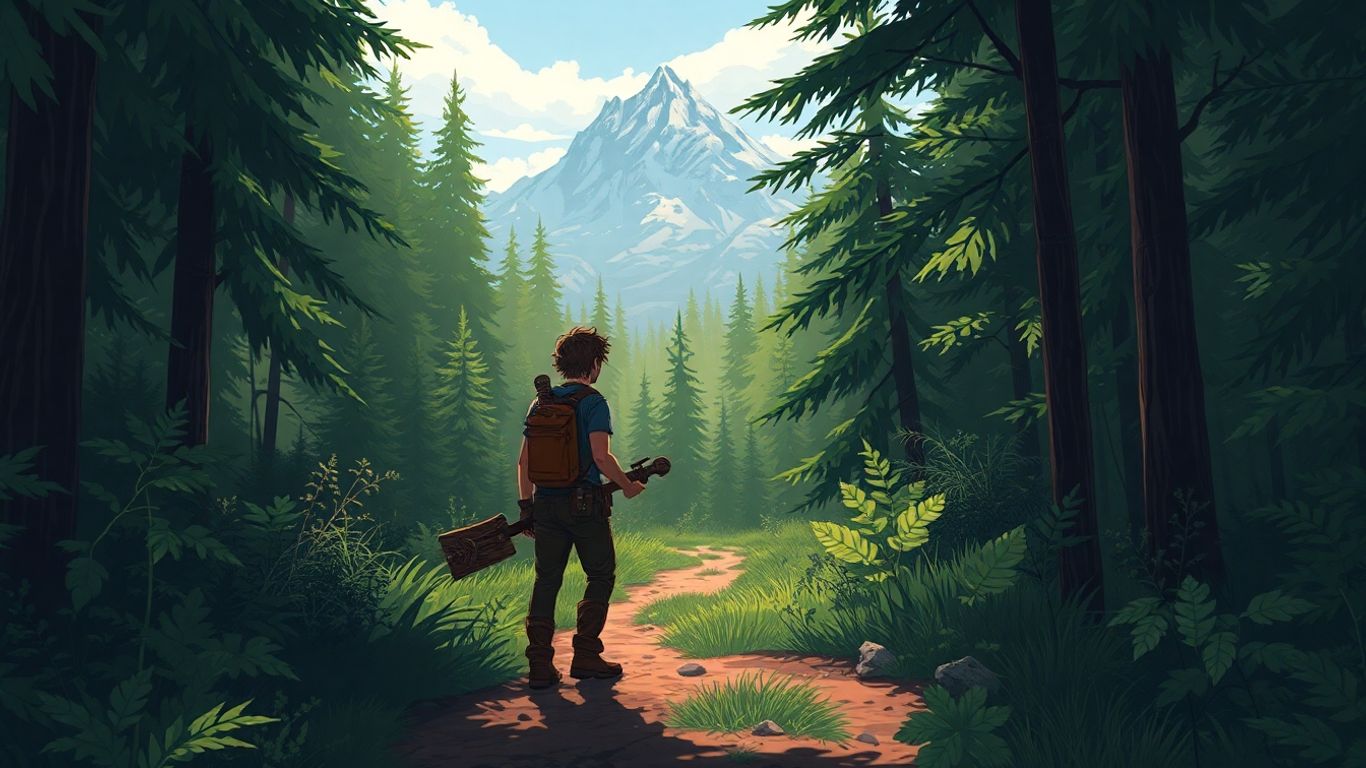
When you’re building characters for a game focused on surviving the wild, you want options that really lean into the theme. It’s not just about having a fighter or a wizard; it’s about having characters whose abilities and backgrounds make sense for someone who spends their days (and nights) out in the elements. Think about what makes a character feel like they belong in a harsh, untamed environment. This means looking beyond standard classes and considering how to tailor existing ones, or even introducing new ones, to fit the survival narrative.
Introducing The Shifter Class
For games that want to really push the animalistic side of survival, a Shifter class can be a fantastic addition. This type of character draws power from the natural world, often manifesting as physical transformations or heightened senses that mimic beasts. They might have abilities that allow them to move faster through difficult terrain, communicate with animals, or even take on aspects of different creatures to overcome specific challenges. The Shifter is all about embracing the primal connection to nature.
Archetypes For Enhanced Survival
Even if you’re sticking to more traditional classes, there are plenty of ways to create survival-focused characters. Archetypes can completely change how a class plays, giving them a wilderness bent. For example:
- Ranger: Instead of just being a tracker, an archetype could make them a master of camouflage, able to blend into any environment, or a survivalist who can find food and water where others would starve.
- Druid: An archetype might focus on the more practical, less overtly magical aspects of druidism, like shaping the land for shelter, understanding weather patterns, or becoming a living encyclopedia of edible and medicinal plants.
- Rogue: A ‘Wilderness Scoundrel’ archetype could focus on skills like trap-making, foraging for supplies in urban ruins or natural settings, and moving unseen through dense undergrowth.
- Barbarian: A ‘Primal Survivor’ archetype might gain benefits from enduring harsh weather, tracking prey across vast distances, or even drawing strength from the very land they inhabit.
Feats And Magic Items For Nature Mastery
Beyond class features and archetypes, feats and magic items are excellent tools for customizing characters for wilderness survival. These can provide small but significant boosts that make a big difference:
- Feats: Consider feats that improve navigation, allow characters to forage more effectively, grant resistance to environmental hazards (like extreme cold or heat), or improve their ability to track creatures. A feat that lets a character always know which way is north, or one that grants advantage on checks to find shelter, can be incredibly useful.
- Magic Items: Items like a ‘Cloak of the Chameleon’ that aids in stealth, ‘Boots of the Pathfinder’ that ignore difficult terrain, or a ‘Bag of Endless Rations’ that magically replenishes food can be game-changers. More subtle items, like a ‘Whistle of the Wild’ that summons a helpful animal companion or a ‘Salve of the Earth’ that heals wounds using natural poultices, also fit perfectly.
When designing character options for a survival game, always ask: ‘How does this help the character stay alive and thrive when they’re far from civilization?’ The answer should be clear and impactful, making players feel more capable in the face of the wilderness’s challenges.
Designing Engaging Wilderness Encounters
Wilderness encounters can sometimes feel like a chore, a simple obstacle between the players and their next objective. But they don’t have to be. By thinking creatively about how you present challenges and opportunities in the wild, you can turn travel into a memorable part of the game. It’s about more than just rolling for random monsters; it’s about weaving the environment and the journey itself into the narrative.
Crafting Compelling Travel Montages
Sometimes, the most efficient way to handle travel is through a montage. This isn’t about skipping the journey, but about summarizing it effectively. Instead of playing out every single day, you can describe the passage of time, highlighting key events or changes in scenery. This keeps the pace up, especially when the journey itself isn’t the main focus. Think of it like a movie montage: a quick series of scenes showing progress, challenges overcome, and perhaps a hint of what’s to come.
- Focus on Sensory Details: Describe the biting wind, the oppressive humidity, or the scent of pine needles. What do the characters see, hear, and feel?
- Introduce Minor Events: A sudden downpour, a close call with a territorial animal, or a chance encounter with a traveling merchant can add flavor without bogging down the game.
- Show Character Interaction: Use the montage to reveal how the characters are coping with the journey, their relationships, and their growing fatigue or determination.
Hex-Crawl Mechanics And Random Tables
For groups that enjoy a more structured approach to exploration, hex-crawls offer a fantastic framework. This method breaks the wilderness down into a grid of hexagonal spaces, each representing a certain area. Players navigate from hex to hex, and you can use random tables to populate these spaces with encounters, discoveries, or environmental challenges. This approach gives players a clear sense of progress and allows for emergent storytelling.
The key to a good hex-crawl is making each hex feel distinct and potentially interesting.
Here’s a sample table for populating a forest hex:
| Encounter Type | Probability | Description |
|---|---|---|
| Wildlife | 40% | A herd of deer, a territorial bear, or a flock of birds. |
| Natural Hazard | 25% | A sudden ravine, a patch of quicksand, or a dense fog. |
| Point of Interest | 20% | An ancient ruin, a hidden grove, or a strange natural formation. |
| Monster | 15% | Goblins, wolves, or a more dangerous beast appropriate for the area. |
Integrating Fey Realms And Strange Terrain
Don’t be afraid to introduce the truly alien into your wilderness. The Feywild, for instance, can warp perceptions, alter time, and present challenges that defy normal logic. Similarly, strange terrain—like crystal forests, floating islands, or lands where gravity behaves oddly—can create unique and memorable obstacles. These elements push players to think outside the box and adapt to unpredictable circumstances.
When designing these areas, consider how the environment itself can act as an antagonist. Is the air thick with illusions? Does the ground shift unpredictably? Are the plants sentient and hostile? Making the wilderness an active participant in the adventure makes it far more engaging than simply a backdrop for combat.
These encounters, whether through narrative montages, structured hex-crawls, or surreal landscapes, are your tools for making the wilderness a dynamic and exciting part of your game. They provide opportunities for problem-solving, character development, and unforgettable adventures.
Leveraging Existing Resources For Survive RPG
When you’re building a new survival RPG campaign, you don’t have to start from scratch. There’s a whole world of game materials out there that can give you a solid foundation or just some great ideas to get you going. Think of it like foraging for supplies in the wilderness – you can find useful things if you know where to look.
Utilizing The Dungeon Master’s Guide
The Dungeon Master’s Guide (DMG) is your first stop for general advice. It has sections on exploration, travel, and even random encounters. While it might not be specifically about survival, many of its principles can be adapted. For instance, the DMG offers tables for weather and random events that can easily be tweaked to represent the challenges of a harsh environment. You can also find guidance on setting DCs for skill checks, which is super handy when you’re figuring out how hard it should be to find food or navigate.
Adapting Older Edition Survival Guides
Don’t overlook older editions of roleplaying games. Many older survival guides, like those from AD&D, are packed with detailed rules for tracking, foraging, and environmental hazards. These can be a goldmine of inspiration. You might find specific tables for different terrains or detailed rules for how exhaustion affects characters. You can often take these mechanics and simplify them for your current game system. For example, a complex exhaustion system from an older edition could be boiled down to a few simple conditions in your game.
Exploring Community Resources And Forums
Online communities are fantastic places to find homebrew content and advice. Websites, forums, and social media groups dedicated to RPGs often have discussions about survival mechanics. Players and GMs share their own house rules, encounter ideas, and even full campaign modules. You might find someone has already created a detailed foraging table for a specific biome or a set of rules for managing resources that fits exactly what you’re looking for. It’s like having a whole group of fellow adventurers ready to share their hard-won knowledge.
Mastering The Art Of Overland Travel
Getting your characters from point A to point B in a roleplaying game can be a real challenge. It’s easy to just say, “You travel for three days and arrive,” but that often skips over a lot of potential fun. Making overland travel interesting means giving players choices that matter. It’s about more than just moving across a map; it’s about the journey itself becoming part of the story.
The ‘Choose Your Path’ Method
This approach puts the planning and decision-making squarely in the players’ hands. Instead of a single, set route, you present them with multiple options for their journey. Each path might have different risks, rewards, or environmental challenges. This method is great because it really highlights the planning phase. Players have to think about what supplies they need, what dangers they might face, and which route best suits their characters’ skills and goals. It’s like setting up a complex plan, and the fun comes from seeing how it plays out, especially when things don’t go exactly as expected.
- Presenting Options: Offer distinct routes with varying travel times and potential hazards.
- Information Gathering: Allow players to seek rumors or scout ahead to learn about each path.
- Resource Management: Track supplies, fatigue, and morale, which can be affected by the chosen route.
The success of this method hinges on how well you prepare. Having a detailed map with clear routes and knowing enough about the world to provide meaningful clues about each path is key. Without this information, player choices can feel random rather than informed.
Balancing Planning And Execution
Once the players have chosen their path, you have to decide how to play out the journey. You could go hex-by-hex, rolling for random encounters and playing them out as they happen. This gives a lot of detail and tactical depth. Alternatively, you can combine the planning aspect of the ‘Choose Your Path’ method with a more narrative approach, like a travel montage. This lets you keep the story moving while still acknowledging the journey. It’s a good way to show the passage of time and highlight key events without getting bogged down in every single step.
- Full Play-Out: Detail each day or segment of travel, including random encounters and skill checks.
- Narrative Montage: Summarize longer travel periods, focusing on significant events or character interactions.
- Hybrid Approach: Use montages for uneventful stretches and play out more dangerous or important segments in detail.
When To Narrate And When To Play Out Travel
Deciding whether to narrate travel or play it out moment by moment depends on your group and your game. If time is short or the journey isn’t central to the current story, a quick narration can get you to the next plot point faster. However, if the journey itself is meant to be a challenge, or if you want to explore the characters’ struggles with the wilderness, playing out the travel in more detail can be very rewarding. The goal is to make travel feel meaningful, not like a chore.
- Narrate When: The journey is routine, time is limited, or the focus is on the destination.
- Play Out When: The journey presents unique challenges, characters are low on resources, or you want to build atmosphere and tension.
- Consider Skill Challenges: Use a series of skill checks to represent the journey, allowing players to overcome obstacles through their abilities rather than direct combat.
Bringing The Wilderness To Life
Making the wilderness feel alive in your game is about more than just describing trees and rivers. It’s about making the environment a character in itself, one that players interact with and react to. This means highlighting the unique abilities of certain classes and presenting players with choices that have real weight, all while keeping the world feeling believable.
Highlighting Ranger and Druid Abilities
Classes like Rangers and Druids are intrinsically tied to the natural world. Their abilities should shine when the party is deep in the wilds. Think about how a Ranger’s knowledge of terrain can help them find safe passage or how a Druid’s connection to animals can provide warnings or aid. These aren’t just flavor abilities; they are practical tools for survival.
- Tracking and Navigation: Rangers can use their skills to follow trails, identify edible plants, and predict weather patterns, making travel smoother and safer.
- Animal Companionship: Druids and Rangers can call upon animal allies for scouting, combat, or even carrying supplies.
- Environmental Adaptation: Druids, in particular, can use their Wild Shape to overcome obstacles, whether it’s flying over a chasm or swimming across a river.
When players choose these classes, they are choosing to engage with the wilderness on a deeper level. Make sure their abilities are called upon and rewarded.
Creating Meaningful Choices In Travel
Travel shouldn’t just be a series of dice rolls or a narrated montage. It should present players with genuine decisions. Should they take the shorter, more dangerous path through the goblin-infested woods, or the longer, safer route that adds days to their journey? These choices impact resources, time, and potential encounters.
Consider a situation where the party needs to cross a mountain range. They have a few options:
- The High Pass: Quicker, but exposed to harsh weather and potential aerial predators. Requires survival checks for cold and endurance.
- The Forest Trail: Slower, with more opportunities for ambushes by forest creatures, but offers shelter and potential for foraging.
- The Underground Tunnels: Potentially the fastest, but fraught with the dangers of the Underdark, including creatures and environmental hazards like cave-ins.
Each choice should have consequences, pushing players to think strategically about their journey.
The Importance Of Verisimilitude In Survive RPG
Verisimilitude, or the appearance of being true or real, is key to making wilderness survival engaging. Players need to feel like their actions have logical outcomes within the game world. If they ignore warnings about a coming storm, they should face its consequences. If they carelessly waste their rations, they should feel the pangs of hunger.
The world should react to the players’ presence and their decisions. A forest that is constantly disturbed by a party’s passage might become more wary, with animals fleeing or predators becoming more aggressive. Conversely, a respectful approach might lead to unexpected aid or a sense of peace.
This attention to detail makes the wilderness more than just a backdrop; it makes it a living, breathing part of the adventure, where every decision, from setting up camp to choosing a direction, matters.
Embrace the Wild
So, we’ve looked at some really cool ways to bring the wilderness to life in your games. From the old-school hex crawls that made you really think about every step, to new classes like the shifter that let you become one with nature, there’s a lot to explore. It’s not just about getting from point A to point B; it’s about the choices players make along the way and how those choices shape their adventure. Whether you’re charting a course through dense forests or facing down desert storms, these new RPG experiences give you the tools to make every journey memorable. Get out there and see what you can discover.
Frequently Asked Questions
What makes a survival RPG exciting?
Survival RPGs are fun when players feel like their choices really matter. Giving them options for how they travel and explore, and letting those choices affect the game, makes the adventure much more engaging. It’s like choosing your own path in a choose-your-own-adventure book, but with more action and consequences.
How can a Dungeon Master make wilderness travel more interesting?
Instead of just saying ‘you travel for three days,’ DMs can make travel exciting by letting players plan their routes. This could involve choosing between a faster, more dangerous path or a slower, safer one. DMs can also use random events or challenges tied to the environment to keep players on their toes.
What’s the difference between ‘macronavigation’ and ‘micronavigation’?
Macronavigation is about the big picture – getting from one major location to another, like traveling across a whole continent. Micronavigation is about the smaller details, like moving through a specific forest or navigating a tricky mountain pass. Both are important for a complete wilderness experience.
Are there special character types for wilderness survival?
Yes! Some games have classes like Rangers or Druids who are naturally good at surviving in the wild. There are also special abilities, items, and even new character classes, like the ‘Shifter,’ that let players tap into animal powers or master nature’s challenges.
How can I use existing game books to help with wilderness adventures?
Many game rulebooks, like the Dungeon Master’s Guide, have sections with random tables and ideas for creating wilderness settings. You can also find inspiration by looking at older game guides or checking out online communities where other players share their own tips and adventures.
When is it okay to just describe travel instead of playing it out?
If traveling from one place to another doesn’t directly move the main story forward or create interesting choices for the players, it’s often best to just describe it quickly. This is called a ‘travel montage.’ However, if the journey itself is important or offers chances for cool decisions, it’s worth playing out in more detail.