
Gaming tech feels like it’s on fast-forward these days. In top esports, every millisecond and pixel counts. From trimming input lag to fresh VR headsets and haptic suits, 2025 is packed with gear that’d make even pros do a double take. Here’s a quick look at ten standout innovations changing competitive play.
Key Takeaways
- NVIDIA Reflex Low Latency SDK and Verizon 5G Ultra Wideband slash lag so your actions register almost instantly.
- AMD FidelityFX Super Resolution 3 teamed with the LG UltraGear OLED Flex 45 cranks up image quality without slowing down frame rates.
- Mobalytics Esports Analytics Platform plus the Tobii Eye Tracker 5 dish out heaps of player stats, helping teams spot weak points faster.
- Meta Quest 3 VR headset and the bHaptics Tactsuit X40 add sight and touch to matches, making you feel like you’re inside the game.
- Elgato Stream Deck Mk.2 and Unreal Engine 5 smooth out streaming and custom content creation, cutting setup headaches.
1. NVIDIA Reflex Low Latency SDK
NVIDIA Reflex is still a big deal in 2025. It’s not exactly new, but its impact on competitive gaming is undeniable. Basically, it’s a set of tools and technologies that game developers can use to reduce input lag. And less lag means faster reaction times, which can be the difference between winning and losing in fast-paced games.
The main goal of NVIDIA Reflex is to make the game feel more responsive. It achieves this by reducing the delay between when you click your mouse or press a key and when that action is reflected on the screen. It’s all about minimizing latency.
Here’s why it matters:
- Faster reaction times: Lower latency translates directly to quicker reactions.
- Competitive edge: In esports, even milliseconds matter.
- Smoother gameplay: Reduced lag makes the game feel more fluid and responsive.
NVIDIA Reflex isn’t just for pro gamers. Anyone who plays games can benefit from lower latency. It makes the whole experience more enjoyable. It’s one of those things you might not notice when it’s working, but you’ll definitely feel it when it’s not.
It’s pretty cool tech, and it’s become a standard feature in many popular esports titles. I expect it to stick around for a while.
2. AMD FidelityFX Super Resolution 3
AMD’s FidelityFX Super Resolution (FSR) tech keeps getting better, and version 3 is a big deal for esports. Basically, it’s all about making games run smoother and look better, without needing the most expensive graphics card. This is super important for competitive gaming, where every frame counts.
FSR 3 uses frame generation to boost frame rates, which can give players a competitive edge. It’s not just about making the game look pretty; it’s about making it more responsive.
Think of it like this:
- Higher frame rates mean less input lag.
- Better visuals help you spot enemies faster.
- Smoother gameplay reduces distractions.
FSR 3 is a game-changer because it makes high-performance gaming more accessible. You don’t need to spend thousands on a new graphics card to get a competitive experience. This levels the playing field and lets more people compete at their best.
Here’s a quick look at how FSR 3 might affect performance:
| Game | Resolution | FSR 2 Performance | FSR 3 Performance (Projected) |
|---|---|---|---|
| Example Game | 1080p | 60 FPS | 100+ FPS |
| Example Game | 1440p | 45 FPS | 75+ FPS |
| Example Game | 4K | 30 FPS | 50+ FPS |
Of course, these are just examples, and the actual performance will depend on the game and your hardware. But the potential is there for a significant boost. It’s something that esports pros and everyday gamers alike will want to keep an eye on.
3. Mobalytics Esports Analytics Platform
Mobalytics has been around for a while, but their focus on esports is really starting to pay off. They’re not just about giving players some basic stats; they’re building a platform that can give teams and coaches a real edge. It’s about understanding the game at a deeper level, and that’s where analytics comes in.
Mobalytics provides in-depth analysis of player performance, team strategies, and meta trends.
Think of it like this:
- It helps teams identify their strengths and weaknesses.
- It lets coaches create better training plans.
- It gives analysts the data they need to predict opponent strategies.
The platform uses machine learning to process huge amounts of game data, turning raw numbers into actionable insights. This means teams can make smarter decisions, both in and out of the game.
It’s not just for the pros, either. Even amateur teams can use Mobalytics to improve their game. The platform offers tools for scouting opponents, tracking progress, and even finding new players. As esports continues to grow, platforms like Mobalytics will become even more important for teams looking to stay ahead of the competition.
4. Meta Quest 3 VR Headset
The Meta Quest series has been making waves in the VR space for a while, and the Quest 3 is no exception. It’s not just about better graphics; it’s about how VR is becoming more accessible and useful for esports training and viewing. I remember when VR was just a gimmick, but now it’s actually changing how some teams practice.
The Quest 3 offers improved resolution and processing power, making VR esports experiences more immersive.
Here’s why it matters:
- Enhanced Training Simulations: Teams can use VR to simulate match scenarios, allowing players to practice strategies and reaction times in a controlled environment.
- Improved Spectator Experience: Fans can watch games from a player’s perspective, getting a closer look at the action.
- Accessibility: The Quest 3 is standalone, meaning no PC is required. This makes VR more accessible to a wider audience.
The Quest 3 isn’t just a gaming device; it’s a portal to new ways of experiencing and interacting with esports. It’s about making the games more real, both for the players and the fans. It’s pretty cool to see how far VR has come, and I’m excited to see where it goes next.
5. bHaptics Tactsuit X40 Haptic Suit
The bHaptics Tactsuit X40 is making waves in esports by adding a new layer of immersion. It’s a haptic suit designed to translate in-game actions into real-time tactile feedback. Imagine feeling the impact of a sniper shot or the rumble of an engine directly on your body. That’s the promise of the Tactsuit X40.
The suit uses 40 individual haptic points strategically placed around the torso and limbs to deliver precise and varied sensations. This level of detail is what sets it apart from earlier haptic devices. It’s not just about feeling a generic vibration; it’s about experiencing the nuances of the game world.
Here’s a quick look at some of the key features:
- 40 Haptic Points: Provides detailed and localized feedback.
- Wireless Connectivity: Ensures freedom of movement.
- Customizable Feedback: Allows players to adjust intensity and patterns.
- Cross-Platform Support: Works with PC, VR, and even some mobile games.
The integration of haptic feedback is more than just a gimmick; it’s about creating a deeper connection between the player and the game. This can lead to improved reaction times, better spatial awareness, and a more engaging overall experience. As esports continue to evolve, devices like the Tactsuit X40 will likely become more commonplace, blurring the line between the virtual and real worlds.
6. Tobii Eye Tracker 5
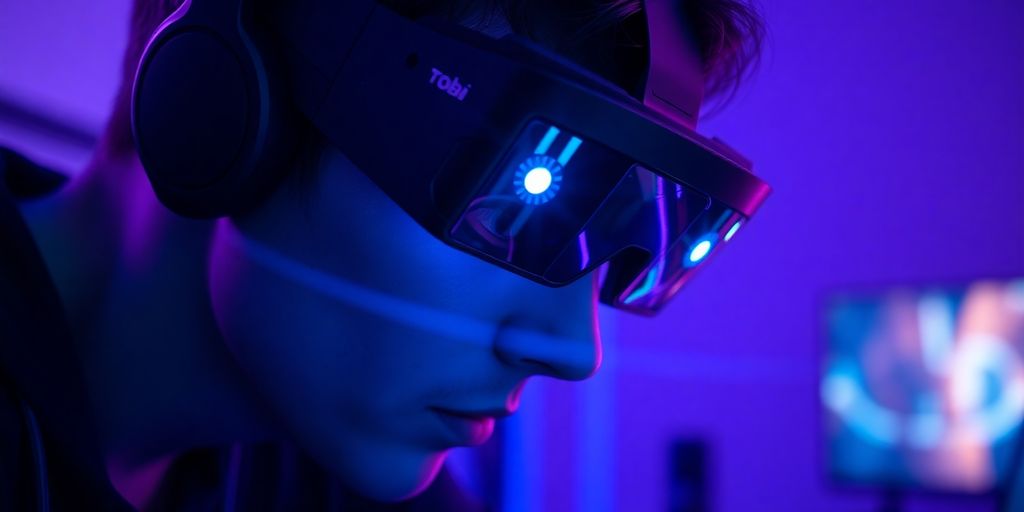
Okay, so the Tobii Eye Tracker 5 isn’t exactly new, but its integration into esports has really taken off. It’s not just a gimmick anymore; it’s becoming a serious tool for both players and viewers.
For players, the Eye Tracker 5 offers some interesting possibilities. It allows for hands-free camera control in games, which can free up your mouse hand for more important actions. Think about it: aiming and shooting while simultaneously controlling your view with your eyes. That’s a competitive edge right there.
But it’s not just about in-game advantages. Eye tracking data can also be used for:
- Analyzing player focus and attention during matches.
- Identifying areas where players tend to lose concentration.
- Developing personalized training programs to improve reaction time and awareness.
For viewers, the Eye Tracker 5 provides a more engaging experience. Imagine watching a pro player’s stream and seeing exactly where their attention is focused at any given moment. It gives you a better understanding of their decision-making process and strategy.
It’s kind of like having a window into their mind. You can see what they’re looking at, what they’re reacting to, and how they’re processing information. This adds a whole new layer of depth to esports broadcasts and makes them more exciting to watch.
Plus, with advancements in AI, we’re seeing more sophisticated applications of eye tracking data. For example, some platforms are using eye tracking to automatically generate highlights reels based on the most visually engaging moments of a match. Pretty cool, right?
7. Verizon 5G Ultra Wideband Network
Okay, so, Verizon’s 5G Ultra Wideband network is a big deal for esports in 2025. I mean, we’re talking about some serious speed and low latency, which is exactly what competitive gaming needs. Think about it: split-second decisions can make or break a match, and if your connection is lagging, you’re basically toast.
The main thing is that 5G Ultra Wideband offers way faster speeds and lower latency compared to older networks. This means less lag, smoother streaming, and a better overall experience for both players and viewers. It’s not just about playing games, though. It’s also about how people watch them. With 5G, streaming in high quality becomes way more reliable, even when you’re on the go.
Here’s a quick rundown of why it matters:
- Lower Latency: Reduces lag, giving players near-instant response times.
- Faster Download Speeds: Allows for quick game downloads and updates.
- Reliable Streaming: Provides stable, high-quality streams for viewers.
Honestly, I think a lot of people underestimate how important network infrastructure is for esports. It’s not just about having a good gaming rig; you need a solid connection to compete at the highest level. Verizon’s 5G Ultra Wideband is trying to provide that foundation.
And it’s not just for the pros. Think about local tournaments and gaming events. With a strong 5G network, these events can run smoother, with less downtime and better connectivity for everyone involved. It’s a win-win.
8. Elgato Stream Deck Mk.2

The Elgato Stream Deck Mk.2 has become a staple for streamers, but its utility extends far beyond just broadcasting. It’s essentially a customizable control panel that can automate a variety of tasks, making it a valuable tool for esports professionals and even casual gamers. Think of it as a macro keyboard on steroids, but with a user-friendly interface.
The Stream Deck Mk.2 allows for instant control over software, hardware, and platforms, streamlining workflows and improving efficiency.
Here’s why it’s making waves in esports:
- Customization: Each of the 15 LCD keys can be programmed with different actions, from launching applications to executing complex macros.
- Integration: It works seamlessly with popular streaming software like OBS Studio, XSplit, and Twitch, as well as other applications like Adobe Creative Suite.
- Time-Saving: Automating repetitive tasks frees up valuable time and mental energy, allowing players and content creators to focus on the game.
The Stream Deck isn’t just for streamers anymore. Esports teams are using it to control in-game settings, manage communication channels, and even trigger specific actions during tournaments. It’s a versatile tool that can be adapted to a wide range of use cases.
While the Stream Deck might seem like a simple gadget, its impact on efficiency and workflow optimization is undeniable. It’s a tool that helps players and teams perform at their best, both on and off the stage.
9. LG UltraGear OLED Flex 45 Gaming Monitor
The LG UltraGear OLED Flex 45 gaming monitor is making waves in the esports scene, and for good reason. It’s not just another monitor; it’s a display that adapts to the player’s needs, offering both a flat and curved experience. This flexibility is a game-changer, literally.
The monitor’s ability to switch between flat and curved modes gives players a competitive edge, adapting to different game genres and personal preferences.
Think about it: a flat screen for strategy games where you need to see the whole map, and then a curved screen for immersive first-person shooters. It’s like having two monitors in one.
Here’s a quick look at some key specs:
| Feature | Specification |
|---|---|
| Screen Size | 45 inches |
| Panel Type | OLED |
| Refresh Rate | 240Hz |
| Response Time | 0.03ms (GtG) |
| Curvature | Up to 800R |
| Resolution | 3440 x 1440 (UltraWide QHD) |
- Unprecedented Immersion: The curved mode wraps around your field of vision, pulling you deeper into the game.
- Versatile Application: Suitable for various game genres, from competitive to casual.
- High Performance: With a 240Hz refresh rate and near-instantaneous response time, it minimizes motion blur and ghosting.
The LG UltraGear OLED Flex 45 isn’t just about flashy features; it’s about providing a tailored gaming experience. The ability to adjust the screen curvature on the fly is a significant advantage, allowing players to optimize their setup for peak performance and comfort. It’s a glimpse into the future of gaming displays, where adaptability is key.
10. Unreal Engine 5
Unreal Engine 5 (UE5) continues to be a game-changer for esports, mostly because it gives developers tools to create visually stunning and highly realistic game environments. It’s not just about making games look pretty; it’s about creating immersive experiences that can draw in viewers and players alike. The engine’s Nanite virtualized micropolygon geometry lets developers import film-quality source art, consisting of millions or billions of polygons, directly into Unreal Engine. This reduces the need for manual optimization, which saves time and ensures a higher level of detail.
UE5’s impact extends beyond just visuals. The Lumen global illumination and reflections system allows for dynamic lighting that reacts to changes in the environment in real-time. This means more realistic shadows, reflections, and overall lighting effects, which can make gameplay feel more immersive and responsive. It’s a big step up from older lighting techniques that often required pre-baked lighting or complex workarounds.
Here’s a quick look at some of the key features that make UE5 so important for esports:
- Nanite: Enables the use of incredibly detailed models without performance hits.
- Lumen: Provides dynamic global illumination and reflections.
- Chaos Physics: Offers advanced physics simulation for more realistic interactions.
- MetaHuman Creator: Simplifies the creation of realistic digital humans.
The adoption of UE5 in esports titles means we’re likely to see a new wave of games that are not only visually impressive but also offer more dynamic and engaging gameplay experiences. This could lead to increased viewership and participation in esports events, as players and fans are drawn to the higher level of fidelity and realism.
UE5 also simplifies the development process, allowing smaller teams to achieve results that previously required large studios. This democratization of game development could lead to a more diverse range of esports titles, with unique art styles and gameplay mechanics. It’s an exciting time for the industry, and UE5 is at the forefront of this evolution.
## Conclusion
Looking at all the big ideas shaping esports in 2025, it’s clear we’re in for some fast changes. AI-driven coaches are making training feel more like a real match. New VR and AR tools let fans feel like they’re right in the arena. Mobile tournaments have exploded, and fresh ways to pay—from small subscriptions to crypto events—are giving teams more cash. We’re also seeing tie-ins with traditional sports, green steps at venues, and players starting their own brands. It’s a lot to follow, but it all shows that esports is moving fast. The games, the gear, and the crowds are all changing, and it’s only going to speed up. Buckle up—this ride is just getting started.
Frequently Asked Questions
What is NVIDIA Reflex Low Latency SDK?
It is a software tool that cuts down delay between your mouse click and what you see on screen. This helps pro gamers react faster in tight matches.
How does AMD FidelityFX Super Resolution 3 improve game visuals?
It makes the picture look sharp and smooth, even on slower computers. It uses smart upscaling so you get better frame rates without losing too much detail.
What does Mobalytics Esports Analytics Platform do?
It studies your play style and gives easy tips to get better. You can track your skills, find weak spots, and see helpful charts all in one place.
Can I use Meta Quest 3 VR headset for esports training?
Yes. You can practice in simulated arenas, improve aim, and train with teammates in virtual rooms. It also helps with focus and reaction time.
How does the bHaptics Tactsuit X40 make gameplay more real?
It gives you gentle taps and rumbles where the action hits. For example, you can feel footsteps behind you or a punch in a fighting game.
Why is Verizon 5G Ultra Wideband Network important for pro players?
It offers very fast and stable internet. Pro players need low lag and no drops during live matches. 5G helps keep the connection solid.