
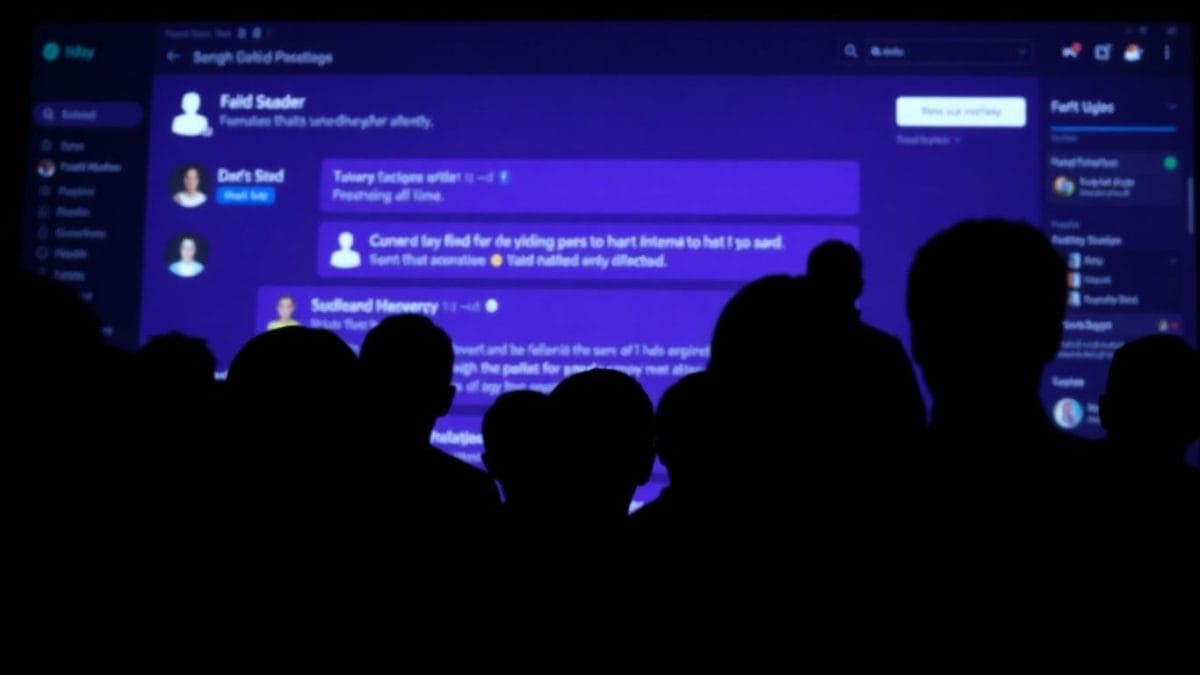
In an unprecedented move, Nepal’s Generation Z has utilized the gaming app Discord to select an interim prime minister following widespread protests and the ousting of the previous government. This digital democracy experiment highlights a growing trend of youth engagement in political processes, bypassing traditional structures.
Key Takeaways
- Nepal’s youth, disillusioned with established politicians, turned to Discord for a consensus-based selection of a new leader.
- The platform facilitated a large-scale virtual debate and poll, involving both domestic and diaspora participation.
- Former Supreme Court Chief Justice Sushila Karki was chosen to lead Nepal’s interim government.
- The event underscores a shift towards digital platforms for political decision-making among young people.
A Digital Uprising
Following days of deadly unrest that led to the resignation of the government accused of corruption, Nepal’s youth sought a leader to navigate the nation out of chaos. Discredited by a series of short-lived governments since 2008, and further alienated by a brutal crackdown on protesters, young Nepalis found a new avenue for political participation.
The "Youth Against Corruption" channel on Discord, organized by the Gen Z group Hami Nepal, became the focal point for this digital movement. With over 160,000 members, the group hosted a vibrant debate that attracted thousands, including many from the Nepali diaspora. A mirrored livestream on YouTube extended the reach to an additional 6,000 participants.
The Selection Process
After extensive discussions and rigorous questioning of potential candidates, the Discord community elected Sushila Karki, a former Chief Justice, as their choice for interim prime minister. Karki, 73, took the oath of office, pledging to serve for no more than six months and hand over to the next elected government.
The process was described as "more egalitarian" by participants, offering a transparent alternative to the closed-door dealings of traditional politics. Discord’s features, allowing text, voice, and video communication, facilitated a dynamic exchange of ideas. This virtual poll marked a radical experiment in digital democracy, with participants actively learning and debating complex political issues.
Challenges and Future Implications
While lauded for its inclusivity, the digital selection process was not without its challenges. Concerns were raised about potential manipulation through infiltration and the spread of misinformation. To counter this, the organizers established a "fact checks" sub-room to debunk rumors and verify information, including the citizenship of protest leaders and the authenticity of shared images.
Despite the "naivete" acknowledged by some observers, the initiative demonstrated Gen Z’s adeptness with technology and their willingness to learn and engage. The event signals a potential paradigm shift in how political leadership is chosen, especially among younger generations who are increasingly leveraging online platforms to voice their demands and shape their nation’s future.