
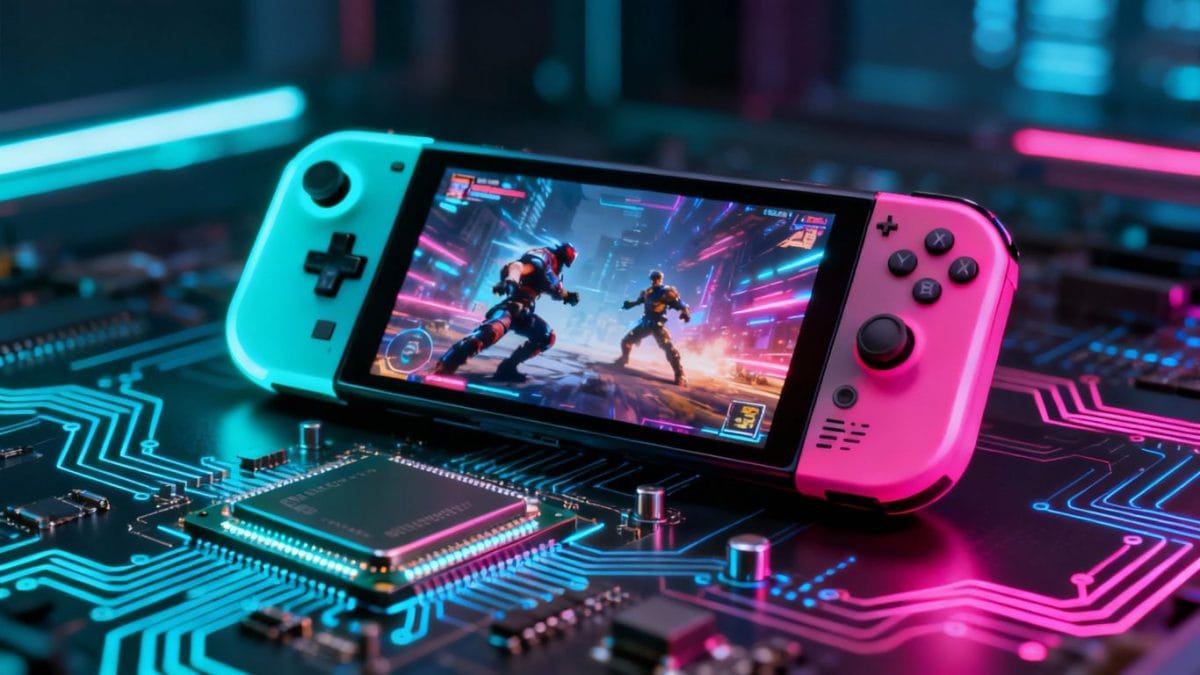
The portable gaming landscape is set to receive a significant upgrade with the announcement of new handheld devices boasting next-generation processors. These upcoming consoles promise enhanced performance, improved graphics, and innovative features, aiming to deliver a more immersive and versatile gaming experience on the go. Manufacturers are gearing up to integrate cutting-edge Intel and AMD silicon, pushing the boundaries of what’s possible in handheld gaming.
Key Takeaways
- New Processors: Devices are adopting Intel’s "Panther Lake" architecture and potentially updated AMD silicon.
- Enhanced Performance: Expect significant improvements in gaming performance, with integrated graphics rivaling dedicated mobile solutions.
- Innovative Features: Detachable controllers, high-refresh-rate OLED screens, and fingerprint sensors are among the new user-centric features.
- Versatile Design: Some devices offer a 3-in-1 design, functioning as handhelds, tablets, or small laptops.
Powering the Next Generation
Leading the charge is the integration of Intel’s "Panther Lake" processors, with the OneXPlayer X1 being one of the first to feature the Core Ultra 5 338H. This chip includes a 12-core CPU configuration with a boost clock up to 4.7 GHz and an Intel Arc B370 integrated GPU. Early benchmarks suggest the Arc B370 is competitive with AMD’s Radeon 880M, offering a substantial leap in graphical performance for handheld gaming.
Advanced Features for Enhanced Gaming
Beyond raw processing power, these new handhelds are incorporating features designed to elevate the user experience. The Lenovo Legion Go, for instance, showcases detachable controllers that enhance portability and usability. Its design includes a built-in kickstand, comfortable grips, and Hall effect sticks for precise control. A notable inclusion is a fingerprint sensor for quick and secure system wake-ups, alongside a custom-fit case for protection.
Display and Performance Benchmarks
The visual experience is also being prioritized. The Lenovo Legion Go boasts an OLED display with a 144Hz refresh rate, delivering vivid colors and deep blacks. While demanding titles like Cyberpunk 2077 might run at around 20 frames per second at native resolution with max settings, tweaking settings or lowering resolution can easily push performance beyond 60 fps. For less demanding indie titles, the device can maintain its 144Hz limit, showcasing smooth gameplay.
A Competitive Handheld Market
The OneXPlayer X1 is poised to offer configurations with up to 32 GB of memory, with potential speeds reaching 9600 MT/s. This device is part of a broader trend where manufacturers are rapidly adopting the latest mobile chipsets. The X1 series itself already features a range of AMD Ryzen and Intel Core Ultra processors, with the Panther Lake variant adding another powerful option to its diverse lineup. The trend suggests a competitive market where innovation in both hardware and user-centric features will define the leading devices.